Commercial Roof Flashing Failure Repair in Sandy Springs, GA
Flashing is the transition that keeps a roof assembly watertight where a wall, curb, penetration, or edge interrupts the field membrane. A leak near one of these details can come from the flashing itself, the surface it connects to, or water traveling from another point. We inspect the affected transition and the adjoining materials before defining a repair. That distinction matters because adding sealant at the visible stain may leave the underlying movement or drainage path untouched. Sandy Springs, GA, has frequent rainfall and a large mix of office, medical, retail, and hospitality buildings. Each site has its own wall construction, rooftop equipment, and access rules. Our report identifies the observed detail, documents the surrounding condition, and separates confirmed work from anything that remains concealed.
Find the transition that needs attention
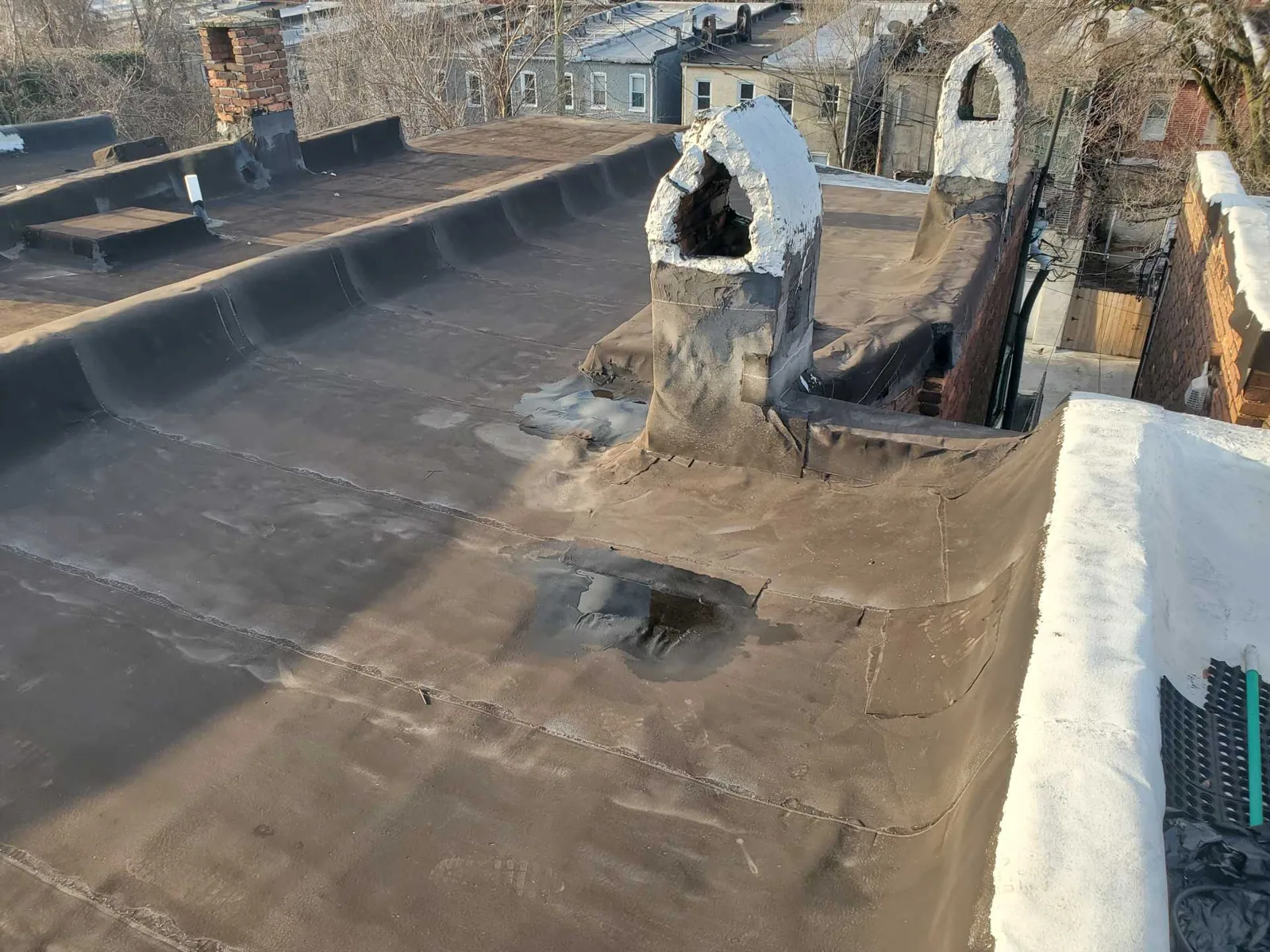
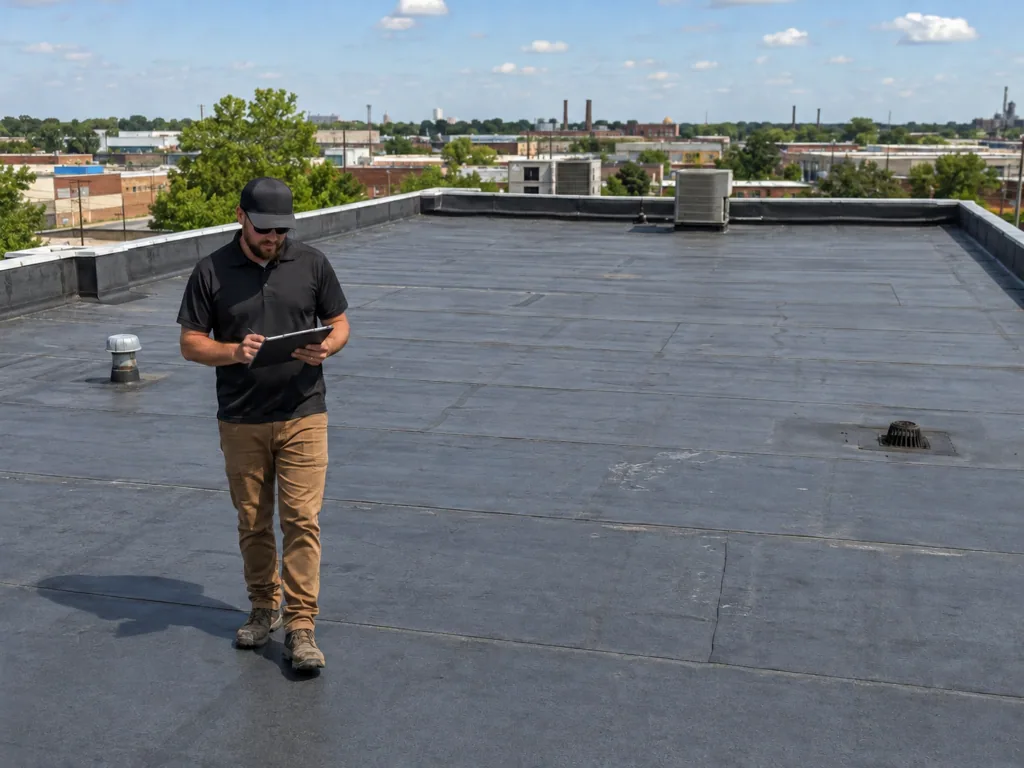
Start with the roof plan, reported interior location, and accessible exterior details. We review wall terminations, parapets, curbs, skylights, equipment supports, pitch pans, and penetrations near the reported condition. Look for loose counterflashing, open reglets, separated sealant, wrinkles, corrosion, or membrane pulling away from a vertical surface. A commercial roof inspection can record each transition by roof zone and elevation.
Photographs should show the complete transition and a close view of the point in question. We note whether a sealant bead is continuous, whether the termination is mechanically secured where expected, and whether water can pass behind the assembly. If the wall or counterflashing cannot be inspected without another trade, the report states that access limit.
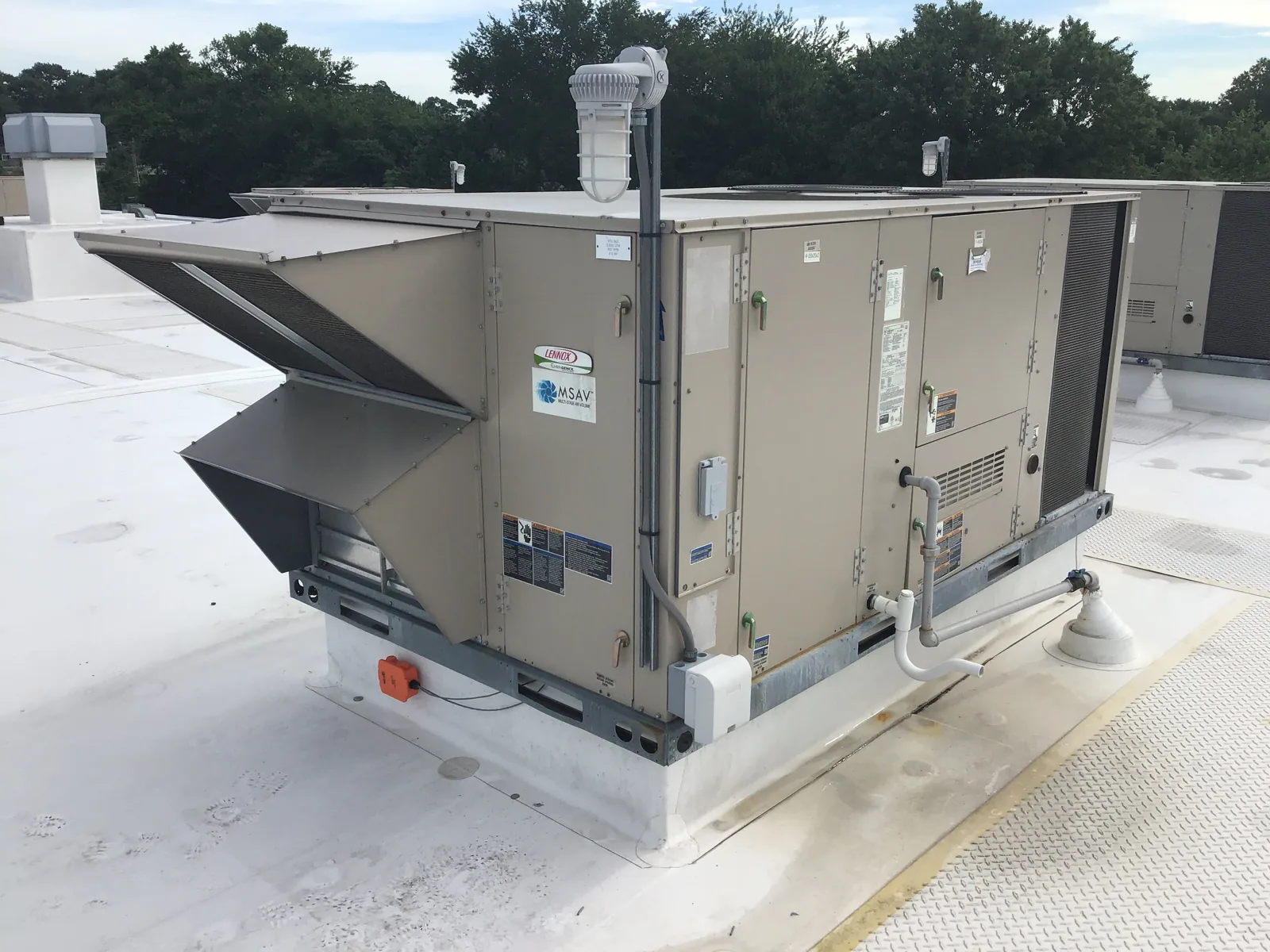
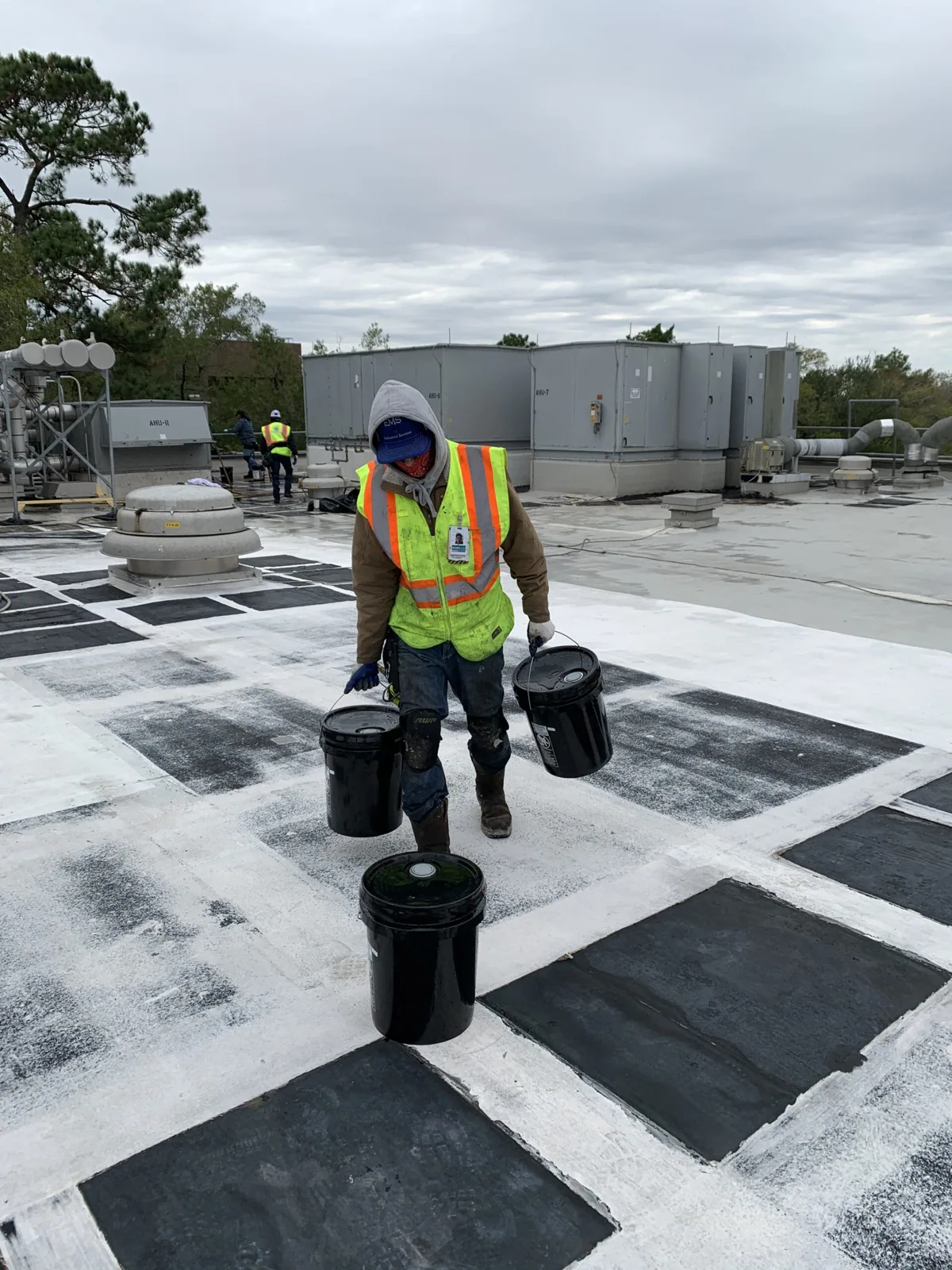
Check movement and material compatibility
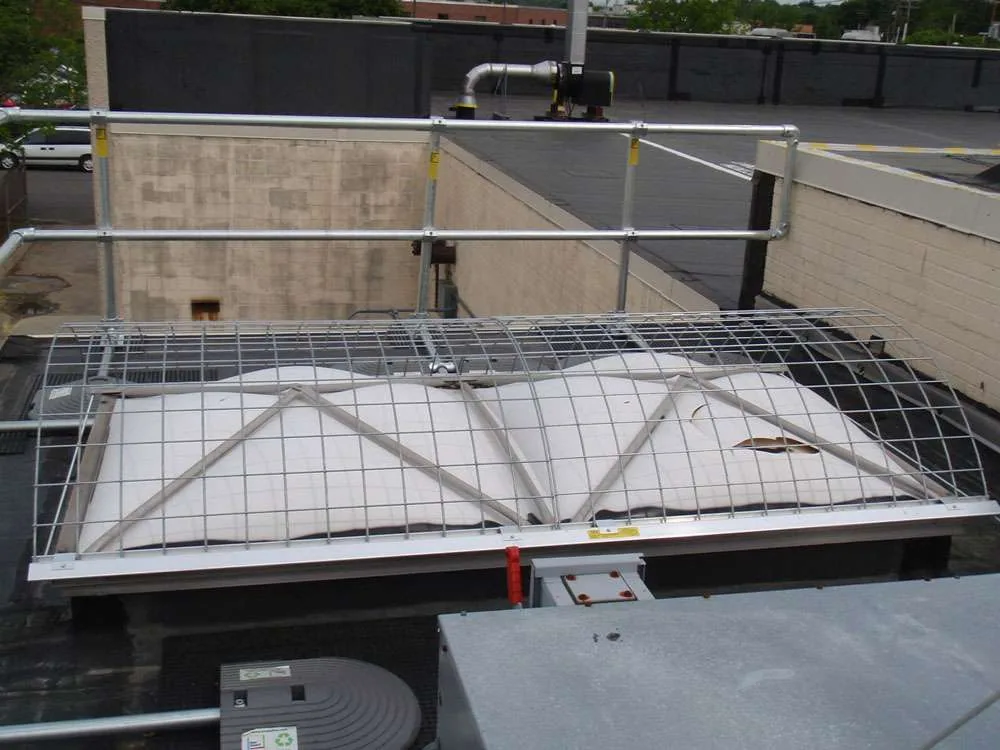
Flashing can fail when connected materials move differently, when a termination loosens, or when incompatible repair material is applied over an old surface. We identify the roof system when possible, inspect the existing detail, and confirm the proposed repair can bond and accommodate expected movement. A penetration and skylight review may be appropriate where the transition surrounds a curb or framed opening.
When the wall substrate is deteriorated or the termination is concealed, a patch alone may not restore a durable connection. We can document the exposed condition and coordinate the needed wall or sheet-metal work with the owner’s contractor. If removal shows wet insulation or damaged deck, pause at a safe boundary and record the extent before adding quantities. Do not extend the original repair allowance to concealed work without review. The owner can then approve a revised scope that describes both the roof and building-side interface.
Trace water instead of following the stain alone
Interior water marks often appear below the point of entry, but the route may follow a deck, joist, or insulation layer before becoming visible. We compare the reported room and timing with roof elevations, penetrations, and nearby drainage conditions. A leak investigation can test the likely path when the source is uncertain. We record what was checked and avoid concluding that a flashing defect caused the interior condition until the evidence supports that link.
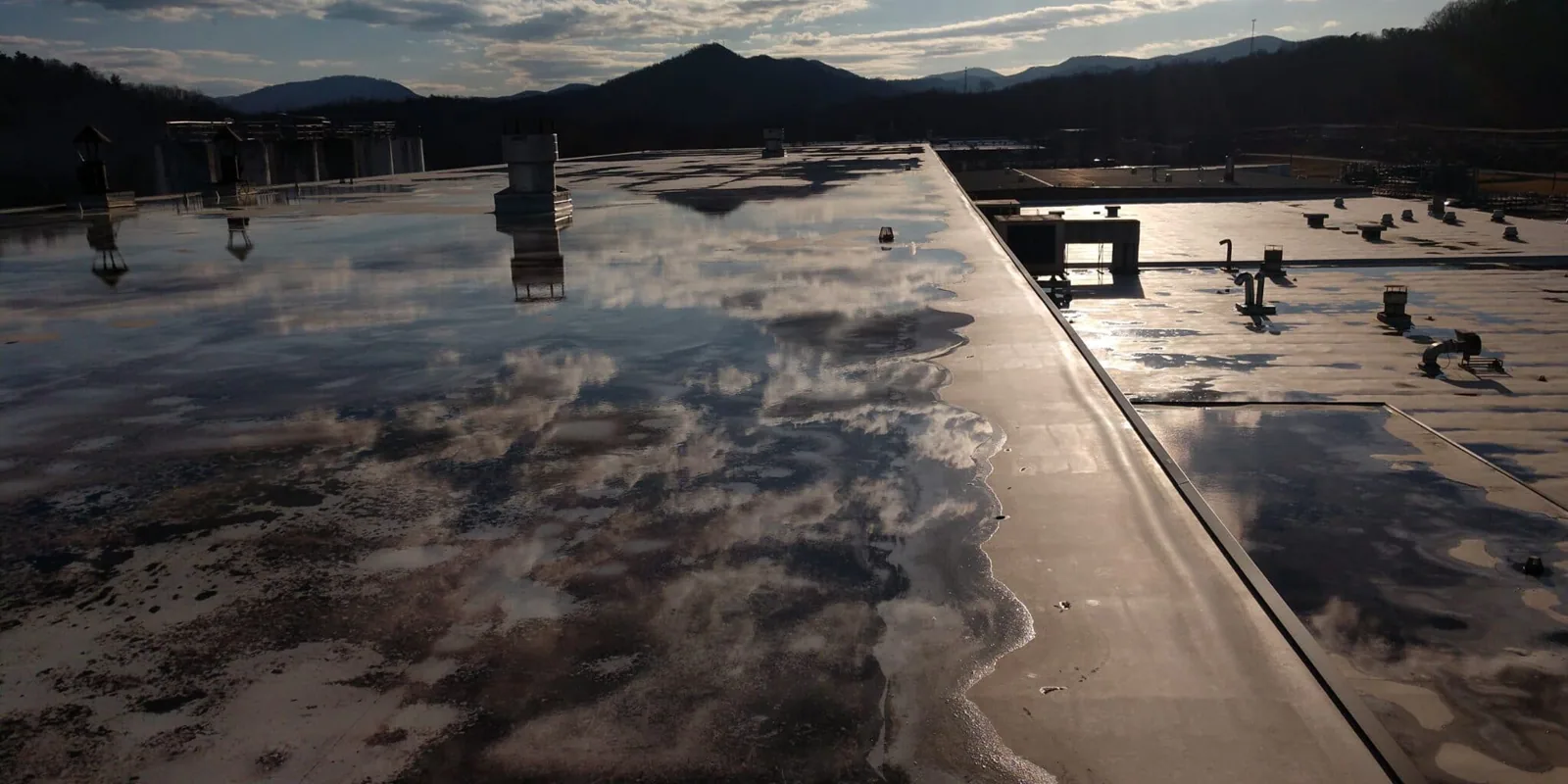
Where several details are close together, inspect each separately. Water could enter through an open curb flashing, then travel to a different wall or ceiling. A ponding review can help distinguish a low drainage area from a failed transition, while a seam assessment considers a split field joint. Separate findings keep a focused flashing repair from absorbing unrelated conditions and make the closeout record easier to use.
Define repair limits and verification
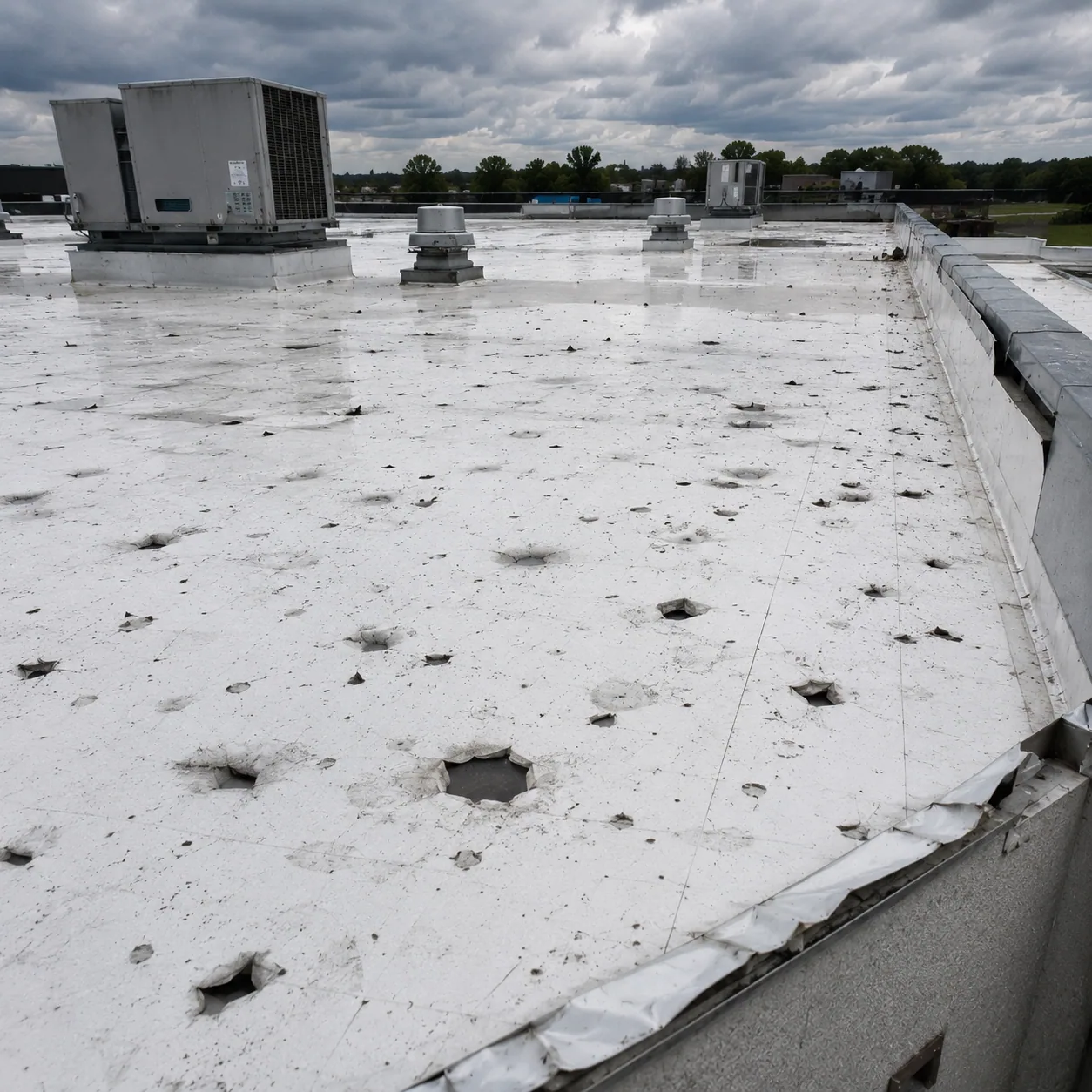
A useful proposal names the detail, removal limits, substrate preparation, new flashing material, attachment or termination method, and tie-in boundaries. It also states how the repaired transition will be checked. If the proposed scope requires opening a wall, replacing counterflashing, or working around equipment, list those interfaces and responsibilities. We show the owner where the crew will start and stop rather than referring to an undefined “leak area.” A condition report can preserve the before-and-after photographs with notes about what was exposed.
If a larger area needs work, use measured quantities and explain why that boundary is necessary. A small bead of sealant may be appropriate for a narrow maintenance item, but it should not be presented as a reconstruction of a failed assembly. If we find a split in the adjacent field, discuss that repair separately. The owner can compare the flashing scope with a replacement review only if broader system conditions support that decision. Repair recommendations remain tied to observed materials and conditions.
Plan access around occupied buildings
Flashing repairs may require ladders, lifts, wall access, or temporary protection over active areas. Confirm roof entry, fall-protection requirements, equipment shutdowns, loading restrictions, and any tenant or patient access limits before scheduling. The Central Perimeter district has a dense employment base and four MARTA stations; nearby Medical District facilities also serve active care operations. These local operating contexts make coordination useful, but each property’s specific safety and access rules must come from its site contact. A visit near the Medical District should account for authorized routes and building procedures.
For a property with several tenants or structures, a healthcare facilities team or portfolio manager may coordinate notifications and escorts. We identify the work zone, expected duration, temporary protection, and any area that remains unavailable. If the repair opens a wall or roof section, define the daily closure point and who verifies that it is secure before the crew leaves. These details make the sequence easier to evaluate without promising that active building operations will be unaffected.
Keep storm and maintenance findings distinct
Wind-driven rain can expose a weak flashing detail, but a storm date alone does not establish when or why that detail failed. The inspection should record the current separation, movement, sealant, fasteners, and material condition, along with any known repair history. Damaging thunderstorm winds and heavy rain affect North and Central Georgia. After a reported event, the property’s repair history and current roof conditions determine whether the flashing needs attention. A wind assessment can review adjacent perimeter conditions when movement is also reported.
Maintenance history may reveal recurring sealant work, earlier repairs, or a transition that requires monitoring. We note those records as background and distinguish them from conditions seen on the current visit. If a coating, reroof, or equipment project is planned, coordinate flashing responsibility before another trade covers the detail. A construction manager can confirm sequencing and acceptance at the interface.
Close out the detail for future inspection
Closeout should identify the transition repaired, material and method when known, photographs, and any limits or follow-up requirement. If a nearby detail was not included, label it clearly so facility staff do not mistake the repair for a full roof survey. We can note what would trigger a return, such as new water entry, renewed separation, or visible movement. A maintenance review can revisit the location and compare it with the completed record.
Roswell Road runs through commercial areas with varied building uses, while City Springs includes civic, restaurant, retail, and event activity. The examples show why a transition repair may need different access planning; they do not identify any particular building’s roof design. We confirm the site’s details and leave a practical report for the owner or property management team.
Questions About Commercial Roof Flashing Failure Repair
Can you repair flashing without replacing the whole roof?
Often, if inspection shows a localized transition failure and the adjacent assembly can support a compatible repair. We document the limits before recommending broader work.
Do you replace wall counterflashing as part of a roof repair?
The proposal identifies included sheet-metal and wall interfaces. If another trade owns part of the transition, we state that boundary and coordinate before closure.
Why does a roof leak appear away from the flashing?
Water can travel through or along roof layers before becoming visible inside. We compare the interior report with accessible roof details and recommend further tracing if needed.
Will sealant stop a flashing leak?
It depends on the detail and failure. We inspect the substrate, termination, and movement before selecting a repair method; surface sealant is not a universal correction.
What helps you prepare for a flashing inspection?
Share the reported room, leak timing, roof plans, prior repair notes, access restrictions, and any wall or equipment work near the affected detail.
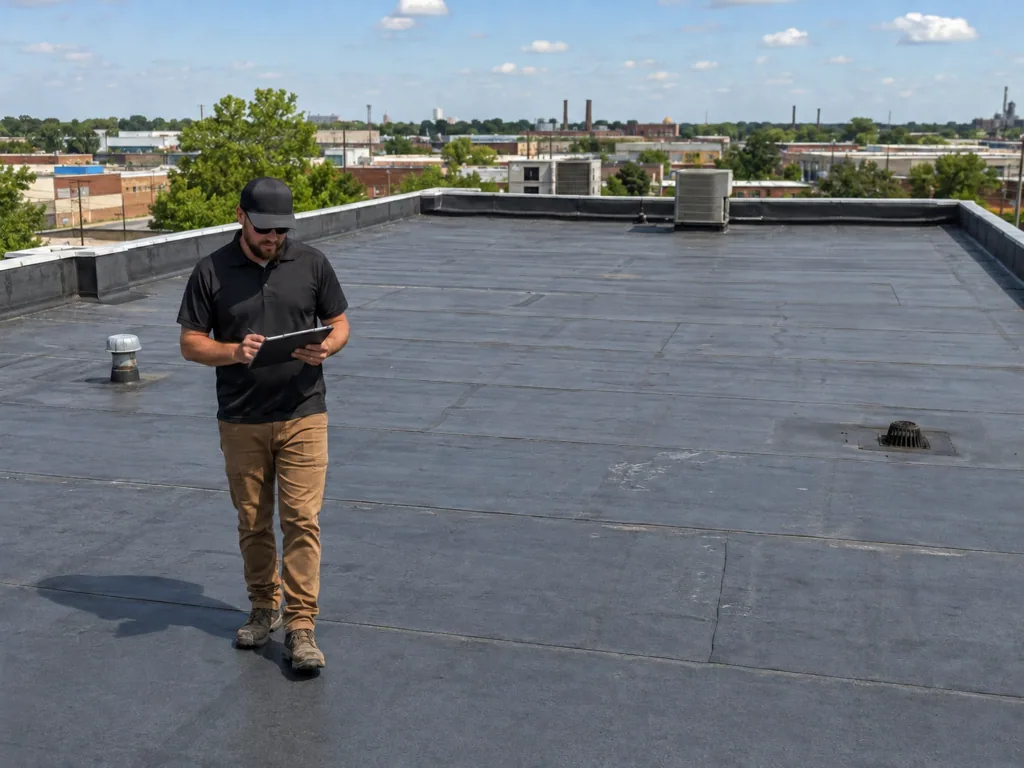
Arrange a commercial flashing inspection
Provide the affected roof area, reported leak location, building access rules, and known repair history. We will inspect the transition and define repair limits.
Call 555-555-5555 or send the building details.