Manufacturing Plant Roofing in Sandy Springs, GA
A manufacturing roof can affect production even when a leak appears in a maintenance bay. The owner needs to know which roof section is exposed, whether equipment or exhaust details are involved, and when the work can be completed without disrupting the line. We inspect the assembly and reported condition, then compare immediate repair with the next renewal window. Sandy Springs' hot summers and frequent rain keep surface, drainage, and access decisions in the operating plan.
Connect roof zones to the production floor
We map each roof section to the building areas below it, including production lines, storage, electrical rooms, and maintenance routes where the facility can identify them. A ceiling mark does not prove the nearest penetration failed. Water can travel through insulation, along a deck, or around a wall before reaching the floor. We compare the leak timing with roof slope, seams, drains, prior work, and equipment changes before deciding where to test.
Marietta-Cobb Industrial Park includes manufacturing alongside distribution, flex, service, and warehouse uses. That regional mix makes it useful context for industrial roof planning, but it does not identify any individual building's assembly. A roof inspection documents the layers and details visible at the property. A condition report connects findings to the mapped roof section and the production area that may need protection.
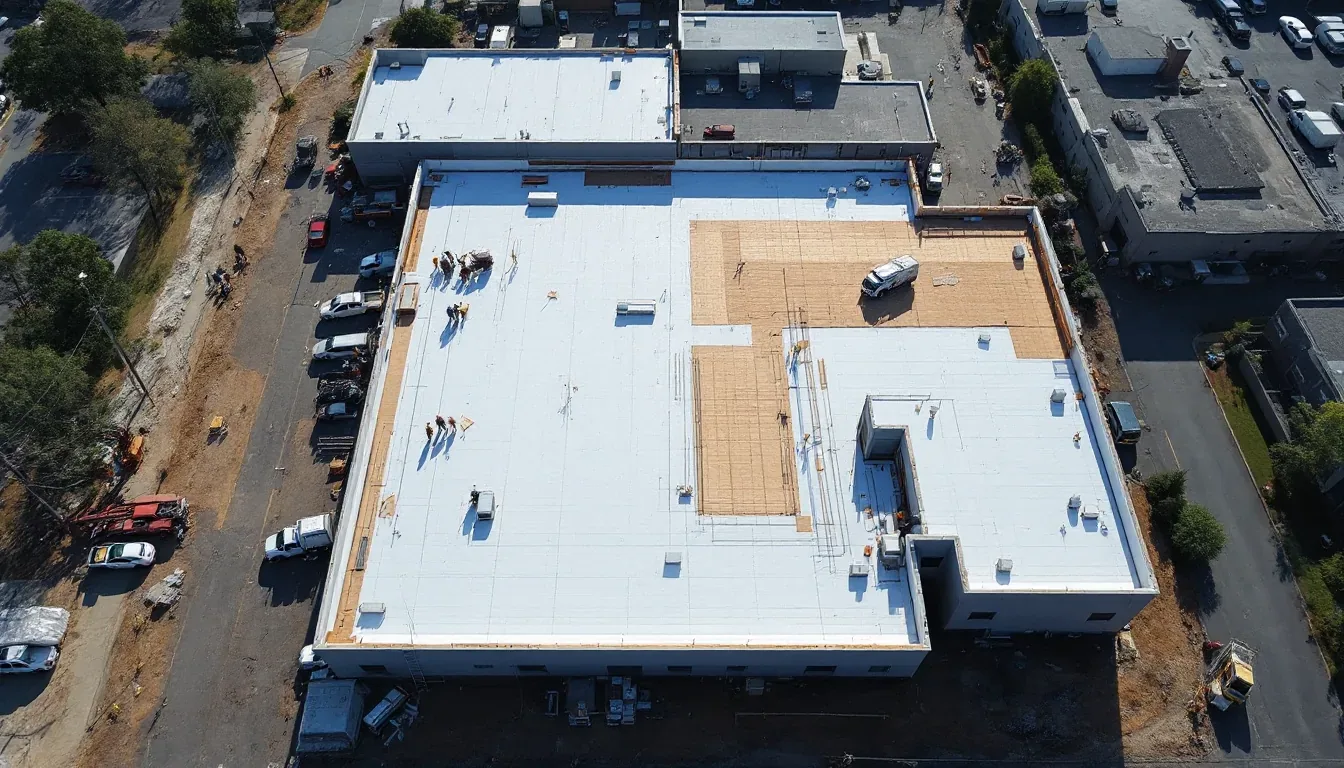
When several additions meet, we label their transitions before combining quantities. One section may have a different membrane, attachment, or repair history. We identify uncertain layers and whether a test opening could change the removal boundary. The owner can then decide whether to authorize testing before committing to broader work.
Review exhausts, curbs, and movement points
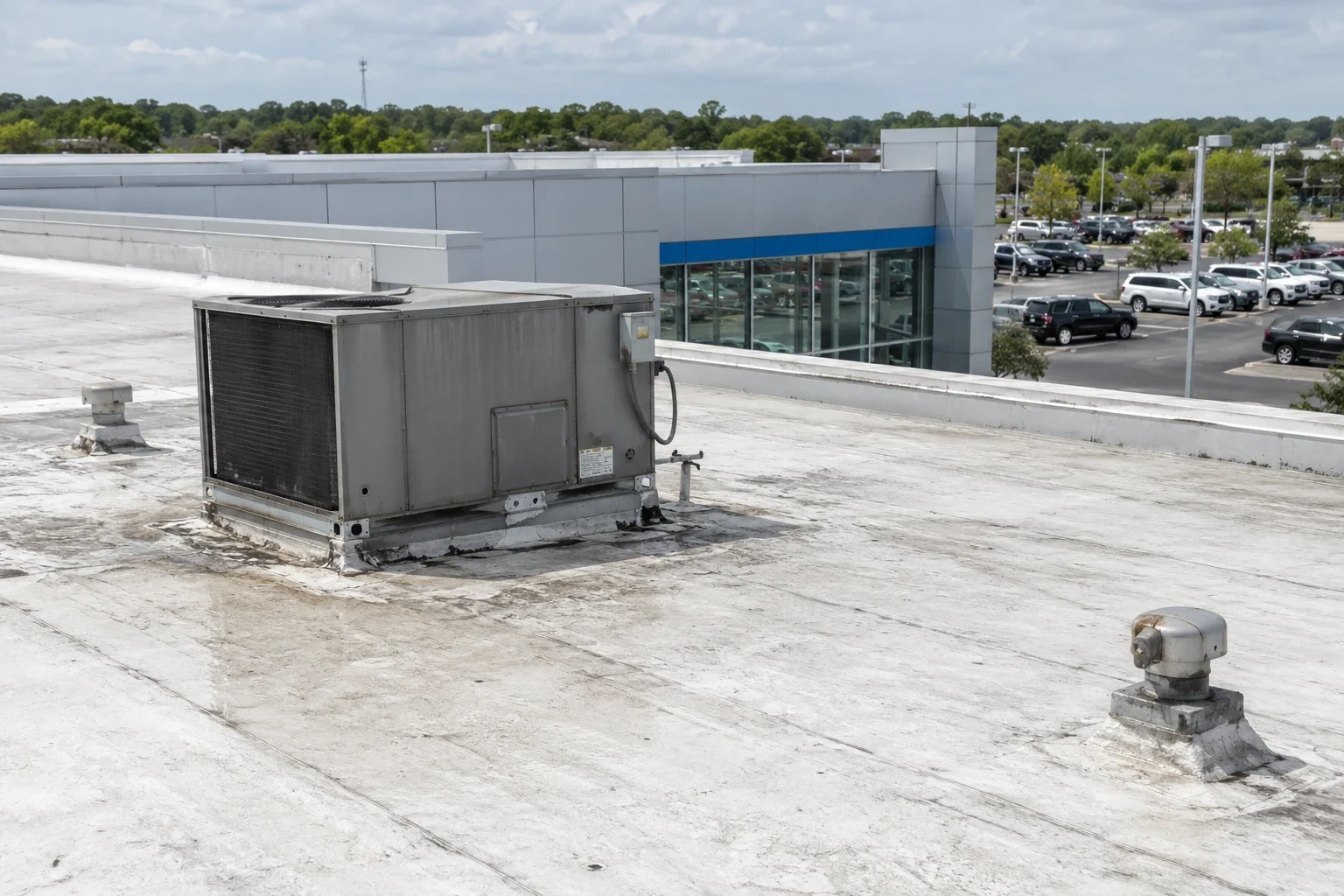
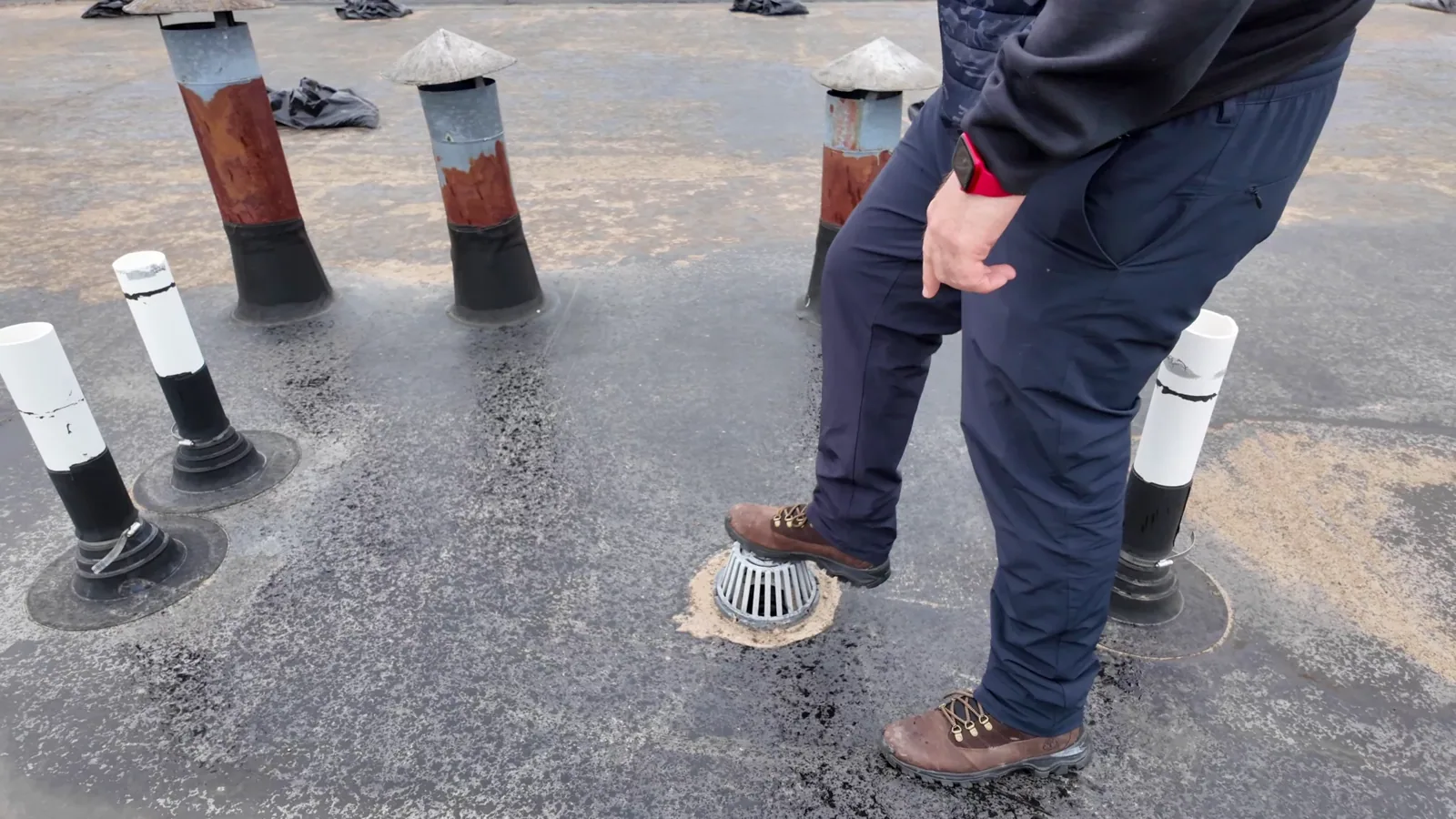
Exhaust hoods, pipes, rooftop units, duct supports, and service paths can concentrate flashing and traffic. We check curb corners, fasteners, membrane terminations, metal transitions, and abandoned supports. If vibration or maintenance access has changed a detail, the scope identifies what is visible and which trade may need to coordinate. The facility contact explains operating conditions that matter to the roof, including exhaust activity, access restrictions, and any equipment that must remain online.
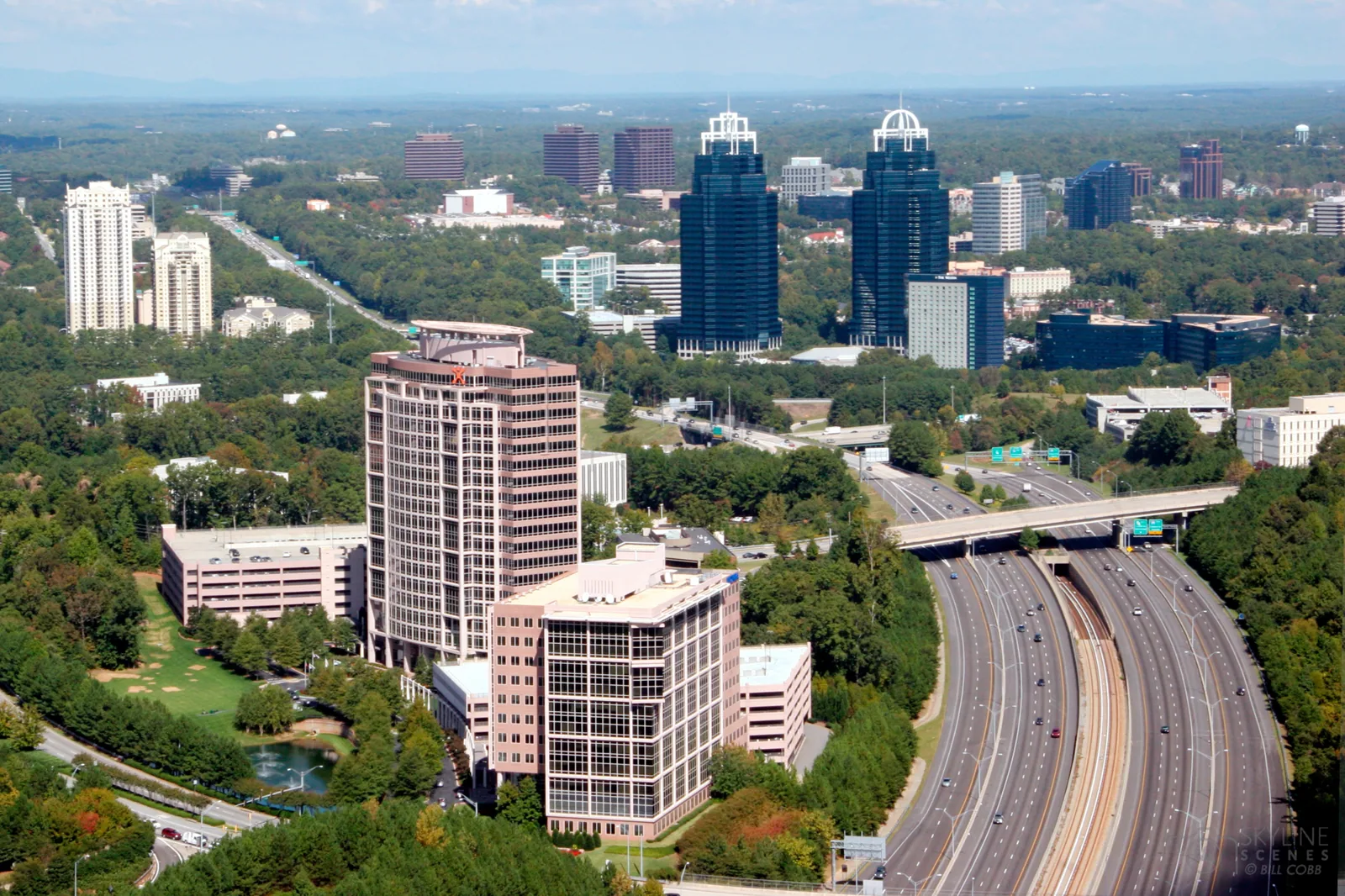
The Roswell Road corridor carries commercial properties through Sandy Springs, while the Central Perimeter combines major offices, highways, and four MARTA stations. Those districts have different delivery and occupancy patterns. For a plant, we confirm its approved truck route, roof entry, lift position, and shutdown window directly with the site contact. A curb and equipment review can coordinate roof flashing with a mechanical change.
If equipment must stay online, the sequence may use smaller zones and a temporary protection plan. The proposal states which line or roof area could be affected and who approves any interruption. A roof opening is closed before the crew leaves or protected under an owner-approved interim measure.
Read moisture and weather evidence together
Wet insulation can spread beyond the visible leak, while an isolated split may stay local if the surrounding assembly remains sound. We use visual inspection, moisture readings, and controlled openings where each method can change the repair boundary. Results are mapped to the tested location. If a surface scan points to a broader area, direct confirmation determines whether material needs removal.
Hot, humid Sandy Springs summers can affect access, preparation, and the time available for some materials. We check actual substrate condition and product requirements before scheduling work. A moisture survey can help select test points, while a drainage review checks whether water is collecting at an outlet or low area.
Medical and office activity adds to the commercial mix around Sandy Springs. Each manufacturing facility sets its own continuity requirements, so we assign the roof work window by section and owner-approved operating limits.
Protect active production during repair
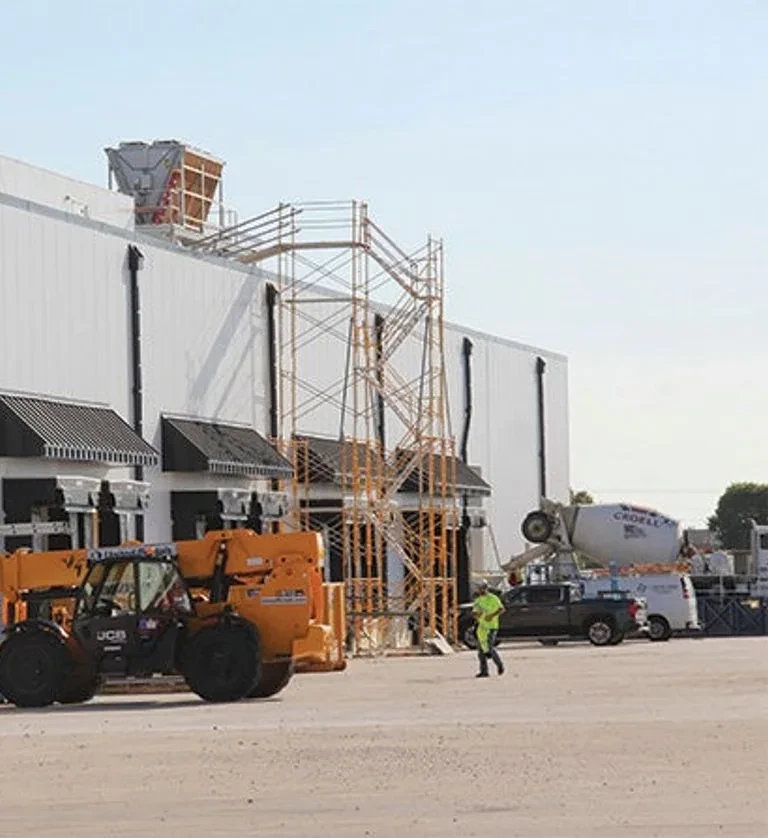
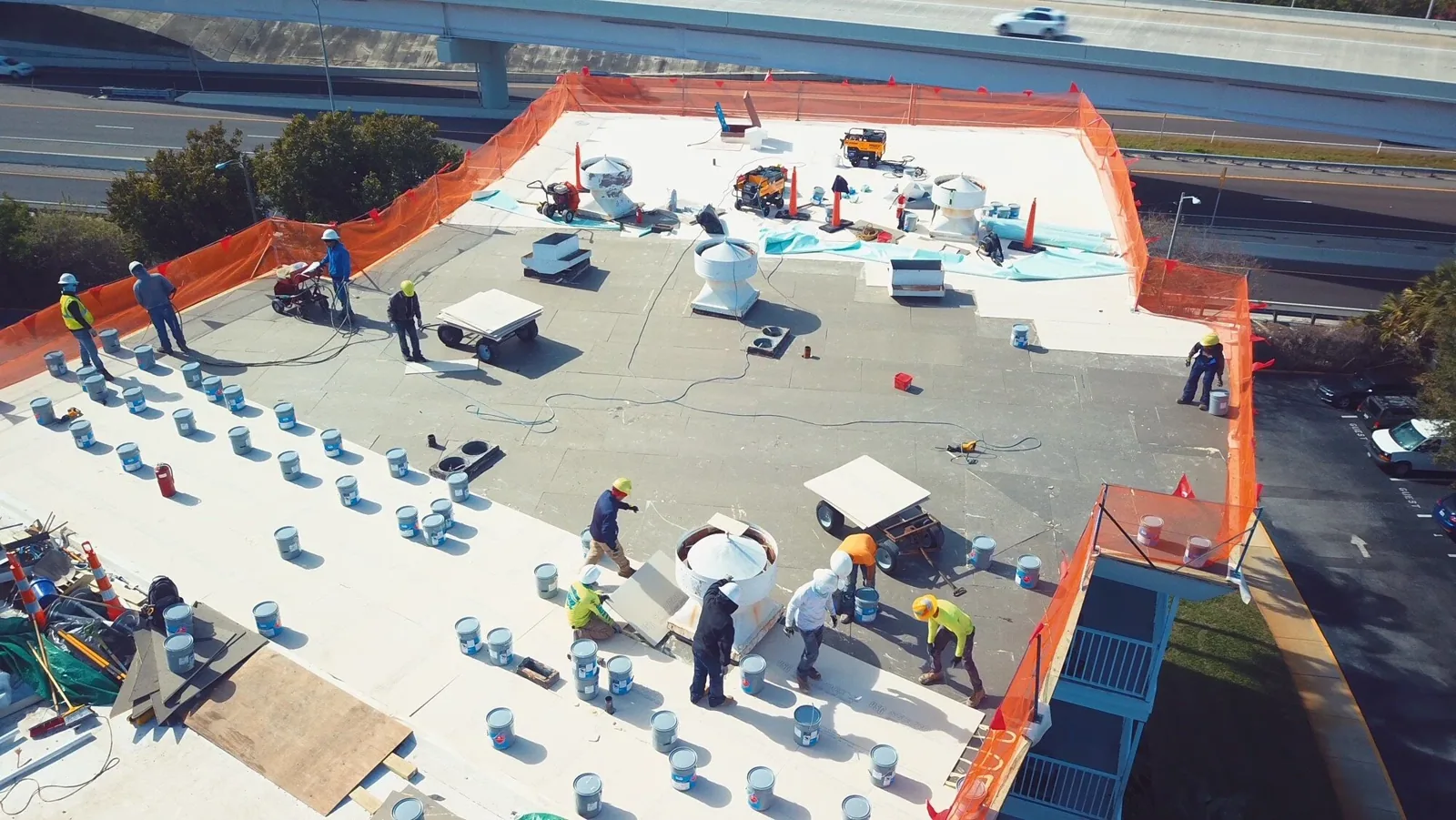
Before the crew opens a roof, the facility contact confirms occupied hours, line schedules, clean or controlled areas, equipment that cannot be shut down, and the person authorized to approve added work. We define the material staging area and keep drains and fire access clear. If demolition reveals wet insulation or a damaged deck, the crew protects the boundary and submits the finding before expanding the scope.
Frequent rain during the cooler months makes a daily closeout essential. We limit removal to the area that can be secured, restore temporary drainage paths, and check the temporary or permanent closure before leaving. If rain interrupts an installation, the owner knows which roof section is protected and what remains open for a return visit. A phased reroof schedule can set that sequence around production and maintenance shutdowns.
Cost and timing depend on system type, access height, equipment density, test needs, removal depth, and the extent of interior protection. A repair scope can isolate a confirmed opening. When recurring failures affect several zones, a replacement review can compare phasing, tear-off, new insulation, drainage, and equipment tie-ins.
When a shutdown window is short, we can prepare the roof-zone map, test plan, material list, and protection sequence before mobilization. That lets the owner resolve approvals and staging in advance. The shutdown request can then specify which work depends on production downtime and which inspection tasks can occur while the plant remains active. If the inspection identifies a condition that needs more time, the facility can decide whether to stabilize it now and reserve permanent work for a later outage.
Compare renewal with the plant budget
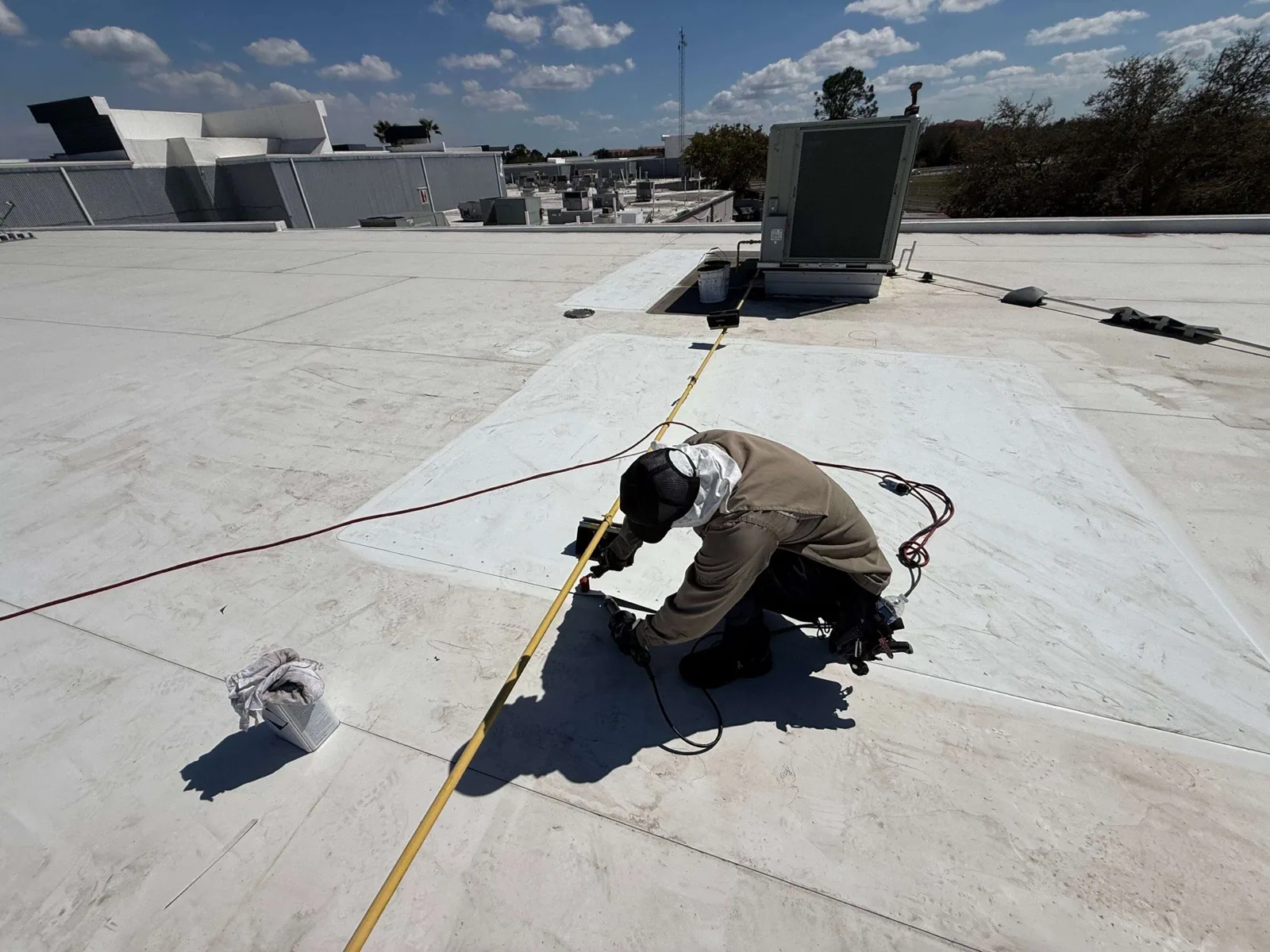
A localized repair may preserve a roof when attachment and adjacent materials remain stable. Repeated leaks, broad moisture, failed edge details, or multiple layers of prior repairs can make a wider project more predictable. We compare verified assembly conditions, production risk, repair frequency, and the next budget year. A coating or recover is considered only after moisture, compatibility, added height, and drainage have been checked.
For an owner with multiple sites, a capital plan can rank projects by confirmed exposure and operating consequence. The warehouse roof assessment focuses on inventory and loading access, while a data-center roof review considers a different continuity profile. Each plant still receives its own condition trend and scope boundary.
Closeout preserves roof plans, photos, repairs, tested areas, equipment changes, and limitations. Update the record after a new exhaust, curb, or rooftop unit is installed. That lets the next inspection distinguish an older roof condition from a detail changed during production work.
Plant teams can help the roofing crew avoid a shutdown by identifying exhaust schedules, hot work restrictions, and sensitive production zones before mobilization. We confirm where temporary protection is needed below the work area and who can release each roof zone. If a test cut or tie-in reveals a condition beyond the approved scope, the crew documents the boundary and gets direction before expanding work. That keeps production decisions with the facility and prevents a field discovery from silently changing the project.
Questions About Manufacturing Plant Roofing
How do you schedule roof work around a production line?
The site sets the operating window and identifies equipment that must remain active. We use that information to sequence roof sections, staging, protection below, and daily closure.
Can a roof leak near an exhaust be repaired locally?
A local repair may fit when the flashing and surrounding assembly remain sound. We inspect the curb, membrane, attachment, and water path before setting the boundary.
How should a plant budget change if a test opening finds wet insulation?
We map the sample, protect the opening, and show the owner how the finding changes removal quantities. Additional work proceeds only after the revised boundary is reviewed.
When should a plant compare repair with replacement?
Recurring failures across different roof zones, extensive moisture, or weak attachment can justify a renewal study. We compare condition, access, production impact, and the capital window.
What information helps price a manufacturing roof project?
Roof plans, system records, leak history, equipment routes, shutdown periods, and access rules help define quantities. We identify any unknown layer or test that could change the estimate.
Set a production-aware roof scope
Share roof ages, active leaks, production windows, equipment access, and the budget year. We will prioritize roof sections and define the next action for each.
Call 555-555-5555 or send the building details.