Commercial Roofing in North End, Sandy Springs, GA
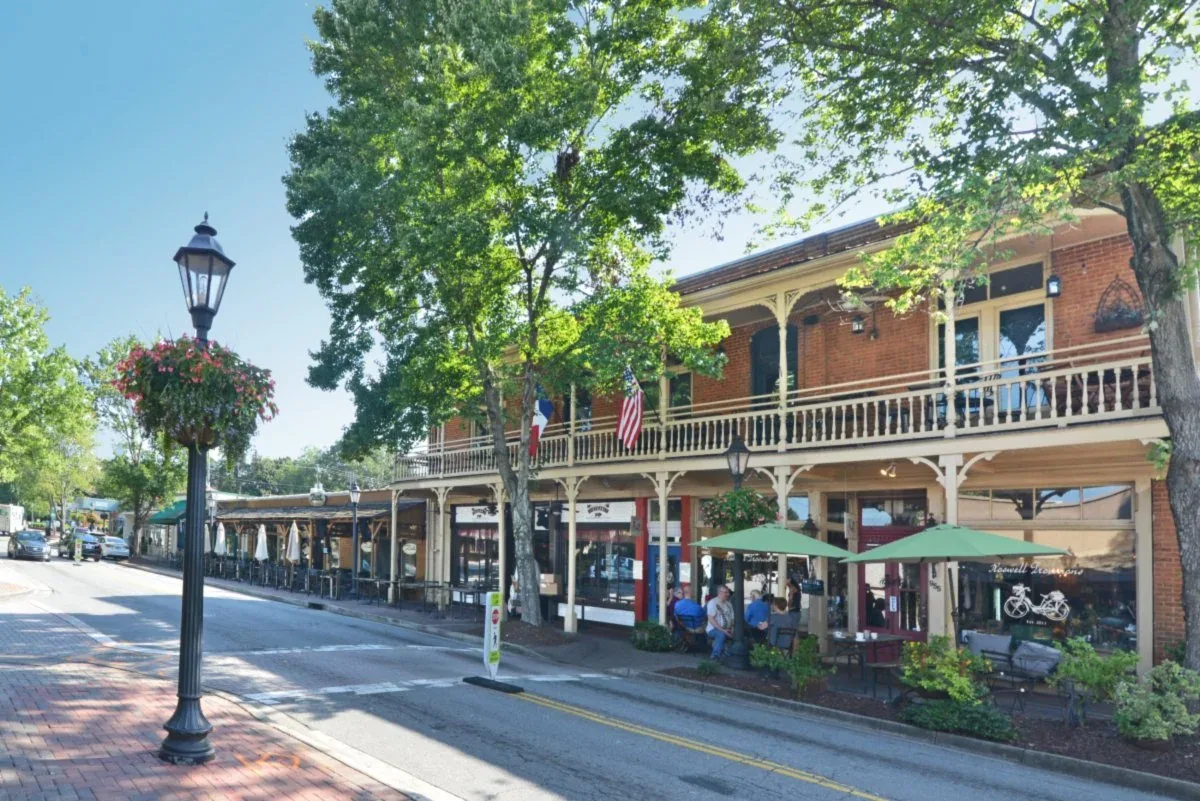
North End’s planning area includes shopping centers along Roswell Road, including Northridge, Loehmann’s Plaza, and North River Shopping Center. A roof project in this district starts with the property’s operating schedule, reported condition, and documented roof history. We map the affected section, inspect drainage and transitions, and separate active protection from permanent work. Sandy Springs has frequent rain, humid summers, and recurring hail and thunderstorm winds, so a small leak or loose edge can influence timing. The field record identifies what is visible, what needs testing, and what remains outside the approved boundary. That gives a property owner a practical basis to decide whether the next step is repair, monitoring, or a capital review.
Property-level access and tenant timing
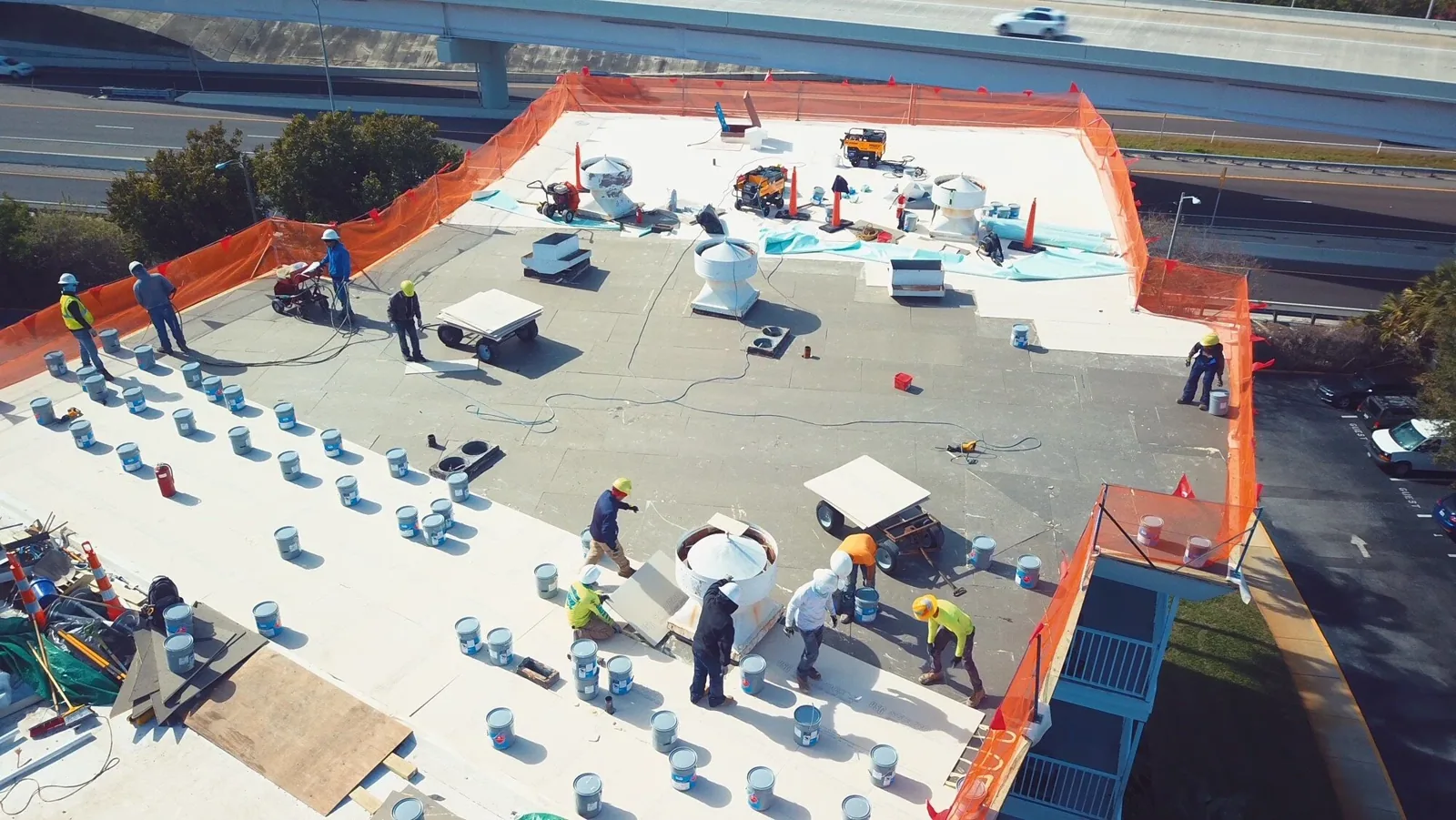
North End’s planning work emphasizes local business growth, better connectivity, and river access. The owner or site contact confirms current loading routes, tenant hours, roof entry, and work restrictions before mobilization. Before mobilization, identify the roof hatch, lift placement, safety orientation, and any route that must stay available for customers or deliveries. A phased work plan can define the daily area opened and closed without assuming all properties operate alike.
If a center has several tenants, coordinate notices and interior protection before cutting or moving material. We ask who can approve ceiling access, equipment shutdowns, and changes to the work area. The daily log records the roof zone released at shift end, the protection left in place, and the contact who can approve a changed boundary. A retail operating plan can help coordinate tenant and customer access around repair work, while the roof scope remains tied to one building.
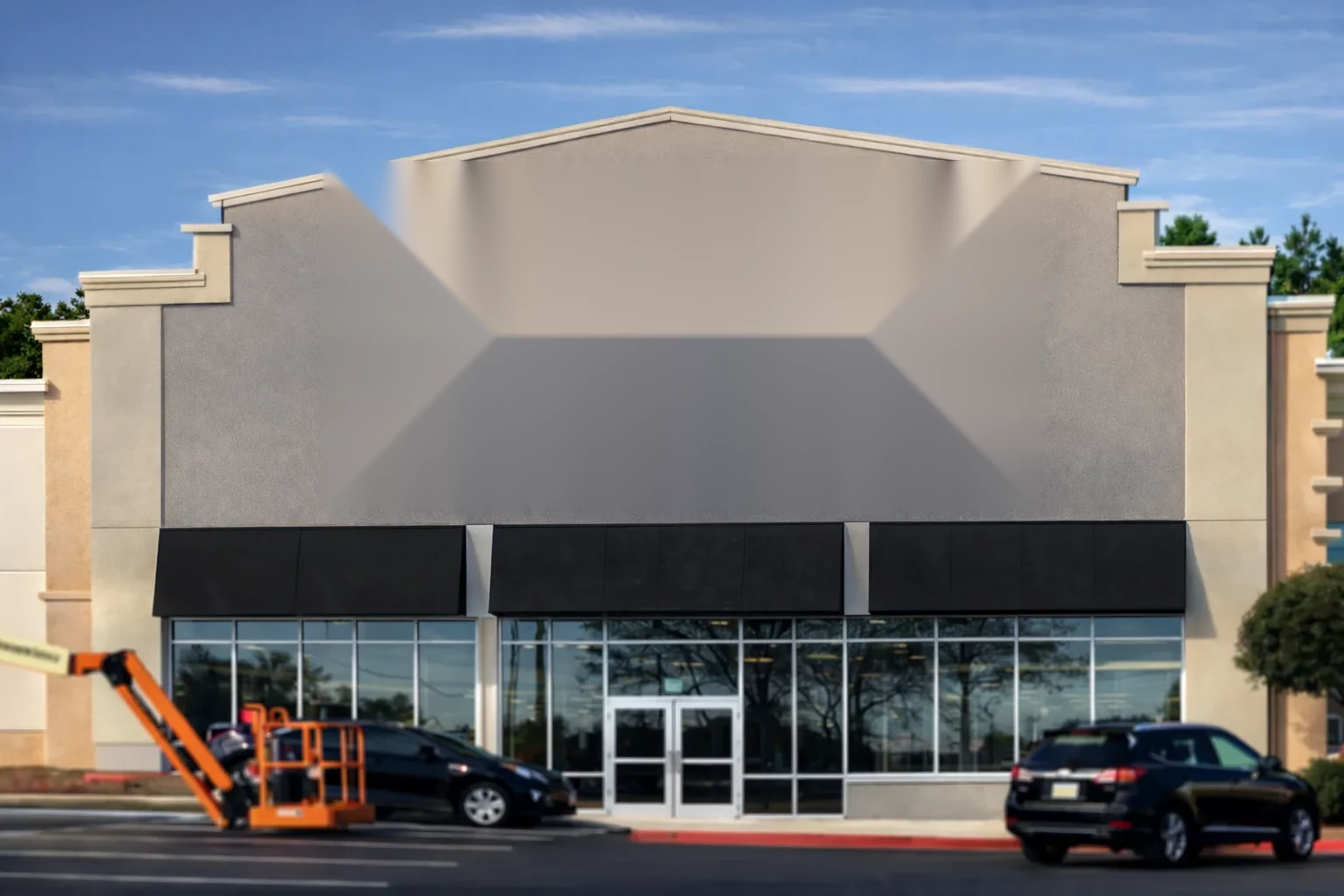

Start at the reported leak or repair history
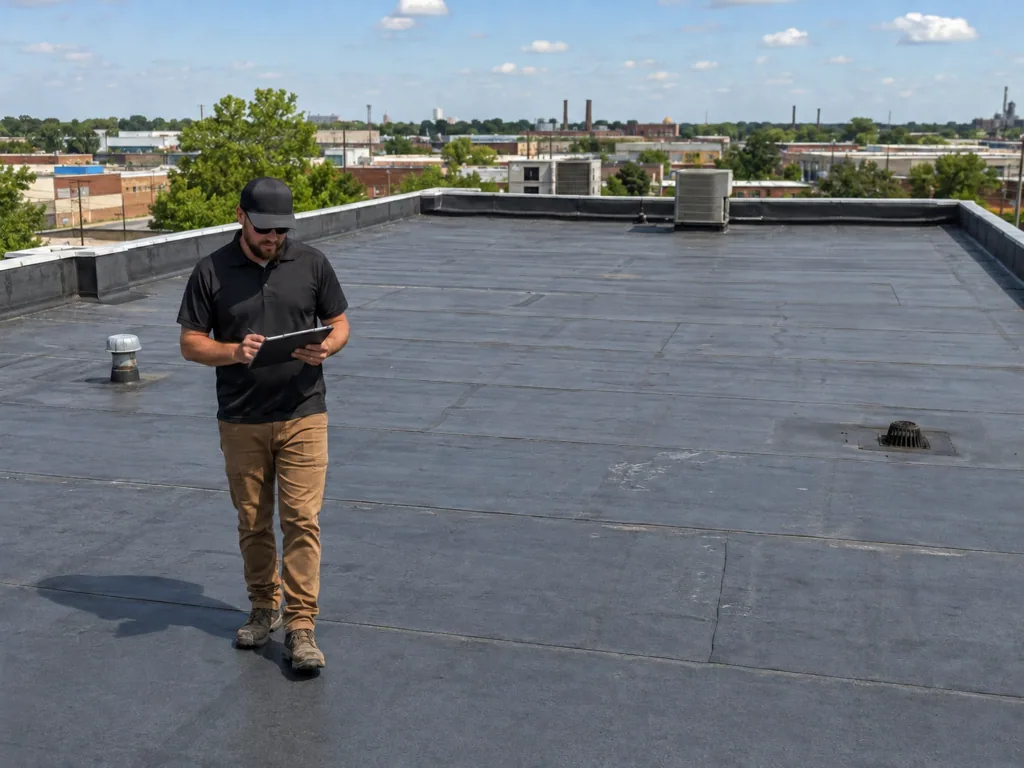
A ceiling stain does not identify the roof opening above it. We compare the reported room and timing with seams, drains, edges, curbs, and prior repair points. A commercial roof inspection documents the assembly when it can be confirmed, accessible roof areas, and any limits on the visit. If the water path remains uncertain, a leak investigation can trace likely entry before the scope is priced.
For Northridge, Loehmann’s Plaza, and North River Shopping Center, attach every finding to the inspected property and roof section. Identify the assembly, condition, and repair history from that building’s records and inspection. We mark inaccessible areas separately and return to them when the property can provide safe access. If test results at one building identify wet insulation, that evidence does not transfer to another center. Building-level records let an owner prioritize follow-up without turning a district plan into a roof survey.
Drainage and exposed transitions
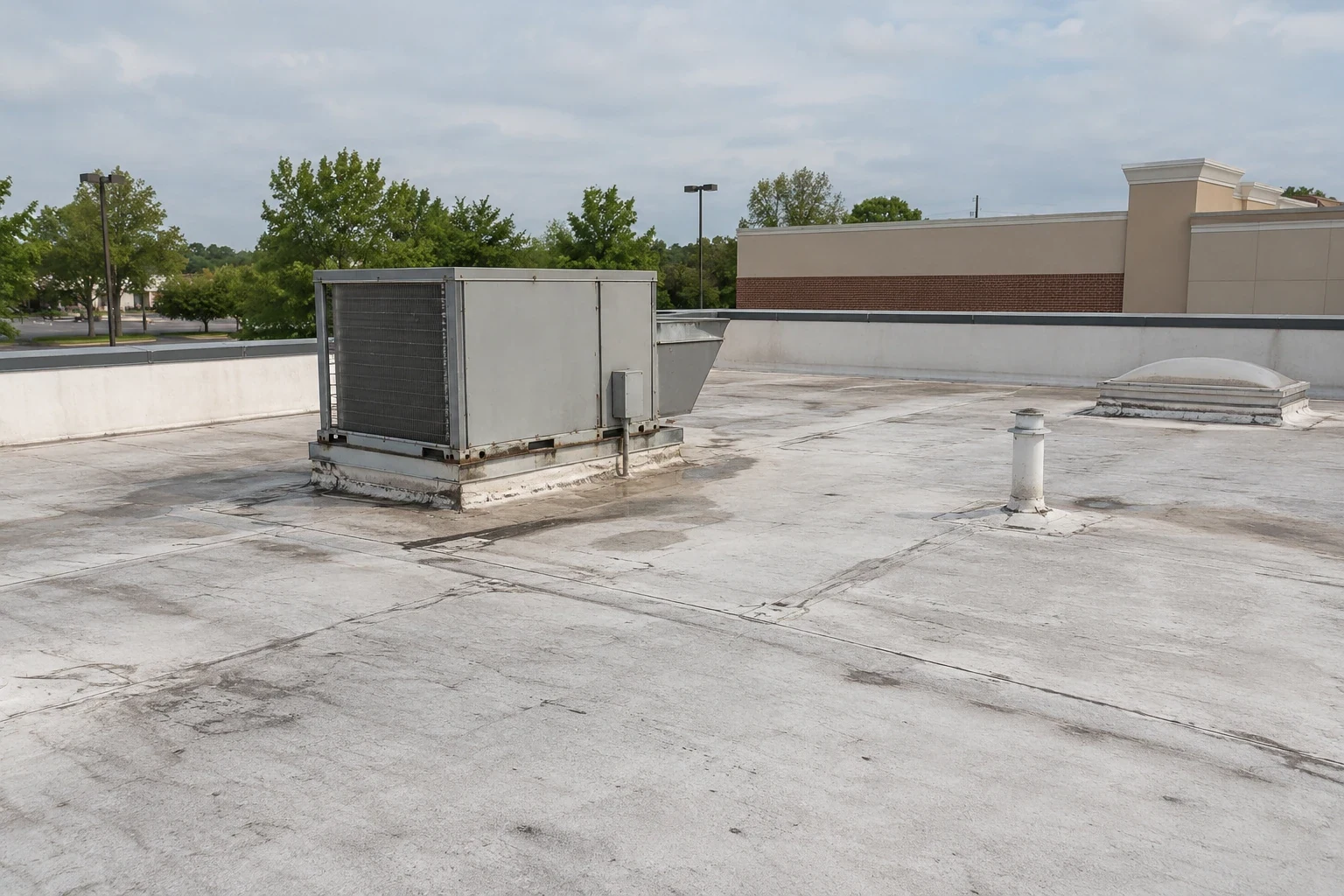
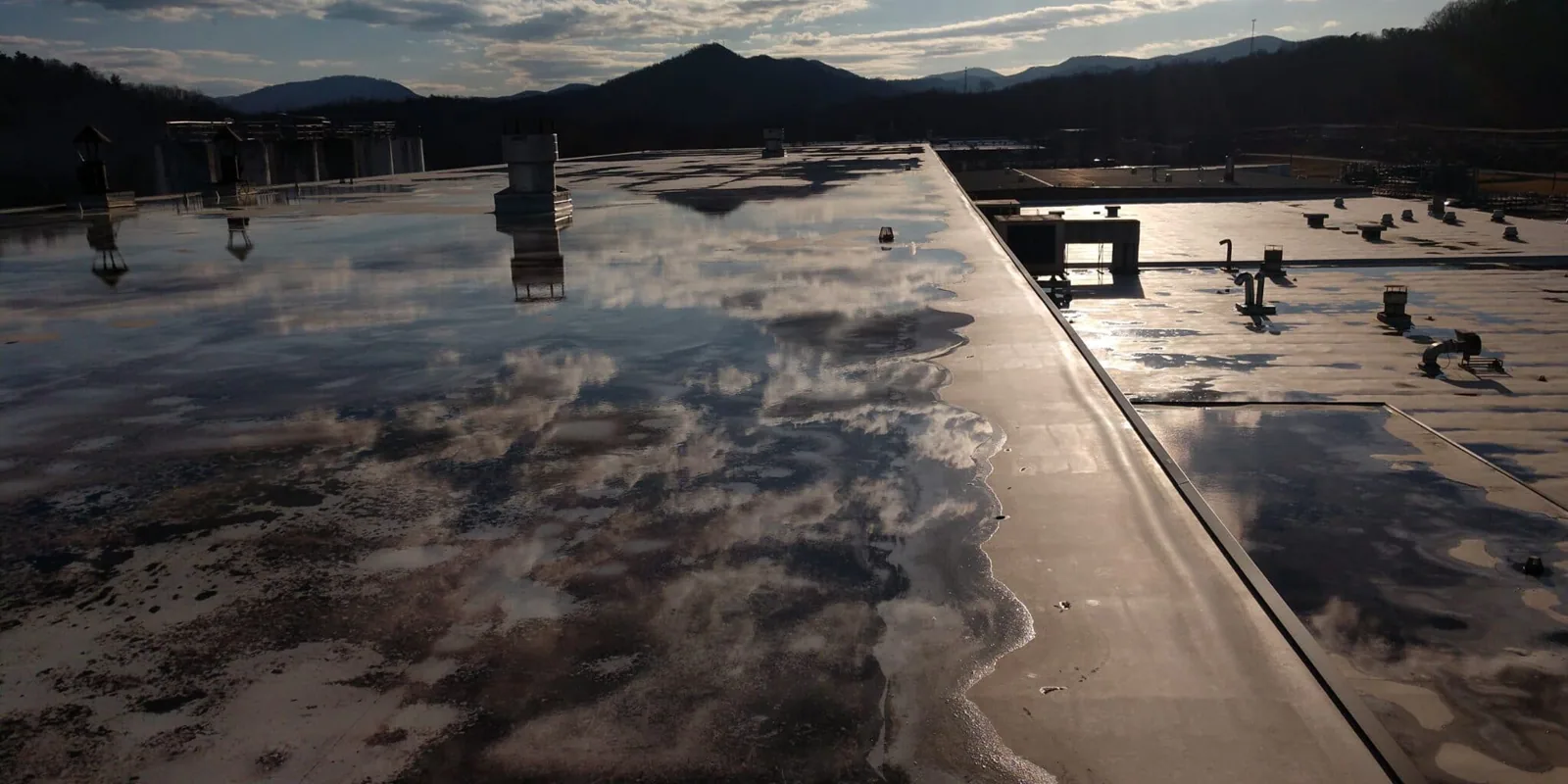
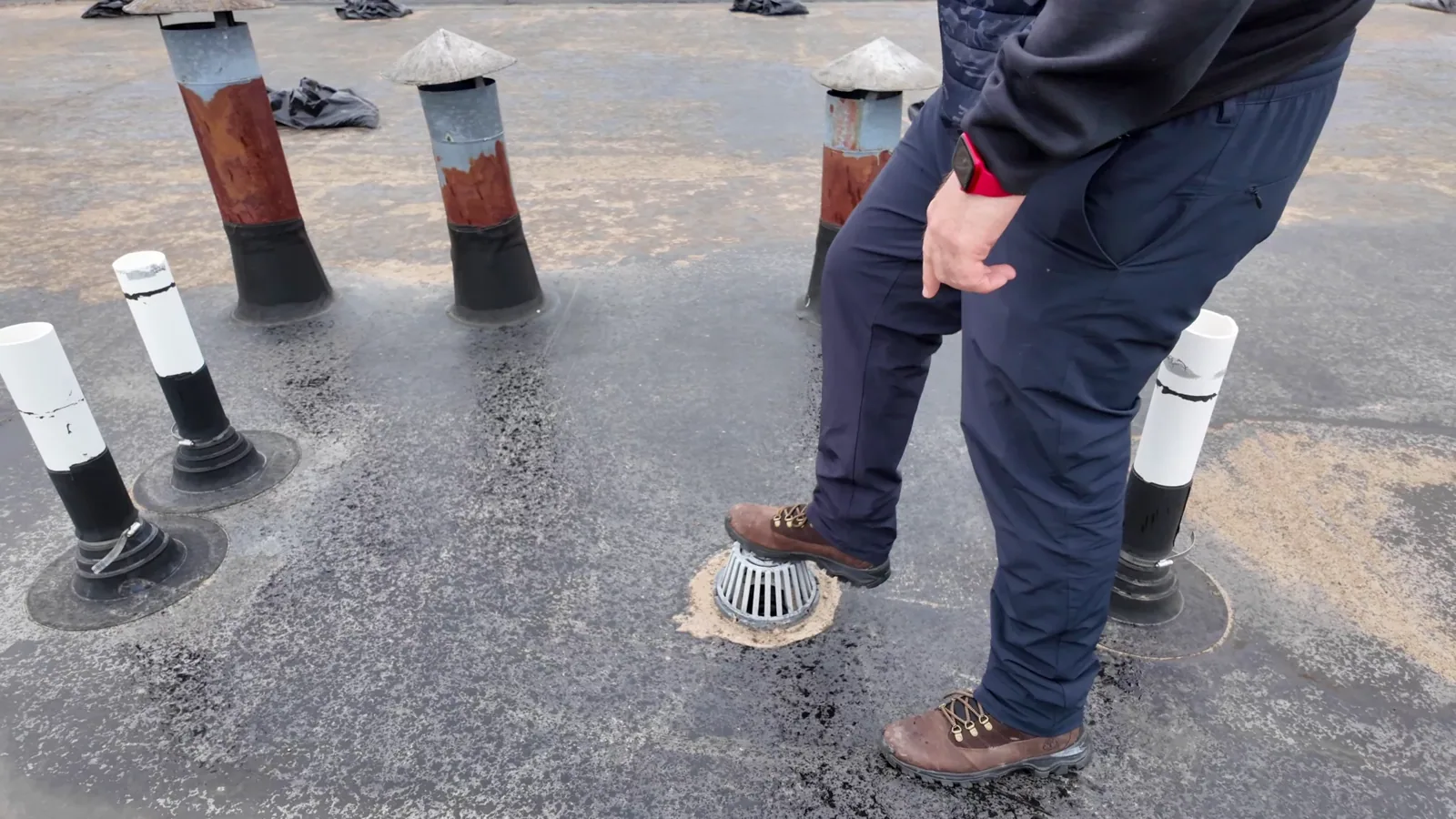
Rainfall makes drainage a useful first check. Inspect strainers, sumps, scuppers, parapets, edge metal, wall terminations, and penetrations for blockage or movement. A drainage review maps where water should leave the roof and whether accessible outlets are clear. If a low area continues to hold water, test whether slope, deck, or insulation conditions change the repair boundary.
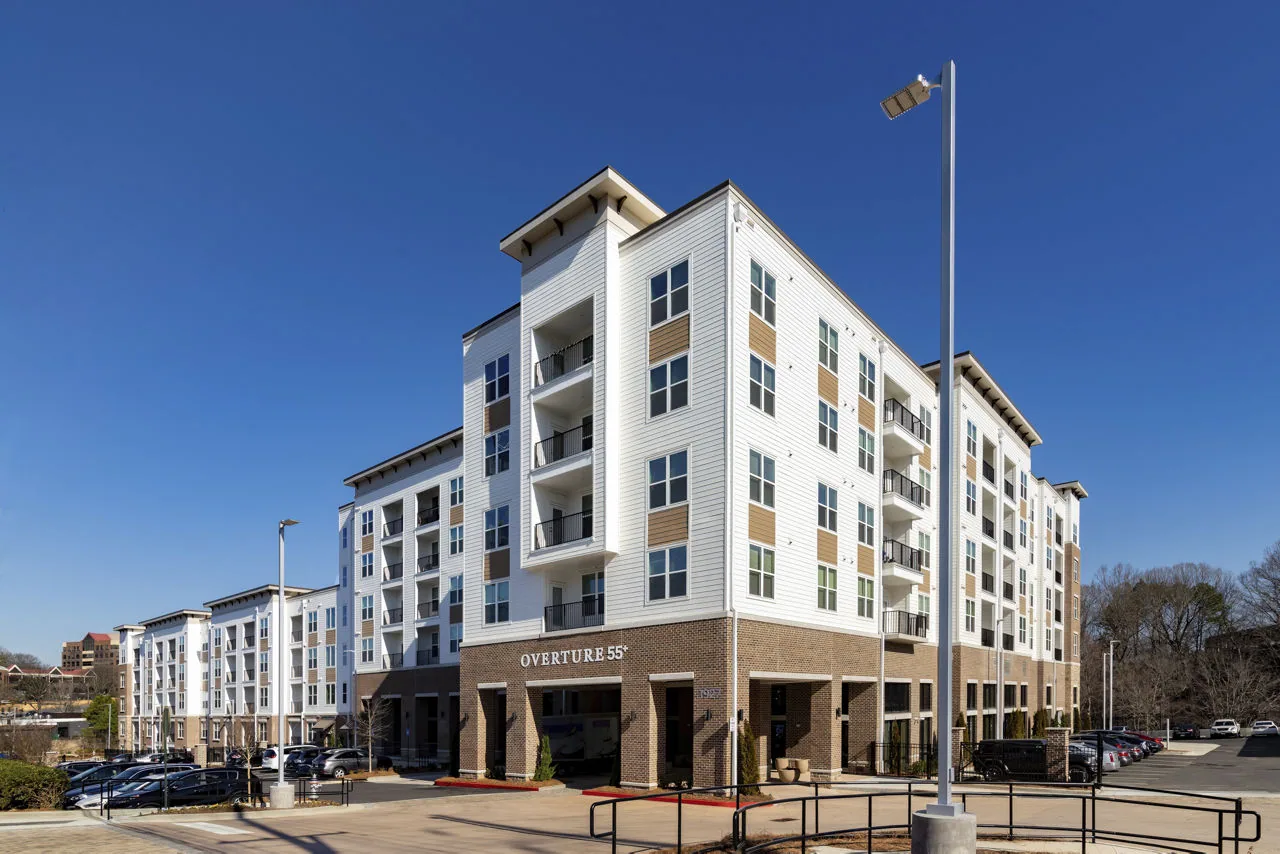
Roswell Road runs through the North End planning area, where existing shopping centers sit alongside possible future housing, retail, office, and green-space concepts. For an operating property, inspect its edges, seams, and drainage details against current site conditions. After a storm report, inspect the property’s roof map and repair history, then document the affected sections and visible damage.
Work boundaries in a changing district
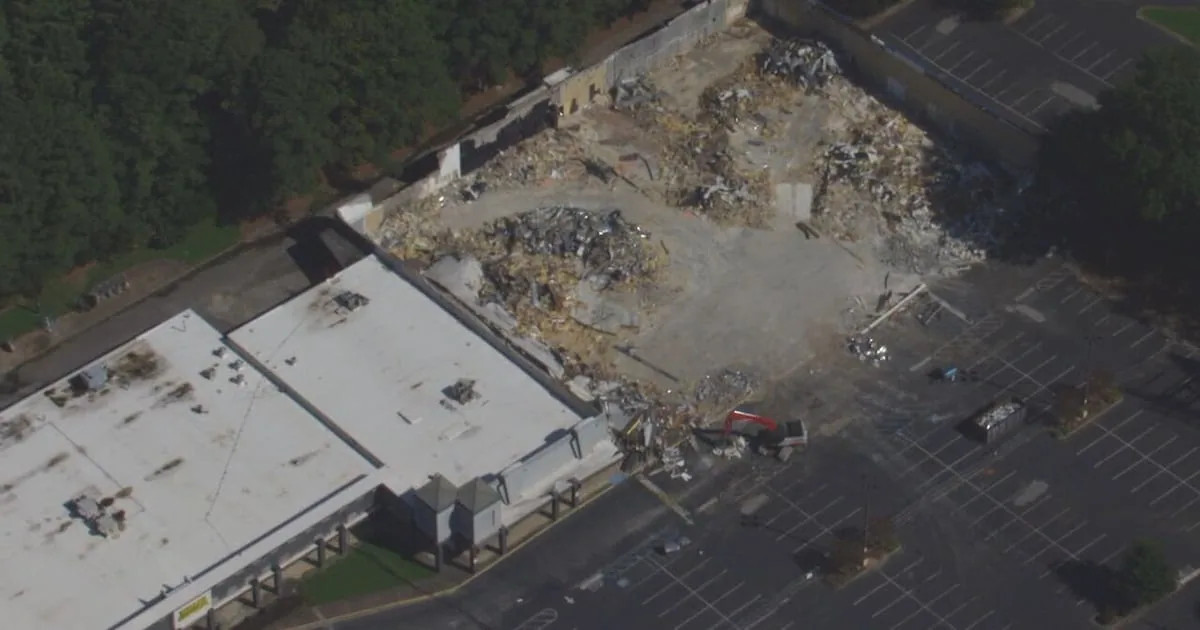
When a repair reaches concealed material, stop at an agreed safe edge, photograph the exposed layers, and measure the change. Show the added quantity separately so the owner can review it before approving a revised estimate. A condition report can link the roof map, test location, photos, and approval history. The crew should keep the opening protected while the owner or general contractor decides whether the added work belongs in this visit. The decision record should include the expected work hours, material lead time, disposal plan, and whether interior access is required. If a tenant must move inventory or close an entrance, include that coordination before the crew date is confirmed. When removal exposes a different roof layer, the owner can review photos and quantities before the next section is opened.
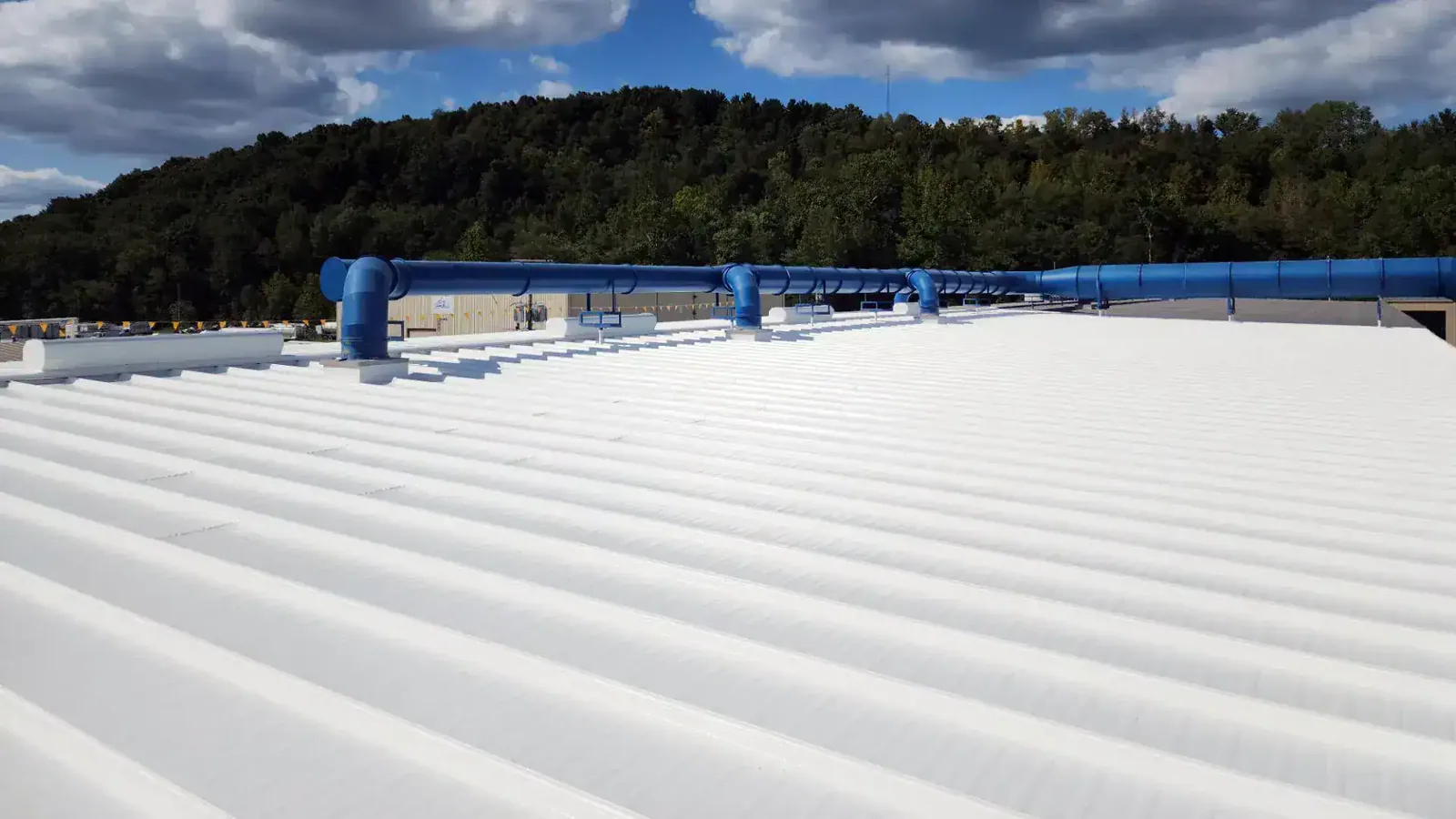
The district plan considers mixed-use housing, retail, office, and green space as possible development options. If nearby construction changes access or staging, confirm those conditions with the property team rather than assuming a future plan is already underway. Cost and timing depend on roof height, material delivery, disposal, equipment access, interior protection, and how much can be closed in one shift. For a renewal scope, price removal, new insulation, perimeter details, and concealed-deck allowances as distinct items. That breakdown lets an owner compare a targeted repair with full replacement without hiding uncertain quantities in one allowance.
Choose repair, renewal, or monitoring
Limit a repair to the area where inspection confirms a discrete defect and a sound transition to existing material. If moisture appears in multiple test locations, seams have separated across zones, or edges no longer hold, expand the investigation before choosing a wider remedy. Compare each option over the same measured area and state which test result would alter the recommendation. Base roof condition and project timing on the building inspection, work history, and current access plan.
Owners can put immediate protection, near-term repair, and capital renewal into different budget windows. A property manager can retain roof ages, active leak areas, repair history, and access requirements across centers while keeping findings separate. If a building is not ready for larger work, define a follow-up trigger, such as renewed leakage or a failed seam at the repaired section. That creates a condition trend the next budget review can use.

A useful closeout for the next visit
Closeout identifies the property, roof section, work completed, photographs, test results, temporary protection, and remaining exclusions. State who owns an open wall, curb, or equipment interface and what must happen before the area is released. A later visit should start from the marked roof plan and the exact test locations, then record whether the repaired area stayed stable or needs another investigation.
Keep the service record tied to the inspected property, and use another area assessment only when the owner manages a separate asset there. A South End roof review and a Central Perimeter assessment can follow the same inspection fields while keeping each site’s evidence separate. Share roof plans, tenant schedule, active leaks, and budget window for a prioritized next-action list.
For an active center, plan the next roof walk around the section most likely to change the owner’s decision. A recurring leak above a sales or receiving area may warrant a targeted opening; a clean repair history with a single open seam may support a narrower correction. Record the trigger for follow-up, such as a new interior report, a drain that remains slow after cleaning, or movement at the repaired edge. The owner can then assign a responsible contact and a review date without treating every building in North End as the same project.
Questions About North End
Do all North End shopping centers have the same roof conditions?
No. We inspect each property and keep the system, repair history, access limits, and test results tied to that building.
Can work be planned around retail hours?
We can schedule an approved access window around tenant needs when delivery, safety, and dry-in allow. The property contact confirms current restrictions.
Does the North End plan confirm future construction is underway?
No. Planning options describe possible mixed-use development. We base roofing scope on existing conditions at the property being inspected.
What should the first roof visit include?
We review reported leaks, prior repairs, drainage, edges, penetrations, access, and the areas that may need testing before wider work is priced.
What should an owner provide for a budget review?
Share roof plans, leak calls, repair records, tenant hours, access rules, and capital timing. We return prioritized findings with open conditions, access dependencies, and a recommended review interval identified.
Set a North End roof inspection
Share the property, affected roof section, leak history, operating hours, and budget window. We will define the inspection boundary and prioritized next actions.
Call 555-555-5555 or send the building details.