Commercial Roofing in Central Perimeter, Sandy Springs, GA
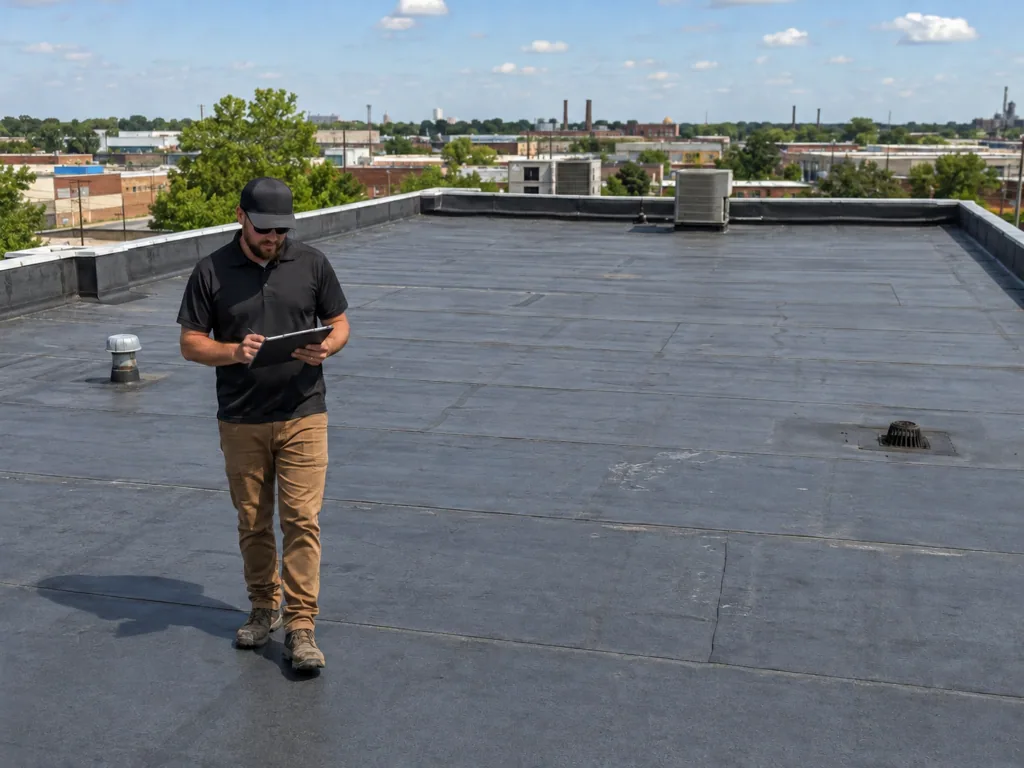
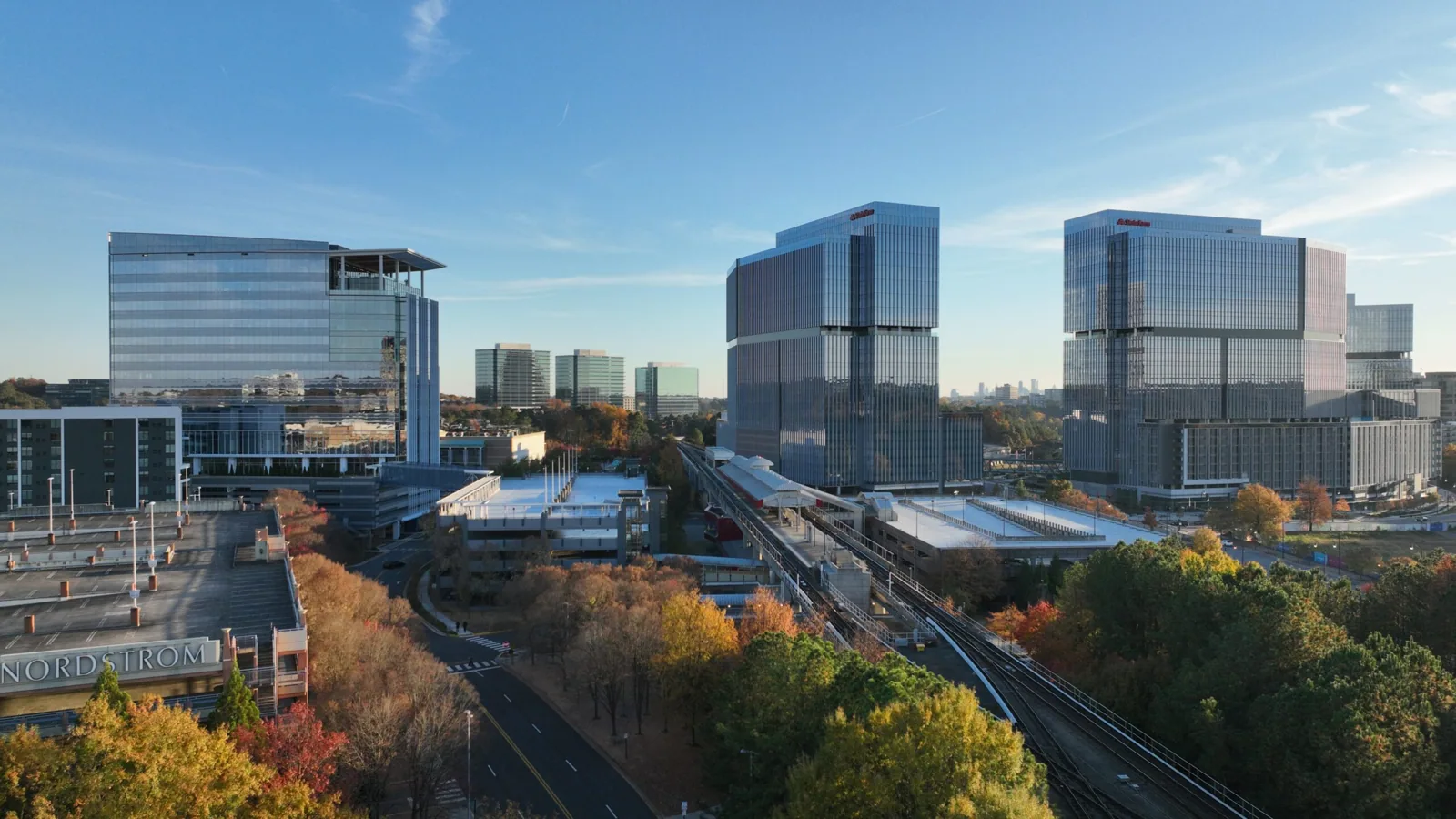
A Central Perimeter roof repair can affect a building’s occupied hours, access plan, and capital sequence. The district is Sandy Springs’ main daytime employment center, with a workforce that nearly doubles the city population during the workday. We begin with the roof section, leak history, assembly records, and approved access window, then separate immediate protection from planned renewal. The inspection identifies what is visible, what needs testing, and what remains out of reach. That gives an owner or property manager a scope boundary that can be coordinated with operations instead of an open-ended allowance. The district’s density informs timing, but the building’s actual tenant schedule and roof condition control the work plan.
Occupied hours and roof access
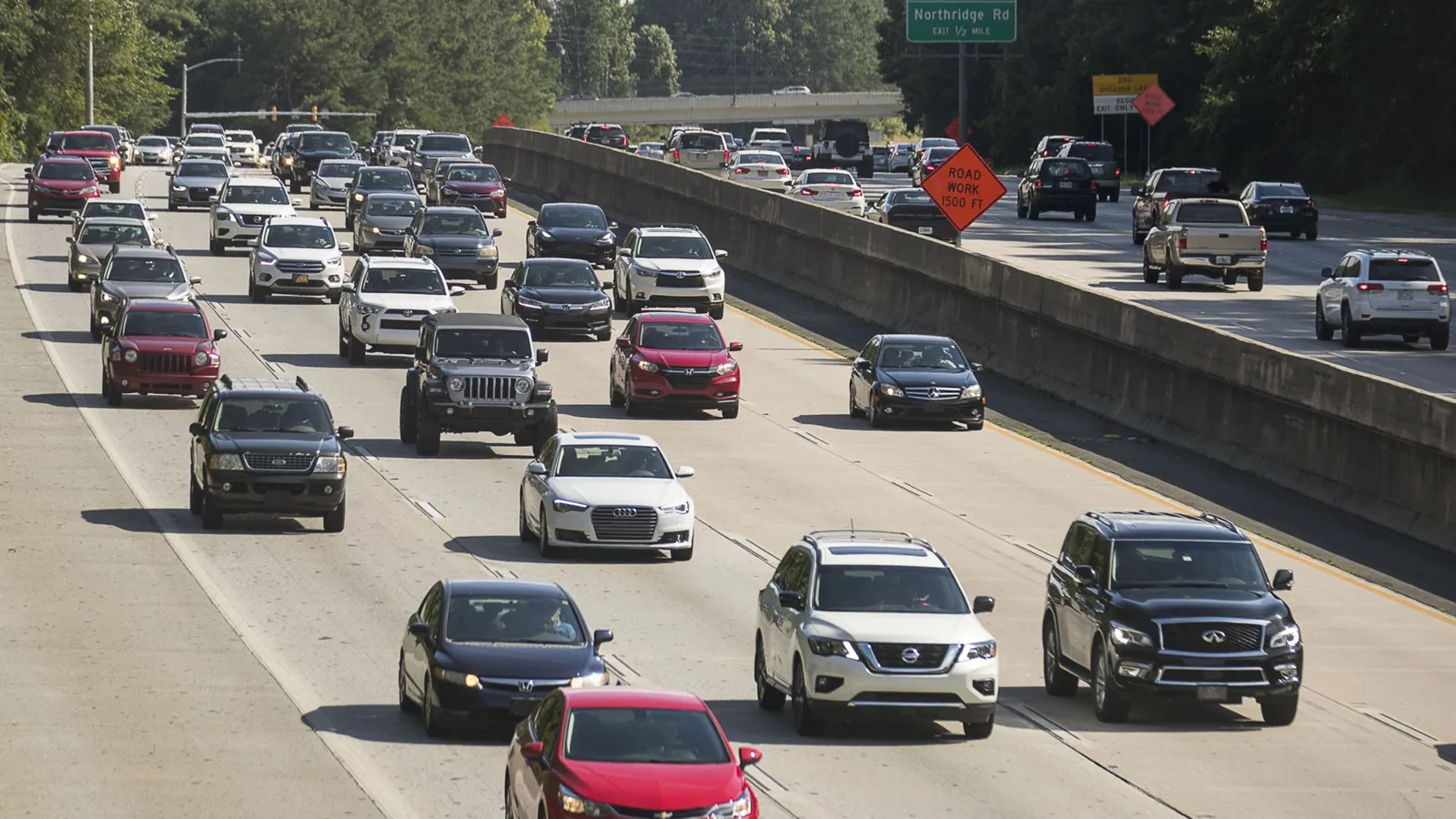
Four MARTA stations serve the district; road connections through I-285, Georgia 400, and I-75 link this employment area with the wider region. Those connections make delivery planning and site arrival relevant, but each property sets its own loading rules, gate access, and roof safety requirements. Before mobilization, confirm the roof hatch, escort needs, staging area, lift position, and tenant-notice period. The inspection report should identify roof zones that can be reached during the approved window and any area that needs a second visit.
For an occupied office property, daytime access may differ from equipment service hours or interior ceiling access. We ask which spaces remain active, whether a unit shutdown is possible, and who can approve temporary barriers. A phased work plan can divide larger work into sections with a daily closure point. If a property manager coordinates multiple suites, a portfolio roof review can keep each tenant report attached to the correct building and roof section.

From leak call to condition trend
A recurring leak near a ceiling does not set the repair boundary. We trace the reported location across seams, drains, curbs, edges, and changes in roof level, then compare it with prior repairs. A commercial roof inspection records the assembly, accessible areas, photographs, and limits of the visit. When moisture below the membrane could change removal quantities, a targeted test can establish what is wet and what remains unknown.
The Perimeter Center office market contains more than 123,000 workers and ranks among the Southeast’s largest Class A office markets. That scale makes consistent asset records useful, but it does not mean buildings share a roof system or failure history. We keep findings at building and roof-section level. The owner can then compare an active failure, a monitored condition, and a future capital candidate without carrying one building’s leak into the next property’s budget.
Drainage, edges, and penetrations
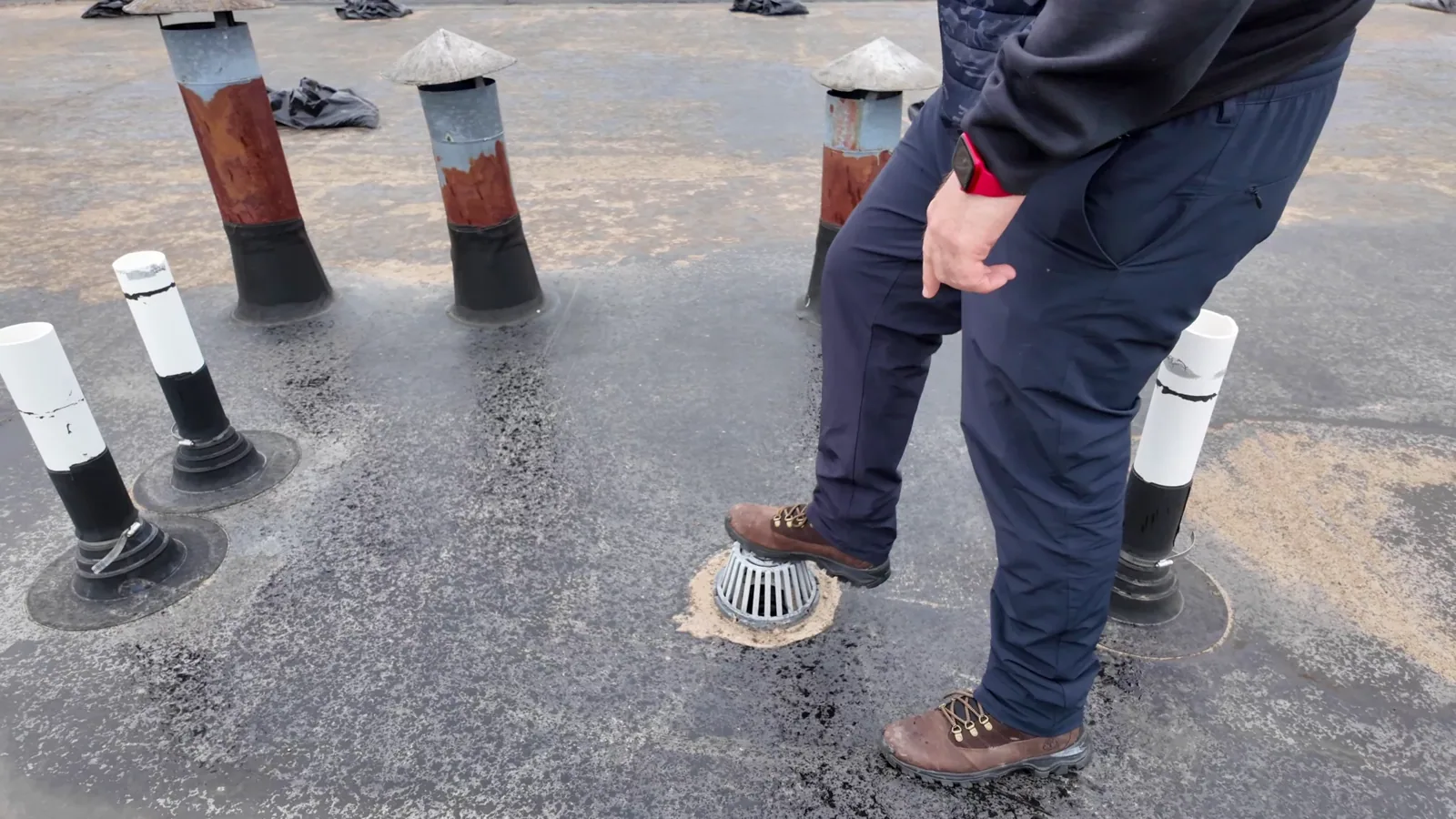
Frequent rain and humid summers make drainage and transitions important points on the first walk. We check drain strainers, sumps, scuppers, parapet edges, wall terminations, and penetrations for obstruction, movement, or prior patching. A drainage review maps the route from roof surface to outlet. If water remains after the outlet is clear, the inspection can test whether a low area, deflected deck, or wet insulation is involved.
Wind and hail can also affect exposed edges and rooftop equipment, but a regional storm record does not prove damage at a particular address. We document the actual movement, puncture, or separation and keep suspected conditions separate from confirmed ones. A storm repair assessment can organize roof findings and measured limits. Where a transition needs replacement, identify the wall or mechanical interface before another trade closes the area.
Work sequence and daily closure
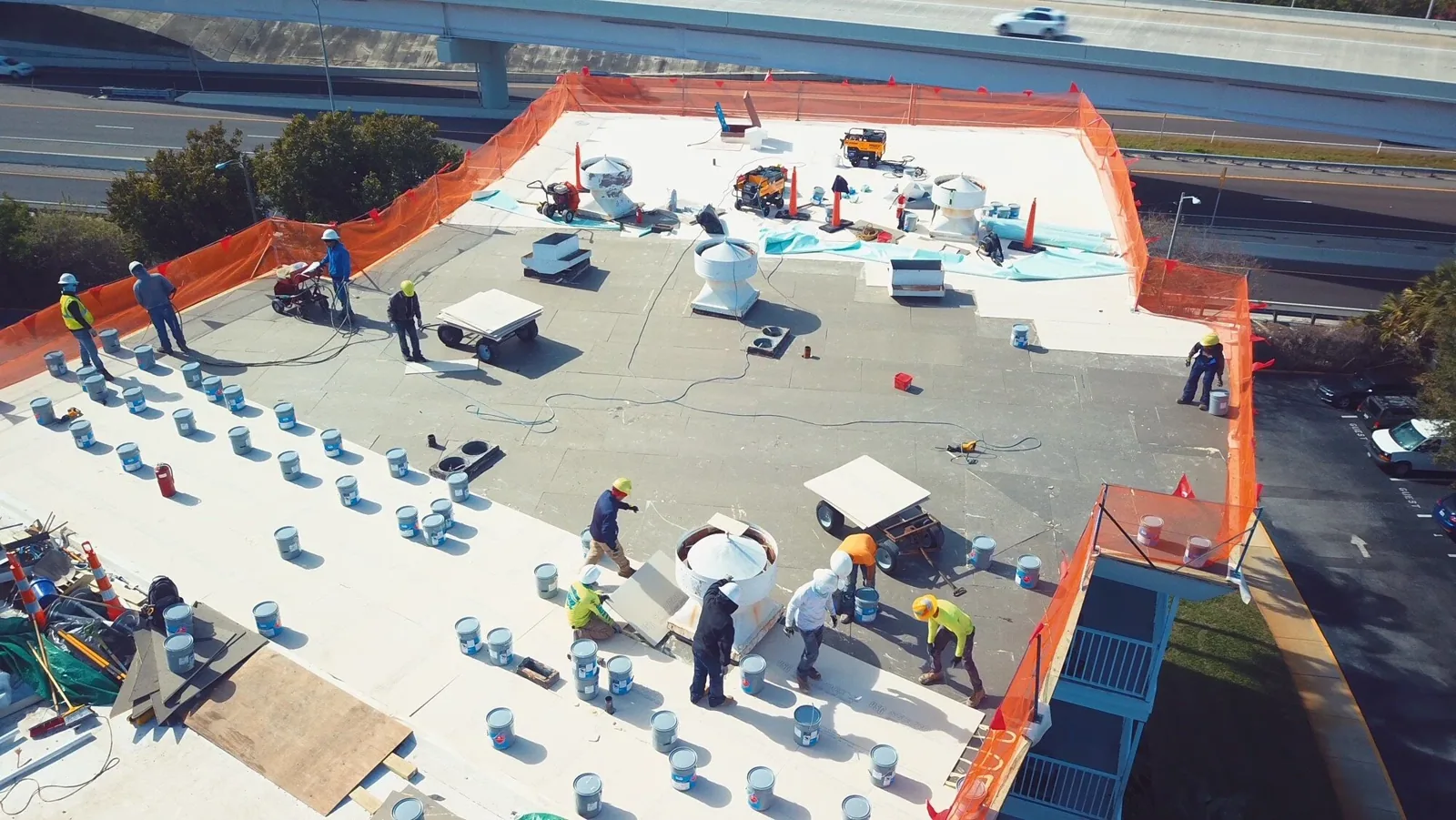
Project timing depends on how much roof can be safely opened and closed in one shift, material delivery, weather, and the owner’s access restrictions. We define the dry-in point, interior protection, and who receives a status update if removal exposes another layer. If the building cannot release a full roof zone, the sequence can focus on a smaller section and retain the remaining area for a later window. This limits open exposure while the owner reviews any concealed condition. For phased work, we also identify how each roof zone will be isolated, where materials can be staged without blocking drains, and which owner representative approves daily closure. If deliveries must pass through occupied areas, include that move in the schedule. The crew should leave a status that explains what is complete, what remains covered, and whether another trade can enter the section.
Central Perimeter’s connections to I-285, Georgia 400, and I-75 can inform route planning, but current traffic, loading access, and contractor rules must be confirmed with the site contact. A Perimeter District roofing review can compare market context while keeping the inspection property-specific. For a campus with active medical uses, an occupancy plan for healthcare facilities may need to coordinate roof access with clinical operations and facilities staff.
If the building has several roof elevations, set a separate inspection boundary and risk note for each rather than treating the whole asset as one condition. That distinction lets a facilities lead prioritize water entry, maintenance, and capital planning without asking finance to price a vague district-wide roof label.
Repair, restoration, or renewal
A localized repair can make sense when the surrounding membrane, attachment, and substrate support a sound tie-in. Repeated leaks, broad moisture, open seams across multiple zones, or deteriorated edges can shift the decision toward recover or replacement. We compare options against the same tested roof boundary and state which conditions support each scope. A replacement estimate should separate confirmed tear-off quantities from allowances for concealed material.
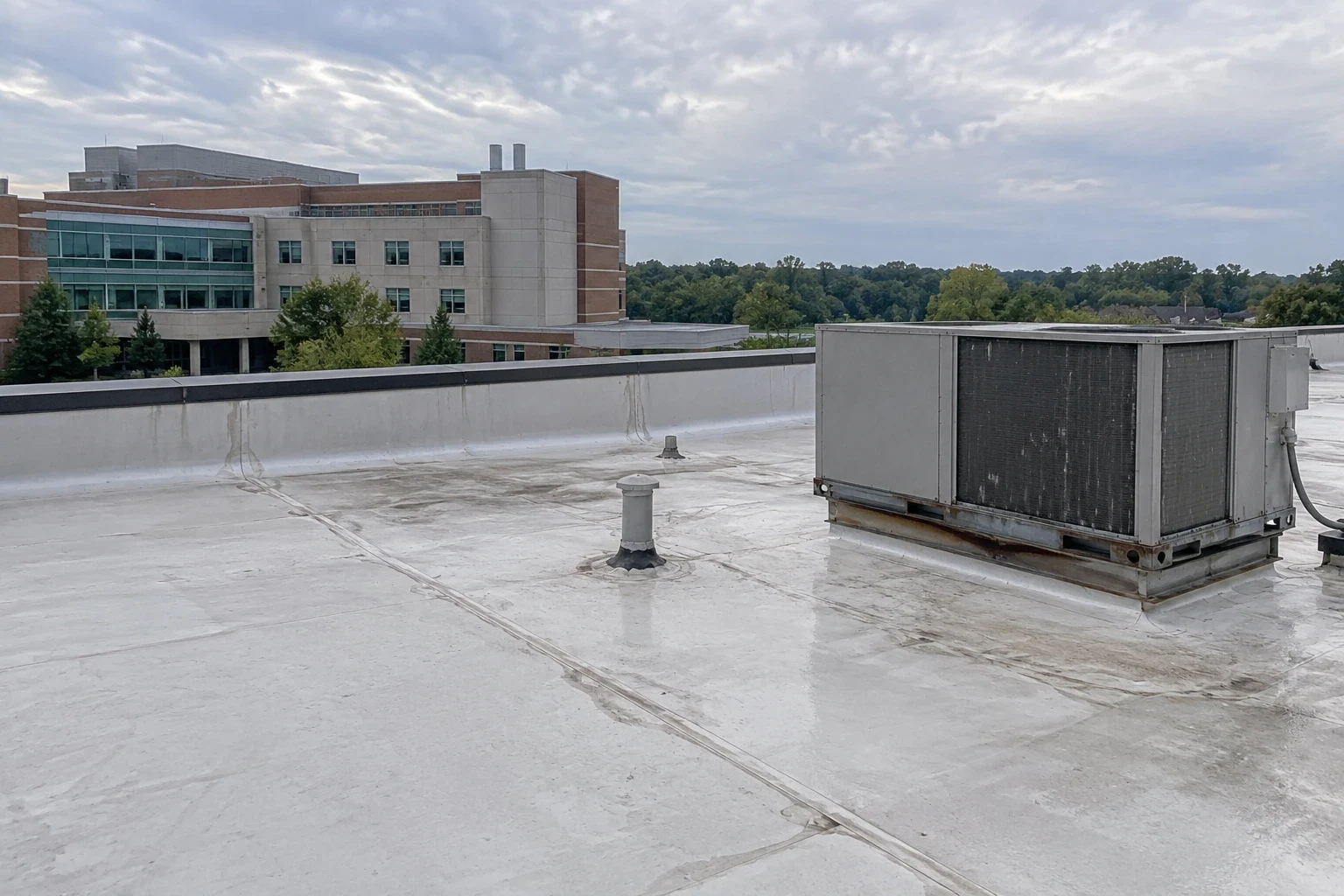
Cost and timing also depend on roof height, staging, disposal route, interior protection, and whether HVAC or electrical equipment must be moved. If those interfaces are not ready, schedule work around the responsible trade rather than leaving a curb open. A capital plan can place urgent protection, near-term repair, and broader renewal into different budget windows. The record should state what could change that priority, such as a test result or a new leak in another section.
A record the next reviewer can use
Closeout identifies the roof section, assembly when known, work performed, photographs, test locations, and any open item. Mark what was not inspected and why. If temporary protection remains, state who checks it and when permanent work is expected. The next reviewer should be able to compare the repaired detail with the original condition without relying on a verbal handoff.
A property in another Sandy Springs service area should receive its own access review and roof map. A separate location-specific roof assessment can use the same inspection fields while keeping its building-level findings distinct. Share roof ages, active leak areas, access requirements, and budget windows for a prioritized review.
Questions About Central Perimeter
Can roofing work be scheduled outside peak office hours?
We can plan around an approved access window when the crew, materials, and dry-in sequence support it. The property team confirms building restrictions before scheduling.
Does a leak in one Central Perimeter building indicate a portfolio problem?
No. We inspect each roof and keep its system, repair history, and test results separate before comparing asset priorities or setting a portfolio interval.
What should the first inspection cover?
We map the reported area, assembly, drains, edges, penetrations, access limits, and any roof section that needs testing before pricing broader work.
Which Central Perimeter condition trends justify setting a renewal year instead of funding another repair?
The decision changes when testing shows widespread moisture, repeated failures, weak attachment, or multiple sections that cannot accept a durable repair.
What information helps set the next budget window?
Provide roof plans, leak calls, prior repairs, access rules, tenant hours, and capital timing. We return prioritized findings with defined next actions.
Set a Central Perimeter roof review
Share roof ages, active leak areas, access requirements, tenant hours, and the budget window. We will return a prioritized inspection with defined next actions.
Call 555-555-5555 or send the building details.