Distribution Center Roofing in Sandy Springs, GA
A missed dispatch window can make roof access costly, so the work plan has to fit truck turns, dock activity, and the space below. A leak above sorting equipment or stored goods can create a larger operational issue than the membrane opening suggests. We map the affected roof section, inspect drainage and equipment details, and separate immediate protection from work that can enter the next capital window. Sandy Springs' frequent rain and humid summer heat make that timing a recurring asset decision.
Keep docks and roof access in sequence
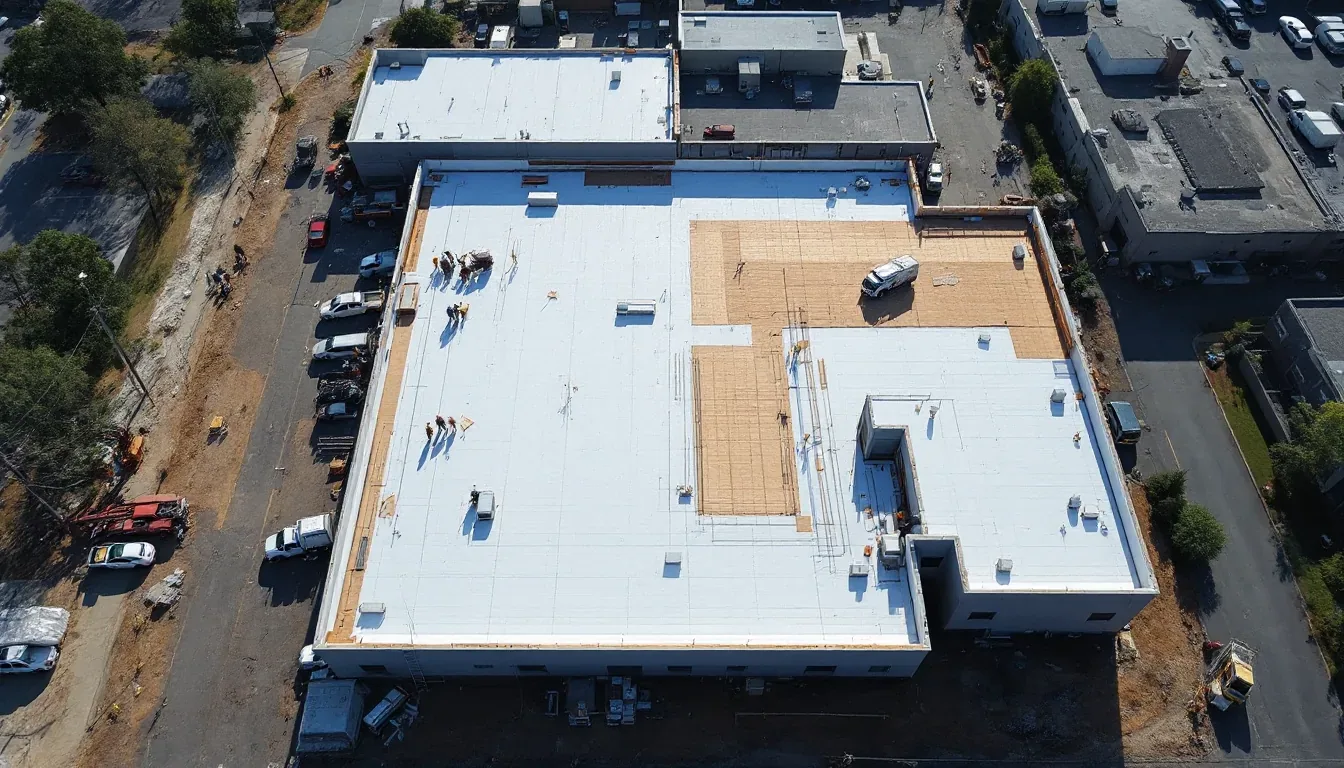
Before mobilization, the owner identifies peak receiving periods, trailer movement, loading doors, security controls, and any area that cannot be blocked. We place lifts and material staging around those limits, then define the roof area that can be opened and closed during a shift. If a repair crosses a conveyor, exhaust, or service route, the work plan names who clears access and when equipment can return to use.
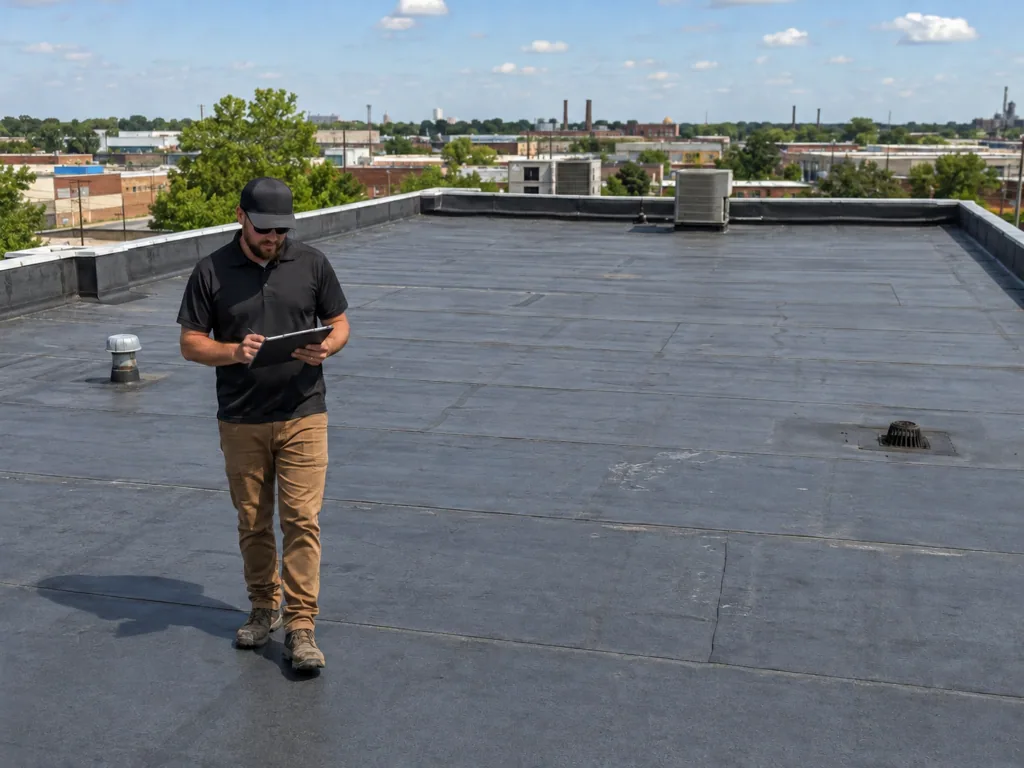
The Marietta-Cobb Industrial Park includes distribution, flex, manufacturing, service, and warehouse properties. That mix makes the district relevant to regional logistics, while each site still sets its own gate and dock procedures. A phased roof sequence can coordinate multiple work zones. A roof inspection records the assembly, penetrations, drains, and areas reached before the owner approves that sequence.
Where the distribution building serves several tenant or operating groups, the roof map should identify which area lies below each section. That lets the facility team prioritize protection and communicate a closure without assigning a leak to the nearest visible seam.
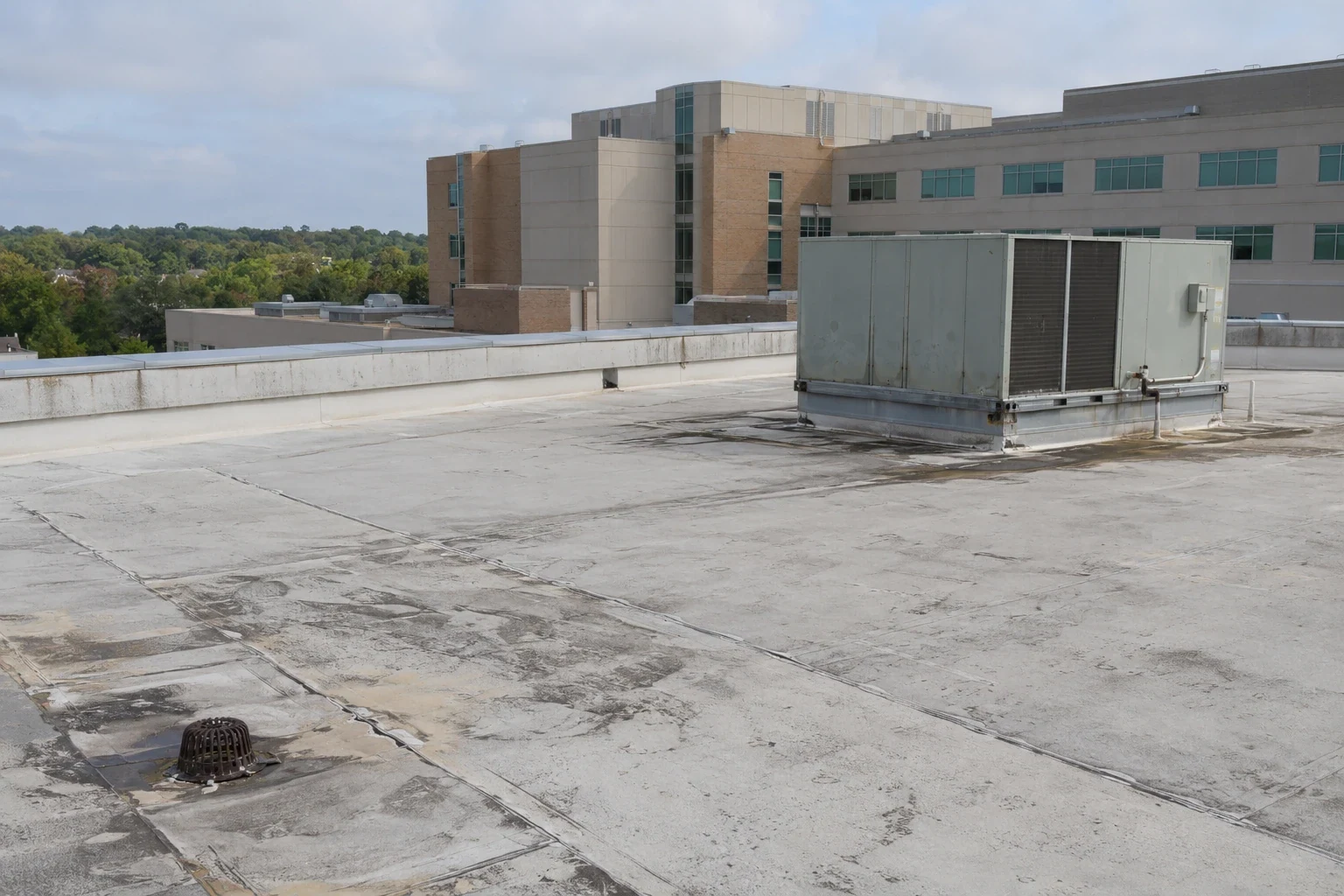
Separate an isolated leak from a roof trend
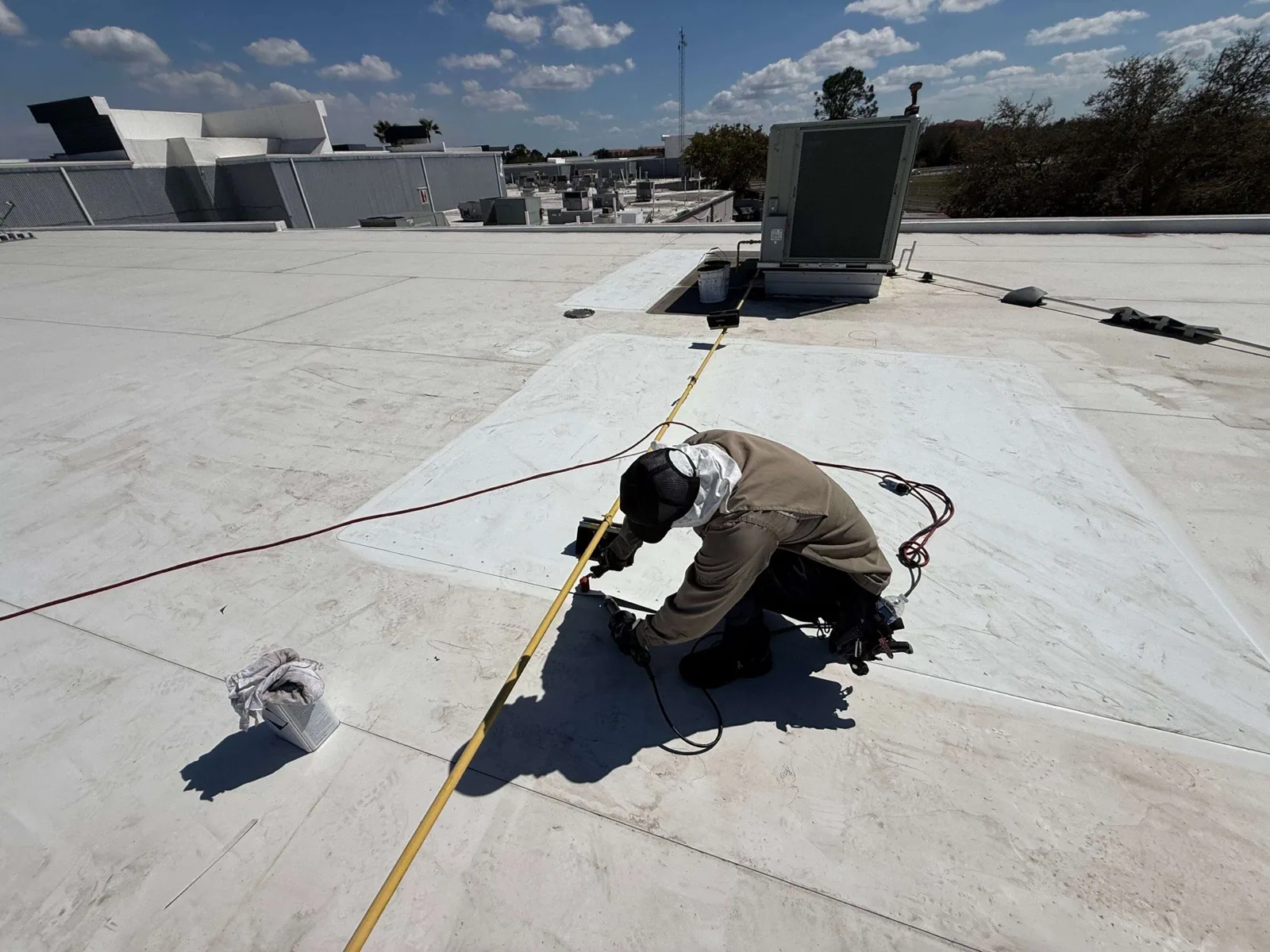
Water entering above a conveyor or rack may move along insulation, a deck flute, or a wall before it appears indoors. We compare the reported location and timing with roof slope, field seams, drains, curbs, and prior repairs. If an interior condition repeats after cleaning, we inspect the outlet and adjacent membrane again. One leak report does not establish whether the assembly is dry beyond the tested area.
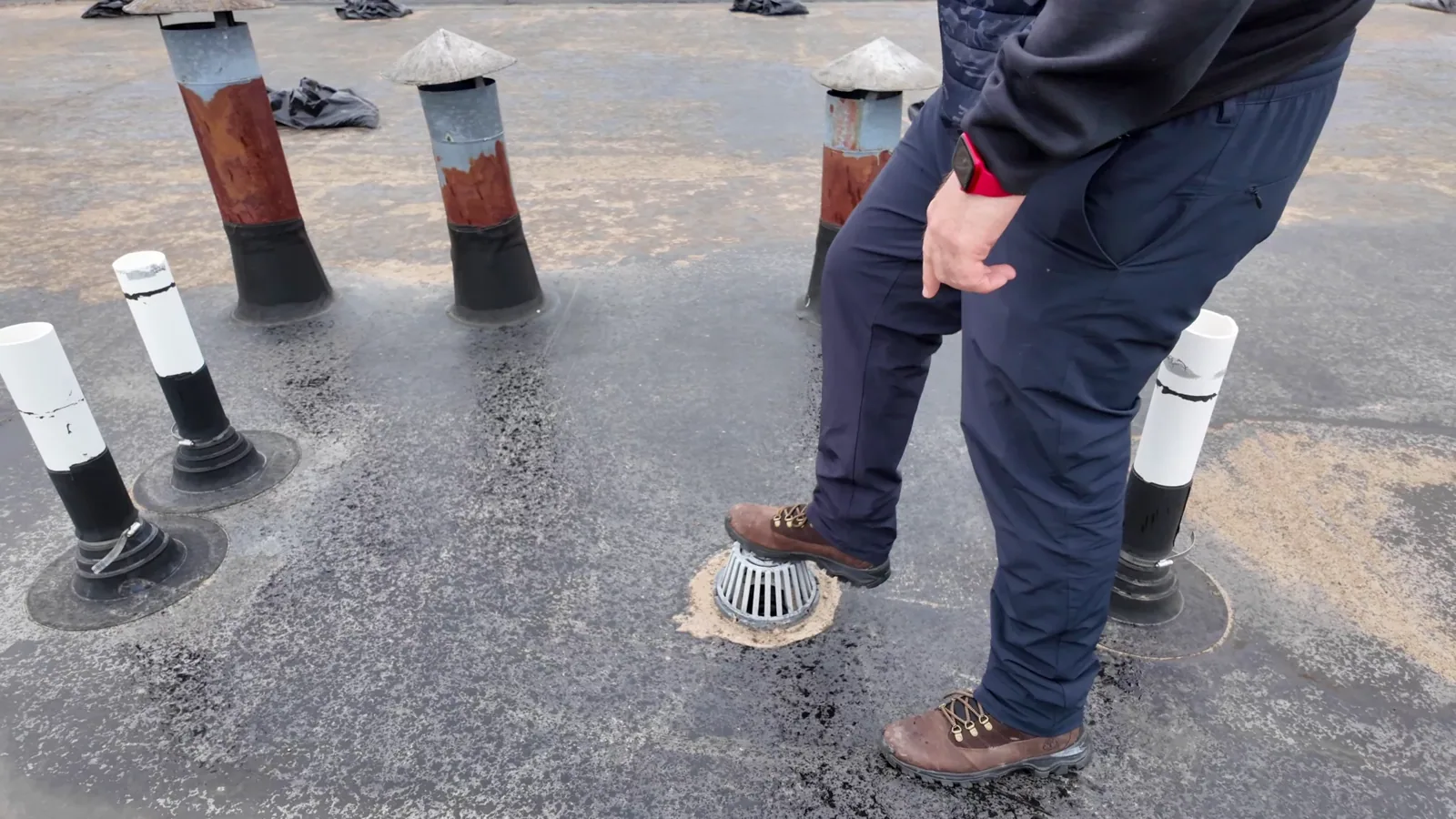
Frequent winter and early-spring rain in the Atlanta area can keep a weak lap or failed drain detail exposed between inspection visits. A drainage check follows the water route through the bowl, overflow, and visible discharge. If moisture may extend beneath the sheet, a controlled opening or moisture survey can help choose the next test, with results tied to the zone inspected.
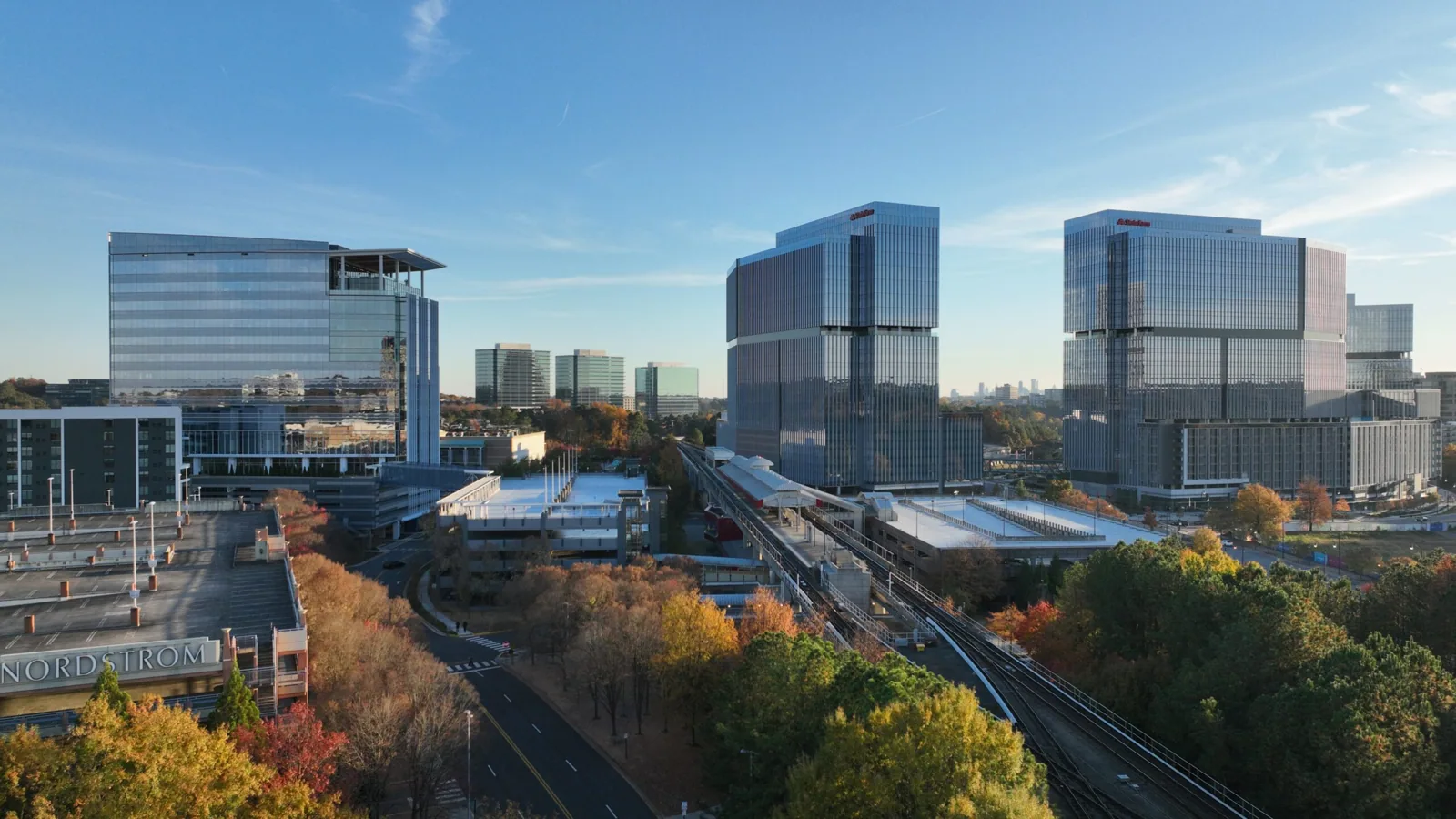
The Perimeter office market is a regional employment center with more than 123,000 workers and four MARTA stations. For a property near the Perimeter District, access planning may need tenant and building-security coordination. Those local operating conditions affect the visit schedule; they do not identify the roof assembly or cause of a leak.
Before a shift begins, we confirm which conveyor lines, dock doors, and interior aisles remain active. If a roof opening sits above a sorting lane, the facility may need to move product or pause that route while protection is installed. We keep the open area small enough to secure before the next weather change. The closeout identifies the covered zone, the route released for use, and any test or repair still awaiting owner direction. This ties the roof sequence to dispatch rather than leaving operations to infer where work stopped. We also identify the contact who releases each affected aisle after the daily closeout.
Inspect equipment, seams, and drainage together
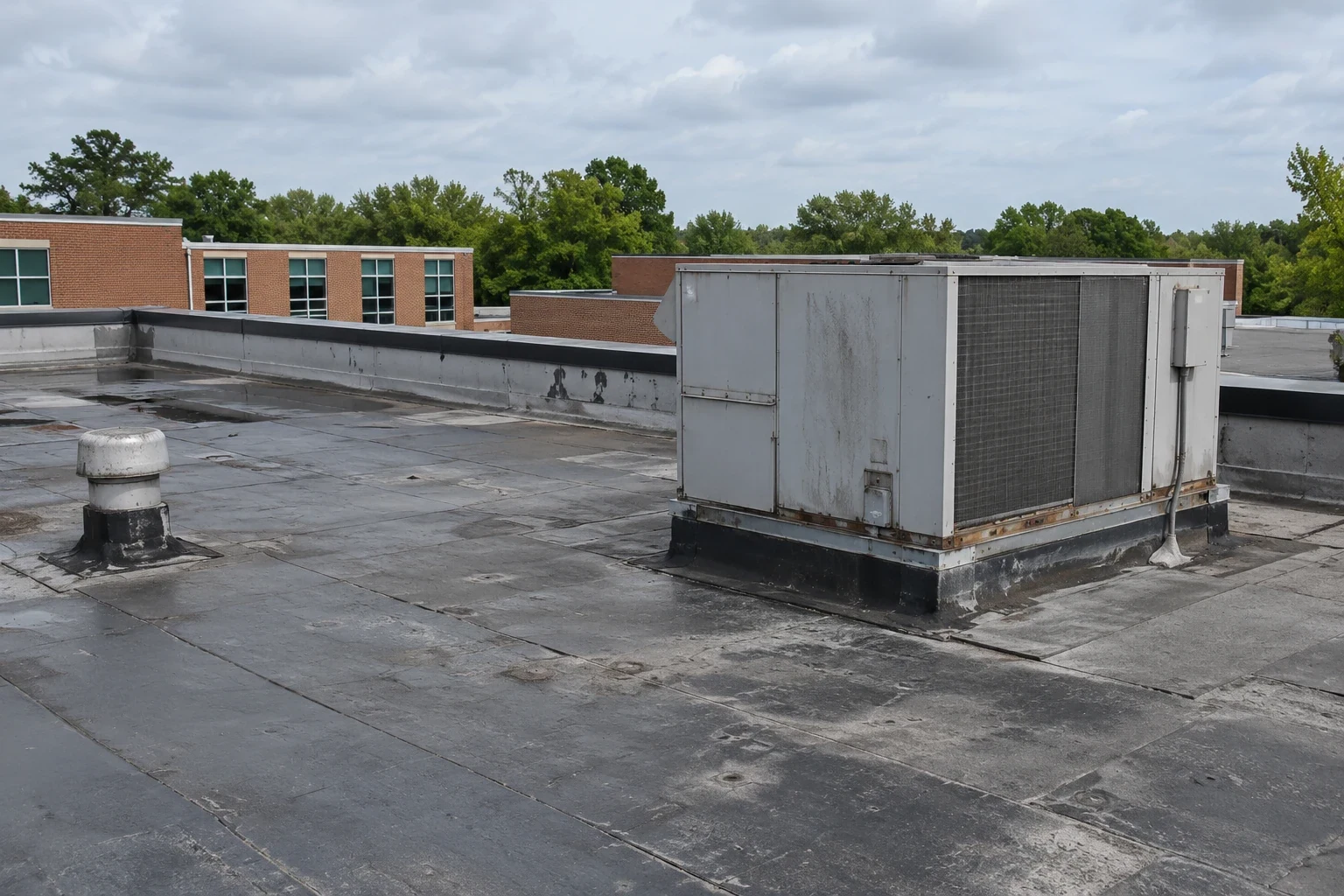
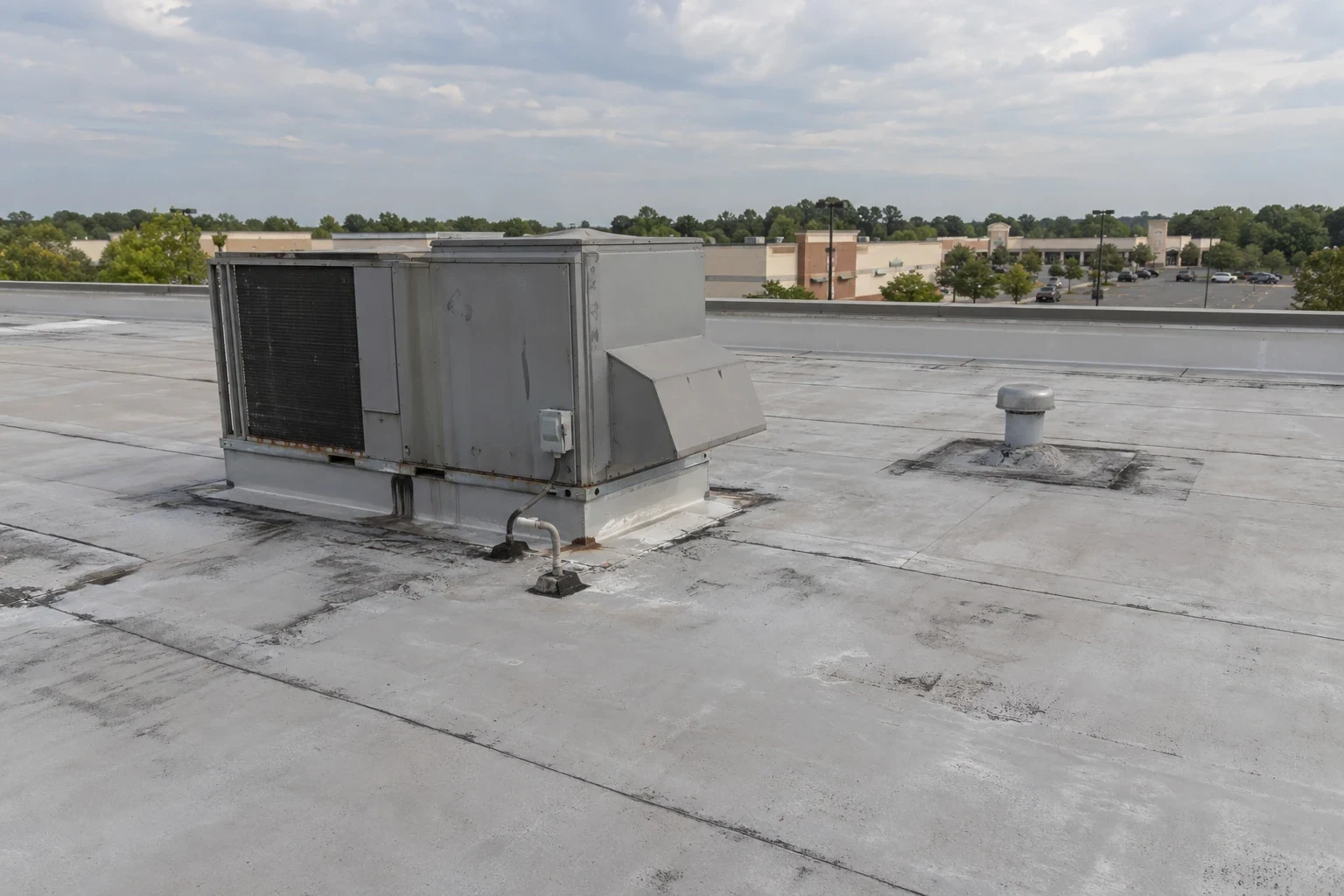
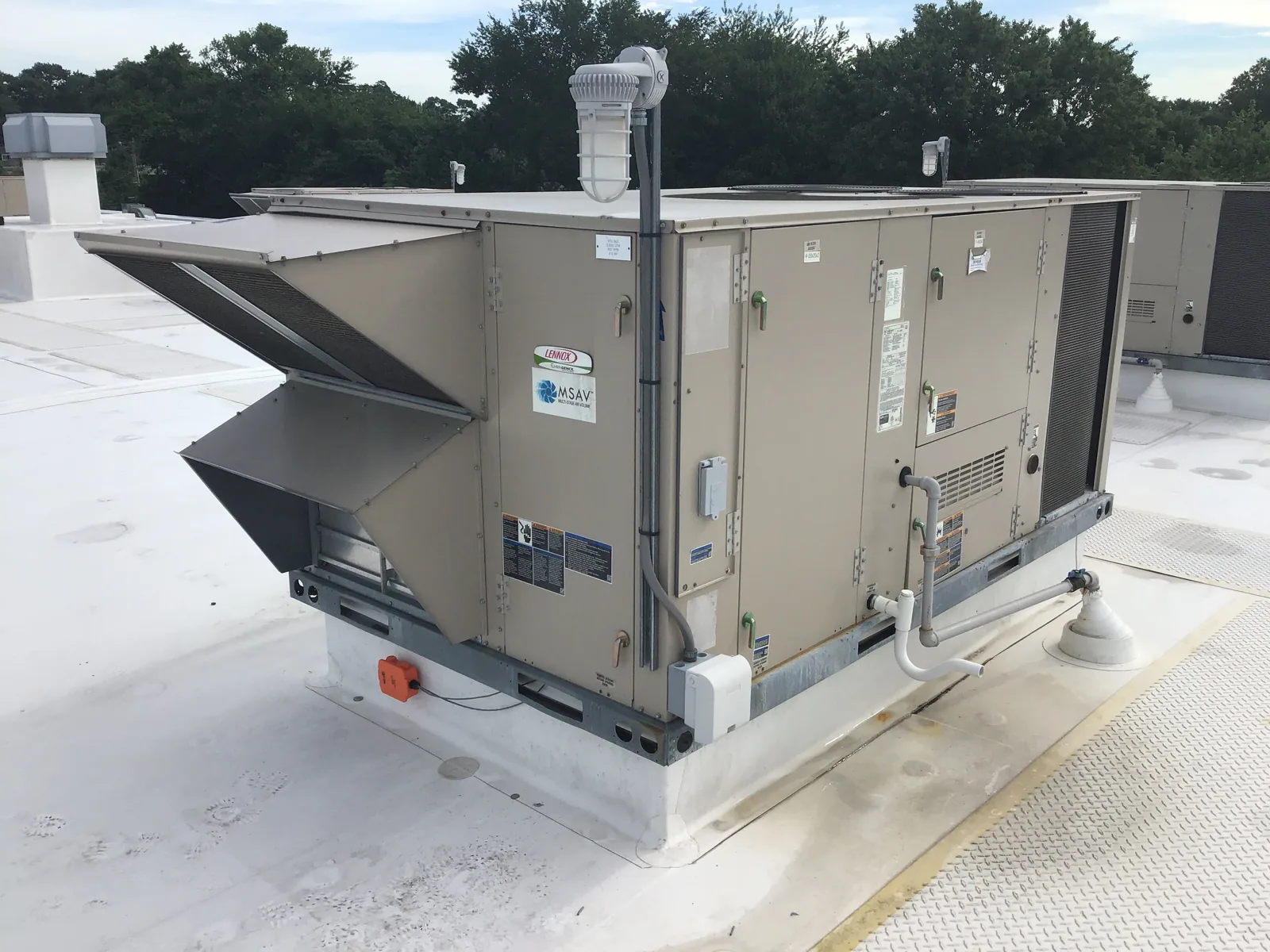
Sortation systems, rooftop units, exhausts, and later equipment additions can create concentrated flashing and service points. We inspect curb corners, pipe boots, abandoned supports, seam transitions, edge metal, and walkway paths. A technician may have changed a penetration without altering the surrounding sheet; the closeout record should show what was opened and how the flashing was restored. We compare those changes with the leak history before including repair quantities.
Sandy Springs’ hot, humid summers can raise roof-surface temperatures and narrow comfortable access periods. We schedule testing and installation by actual roof conditions and product requirements. If an area cannot be prepared and closed within the window, the crew secures it and resumes when conditions allow.
A curb and equipment review can identify connections that need another trade. Where a localized membrane failure is confirmed, a repair scope defines the tie-in and closure. That distinction keeps an equipment coordination issue from being priced as membrane work without evidence.
Compare throughput impact with renewal cost
Repair cost depends on the roof system, access, number of details, staging, removal depth, and protection below the work. A narrow repair may be economical when the surrounding assembly remains stable. Repeated openings, wet insulation across several zones, or loose attachment can make recurring mobilization more expensive than planned renewal. We compare actual findings and repair history with the next budget year before assigning a portfolio interval.
The scope should state which roof zones are included, how the building remains protected during each shift, and how hidden conditions affect quantities. If testing changes the removal boundary, the owner receives the revised area before work expands. A replacement review can compare tear-off, recover, and phased installation. A capital plan can place that decision beside other buildings without treating every roof as equally urgent.
When a facility includes temperature-controlled storage, a cold-storage roof review can account for different interior conditions and continuity needs. A warehouse assessment can focus on inventory protection and rack access. The actual assembly and operating plan determine which scope applies.
Preserve a usable operating record
Closeout should include the roof plan, test locations, photographs, repairs, equipment changes, drainage observations, and any zone not reached. Mark the daily boundary and temporary measures so a later crew can distinguish completed work from open exposure. If another trade returns to the roof, update the map after its penetration or equipment work. The owner can then compare the next inspection with a real condition trend.
For multiple distribution assets, the portfolio program can group inspections by access window and budget year while keeping each building's findings separate. Share roof ages, active leaks, dock restrictions, maintenance history, and the capital window. We will return a prioritized review that identifies immediate protection, repair candidates, and renewal decisions.
Dock activity can change by shift, carrier, and season, so the roof visit should be coordinated with the operations lead rather than set from a general calendar. We map safe ladder and lift access, protect pedestrian routes, and keep staging clear of trailer movements. If a leak appears near a shipping or sorting area, the inspection record should identify the roof zone and interior impact separately; that gives facilities a practical repair target without interrupting more of the operation than necessary.
Questions About Distribution Center Roofing
Can roof work continue while trucks use the docks?
The work zone and dock plan determine whether both can operate. We coordinate lift placement, material delivery, emergency access, and daily roof closure with the site contact.
How do you trace a leak above conveyor equipment?
We compare the interior location and timing with roof sections, drains, seams, curbs, and prior repairs. Water can travel before appearing below, so the opening is confirmed at the roof before repair quantities are set.
What will a moisture survey add to a Sandy Springs distribution-center roof plan?
It can identify areas for closer testing, but a survey does not verify every concealed layer. We map readings and use a controlled opening when material condition could change the scope.
When does repeated repair justify a renewal study?
Several roof zones with recurring openings, wet insulation, or attachment problems can shift the comparison toward planned replacement. We use test results, access costs, and repair history to set that decision.
How should a distribution roof be documented after repair?
Keep the roof map, repair boundary, photos, materials, drain findings, equipment changes, and areas not reached. The record helps the next crew protect dispatch and receiving operations.
Set the next distribution roof action
Share roof ages, leak areas, dock restrictions, access requirements, and the budget window. We will prioritize protection, repair, and renewal by roof section.
Call 555-555-5555 or send the building details.