Commercial Roofing in Sandy Springs Medical District, Sandy Springs, GA
Roof work in the Sandy Springs Medical District starts with the operating calendar as well as the condition record. Northside Hospital is one of the major healthcare institutions in this district, which also includes thousands of medical professionals. We inspect the roof by section, document access and service constraints with the facility contact, then rank immediate repairs against planned renewal. For each medical building, we confirm the roof assembly, work boundary, and access requirements with its facilities contact.
Access and occupied hours
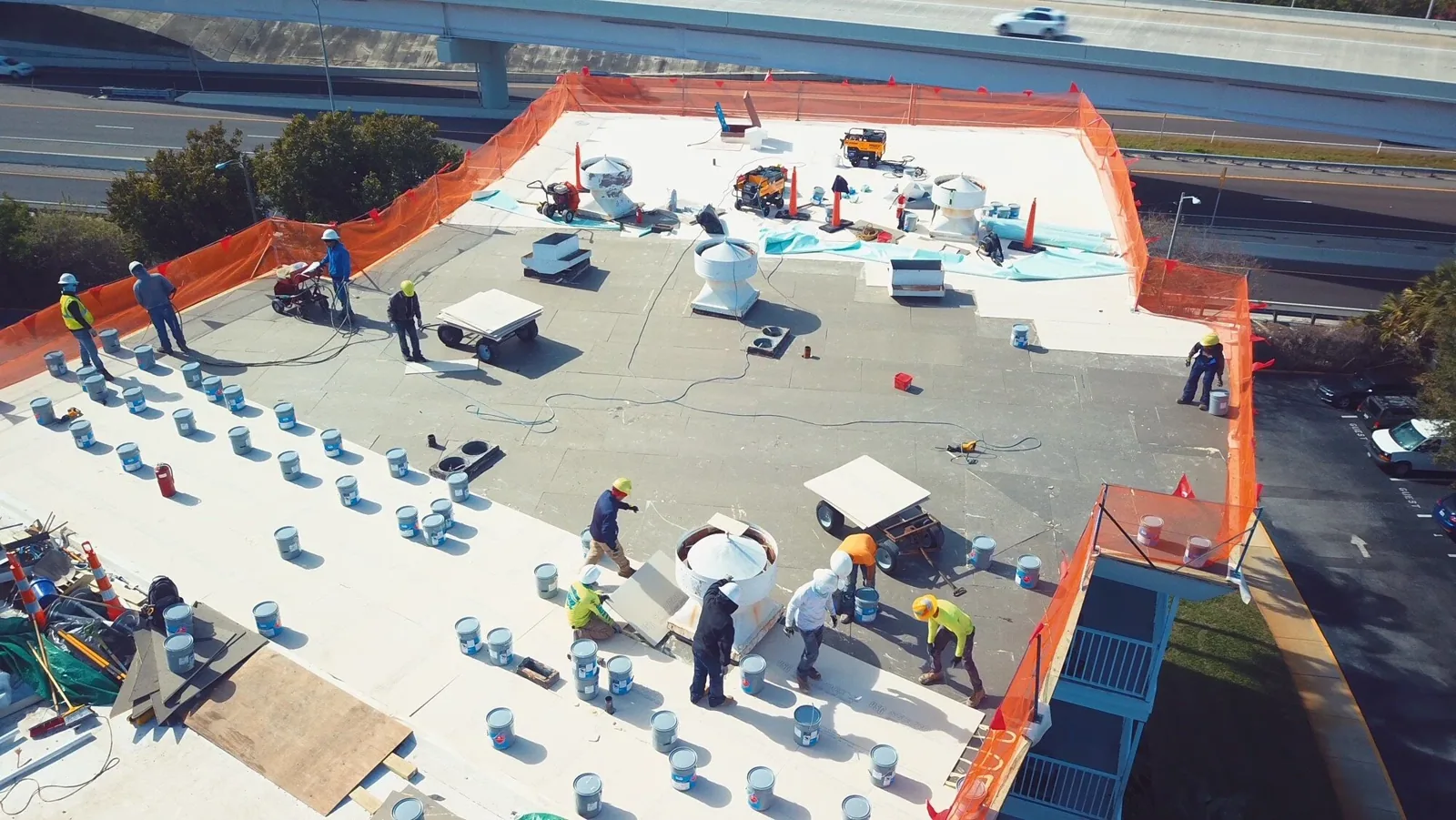
A facility can remain in operation while work proceeds above it, but the access plan has to come from the building team. We confirm roof entry, escorts, material routes, restricted areas, equipment dependencies, and hours when noise or vibration needs added coordination. If a lift or hoist is required, define its location and the ground area it will affect. This information belongs beside the roof plan so the estimate reflects the actual work window, not a generic assumption about a medical campus.
At Peachtree-Dunwoody Road and Lake Hearn Drive, the Medical Center rail stop connects the district to the Red Line. The Red Line serves the district, and the facilities contact confirms vehicle staging, roof entry, and delivery timing for each property. A Central Perimeter roof review can involve different office access patterns, while a phased occupied-building plan divides the work into areas that can be prepared, completed, and secured within approved hours.
We list who approves shutdowns, how emergency access remains open, and where materials may be staged. Rooftop equipment may serve clinical or building operations, so the owner’s facilities staff identifies any unit that cannot be interrupted. The field scope then names the protection and coordination steps rather than assuming equipment can be moved or shut down.
Condition evidence by roof section
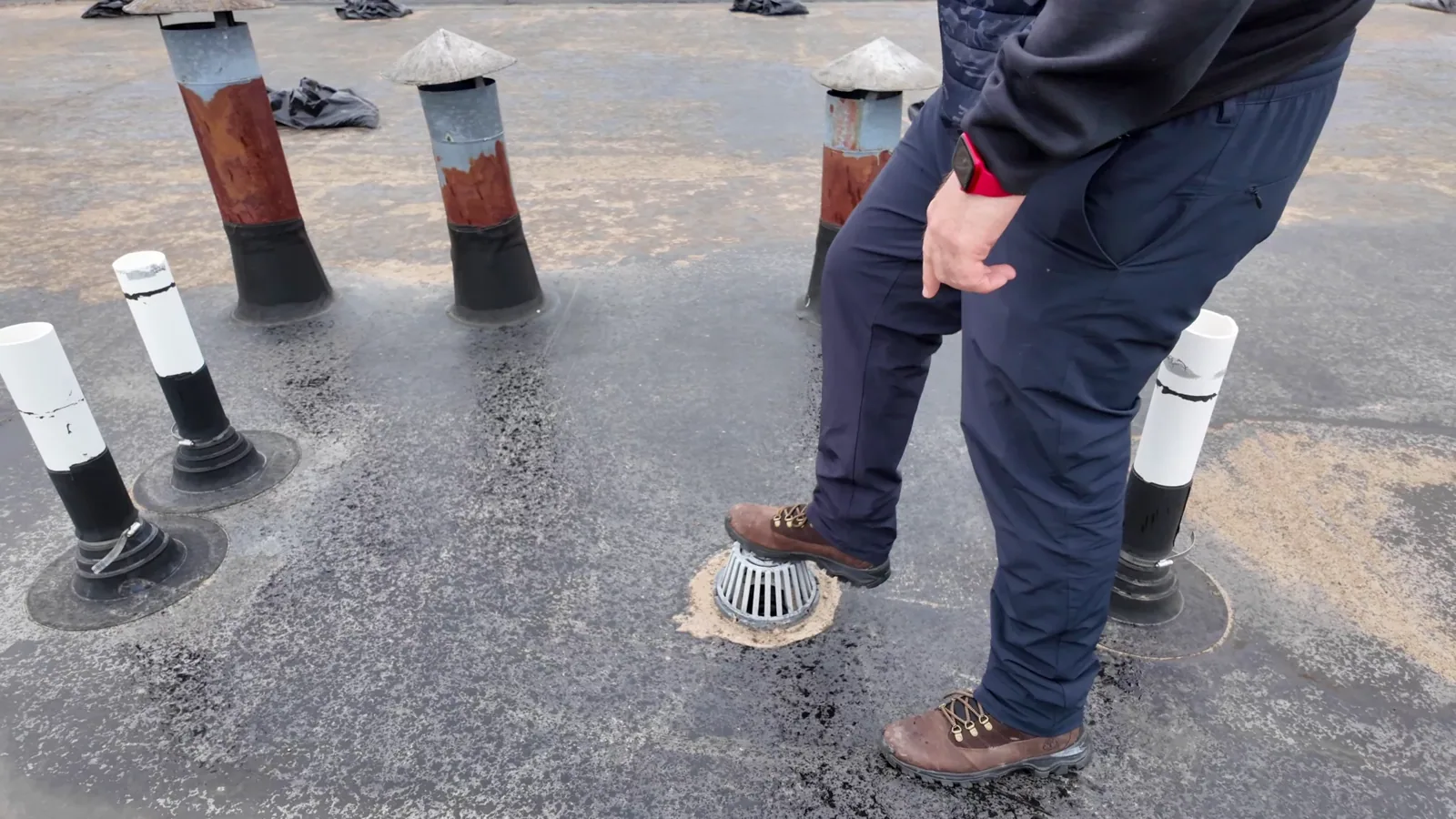
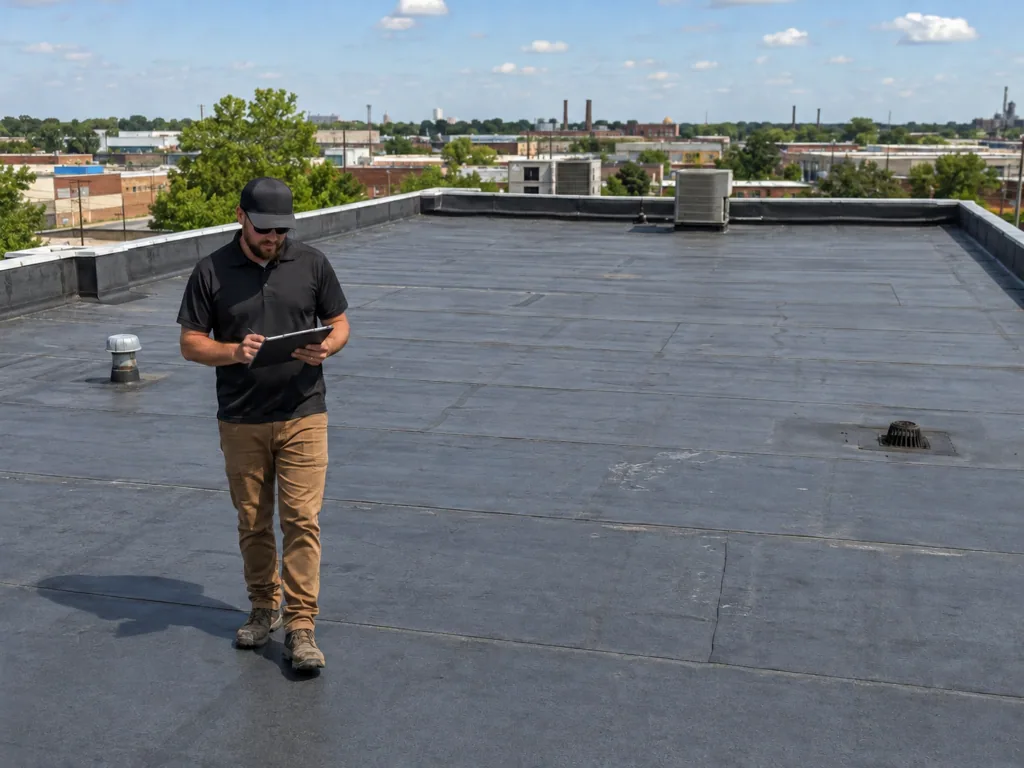
Before assigning a repair boundary, map reported leaks against drains, penetrations, expansion joints, roof edges, and the building plan. The stain inside may be separate from the point where water entered. We document membrane seams, flashing, low areas, edge metal, and visible repair history, then distinguish confirmed moisture from locations that need testing. Photographs should show the detail and its roof-zone label so ownership can compare the next visit with the same condition.
Hot, humid summers and frequent rain in Sandy Springs make drainage and transition details useful review points. Hot, humid summers and frequent rain in Sandy Springs put drain and transition details into regular review. We check drains and scuppers, record water that remains after rain when conditions allow, and note whether an outlet was restricted. A drainage inspection can separate routine cleaning from a low-slope or assembly question. We use seasonal exposure to prioritize drain and flashing checks, then set repair limits from conditions observed on that building.
When readings suggest moisture below the membrane, we identify test locations and methods. A reading can focus an investigation; it does not establish concealed material conditions across an untested area. If a test opening would change repair versus replacement, obtain approval before the final scope is set. The owner receives the result, the limits, and the next decision in plain terms.
Storm record and immediate repairs
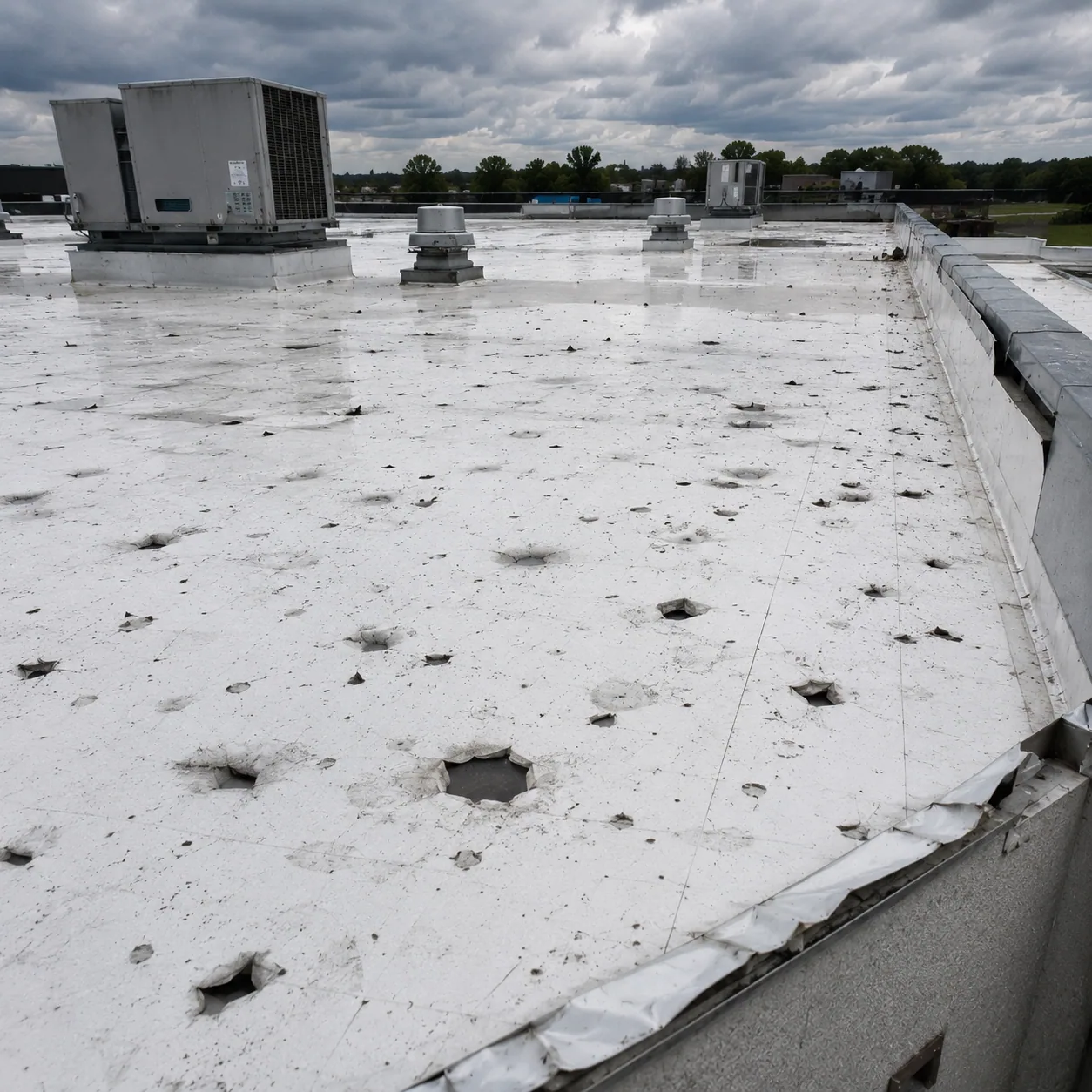
After a reported hail or wind event, inspect the roof area actually exposed and document punctures, displaced edge metal, open seams, and damaged flashing. We compare the storm date with the roof map, reported leaks, and visible conditions before setting a repair boundary. We photograph observed conditions, list inaccessible areas, and connect each finding with its location and repair option. A hail damage assessment can separate confirmed impacts from age-related wear or unrelated maintenance needs.
A localized seam, puncture, or loose flashing may be repaired when the material around it remains sound and the layer below can support the work. We identify preparation, repair materials, and what remains beyond the boundary. If a failure repeats around several curbs or moisture is broad, widen the inspection before committing to a string of patches. A commercial roof inspection can establish that condition map before a project is priced.
Temporary protection is a separate action from permanent correction. If active water is threatening interior space, isolate the entry area where possible and arrange an appropriate stabilization visit. Record temporary materials, date, and follow-up needs so a short-term measure does not disappear from the maintenance file. Permanent work can then be sequenced around the facility’s operating requirements and weather exposure.
Repair, recover, or replace
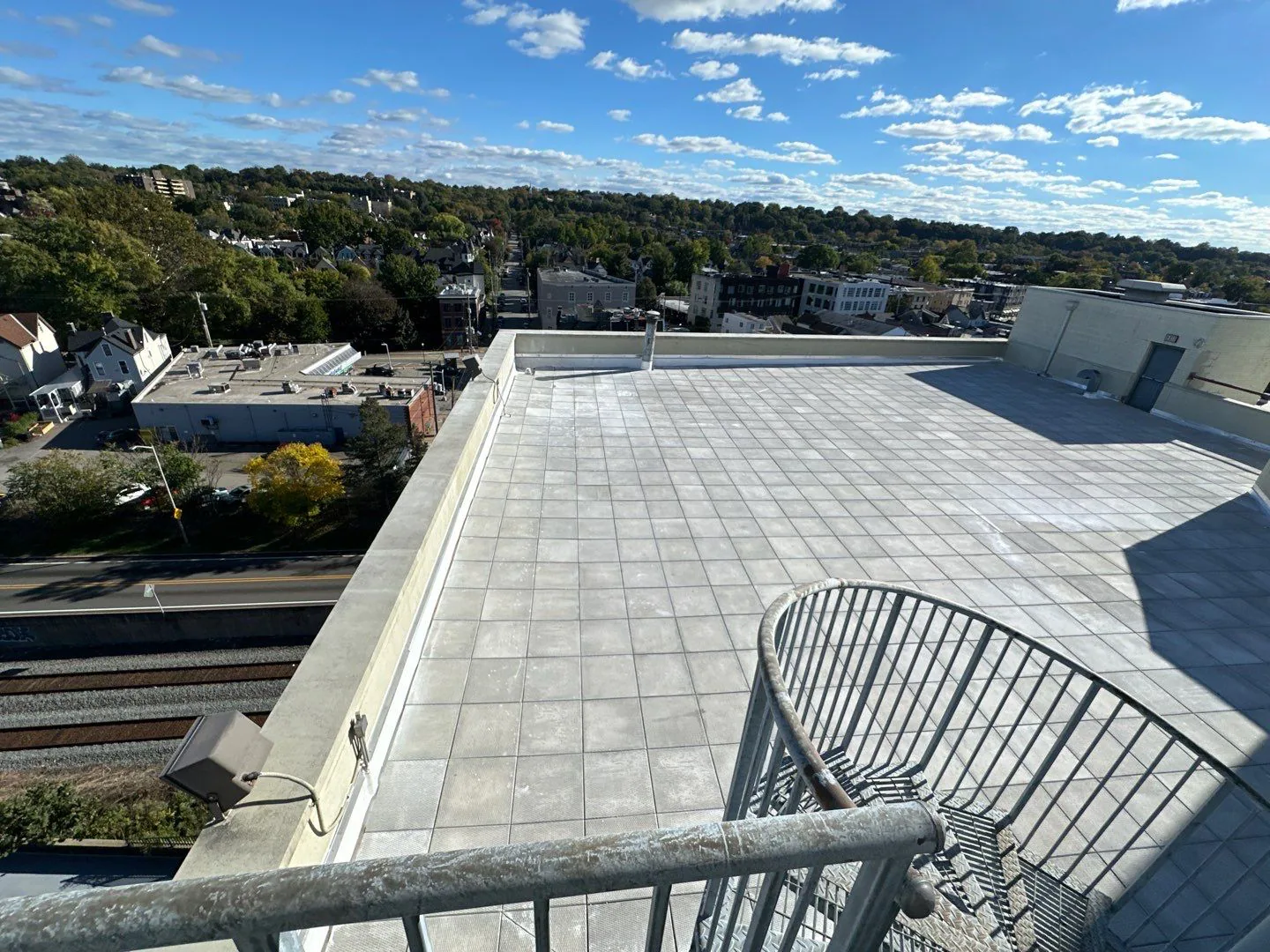
Repair suits a bounded defect when the surrounding membrane and substrate support a compatible tie-in. A recover adds a layer only if the existing assembly, attachment, moisture, drainage height, and applicable code conditions allow it. Tear-off provides access to concealed layers but changes debris handling, staging, noise, and duration. We compare those paths using the same roof-zone map and state which unknown findings could alter quantities or sequence. A recover feasibility review should use confirmed assembly details, not an assumed layer count.
Georgia’s adopted construction requirements affect reroof details; identify the proposed assembly, insulation, and permit questions for the project reviewer before approval. Existing insulation, deck, fire requirements, perimeter securement, drainage, and roof height can all affect the replacement scope. We identify which design questions need confirmation before material quantities or tie-in details are finalized. The proposal separates field observations from requirements that must be resolved during design.
A project in a healthcare district also needs defined work boundaries and closeout points. Each day should end with the exposed area secured, roof access controlled, and any equipment or service impact communicated to the designated contact. A hospital roof scope can help structure those considerations, while a property in City Springs may have different event and civic scheduling constraints. Neither setting changes the need to verify the roof itself.
Budget timing and closeout record
Cost and timing follow removal depth, wet insulation, deck work, edge height, equipment coordination, access, and the amount of occupied space affected. Keep immediate protection separate from capital renewal so a leak response does not become an unexamined long-term plan. We rank each roof section by documented condition, deferred exposure, operational consequence, and the available budget year. The owner can then see which actions are urgent and which require more investigation before pricing.
Closeout should include the roof-zone map, material and detail repaired, photographs, moisture findings, drain observations, and any approved scope changes. An open test question or inaccessible section stays visible in the record. A roof condition report gives facilities and ownership a consistent basis for setting the next portfolio interval, even when different buildings in the district have different systems.
Share roof plans, active leak areas, repair history, access procedures, equipment constraints, and the budget window. We will inspect the building, separate confirmed conditions from open questions, and return prioritized actions with defined next steps. The recommendation should work for that facility’s roof and operations, not simply repeat a district-wide schedule.

Questions About Sandy Springs Medical District
How do you schedule roofing around medical operations?
The facility contact sets access, safety, noise, service, and equipment requirements. We divide the scope into roof sections with clear daily closures and coordinate staging around the approved work window.
Can you tell whether a hospital roof is wet without opening it?
Some survey methods help locate areas for confirmation, but no surface reading establishes every concealed layer. We identify readings, limits, and test locations, then open the assembly where the result affects the repair or replacement choice.
What should follow a storm report in the Medical District?
Inspect accessible roof sections, photograph actual impacts, and label areas that could not be reached. We compare the findings with leak reports and repair history before defining temporary protection or permanent work.
When does a local repair become a capital project?
Repeated failures, widespread moisture, deteriorated attachment, or multiple roof zones needing work can shift the decision to recover or replacement. We map that evidence and identify the test or design question that could change the budget.
Which records are useful after a medical facility roof repair?
Keep the affected zone, repair detail, photographs, moisture results, access limits, and follow-up date together. That lets the next facilities review compare the same area without reopening an old scope question.

Set the next Medical District roof action
Share roof plans, leak areas, repair records, access procedures, equipment constraints, and budget timing. We will return a prioritized review by roof section.
Call 555-555-5555 or send the building details.