Commercial Roof Repair in Sandy Springs, GA
A repair ticket should identify more than the room where water appeared. We trace the water path, inspect the roof assembly, and set a boundary that can be tested and closed before the next weather window. The decision may be a seam weld, flashing repair, drain correction, or a wider section of membrane. In Sandy Springs, frequent rain and humid summer heat make deferred exposure a budget concern, but the repair still follows the material and condition found on the specific building.
Repair Condition
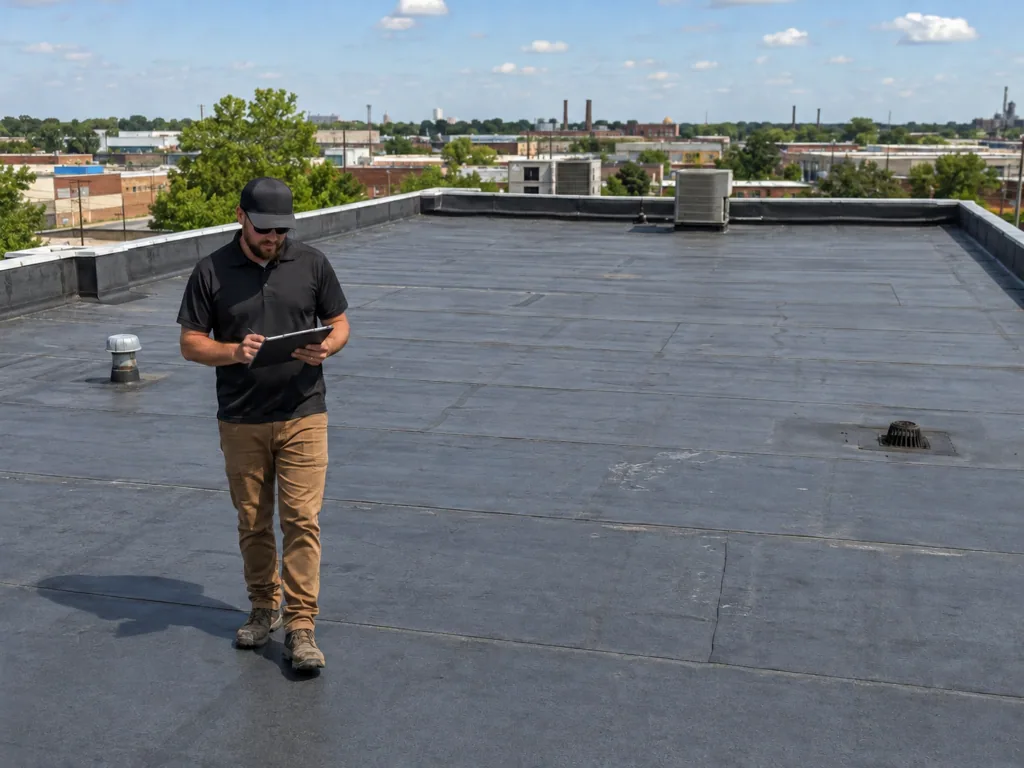
We begin with the reported interior location, then inspect roof seams, curbs, penetrations, edge metal, and drainage routes above and around it. Water can travel beneath a membrane before reaching a ceiling or wall, so a visible stain does not automatically define the repair. We compare prior work, current openings, and signs of wet insulation. If the affected area may extend below the surface, a roof inspection with a marked test area helps the owner see what has been confirmed and what needs further verification.
Central Perimeter's office district draws a daytime workforce more than twice the city's residential population. Repair access around occupied lobbies, loading zones, and tenant entrances can therefore affect timing even when the defect is small. We ask who controls roof access, whether mechanical equipment can be interrupted, and which interior areas need protection. For a building in the Central Perimeter, the work plan should identify arrival, staging, and a secure stopping point for each repair visit.
When two details could explain the same leak, we compare the evidence each repair would address before opening either one. A weld test, targeted probe, or controlled opening should answer a defined question and have an approved restoration method. We keep each test point on the roof map so a later repair can follow the confirmed path without widening the scope by assumption.
Roof Details
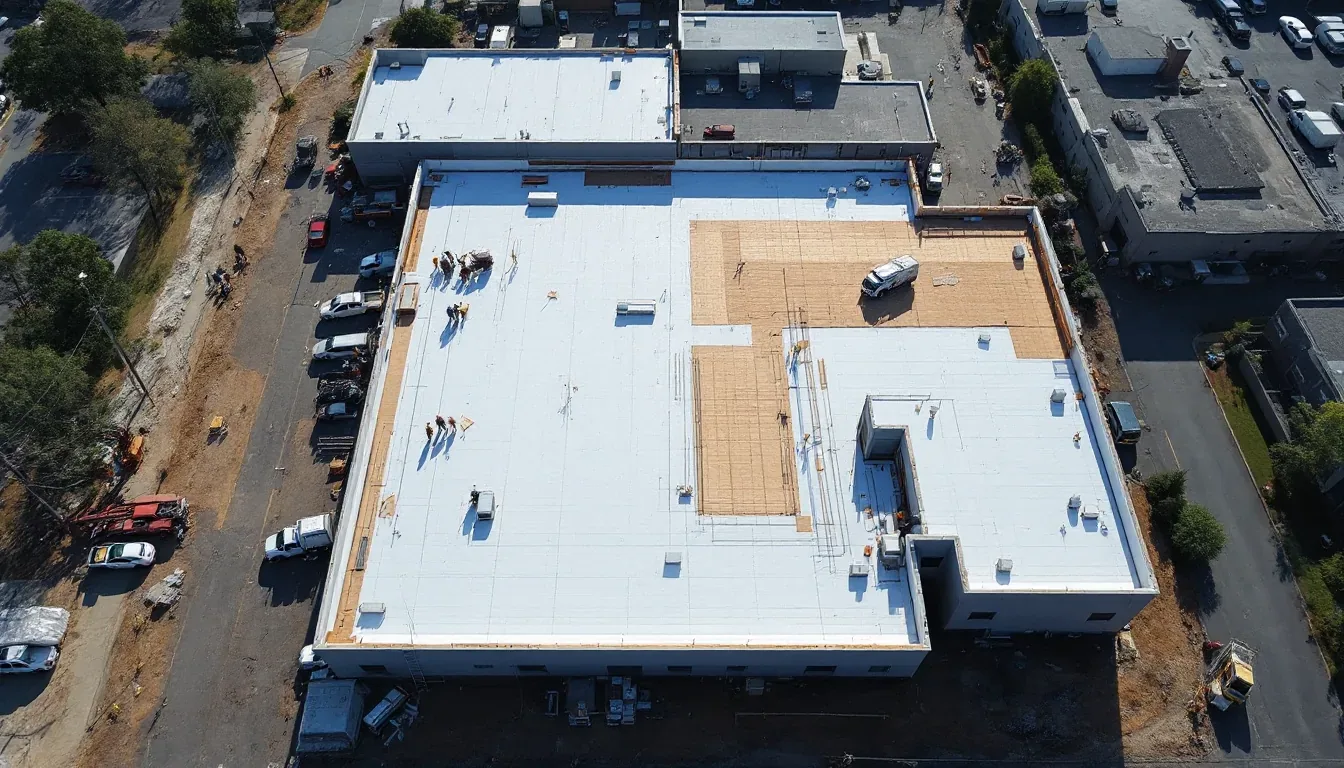
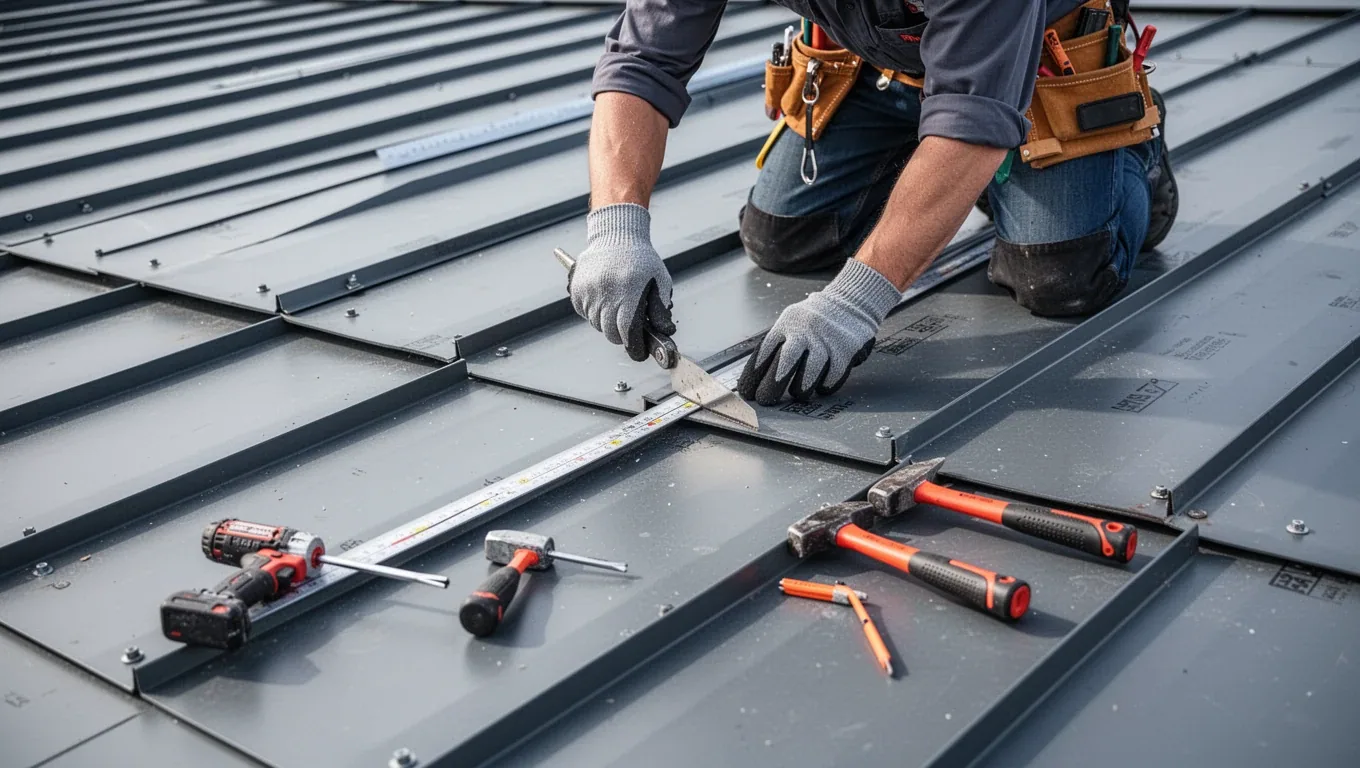
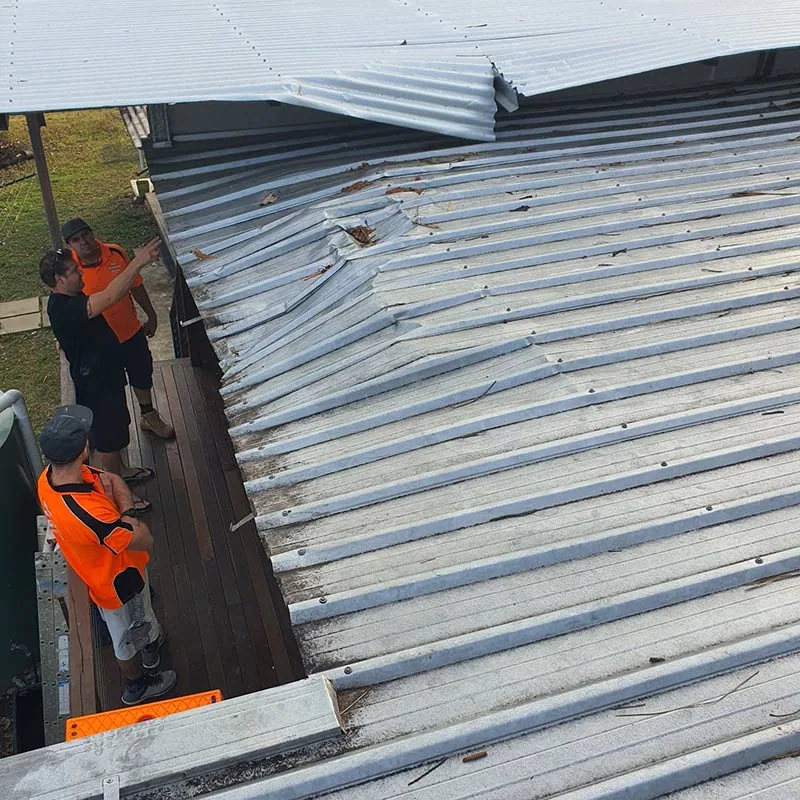
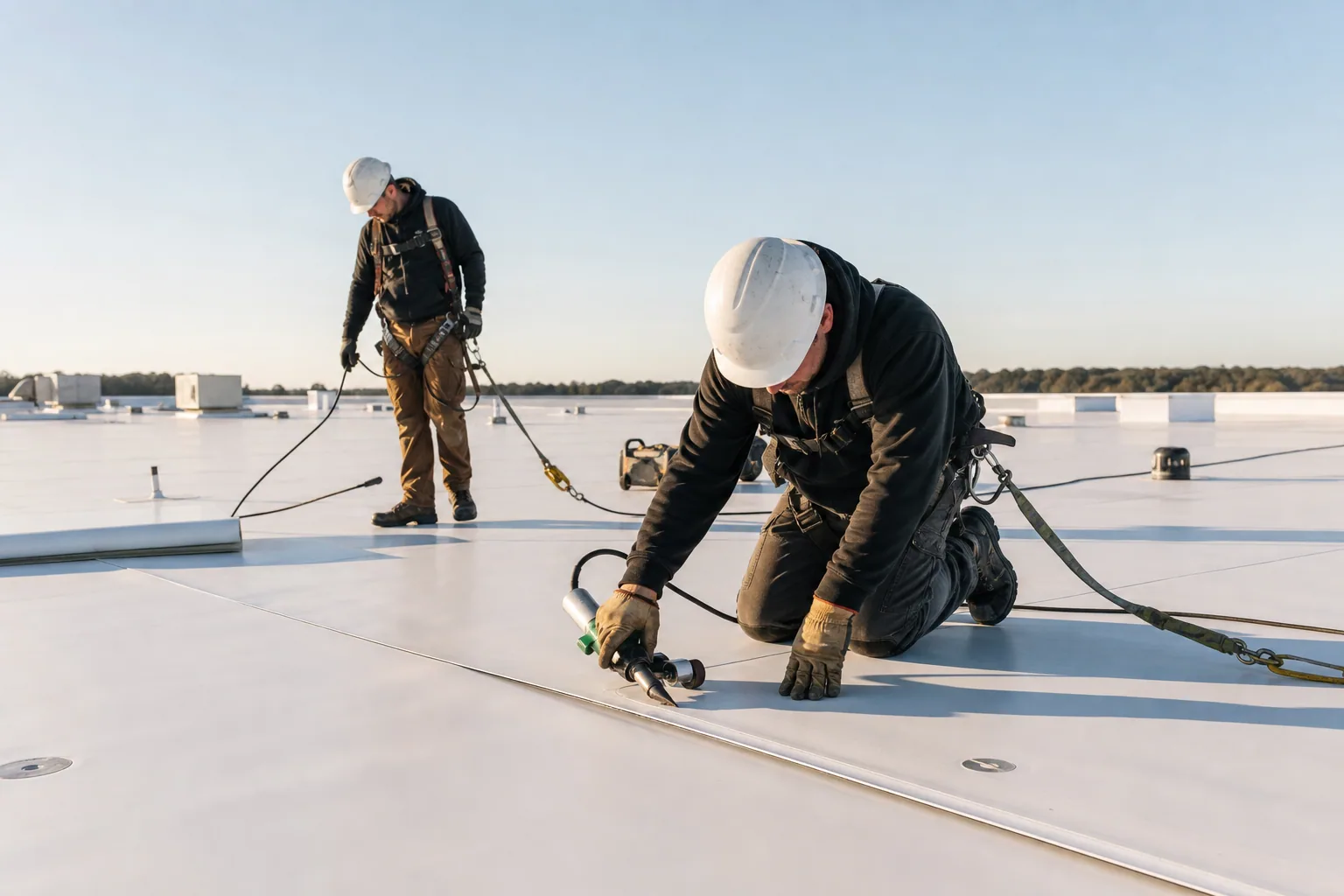
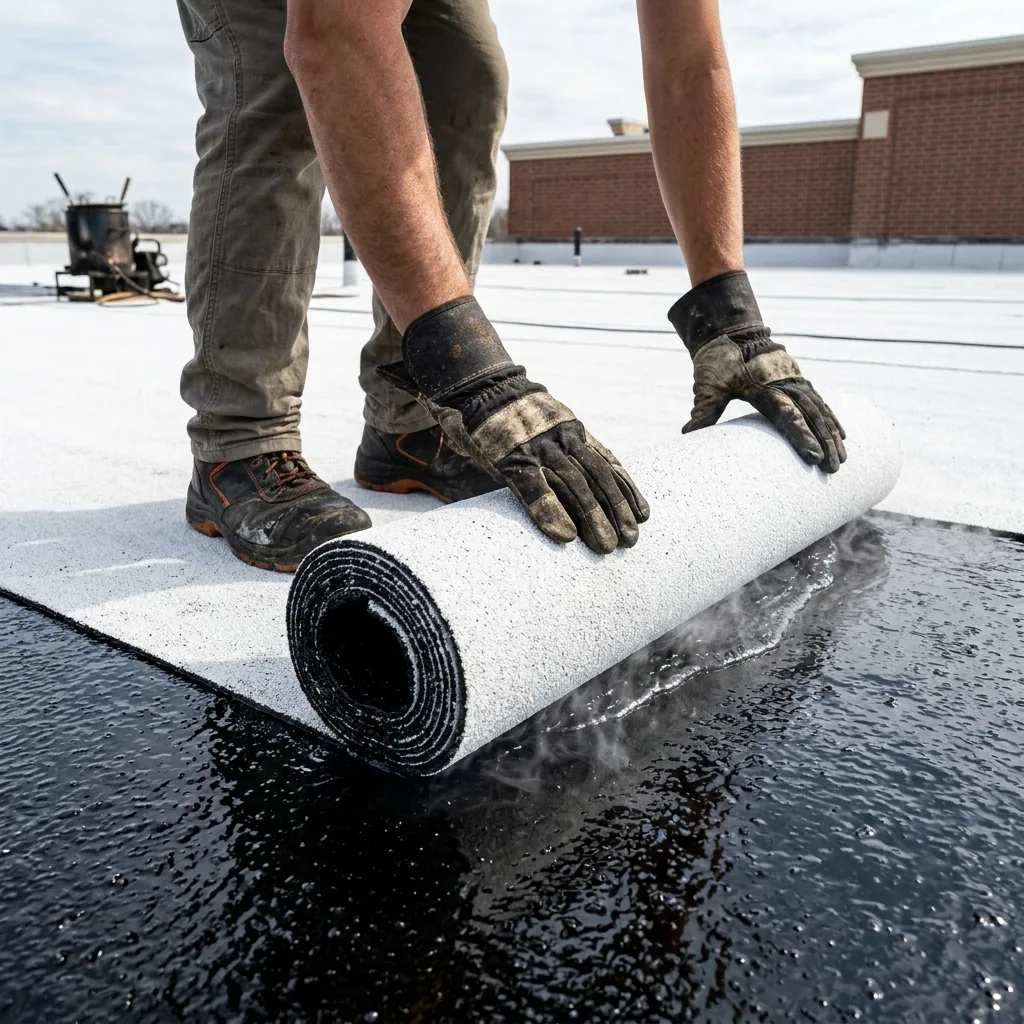
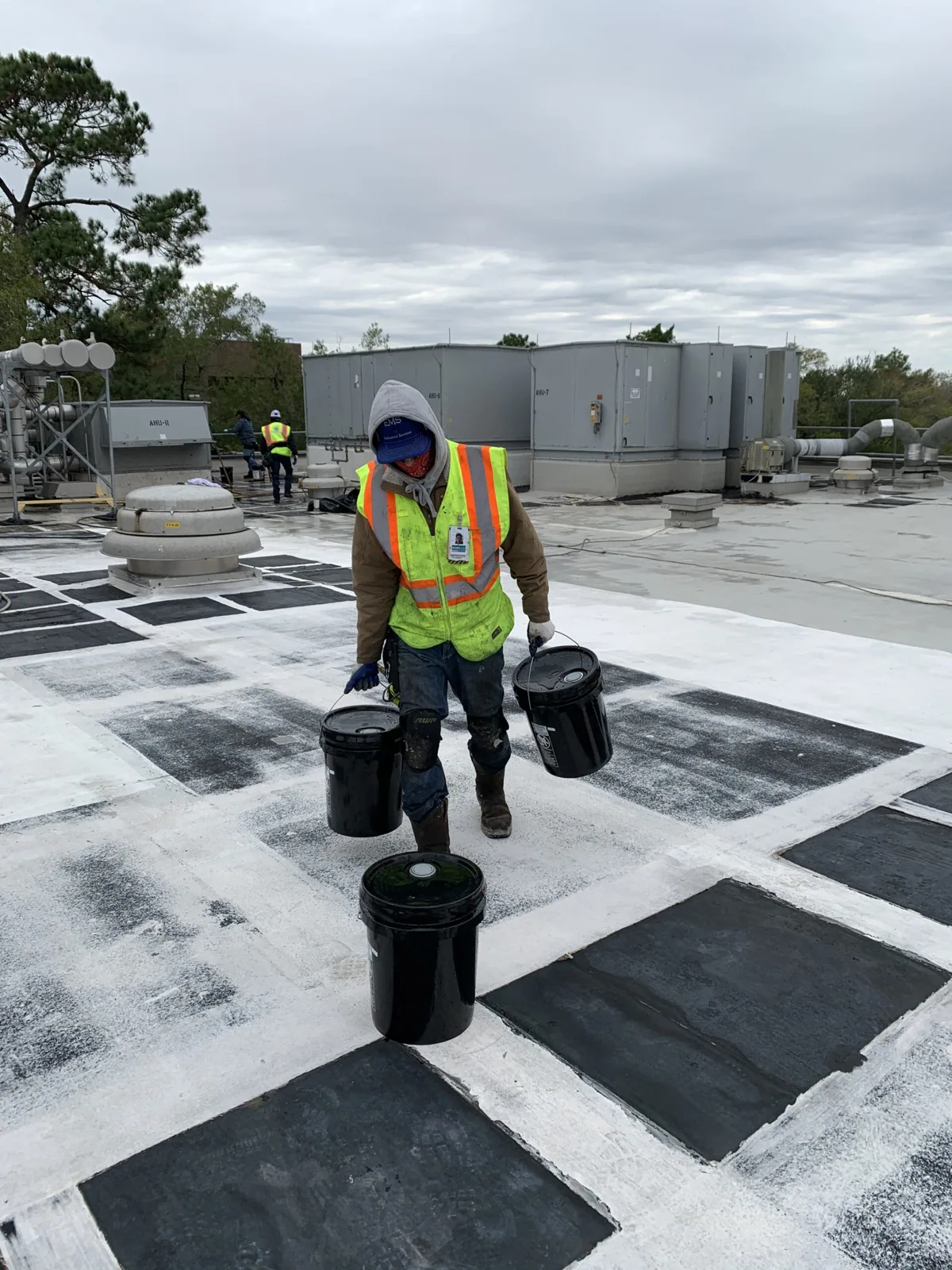
Most small leaks enter at a transition rather than through an undisturbed membrane field. We inspect lap edges, termination bars, curb corners, pipe boots, drains, scuppers, and metal joints. A repair material must match the installed system and bond to a prepared, stable surface. On thermoplastic roofs, a test weld checks preparation and heat settings before a patch is extended. On asphaltic or metal sections, the detail and fastening pattern call for different methods. The PVC assembly and modified-bitumen assembly have different lap and flashing requirements.
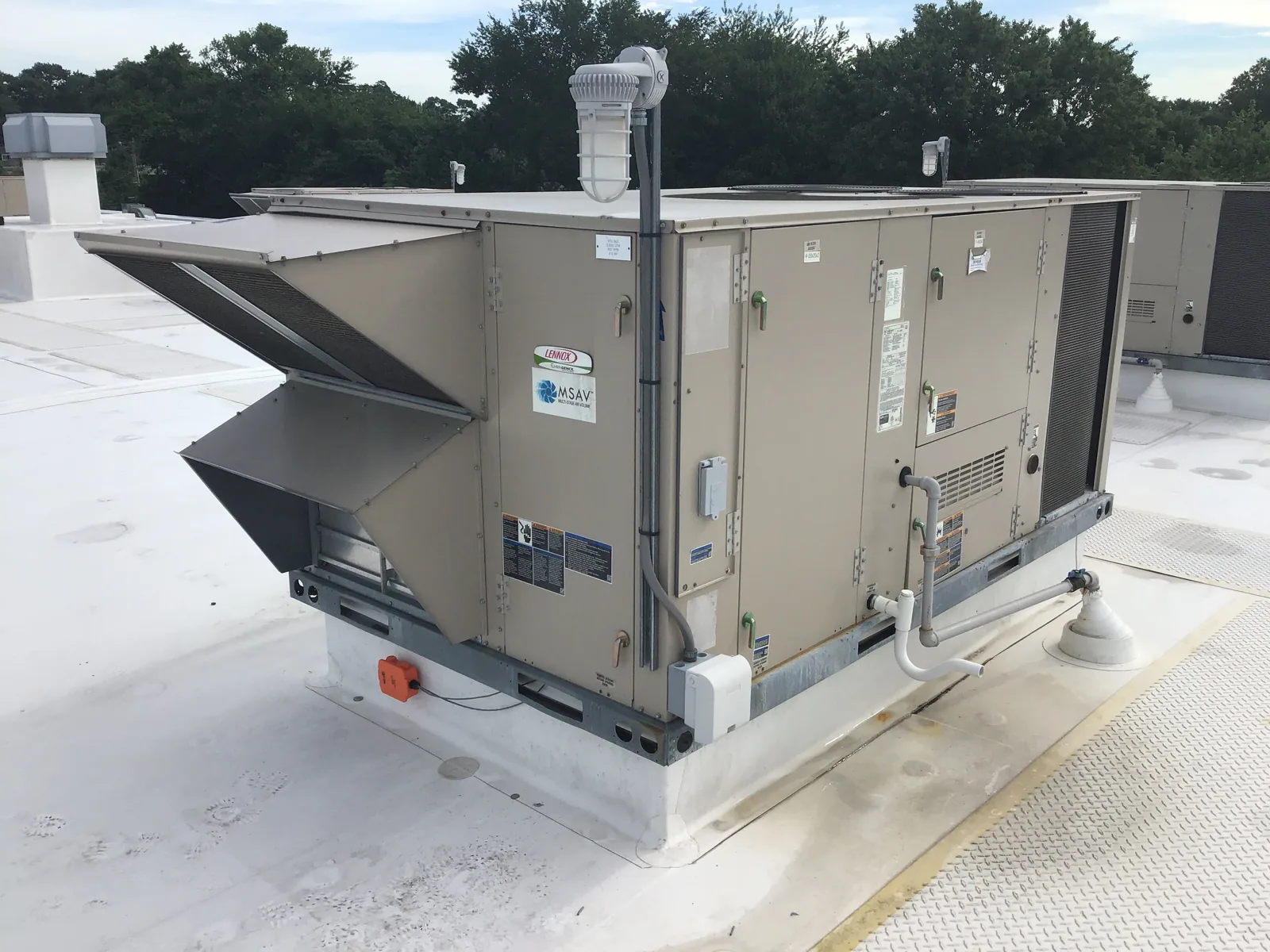
HVAC replacements, conduit work, solar additions, and sign supports can disturb a roof even when their contractor has left the site. We look for cut membrane, loose counterflashing, open abandoned penetrations, and unsupported curb edges. A curb and support repair coordinates the roofing detail with equipment clearance and the service path. If the unit must move, the facilities contact and mechanical provider establish who isolates, lifts, reconnects, and signs off on equipment before the opening is made.
Seasonal Exposure
Sandy Springs’ hot, humid summers and frequent rain influence repair preparation and dry-in. We check the actual substrate temperature and forecast window before opening the roof. The repair plan states how much area can be exposed, which materials need protected storage, and how the work will be secured if rain moves into the forecast.
Large hail, tornadoes, and damaging thunderstorm winds recur across North and Central Georgia, especially in spring and summer. After a storm, we inspect for a specific puncture, displaced edge, torn flashing, or open seam. An owner evaluating wind or hail damage can use a storm-damage inspection to connect photographs and test results to the proposed scope, including sections that should remain untouched.
Roswell Road links the city north to Roswell and south to I-285, and its North End project area includes commercial properties and MARTA stops. That corridor can shape crew routing and service windows. It does not define a property's roof access. We confirm the gate, loading lane, parking area, and any tenant notices with the site contact before bringing tools or materials onto the building.
Repair Versus Renewal
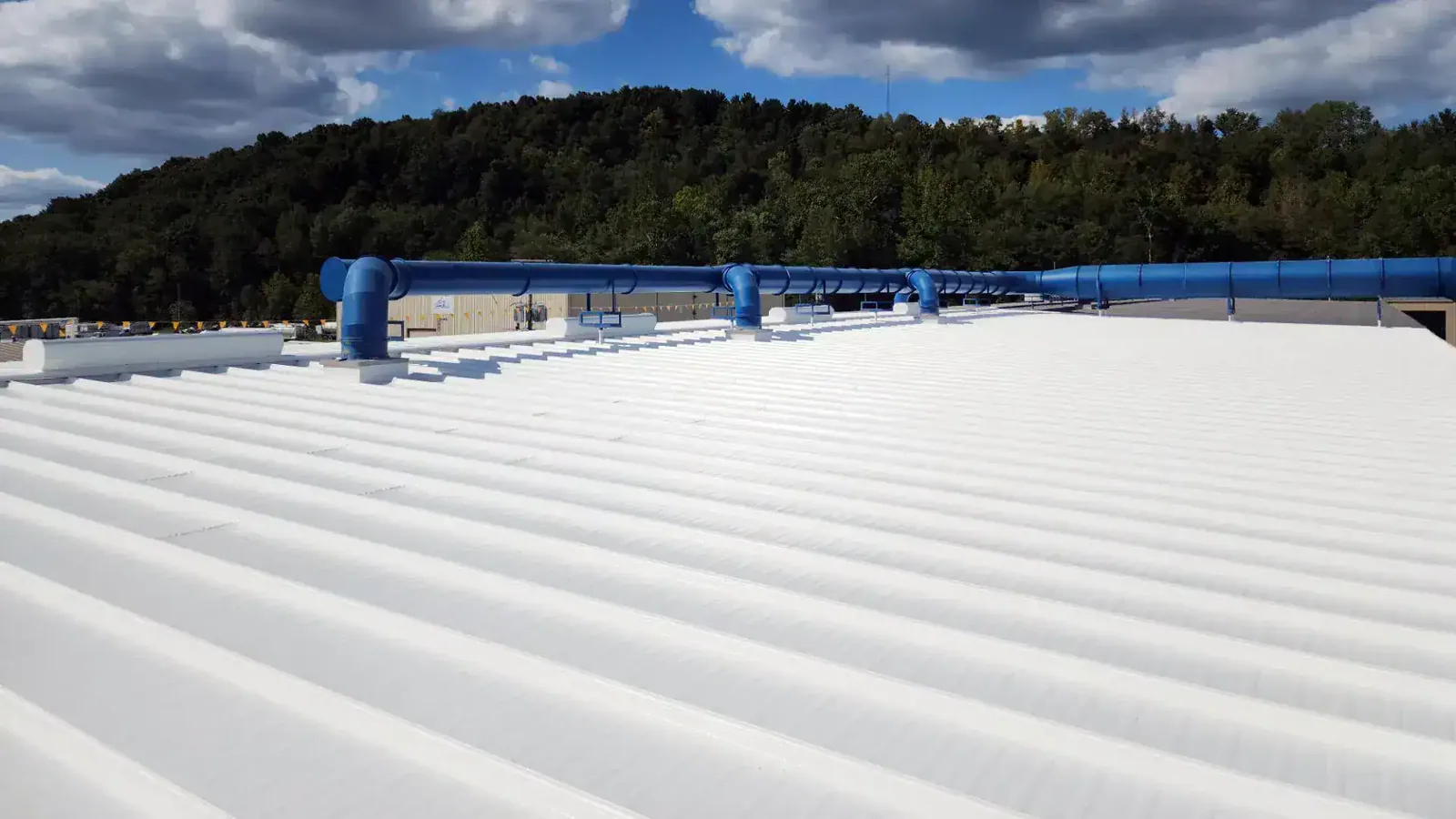
A localized repair fits when the surrounding membrane remains sound, the insulation below is dry enough, and the defect can be closed to stable material. Repeated leaks, multiple failed transitions, widespread moisture, weak attachment, or deteriorated edges can push the decision toward recovery or replacement. We state which condition changed the scope and identify the area still operating under an interim measure. A recover review can compare another layer against removal after layer count, attachment, moisture, height, drainage, and code are checked.
Repair cost and duration depend on access, material compatibility, surface preparation, roof height, interior protection, equipment coordination, and whether testing expands the boundary. For a multi-building owner, we separate emergency stabilization from scheduled corrections so urgent exposure does not obscure the larger capital picture. A roof asset record can track repeat repairs by zone and show where deferred exposure is increasing. That record is more useful when it distinguishes a new leak from a return at the same detail.
Repair Record
At completion, we record the tested boundary, roof material, preparation, repair product, seam or flashing restored, drain condition, and photographs before and after work. The log notes any area not reached, moisture question left open, or equipment issue awaiting another trade. If the patch is temporary, it is labeled as temporary, with a follow-up action and date. This gives the next facilities manager enough context to compare a later leak report with the repair that was actually made.
Share the leak map, roof plan, prior repair invoices, operating restrictions, and access contact. We can prioritize each finding by exposure and schedule the work around occupied hours. A condition report can organize inspection results with photos, while a Sandy Springs Medical District visit can account for the access and continuity needs of a clinical property. The recommendation will identify the next decision, not just the material applied.
Questions About Commercial Roof Repair
How do you decide where a roof repair should stop?
We follow the likely water path and inspect the assembly until the defect and surrounding material can be evaluated. A probe, weld test, moisture survey, or controlled opening may be needed. The written scope identifies what was tested and where concealed conditions could require a change.
Can a commercial roof leak be repaired without replacing the whole system?
A local correction can work when the surrounding membrane, attachment, and substrate remain serviceable. Recurring failures or moisture across multiple sections can change that comparison. We map the evidence first and price a repair boundary that can be checked after installation.
What affects the timing of repair work in Sandy Springs?
Rain forecast, summer surface heat, roof access, occupied hours, and mechanical coordination all influence the work window. We set the daily area that can be opened and a secure closeout point. If weather shortens the window, the sequence changes before the next roof section is disturbed.
How do you coordinate a repair around rooftop equipment?
We identify the unit, curb, electrical or mechanical contact, and service clearance before work begins. A shutdown or lift is scheduled with the party responsible for that equipment. The roof scope states how the flashing will be restored and how the area will be checked after reconnection.
What should be documented after a repair?
Keep the roof-zone location, material, test results, photos, repair limit, drain or edge findings, and any temporary protection or open follow-up together. We note whether the defect was isolated or part of a broader condition so the next budget review can use the history accurately.
Prioritize Repair Exposure
Send the leak map, roof plans, previous repair records, operating limits, and access contact. We will return a repair boundary, schedule options, and the next action for each finding.
Call 555-555-5555 or send the building details.