Commercial Wind Damage Roof Repair in Sandy Springs, GA
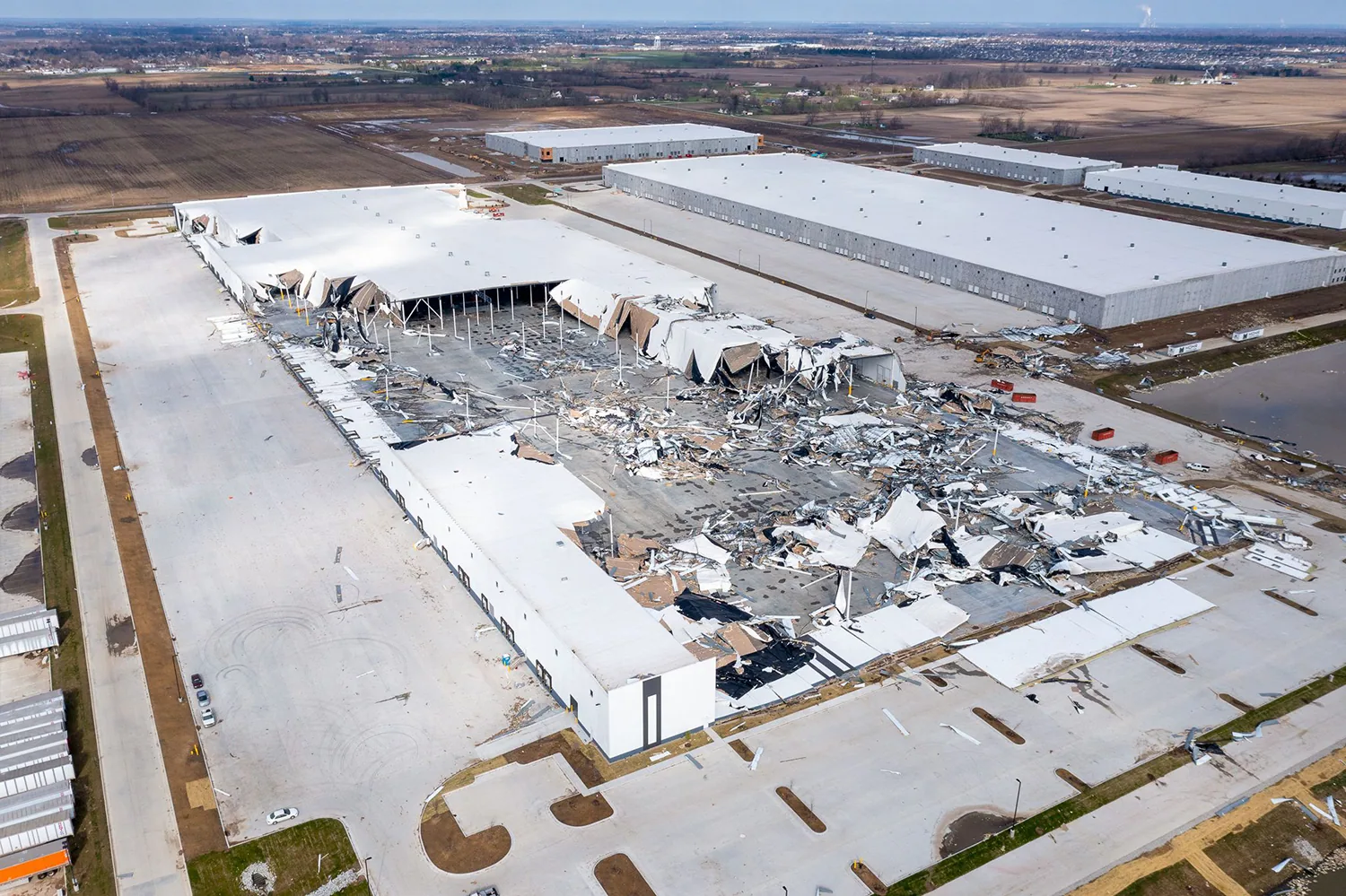
Wind can affect a roof through edge movement, displaced components, debris impact, or water pushed into a vulnerable transition. We begin by locating the reported area, checking the surrounding field and perimeter, and recording what is visible before recommending repair. The service separates immediate protection from permanent restoration, so an owner can understand what needs action now and what still requires investigation. Sandy Springs, GA, has commercial offices, medical facilities, retail, and hospitality uses, with damaging thunderstorm winds affecting the wider North and Central Georgia region. That variety makes access and operating hours part of the repair plan. We document a specific roof section, note any limits on what could be inspected, and give the property team a defined next step rather than a citywide storm assumption.
Inspect the perimeter before assuming the field failed
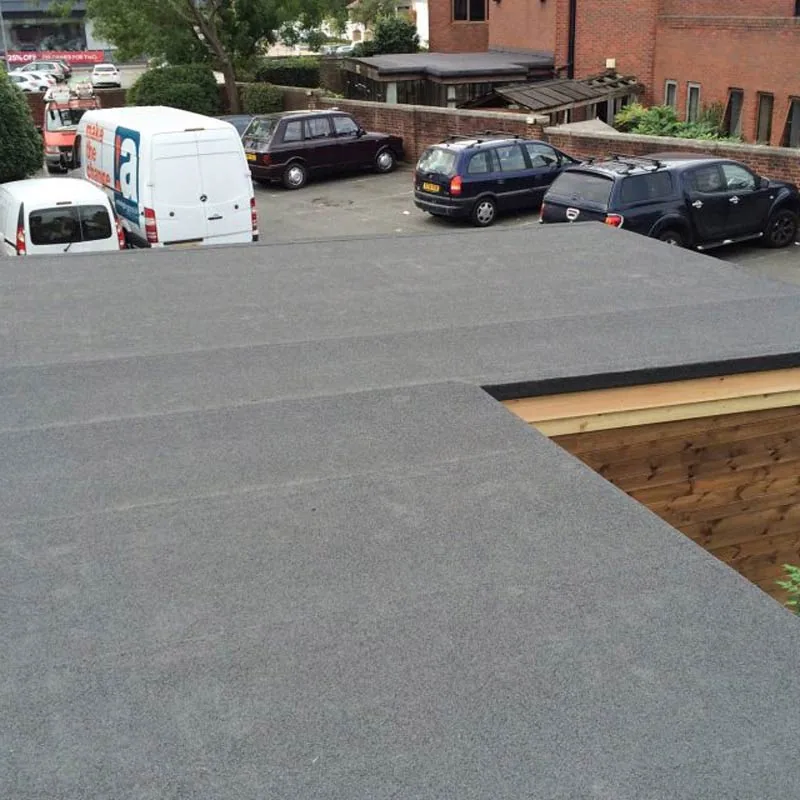
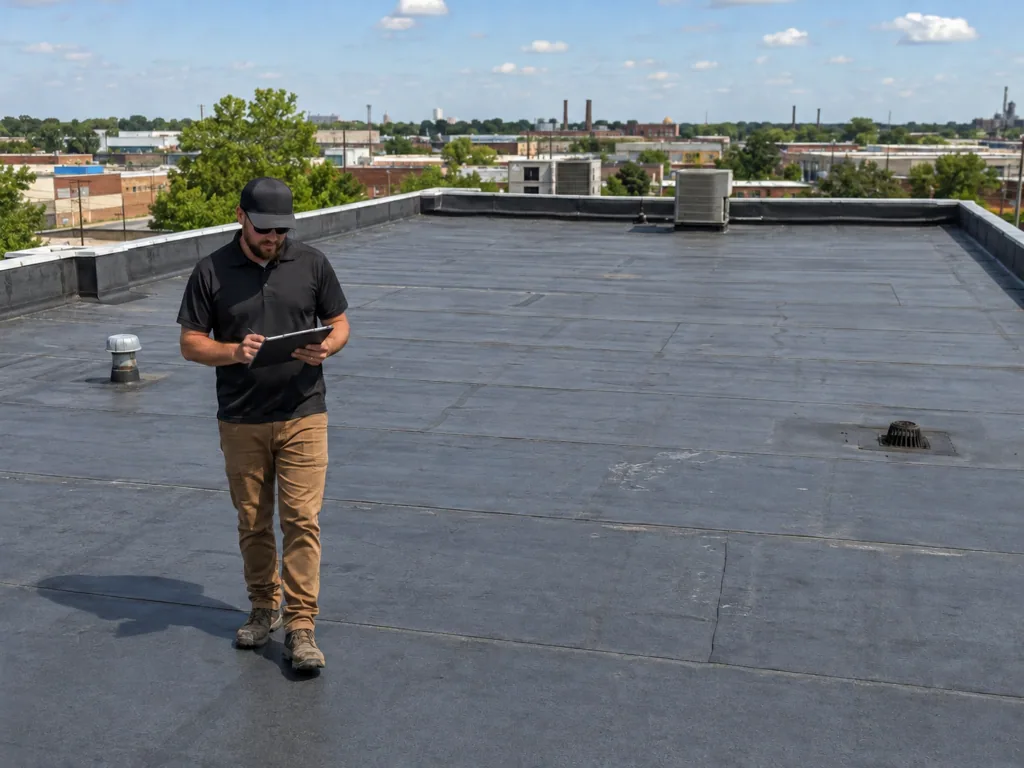
A wind review starts with the roof edge, corners, parapets, drains, rooftop equipment, and transitions to walls or canopies. We look for lifted metal, loose terminations, open seams, displaced ballast, damaged flashings, and debris impact. A commercial roof inspection can map observations by elevation and section, with photographs that show both the close detail and its surrounding context. That record helps distinguish a localized wind-related condition from pre-existing wear or an unrelated drainage issue.
Where membrane or edge material has moved, we check whether the attachment and adjacent components remain secure. An edge and coping review can address perimeter details as a connected assembly. The owner receives an explanation of the observed condition, what remains uncertain, and whether temporary protection is needed before permanent work.
Control active water without confusing it with the final repair
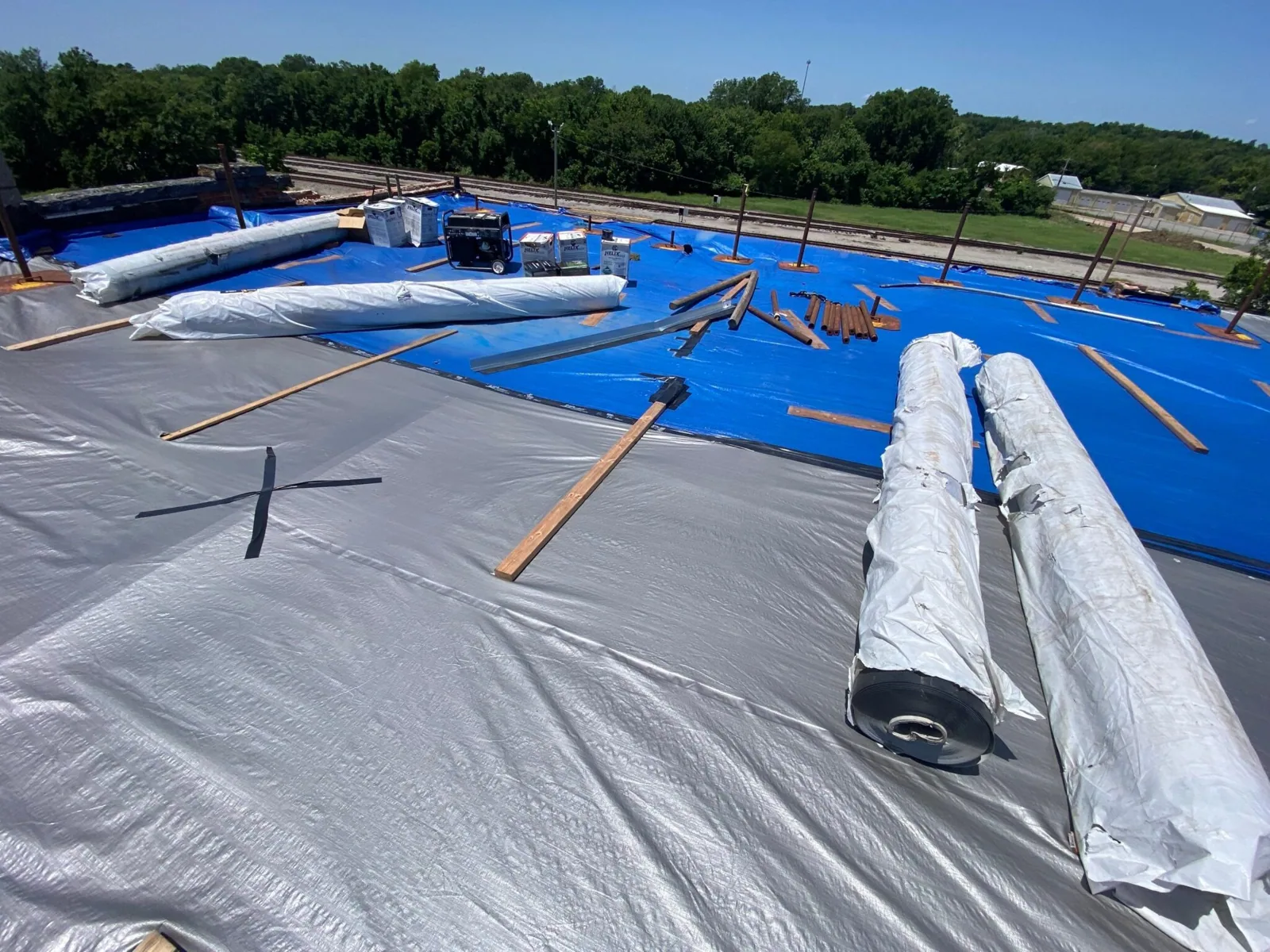
If water is entering, first protect people, equipment, and interior finishes while the roof is made safe to access. The immediate response may involve temporary material or a limited patch, but it should identify its location, purpose, and expected follow-up. A emergency roof response can reduce ongoing exposure while the owner arranges a complete inspection. We record whether the temporary measure is weather-dependent and what condition would require a return visit. Roof and interior observations should share the same location reference.
A ceiling stain does not necessarily sit directly below the roof opening. Water may travel along a deck, insulation, or structural member before becoming visible. We compare the interior report with roof-level details and note when further testing is needed. If the source remains uncertain, a leak investigation can trace the path before a permanent repair is priced. This prevents an emergency measure from being represented as a completed restoration and gives the property team a clear distinction between water control and correction of the underlying detail.
Set a repair boundary that can be verified
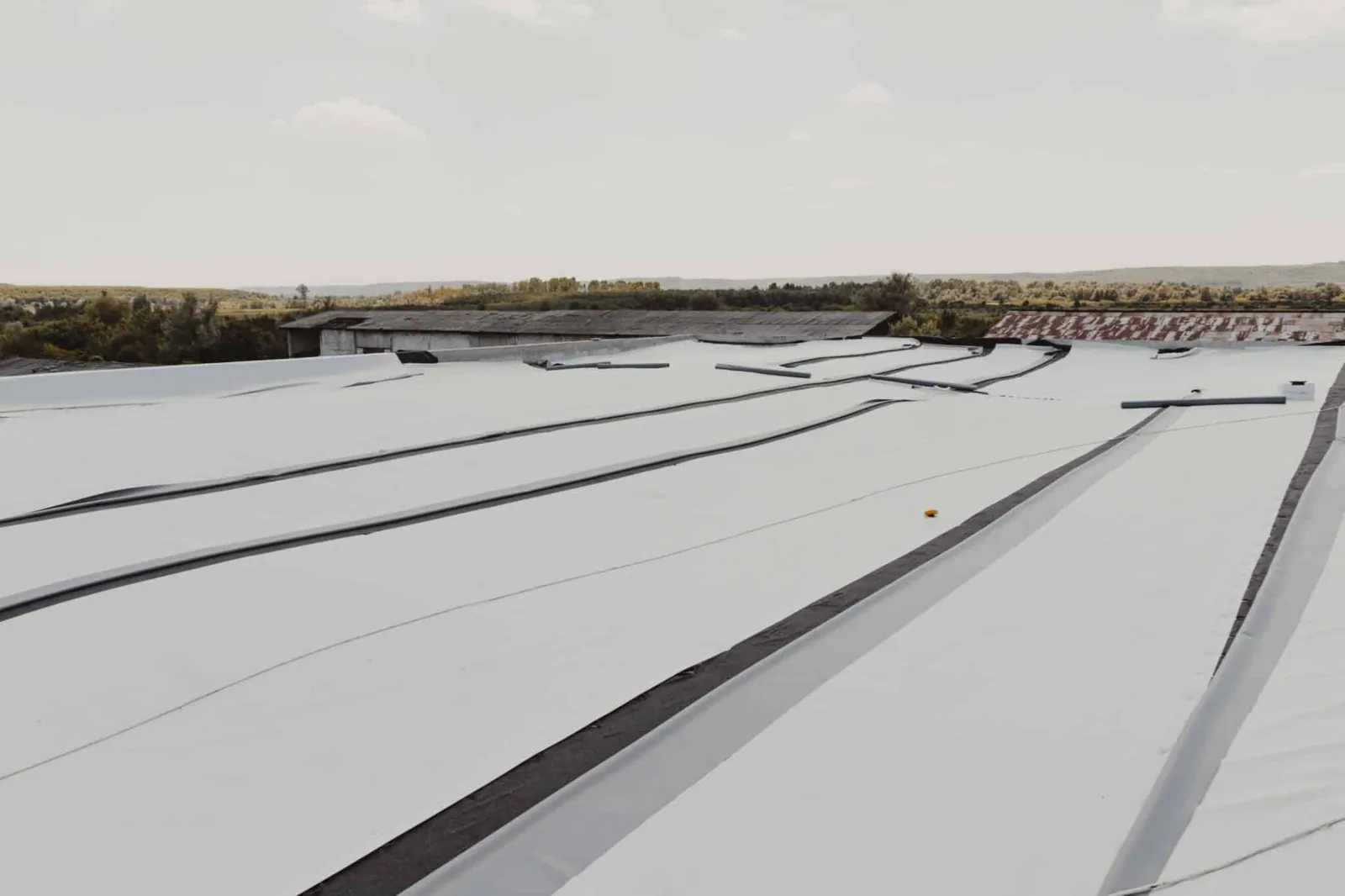
The permanent scope should describe the roof section, affected component, preparation, repair method, and tie-in limits. We identify what material will be removed or secured, how the surrounding assembly will be checked, and what must remain unchanged. If the damage reaches a seam, edge, curb, or wall transition, that interface belongs in the repair description. A storm repair assessment can separate observed wind conditions from other issues discovered during the visit. The boundary keeps age-related defects separate from storm damage.
When removal exposes wet insulation, a damaged deck, or a different assembly than expected, work pauses at a safe boundary. We photograph the uncovered condition, record dimensions, and identify whether a test or additional authorization is needed before proceeding. Concealed work stays separate from the confirmed quantity until it can be reviewed. A seam repair review may be appropriate when separation follows a membrane joint rather than a broad field tear. The repair record should state the condition that was found and the closure method used, not merely say that the roof was patched.
Use local weather as context, not as a diagnosis
Damaging thunderstorm winds affect North and Central Georgia most often in spring and summer. After a report near Central Perimeter or Roswell Road, the building’s storm timing and roof evidence determine whether loose edges, seam separation, or debris damage need repair. We inspect the property and record what the accessible roof shows. A tornado damage review follows its own evidence and scope rather than being inferred from ordinary thunderstorm activity.
Central Perimeter is a major employment district served by four MARTA stations, and the Roswell Road corridor connects a range of commercial sites. For a property near the Central Perimeter, confirm delivery windows and tenant requirements directly with management. A property manager can also coordinate notices, escorts, and interior access across an occupied portfolio.
Coordinate repair with tenants and rooftop trades
Wind repair may overlap with HVAC service, electrical work, or interior restoration. Before mobilization, confirm who controls roof access, whether equipment must be shut down, where materials can be staged, and which areas remain occupied below. If a curb or rooftop unit moved, the mechanical contractor and roofer should agree who restores the penetration and who verifies the completed flashing. A curb coordination review defines that boundary before one trade closes another’s work.
For occupied properties, schedule work so each open section can be protected and closed within the available shift and weather window. Notify the site contact before moving across tenant areas or placing equipment. A phased access plan can identify work zones and daily closure points when permanent repairs require more than one visit. These decisions help protect operations without making an unsupported promise that all work can occur without disruption.
Compare repair with broader renewal only when evidence supports it
A wind event may expose a weak edge or aging seam, but one repaired area does not automatically call for replacement. We review the existing system, repair history, attachment, drainage, and other observed conditions before discussing a larger project. If defects appear isolated, a bounded repair and follow-up inspection may be appropriate. If multiple sections show related movement or the assembly cannot support a durable detail, the owner can compare repair with a replacement evaluation. The recommendation states what evidence supports each option.
A roof condition report can establish a baseline for the repaired section and adjacent areas. The record lists photographs, completed work, open items, and a practical trigger for the next review, such as renewed water entry or movement at the repaired edge. Owners comparing several buildings should keep each roof’s findings separate; a storm’s regional footprint does not make assemblies identical.
Close out with photographs and a clear status
At completion, the owner should receive the repaired location, materials installed when known, photographs before and after work, and any remaining limitations. We identify whether temporary protection was removed, whether permanent closure was achieved, and whether another trade still owns an interface. If the crew found conditions outside the approved scope, those remain documented as open decisions rather than being hidden inside a general completion note. A useful closeout lets facility staff compare a later inspection with the actual repair boundary.
Commercial operations vary between Central Perimeter’s employment district and Powers Ferry’s office, retail, and hospitality mix. We confirm site rules with the owner and leave a record that can be used by a restoration coordinator or maintenance team. This keeps the next decision tied to the building’s condition rather than to the storm headline.
Questions About Commercial Wind Damage Roof Repair
After an Atlanta-area wind alert, which roof findings should trigger a site inspection?
No. A regional advisory is not a roof inspection. Have reported leaks, lifted edges, or displaced components checked, then base repair on documented conditions.
Can you make a temporary repair before the full inspection?
When safe access is available, we can evaluate immediate protection and document its limits. A permanent repair still requires a defined scope and review of adjacent details.
Will you inspect the roof edge and equipment curbs?
Yes. We review accessible perimeter and penetration details, along with the reported area, and record any location that could not be safely inspected.
Does a wind-related leak require roof replacement?
Not automatically. Replacement merits consideration only if adjacent sections, repair history, or system integrity point beyond that one opening.
What should I share before a wind damage inspection?
Provide the reported date and location, interior photographs, roof plans if available, access rules, and details of any temporary work already completed.

Schedule a wind damage roof review
Share the reported roof area, leak history, access requirements, and any temporary protection. We will inspect accessible conditions and define evidence-based next steps.
Call 555-555-5555 or send the building details.