Commercial Hail Damage Roof Repair in Sandy Springs, GA
Hail review begins with the reported storm date and a careful look at the roof components that could have been exposed. A mark on a membrane or metal surface is an observation, not automatic proof of functional damage. We document impact patterns, check seams and edges, and distinguish confirmed defects from cosmetic change or prior wear. A recommendation should describe which material was affected and how that condition changes water-shedding or serviceability. North and Central Georgia experience severe thunderstorms and hail, and Sandy Springs has a broad mix of commercial roofs. Local storm activity makes inspection timely, but only the individual building review establishes what happened at its roof. We provide a measured record so owners and claim teams can make a repair decision from site evidence rather than a regional storm report alone.
Record the storm context and inspection limits
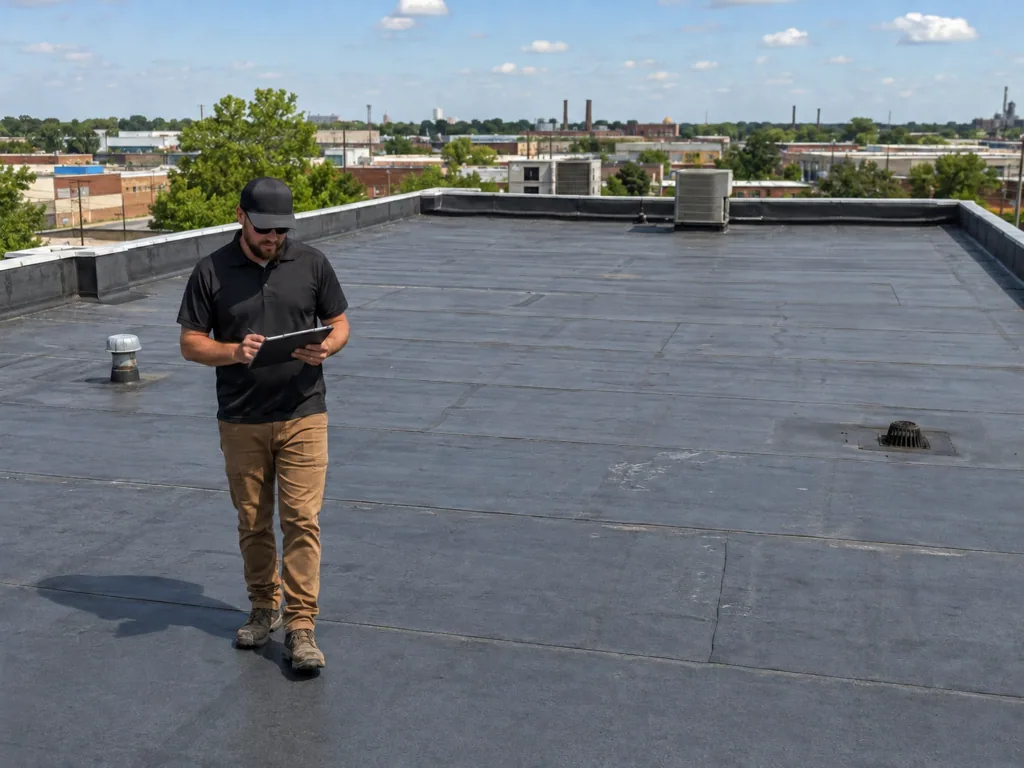
Before climbing, identify the date and approximate time supplied by the owner, the reported elevation, any active leak, and whether temporary work has changed the surface. We note roof access, weather during inspection, and areas that could not be reached. A commercial roof inspection can map the accessible field, perimeter, penetrations, drains, and rooftop equipment. North and Central Georgia experience recurring severe thunderstorms and hail. After a reported event, inspect the property’s membrane, edges, penetrations, and equipment supports to establish the repair boundary.
Photographs should show impact marks in context and include enough detail for another reviewer to locate them. We identify the surface and nearby feature, not just the number of marks. If a roof was inspected before or after the reported storm, compare records only where the angle and area are similar. A pre-existing blister, seam repair, or worn coating should not be reclassified as hail damage without supporting evidence. When possible, compare matching roof areas photographed before the reported event. The inspection notes what is visible today and which historical information came from the property team.
Evaluate each roof material on its own terms
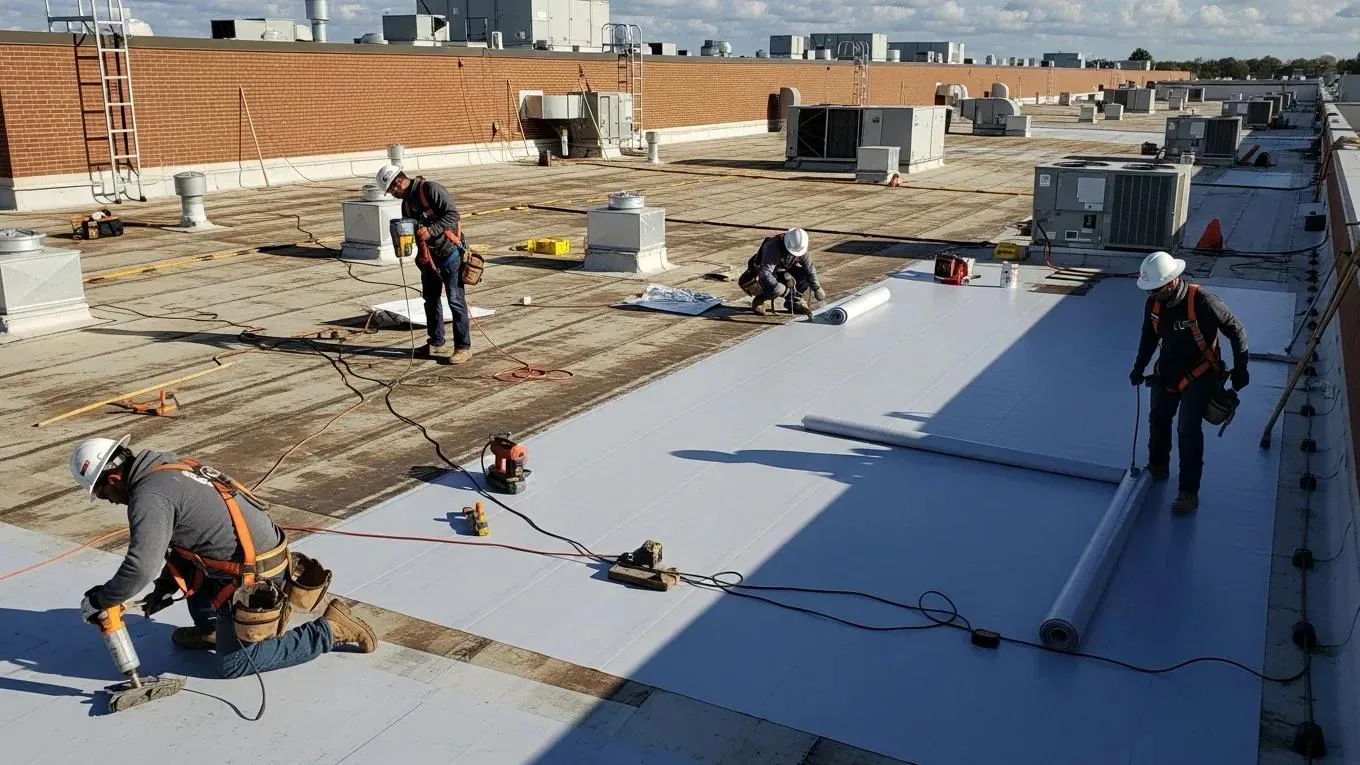
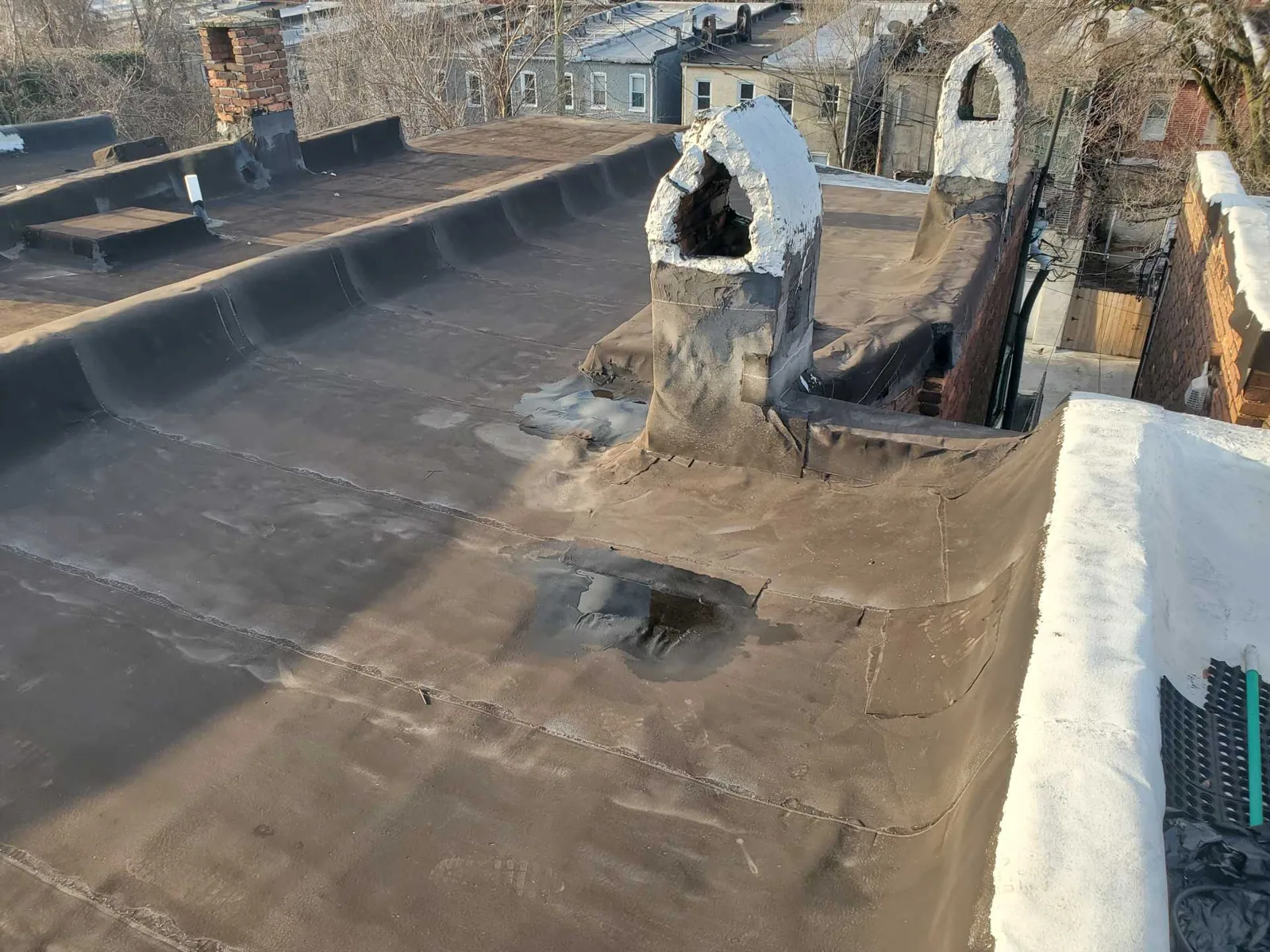
Different systems show impact differently. On membrane, assess punctures, splits, displaced surfacing, and damage near seams or penetrations. On metal, inspect for deformation that affects drainage, seams, fasteners, and coatings. On roof-mounted units, check accessible covers, curbs, and adjacent flashing, while leaving equipment function to the appropriate contractor. A roof system review may help when the installed assembly or surface layer is unclear. The report describes the material and the condition rather than applying one hail threshold to every component.
Where an impact mark appears shallow, check whether the underlying assembly shows a functional defect before specifying replacement. If a puncture or tear is confirmed, document its position and dimensions and identify a compatible repair. A puncture assessment addresses openings, while wind damage review is relevant where a storm also moved edge or perimeter components. Each scope remains separate so a mixed-weather event does not blur the evidence.
Look for entry and concealed moisture
Interior reports can help prioritize the roof walk, but a ceiling stain does not show where hail struck or where water entered. Compare the reported area with roof geometry, seams, drains, and penetrations. If the source is unclear, a leak investigation can trace active water entry. If moisture below the membrane is suspected, testing should be selected to answer a defined question and its limits explained. A thermal survey can identify areas for additional verification but is not a direct view of hidden layers.
If inspection or an approved test opening exposes wet insulation, record the area, materials, and dimensions before expanding the repair. Keep concealed conditions outside the confirmed hail quantity until the owner reviews the evidence. A condition report can link the storm observations with interior reports, test results, and repair boundaries. That gives the adjuster or facility manager a clear distinction between observed impact and a possible secondary condition requiring further review.
Build a defensible repair or replacement scope
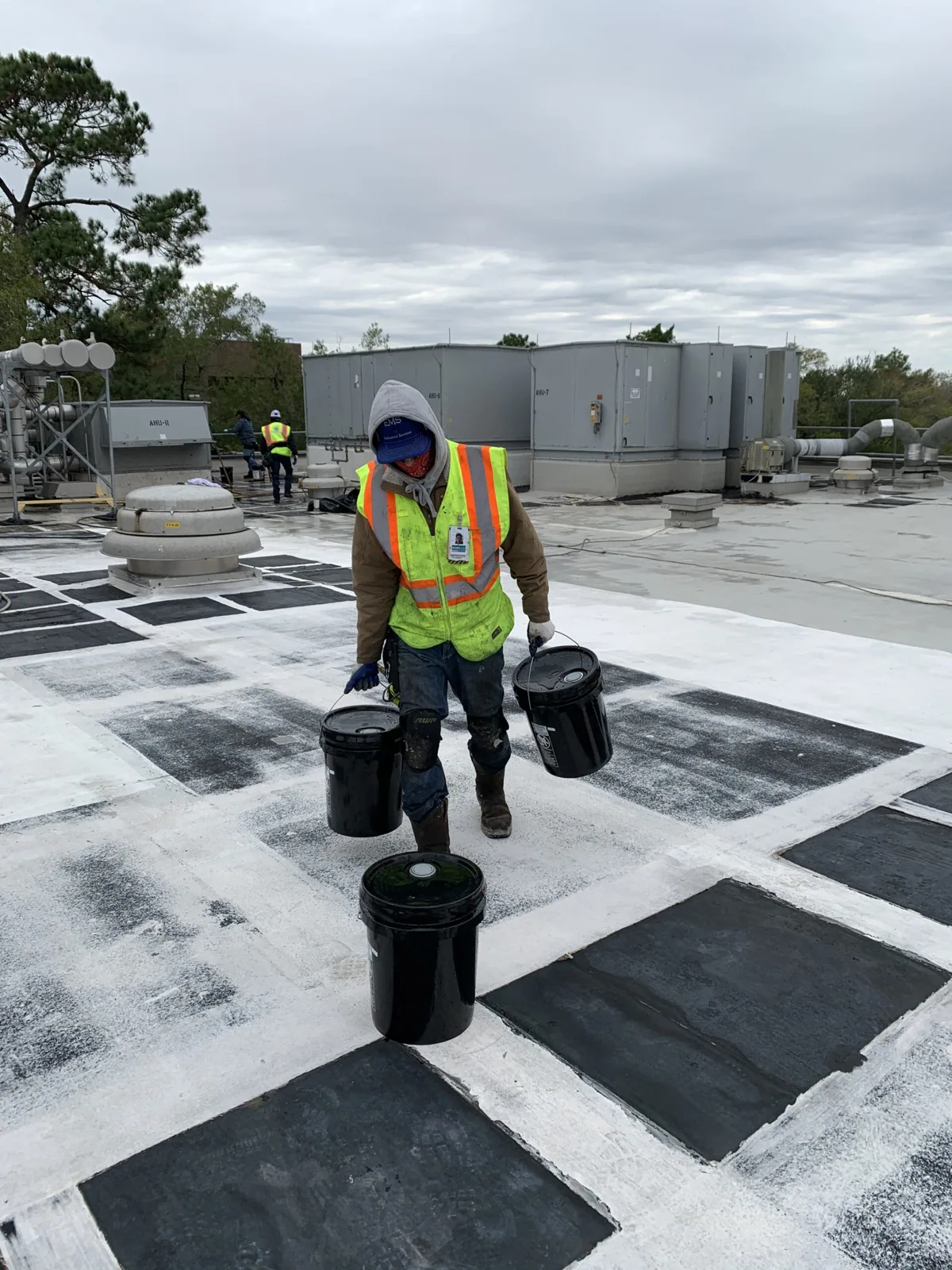
A repair scope should name the component, preparation, replacement material, tie-in, and verification step. If damage is localized, describe that area and the adjacent details inspected. If multiple sections show functional impairment, explain the pattern and additional evidence that supports a broader evaluation. A storm damage assessment can assemble the roof findings, while the owner decides how to proceed under its contract and insurance process. We organize dated photographs, test locations, and completed work so the owner and adjuster can evaluate the documented roof conditions.
When a replacement comparison is appropriate, state the roof assembly, visible condition, repair history, and unresolved questions that affect the decision. A replacement review can consider system-wide needs; an isolated impact should not become a roof-wide conclusion without additional inspection. If material is unavailable or compatibility uncertain, identify the required submittal or manufacturer detail before work is priced. The property team can then compare alternatives on a shared, measured boundary.
Coordinate inspections at active properties
Commercial sites may have tenants, patients, deliveries, or equipment operations that constrain roof access. Confirm who authorizes entry, required escorts, safety orientation, roof hatch use, and any unit shutdown before scheduling. Central Perimeter has several MARTA stations and a high daytime employment concentration; City Springs combines civic, restaurant, retail, and public activity. Use regional storm patterns to set response readiness, then follow the property’s access instructions and inspect the affected roof zones. For a location near the City Springs district, confirm event schedules and pedestrian access with the site contact.
A restoration coordinator can align roof photographs and interior mitigation notes, while a building representative controls tenant access. If the inspection requires walking near fragile surfaces, define the route and protection before arrival. For a multi-building site, label each record by building and roof zone so findings remain tied to the inspected surface. This keeps site operations clear and the evidence tied to the correct property.
Use follow-up to confirm the repair holds
After repair, compare the finished area with the pre-work photographs and record materials, limits, and any remaining monitoring item. If a leak report returns, inspect the repaired detail and nearby path rather than assuming the same failure. A maintenance review can revisit the roof on an agreed interval and identify new movement or water entry. For repeat impact reports, retain dates and site-specific photographs to support a comparison.
The Roswell Road corridor and Powers Ferry area contain commercial uses with different access and occupancy patterns. A Roswell Road corridor inspection should follow the property’s own loading and safety requirements. A property management team can keep roof observations and repair records organized across locations, while each building retains its own findings. Closeout should say what was inspected, what was repaired, and what further evidence would change the recommendation.
Questions About Commercial Hail Damage Roof Repair
Which roof details should be checked after hail near Sandy Springs?
Start with membrane seams, sheet edges, penetrations, equipment supports, and metal panels near visible impact marks. We document observed defects and test only where the result could change the repair scope.
Can you confirm hail damage from a storm report?
A roof inspection after the reported event establishes which surfaces, seams, and flashings need testing or repair. The roof and reported areas must be inspected directly.
Should the whole roof be replaced after hail?
Not based on a storm event alone. We document affected sections and compare repair with broader renewal only when observed conditions support that review.
What should I save before the inspection?
Keep the reported date, interior photos, prior roof records, temporary repair details, and any pre-storm photographs that show the same roof areas.
Can repairs begin before an insurance decision?
Urgent protection may be needed to reduce ongoing exposure. We document temporary work separately and coordinate permanent scope with the owner’s review process.
Arrange a commercial hail roof inspection
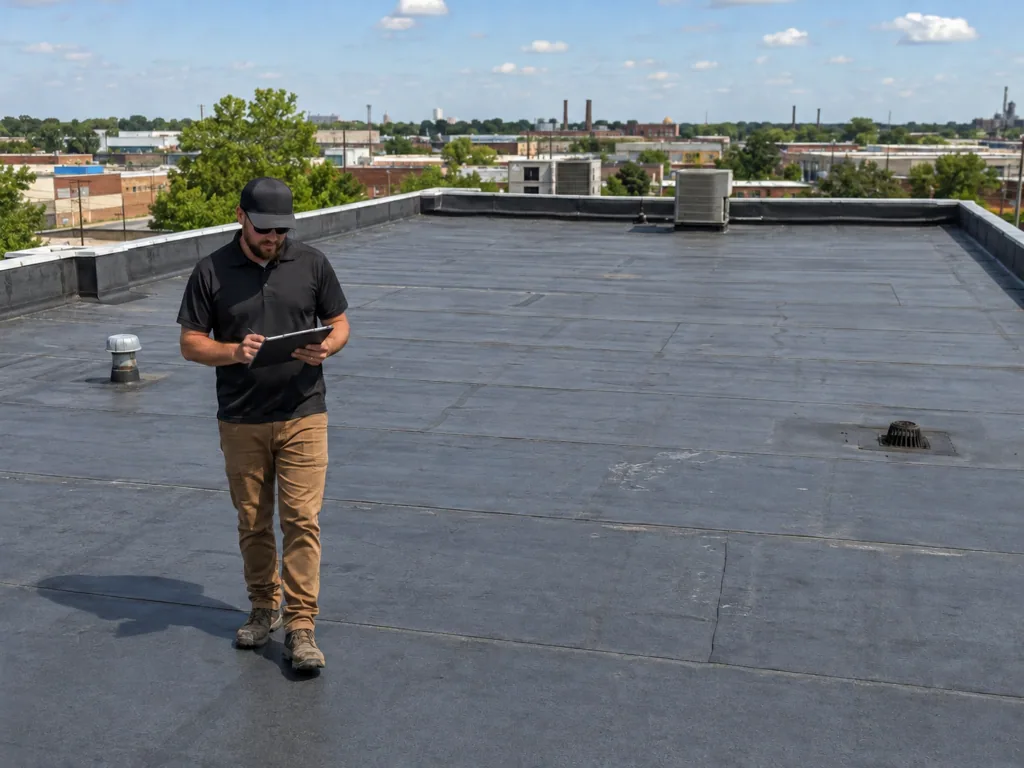
Share the reported storm date, roof plans, leak history, access rules, and photographs. We will document accessible conditions and define repair options.
Call 555-555-5555 or send the building details.