Commercial Roofing for Insurance and Restoration Teams in Sandy Springs, GA
After a storm, the hardest roofing decisions often arrive before the full damage picture is available. A restoration team may need to protect an occupied building, document visible conditions, coordinate an adjuster visit, and keep interior work moving without treating an early observation as a final repair scope. We help insurance and restoration professionals define those steps in order. The review separates stabilization from permanent work and maps affected sections. In Sandy Springs, GA, commercial property spans office, retail, medical, and service uses, while severe thunderstorms can bring damaging wind or hail across the region. Our work gives the project team a clear, evidence-led roofing record for the next decision.
Separate emergency protection from permanent repair
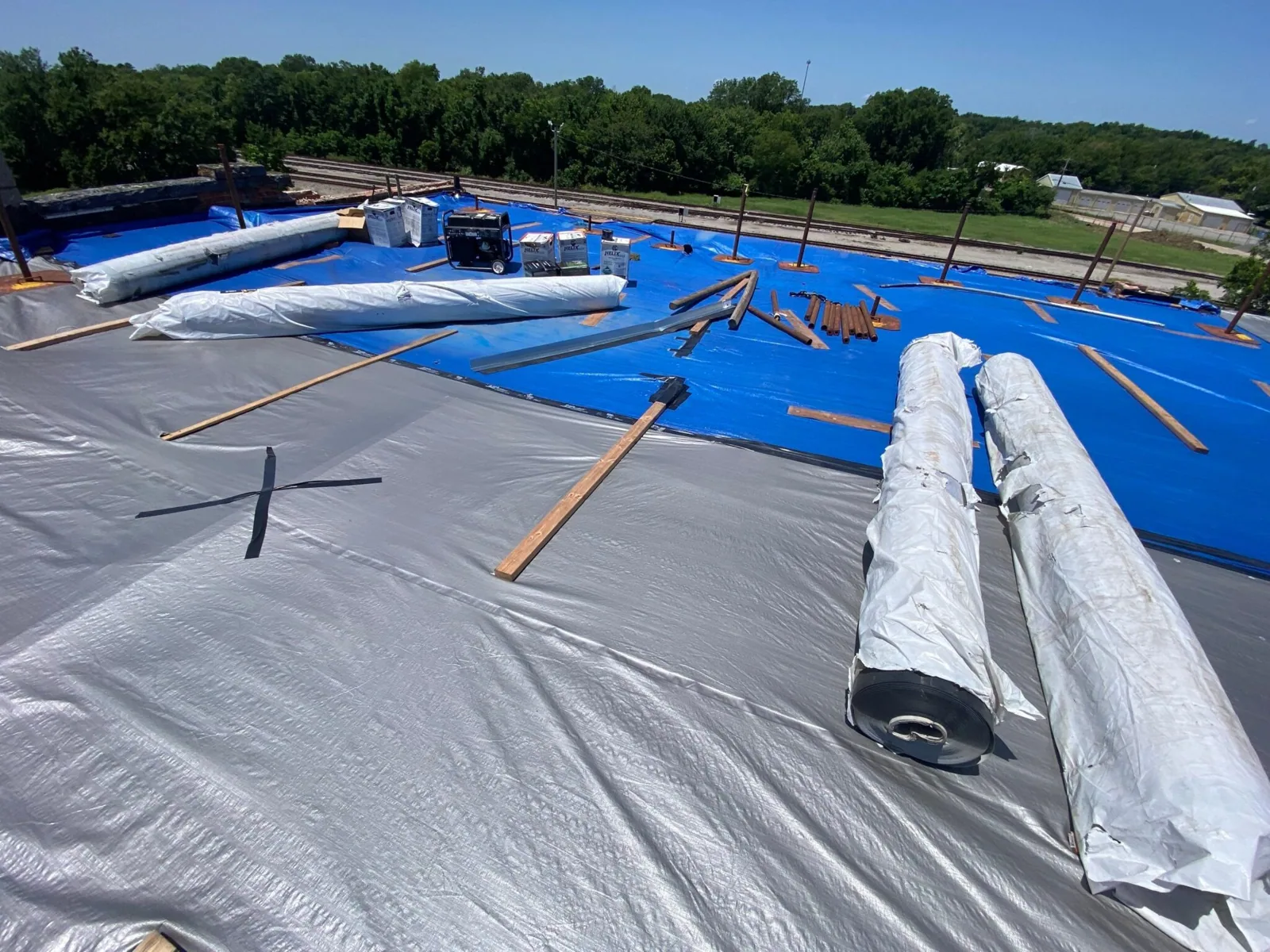
Emergency work has a narrow purpose: reduce ongoing water entry and make the roof safe until a complete repair can be defined. We identify the opening or vulnerable detail, the temporary measure, the affected interior area, and the conditions that require follow-up. A roof emergency response can coordinate safe access and temporary protection while the restoration contractor addresses interior drying. Record temporary protection separately from permanent roof work, and trace the water path before assigning repair quantities.
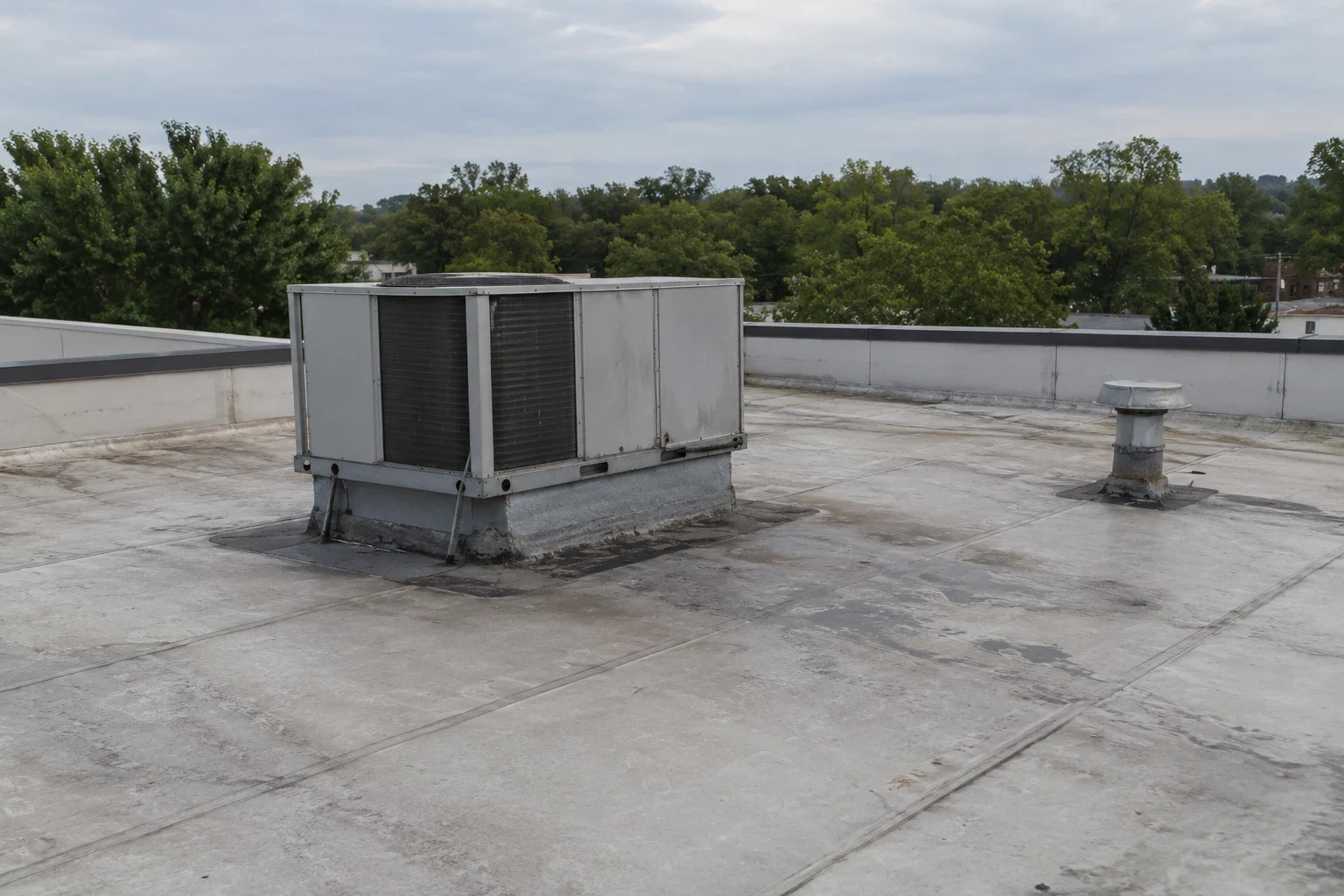
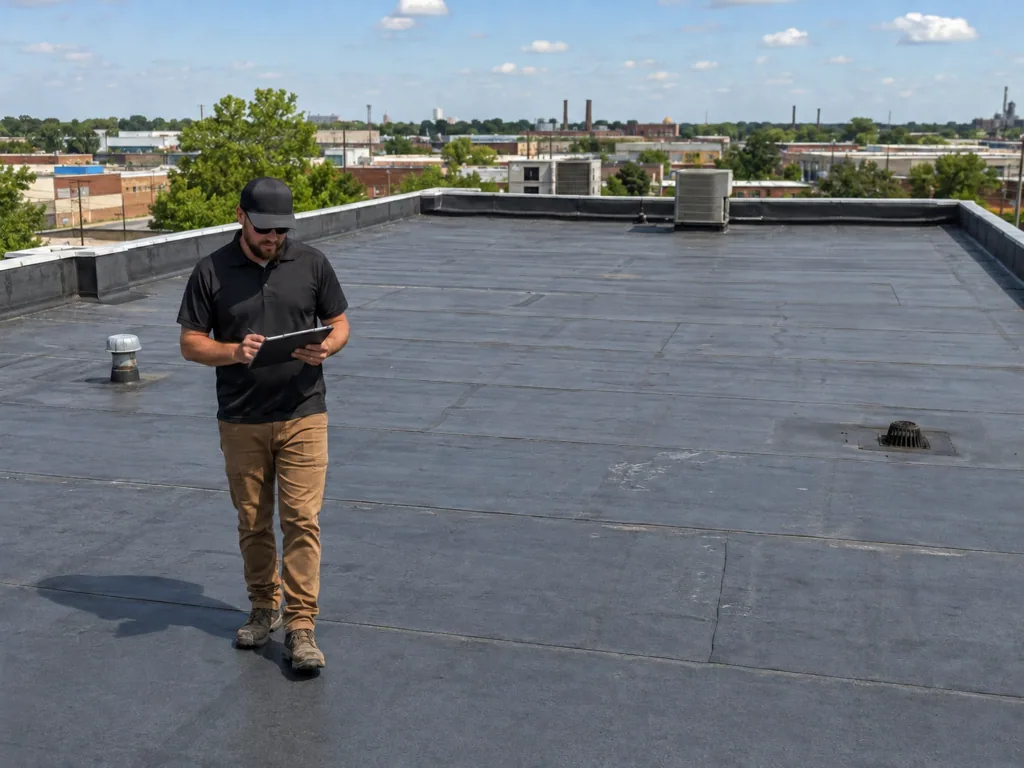
Once immediate exposure is controlled, the team can arrange a commercial roof inspection that documents membrane condition, seams, edge details, penetrations, drainage, and visible impact. The inspector records limits and observations without extending a repair beyond the evidence. If the roof includes equipment or several elevations, each area receives a location reference so photographs and estimates can be compared. This division distinguishes completed protection from repairs still awaiting review.
Build a usable record for the claim file
A useful roof record answers practical questions: where is the condition, what is visible, what was done, and what evidence is still missing? We label photographs by roof section and direction, note weather exposure when supplied by the project team, and describe the observed material without guessing at concealed construction. A condition report can link images to a marked roof plan, Diligence Notes, and recommended next steps. When an assembly is not confirmed, the report says so plainly and identifies an appropriate test or opening for review.
Keep emergency invoices, access logs, temporary-protection photographs, and permanent-repair quantities distinct. If a restoration estimate includes interior removal, the roofing scope should state where water entry was observed and whether the same location was inspected above. That does not assign responsibility for interior damage; it gives the project participants a shared location record. We can also provide a leak investigation when active entry needs to be traced beyond the first visible stain. This supports focused review without inferring roof-wide damage from one image.
Keep the damage boundary tied to observations
Wind, hail, falling debris, and water entry can affect different roof components, and the repair boundary should reflect what inspection finds. For each section, we describe the observed condition, the nearby details reviewed, and the reason for any proposed replacement. A hail review may document surface impacts and related details, while a wind assessment considers displaced edges, lifted materials, or other visible effects. These are inspection topics, not automatic findings.
If the condition changes from one elevation to another, photographs and quantities should preserve that distinction. The estimate can separate confirmed repair from an allowance or investigative step where concealed damage is possible. If testing is needed, the owner and claim team can review its purpose first. This keeps a localized repair from silently expanding and gives the restoration contractor clear roof-closure status for interior scheduling.

Coordinate roof access with restoration activity
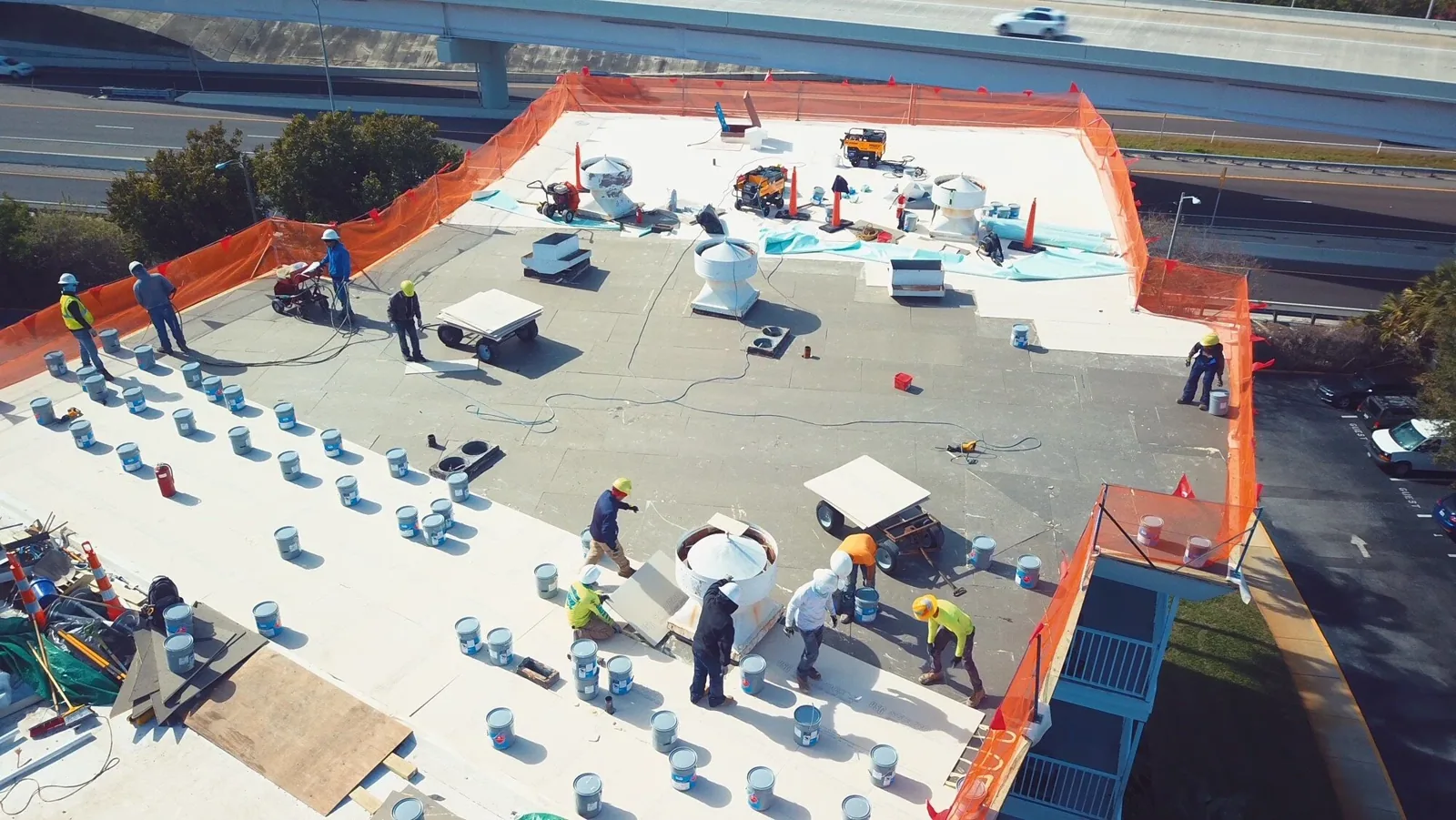
Roofing crews, mitigation teams, adjusters, and building staff may need the same access route on a compressed schedule. Before mobilization, confirm who authorizes entry, whether escorts or safety orientation are required, where materials may be staged, and which interior areas remain active. We set a field contact and identify the roof zones that can be entered without crossing protected work. A phased access plan can help keep work areas separated while a facility remains in use.
Central Perimeter is a major employment district with four MARTA stations, and Roswell Road connects a mix of commercial destinations through Sandy Springs. For a property along Roswell Road or near Central Perimeter, confirm loading rules, traffic controls, and access permissions with the site team before setting delivery and roof-closure times. For a claim or restoration project near the Hammond Drive corridor, ask about delivery hours and tenant notifications early.
Sequence temporary and permanent work
A temporary closure can fail if the permanent repair is scheduled without considering weather, material lead time, or access to the affected detail. We identify the current protection, the next inspection or approval point, and the condition that must be met before the temporary measure is removed. A storm repair plan can separate immediate work from permanent restoration, with quantities and roof locations stated for each phase. If the permanent repair requires matching materials or a manufacturer detail, that dependency belongs in the schedule before the crew is committed.
Some claims involve multiple buildings or operating locations. A property manager may need separate reports by asset, while a health system may prioritize access and continuity differently from a retail property. We keep each building’s findings separate and identify which decisions belong to its owner or representative. A regional loss can create competing crew and material demands; the schedule should state confirmed dates and open dependencies.
Review scope changes before covering the roof
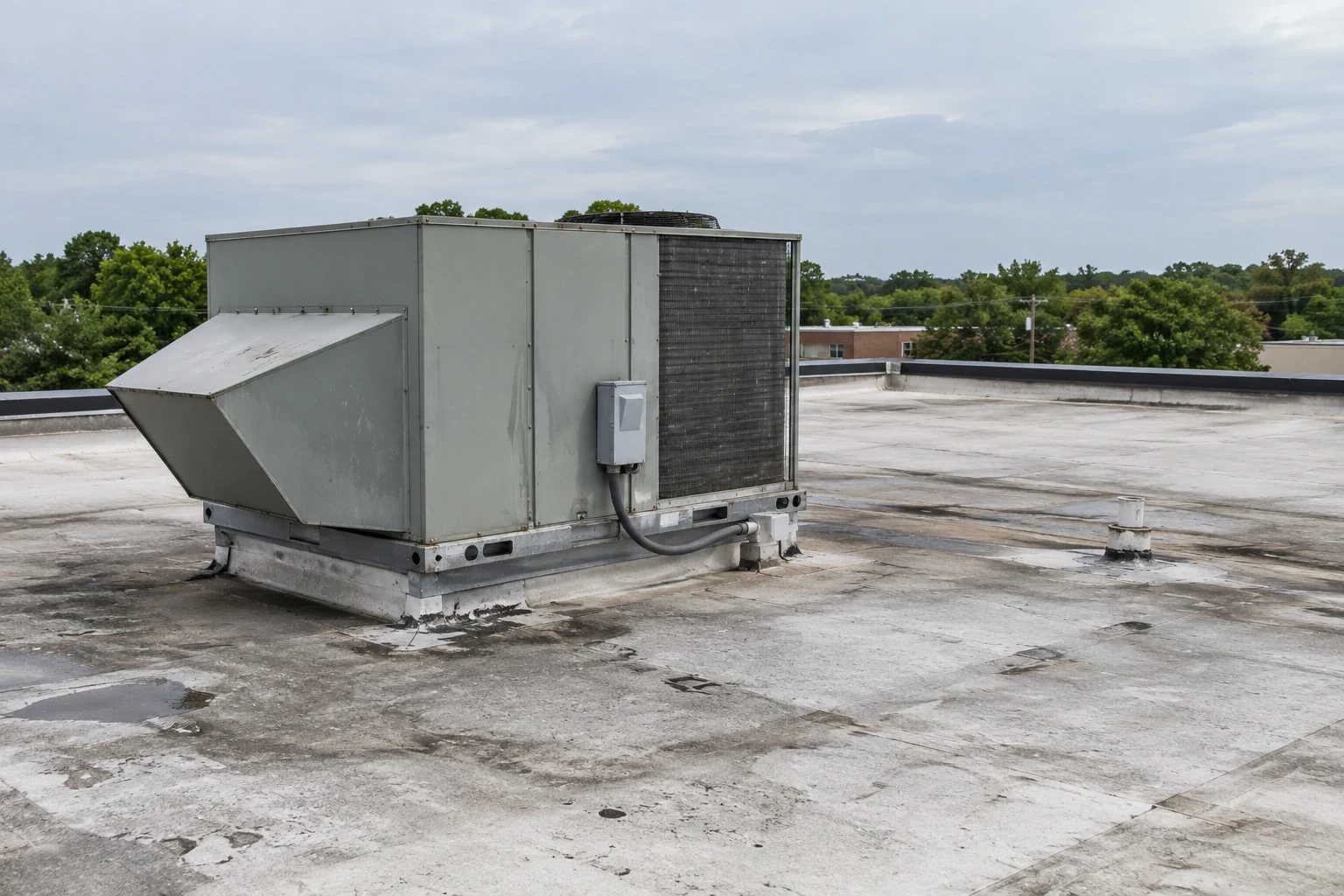
When removal exposes wet insulation, damaged deck, or an unexpected transition, pause at a safe boundary and document what is uncovered. The change record should show location, dimensions, photographs, temporary protection, and the recommended next step. We separate the original repair from added work so the owner and claim representative can evaluate each quantity. If further removal is needed to define the condition, state its limits and how the roof will remain protected before opening the area.
A recover assessment or replacement discussion belongs after the existing assembly and substrate have been reviewed, not simply because a claim is open. Where a coating or membrane repair is feasible, the proposed method should identify preparation and tie-in limits. Where evidence suggests broader work, the report explains which additional observations support that conclusion. This gives the adjuster a concrete basis for follow-up and helps the restoration contractor sequence interior finishes only after permanent roof closure is confirmed.
Close the file with clear status and next actions
At closeout, identify the roof zones inspected, work performed, materials installed when known, remaining exclusions, and any monitoring or follow-up item. Include comparable photographs and note whether work is temporary or permanent. The owner can then compare the completed roofing scope with invoices, restoration records, and any remaining estimate questions.
For properties in the Powers Ferry area, where commercial, office, and hospitality uses meet the I-285 corridor, a coordinated report can help portfolio teams compare how separate buildings were reviewed without assuming they share roof conditions. We provide the observations and recommendations for the specific roof inspected. The restoration lead can use that information to track interior completion, the adjuster can review documented quantities, and the owner can decide whether additional capital planning is warranted. A concise status record closes the immediate repair loop while keeping future roof decisions grounded in the condition actually observed.
Questions About Insurance and Restoration Teams
Does storm activity in Sandy Springs prove that my roof was damaged?
No. Regional wind or hail activity is a reason to arrange an inspection, but the specific roof must be reviewed and documented before damage is concluded.
Can you provide a report before the adjuster visits?
Yes. We can document visible roof conditions, locations, photographs, and any immediate protection already in place. The report can help the project team prepare focused questions.
Should temporary protection remain while a claim is under review?
It depends on the exposure and safety conditions. We describe the temporary measure and its limits, then identify what follow-up inspection or permanent work is needed.
When should a Sandy Springs leak file include a replacement comparison?
Not by itself. We inspect the likely entry point, adjacent details, and affected section, then explain whether evidence supports a localized repair or broader evaluation.
What should a restoration contractor share before a roof visit?
Provide the property contact, access and safety rules, reported leak locations, interior photographs, known roof plans, and any temporary work already performed.
Coordinate a documented roof review
Share the property location, reported conditions, access requirements, and restoration schedule. We will inspect the identified roof areas and outline evidence-based next steps.
Call 555-555-5555 or send the building details.