TPO Roofing in Sandy Springs, GA
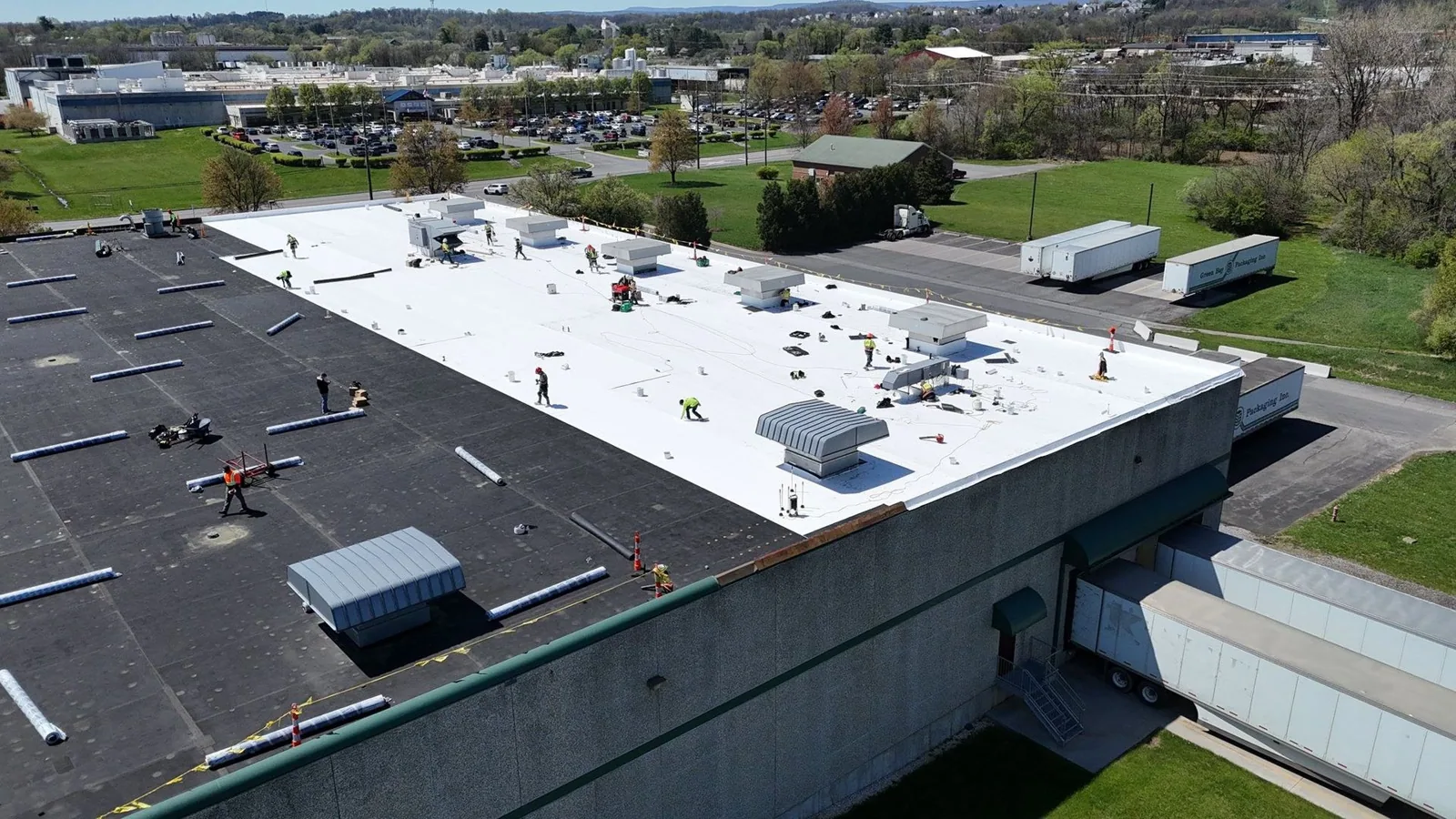
A TPO roof is a welded membrane assembly, so seam and transition details carry as much weight as the open field. We identify sheet condition, attachment, insulation, drain tie-ins, and prior repairs before scoping work. In Sandy Springs, repeated rain and summer heat keep drainage and membrane movement in the owner’s maintenance record. A seam that looks intact from a distance still needs a hands-on check where sheets meet, where equipment interrupts the plane, and where water must leave the roof.
Membrane and seam condition
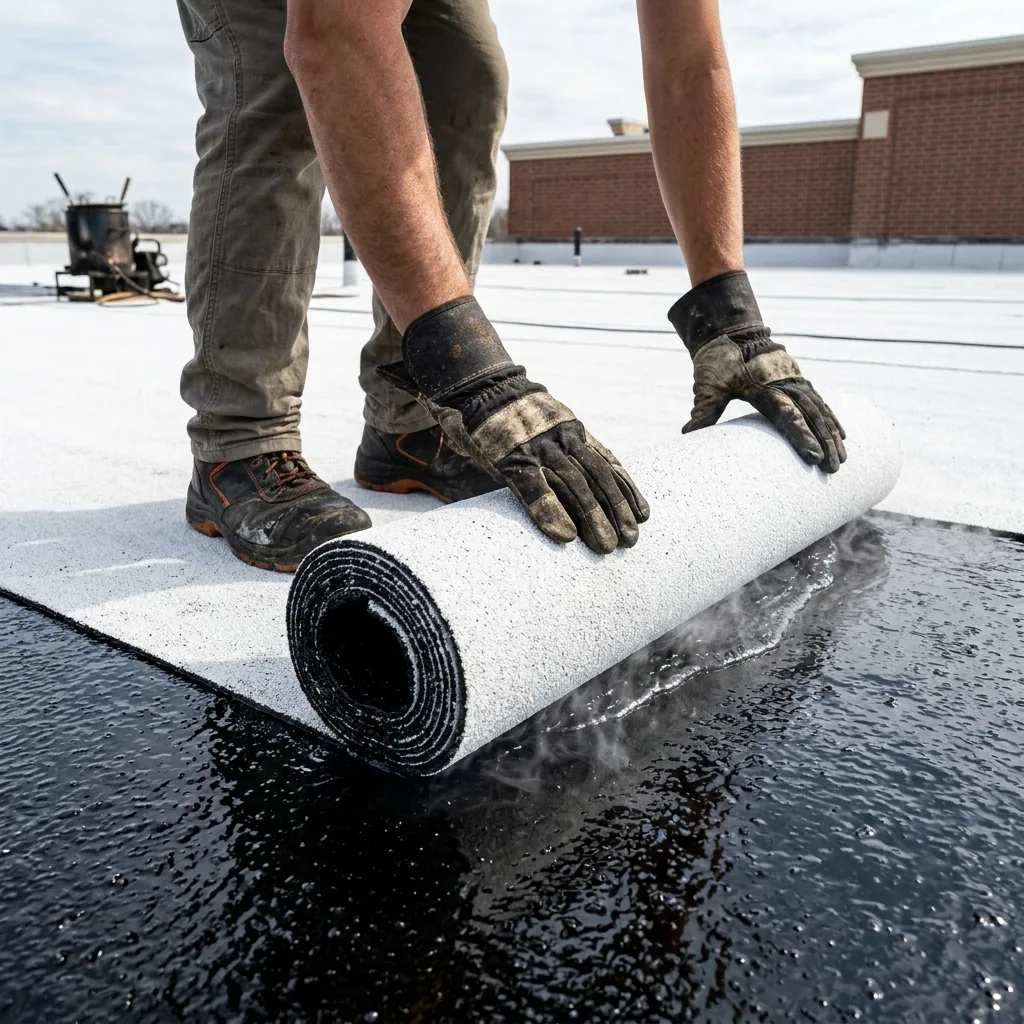
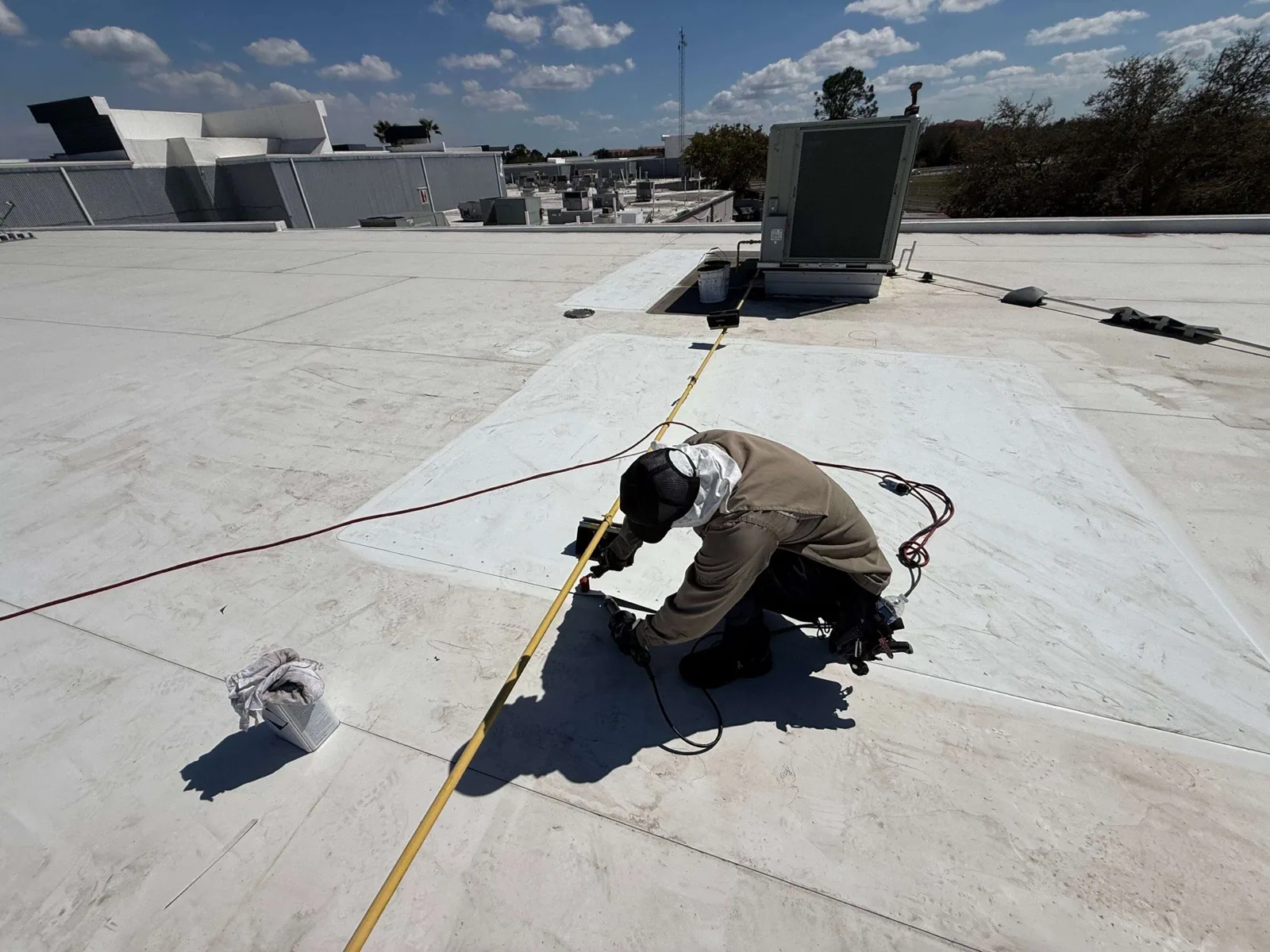
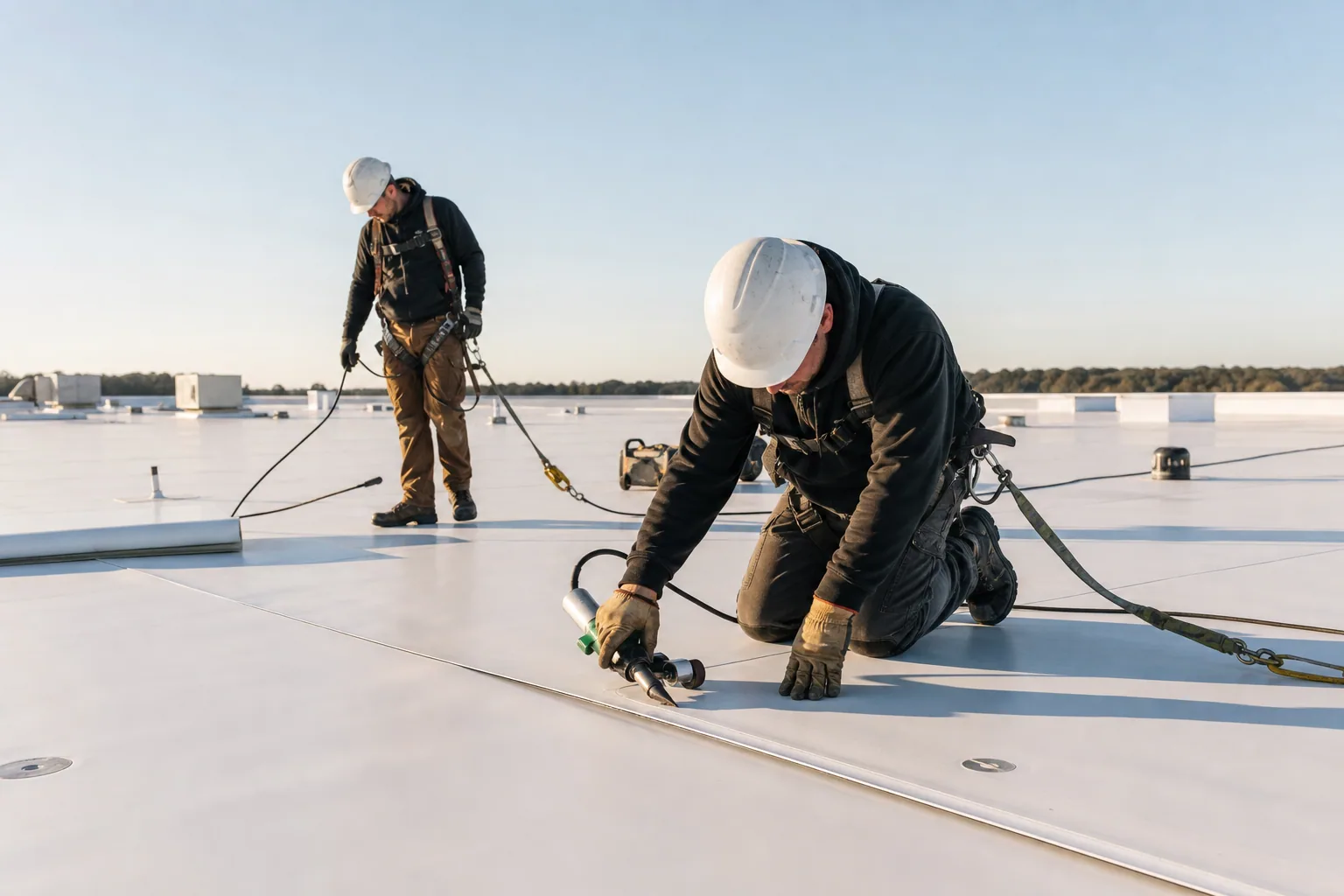
TPO seams are joined with hot air, creating a continuous weld when the surfaces are clean, correctly heated, and rolled under suitable conditions. Age, contamination, movement, and poor earlier repairs can leave a weak edge or void. We inspect lap edges, probe suspect welds where appropriate, and compare visible separation with leaks or interior stains. The repair boundary should include sound material for the tie-in, not just the spot where water became visible. A seam-failure review can distinguish an isolated weld issue from deterioration across a larger roof section.
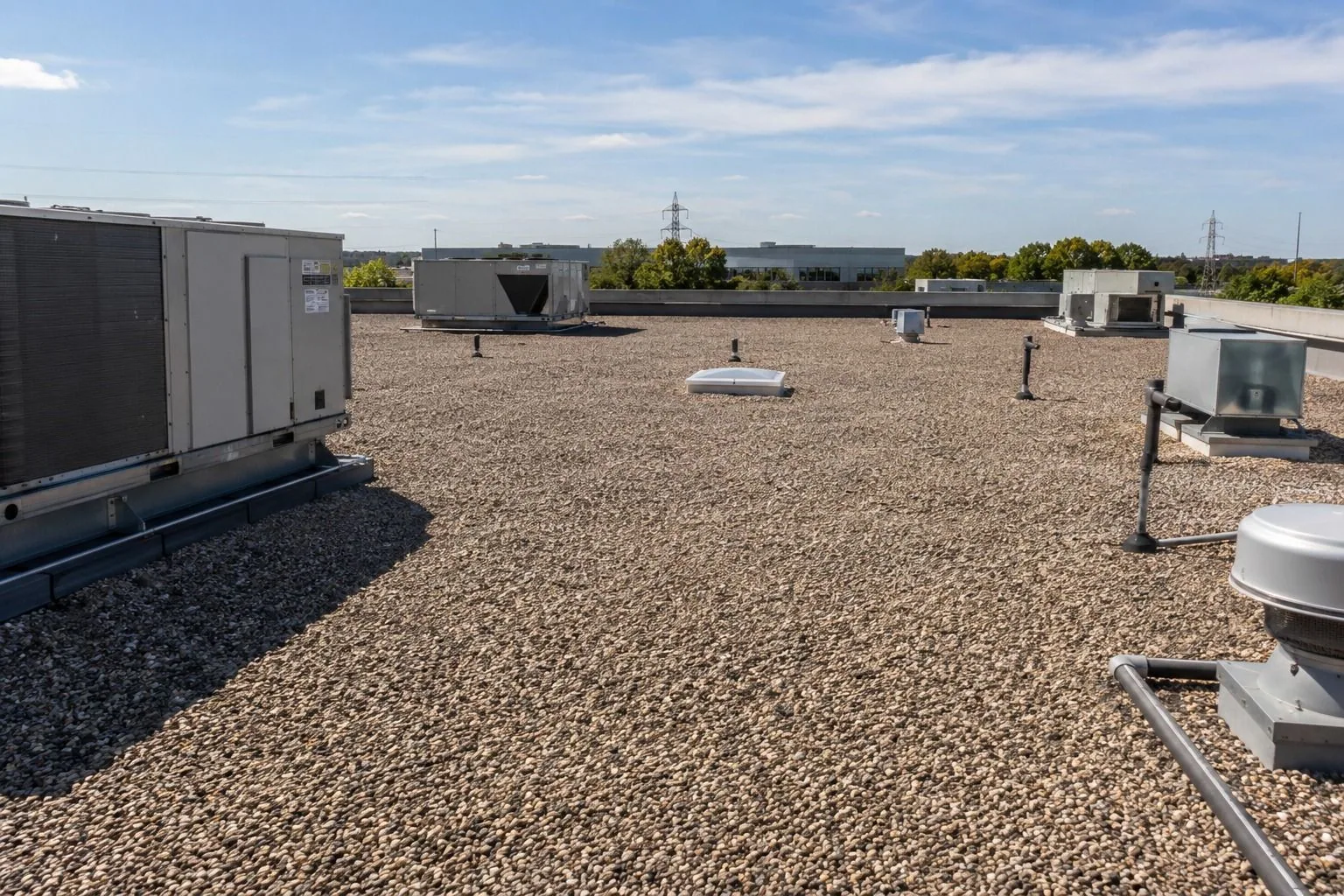
Membrane thickness alone does not describe the roof. The assembly also includes insulation, cover board, attachment or ballast, vapor control where designed, edge metal, and flashing. We record what can be identified and flag layers that require a test opening. A moisture map may help prioritize testing, but it does not confirm the condition of every concealed area. The owner needs a clear line between observed material, measured result, and assumption before comparing repair with renewal.
Water paths at roof details
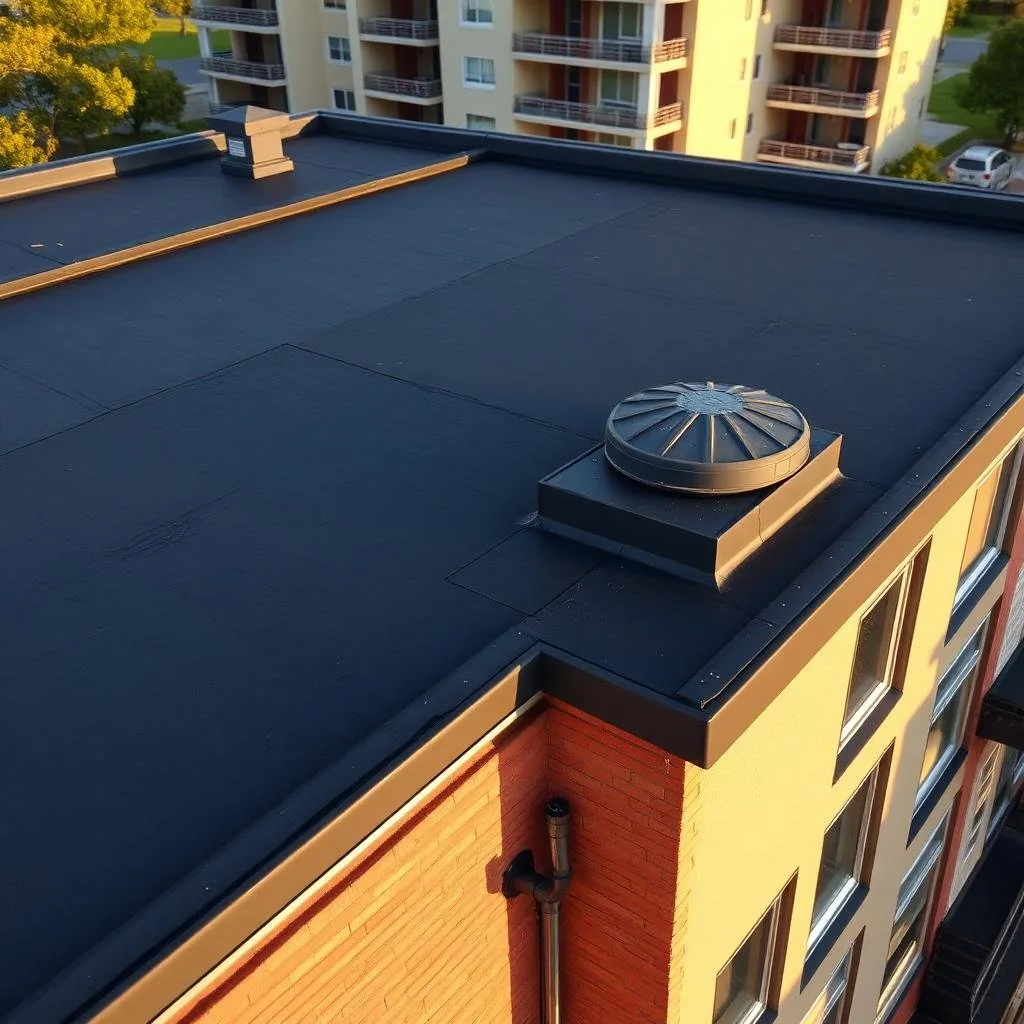
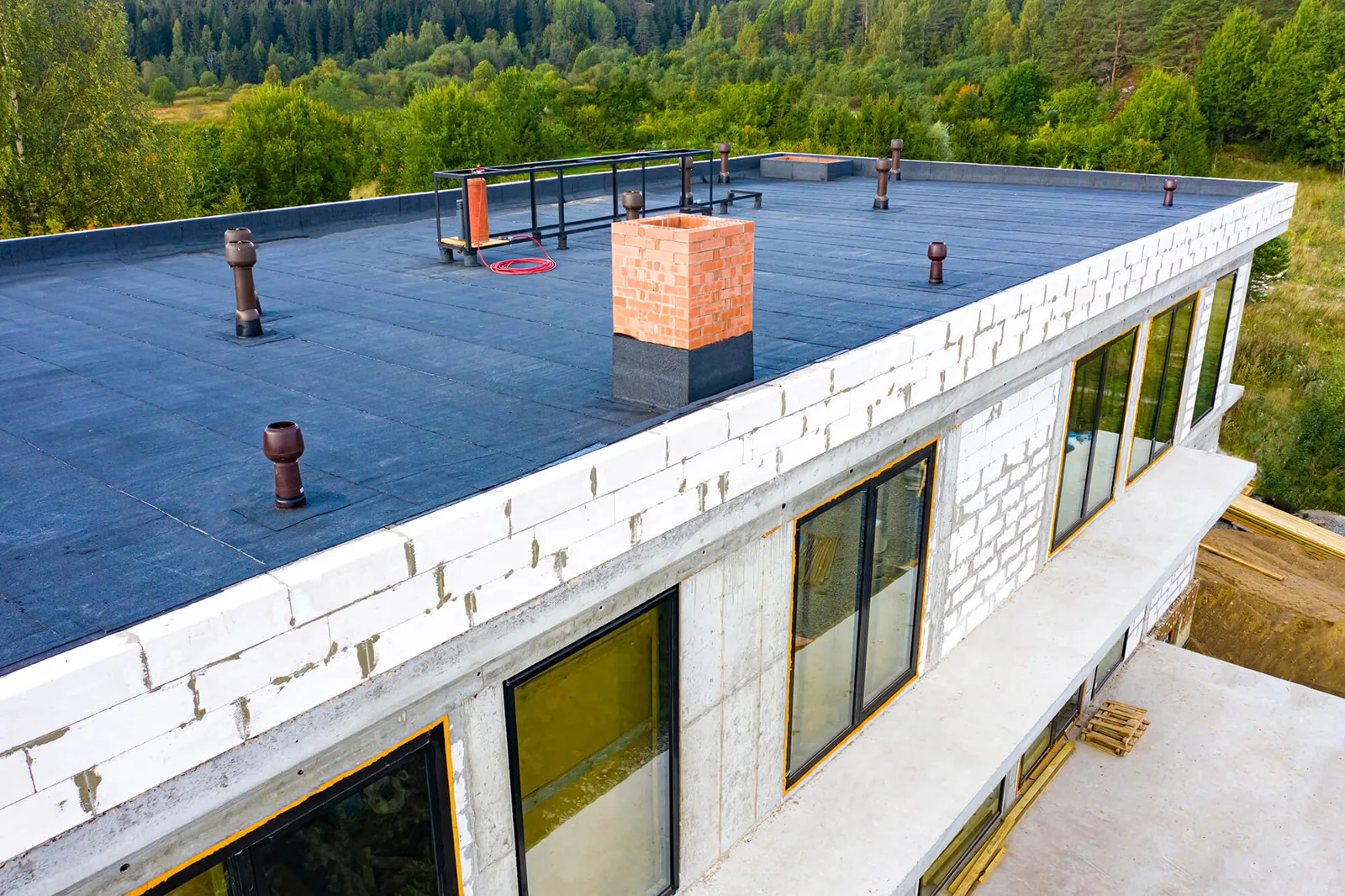
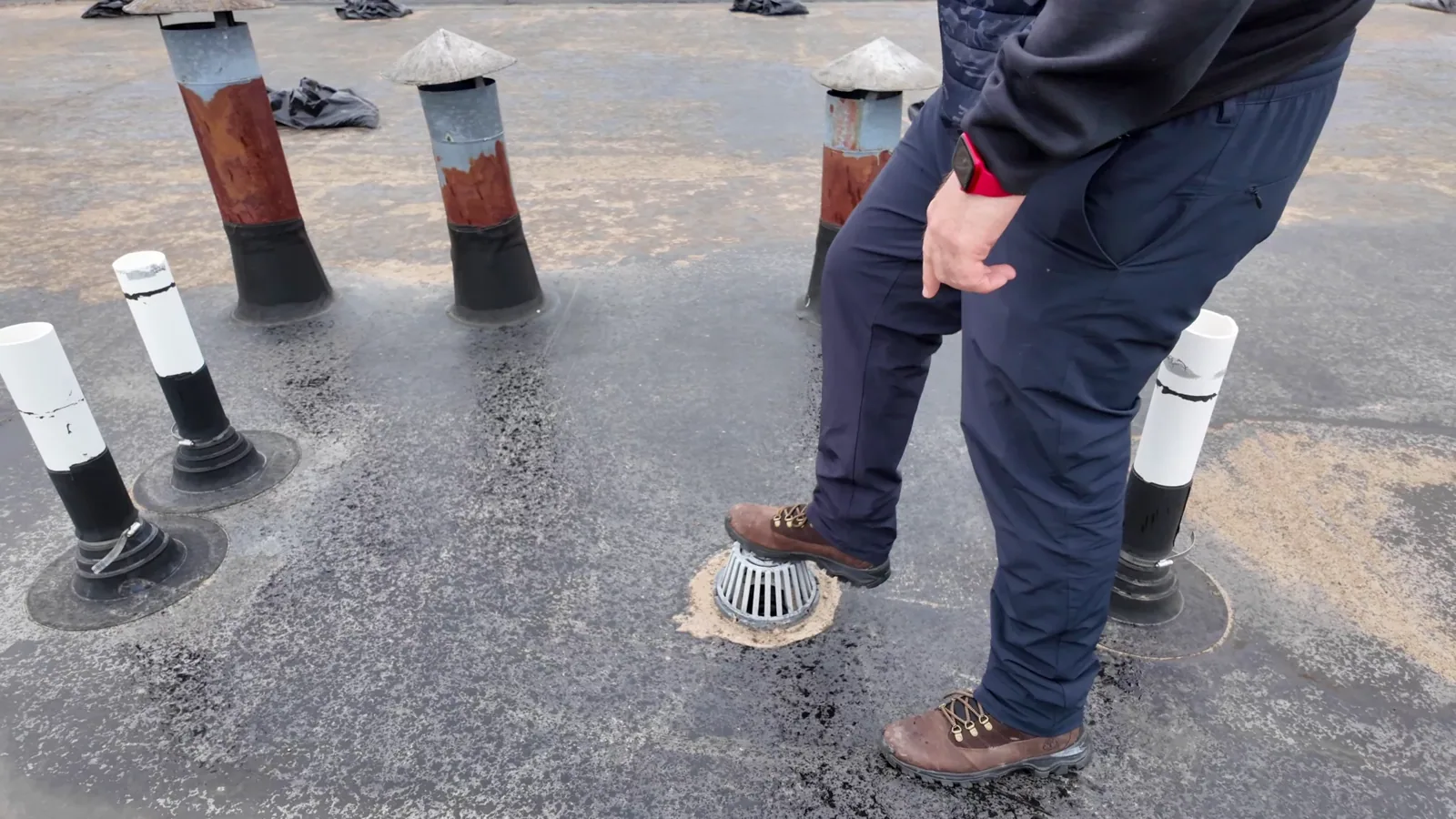
Drains, scuppers, curbs, pipes, expansion joints, and parapets interrupt the membrane. Each one needs compatible flashing and a route that lets water move without collecting at a seam. We check drain bowls, overflow openings, corner reinforcement, membrane terminations, and places where rooftop service traffic has worn the surface. When a leak follows rain, its ceiling location may not match the entry detail. A drainage inspection can document whether the outlet, low point, or tie-in is part of the problem.
Central Perimeter’s office district has a large daytime workforce and four MARTA stations. Roof work above an occupied office may require a separate access plan for equipment, tenant entrances, and deliveries. For each Central Perimeter or Powers Ferry building, we map the roof area, equipment, access route, and drainage before setting the TPO work sequence. We confirm drains, mechanical equipment, safety routes, and occupied hours during the building survey. A Central Perimeter roof assessment can tie those access constraints to the membrane condition and the planned work section.
Repair and renewal choices
A localized puncture, loose flashing, or short seam opening can be repaired when surrounding membrane remains weldable and the insulation beneath it is suitable. We clean and prepare the area, make a compatible patch or detail, then inspect the finished weld. If water has traveled under the sheet or the field has widespread attachment concerns, the repair may not resolve the broader exposure. A commercial roof repair should name the affected zone and any condition left outside its boundary.
A recover can add a new layer only when the existing assembly, moisture, attachment, drainage height, and applicable requirements support it. Tear-off exposes concealed layers and gives the owner a chance to address wet insulation or damaged deck conditions. A recover assessment compares those constraints; a replacement plan sets removal and transition scope. Neither option should be chosen from a product label alone.
A roof may contain more than one assembly, especially where additions or earlier repairs changed the system. An adjoining EPDM roof section or PVC area can have different seam, flashing, and repair requirements. We label each system before work crosses a transition, then keep the scope tied to the membrane actually found. That avoids using a TPO repair detail where the adjacent material needs a different preparation or tie-in.
Heat, rain, and installation windows
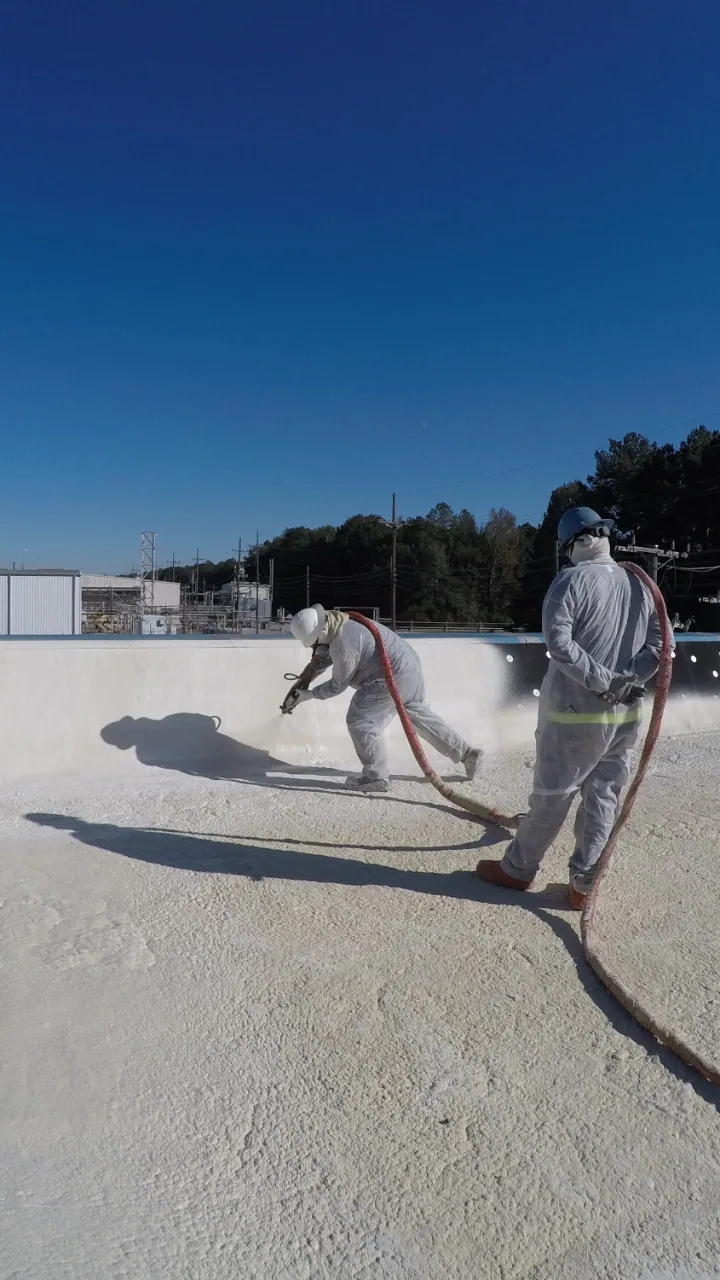
Summer heat in metro Atlanta often reaches near 90 degrees in July and August, while average lows stay in the low 70s. TPO installation still follows the sheet, adhesive, and flashing product requirements for the actual roof temperature and substrate condition. Rain requires another decision: how much area can be prepared and closed before water reaches the assembly? We plan around forecast conditions, secure stopping points, and the time needed for each weld and penetration detail. A rapid stabilization visit can limit exposure if a storm damages an open or recently repaired section.
North End Sandy Springs includes shopping centers along Roswell Road, with future plans considering additional housing, retail, office, and green space. A property in that changing district still needs a survey of its actual system, roof access, and business hours. We schedule material handling and roof access with the property contact. We coordinate access with the property contact and base the membrane recommendation on the assembly inspected.
Long-term weather records for North and Central Georgia include roughly seven large-hail days and six tornado days per year. After a reported storm, we inspect actual punctures, displaced edge metal, open welds, and damaged penetrations instead of assuming every mark is a membrane breach. A hail inspection can document impact locations and determine whether a test or repair is needed. The roof record should state what was observed at this building and which sections were not accessible.
Condition trend and service life
The owner’s file should connect each repair to a roof zone, photo, date, material, and follow-up interval. Note seam repairs that remain stable, areas where moisture testing is pending, and drainage conditions that need another visit after rainfall. A roof condition report can make that history usable during the next capital review. Where several buildings have different TPO ages and repair patterns, a portfolio roof program can rank them without assigning one renewal date to all.
Send roof plans, active leak areas, system age if known, prior repairs, access needs, and the budget window. We inspect the membrane and transitions, distinguish observed conditions from open questions, and return repair or renewal steps by roof section. The recommendation states what can be addressed now and what evidence would change the next decision.
Inspection timing can reflect the roof’s exposure and use. A section with recurring foot traffic near equipment may need a different check from a roof area that stays clear. We note service routes, seam condition, drainage changes, and repairs that alter the next inspection priority. That record helps the owner set an interval based on evidence and access, then revisit the decision after major weather or mechanical work.
Questions About TPO Roofing
How do you check a TPO seam that has started to open?
We inspect the weld edge, nearby sheet condition, repair history, and moisture indicators before setting the patch boundary. The repair needs clean, sound material beyond the visible opening and a compatible weld detail.
Can a TPO roof be coated instead of replaced?
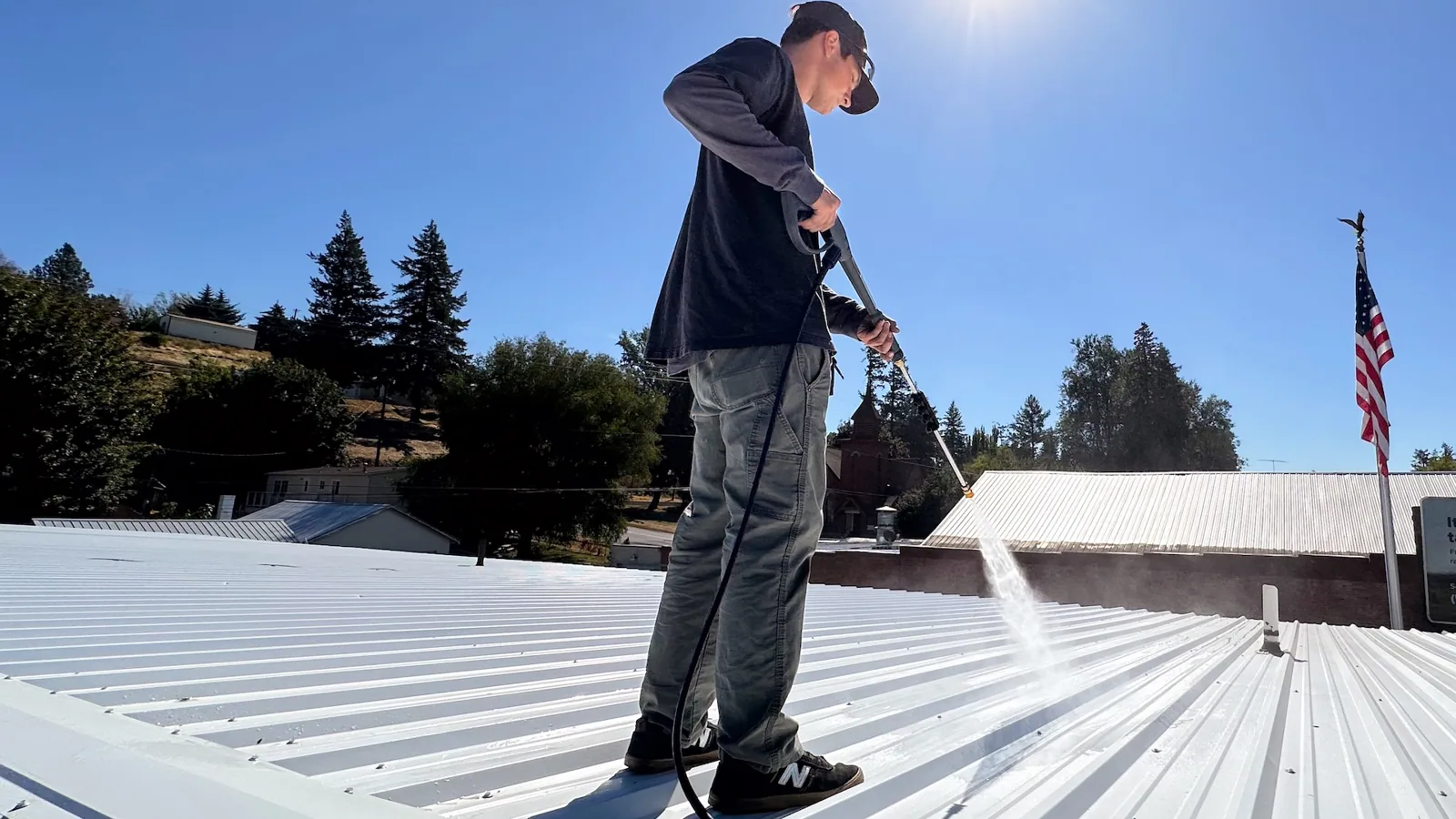
A coating is an option only when the membrane, surface preparation, attachment, drainage, and coating compatibility support it. We compare those findings with recover and tear-off conditions before pricing a restoration system.
What does ponding water mean for a TPO assembly?
Standing water can point to blocked drainage, a low roof area, settlement, or an outlet problem. We map the water and inspect the membrane around the low point, then identify whether cleaning, repair, plumbing review, or slope correction is needed.
Can a repair be completed during a rainy week?
The substrate and installation products must meet their moisture and temperature requirements. We check the actual forecast and divide work into areas that can be prepared and secured before conditions change.
What records help evaluate a TPO roof over time?
Keep roof-zone plans, installation or replacement details, seam repairs, moisture results, drainage notes, photographs, and open testing questions together. We use that history to distinguish a recurring detail from a broader system trend.

Review a TPO roof section
Share roof plans, active leak areas, repair history, access limits, and the budget window. We will return a prioritized membrane review with defined next actions.
Call 555-555-5555 or send the building details.