Commercial Roof Leak Repair in Sandy Springs, GA
A single leak report can change the repair order across an office portfolio, but the building record sets the scope. We start with the room, timing, and pattern of the report, then trace the likely water path through the assembly above it. The aim is to stop active entry and establish a boundary that can be inspected and repaired. Sandy Springs receives frequent rain, and spring and summer storms can bring damaging wind, so a leak plan needs both immediate protection and a permanent correction tied to the building evidence.
Interior Report
Tell us when the leak began, whether it changes with wind direction, what room or equipment is affected, and whether the area has leaked before. We compare those details with ceiling stains, wall marks, equipment alarms, and prior work. Water may travel across a deck or insulation before it reaches the interior. The first inspection notes the point where moisture became visible and the roof sections above and uphill from it. A commercial roof inspection documents the accessible details and identifies what needs a closer test.
Medical and office properties need fast coordination with people below. Sandy Springs' Medical District includes three major hospitals and thousands of physicians and medical professionals. An active leak near clinical space, records, or electrical equipment may require a restricted work area and direct notice to facilities staff. For a medical district roof visit, we coordinate room access, infection-control or operating requirements provided by the site, and a secure route for temporary materials before opening the roof.
Roof Path and Entry Point
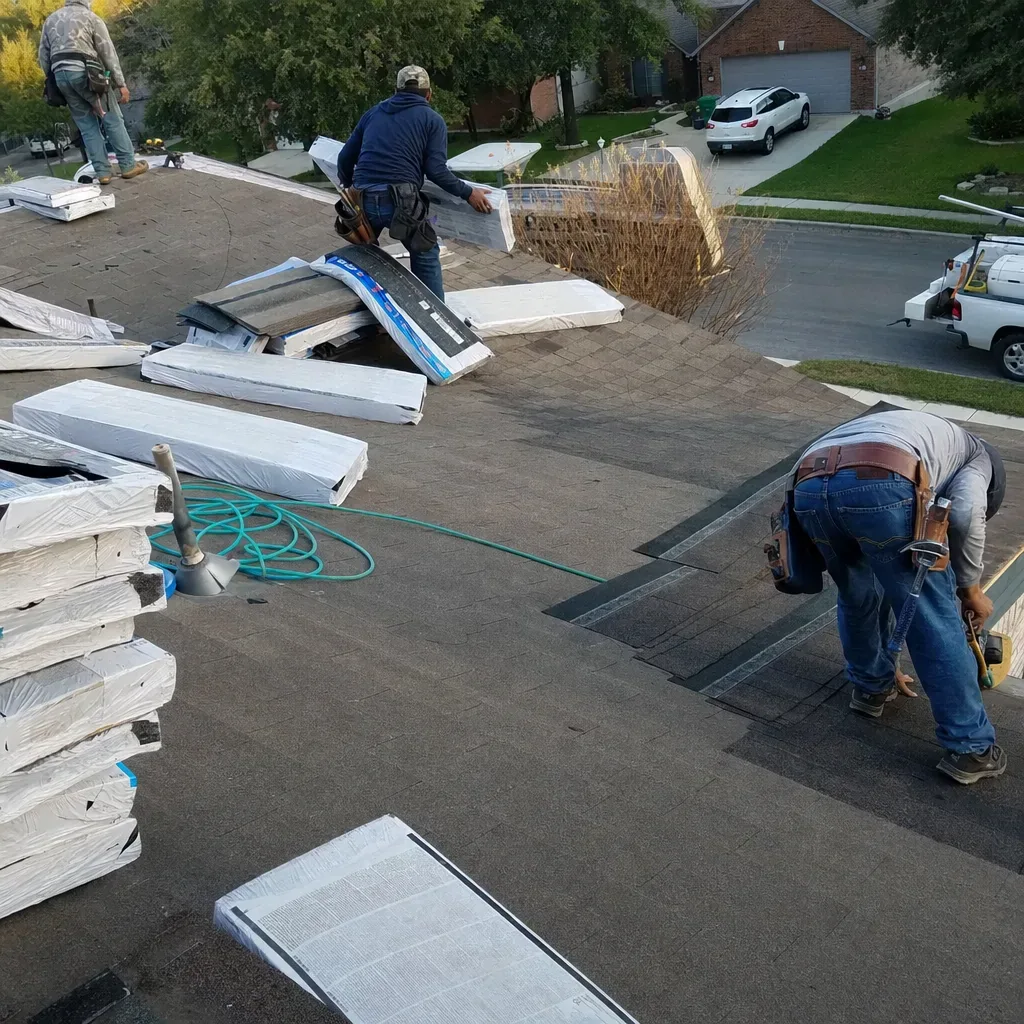
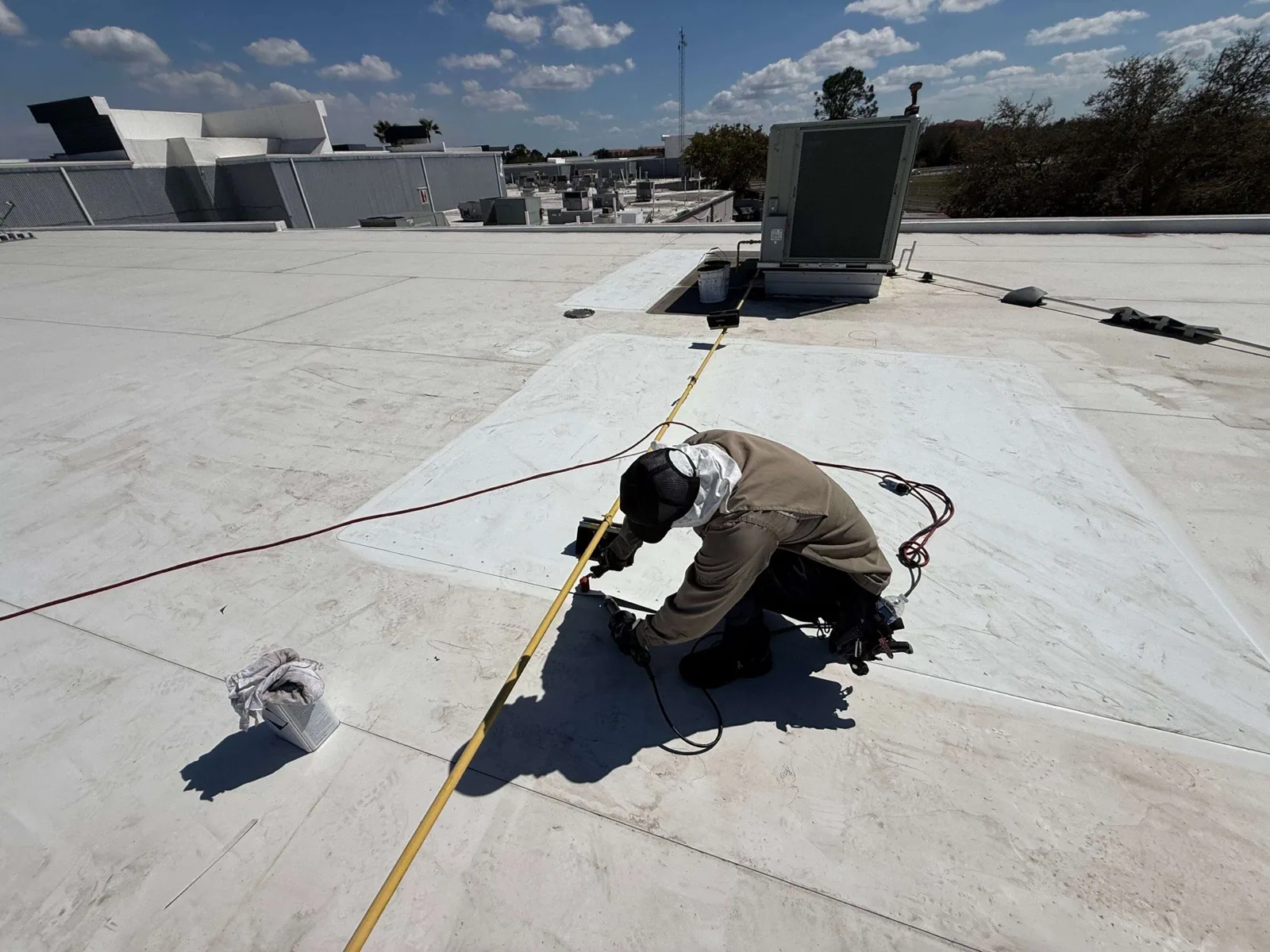
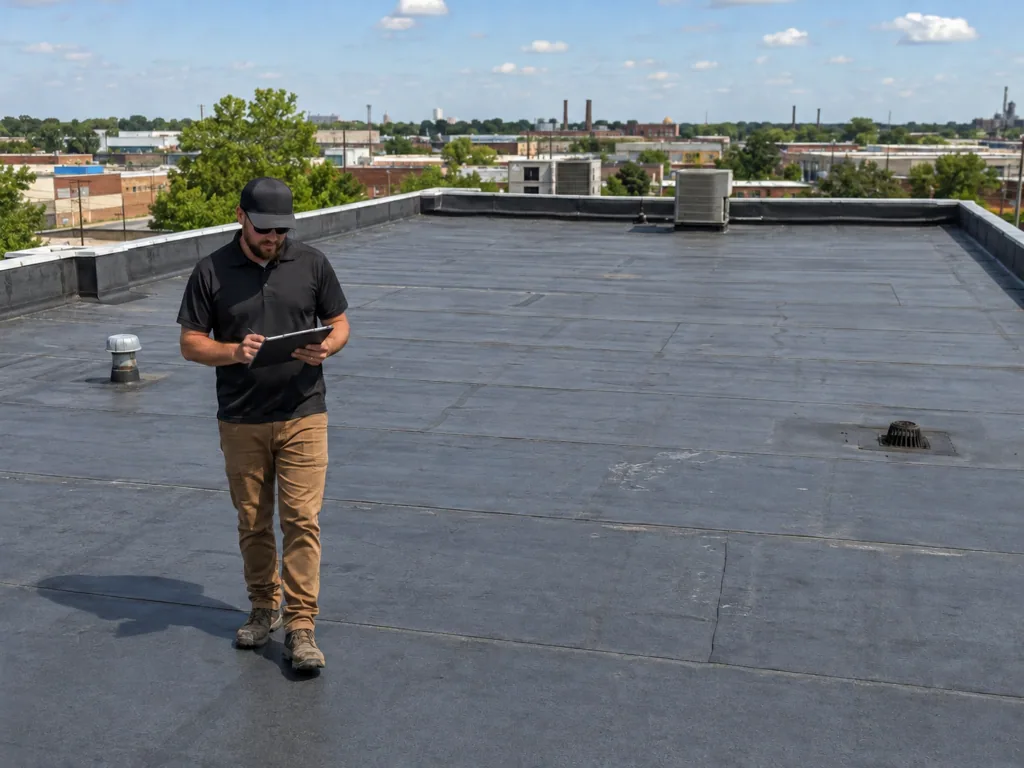
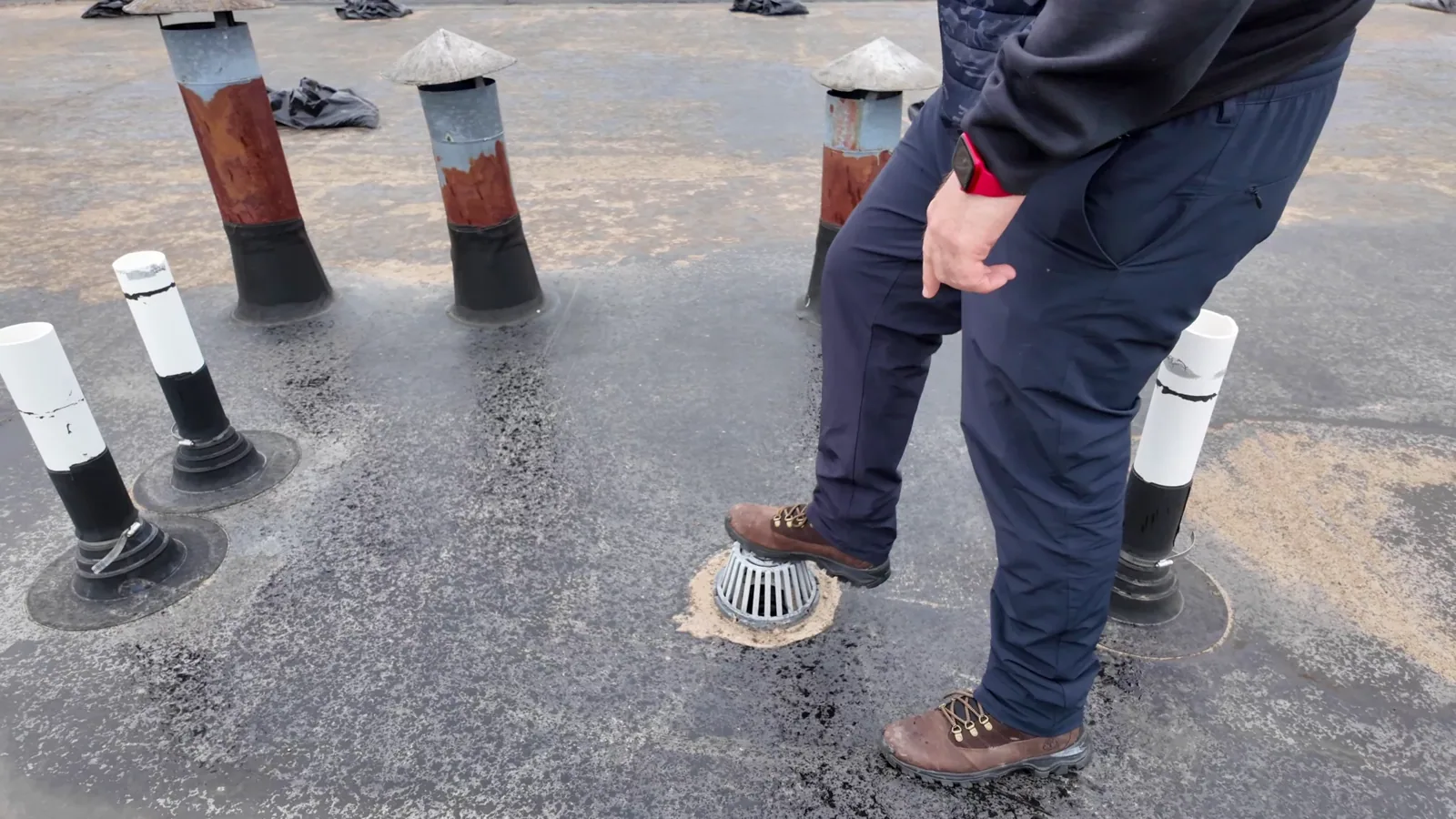
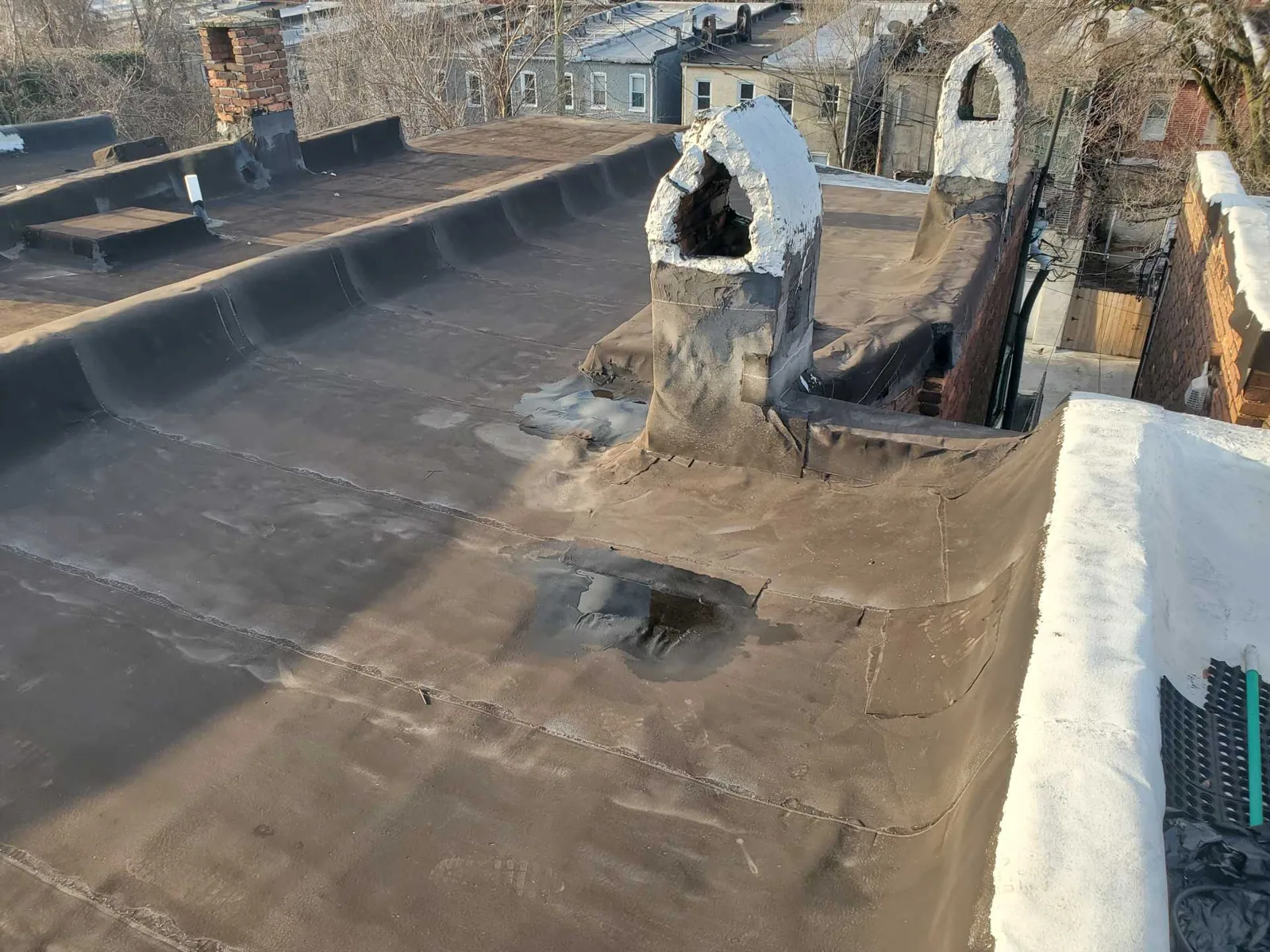
At the roof, we examine seams, curb corners, pipe boots, edge metal, wall transitions, skylights, drains, and any previous patch along the likely route. The repair boundary follows the defect, not simply the interior mark. A probe can reveal a loose lap. A moisture scan can help select a test area, while an opening may be needed to confirm whether insulation is wet. We state the method and limits so the owner can separate observed surface conditions from concealed layers that have not been checked.
Frequent winter and early-spring rain keeps drainage, overflow routes, and flashing under regular attention. We inspect drain bowls and strainers, then check whether water can pass through the outlet and its connection to the membrane. A drain and scupper review can identify a blockage; if standing water remains after flow is restored, a separate ponding-water assessment checks the roof plane.
Before opening the membrane, compare the leak's start time with recent rain, wind direction, HVAC service, and plumbing activity. Sketch the roof route from the reported room toward drains, curbs, seams, and wall transitions, then note which details were inspected first. If two possible sources remain, rank the next test by how clearly it would distinguish them. This prevents an early patch from hiding the evidence needed to select the permanent repair.
Immediate Protection
If water is entering now, the first step is to limit exposure without making the permanent repair harder. We identify the affected interior area, protect contents, and locate the roof opening or likely path. Temporary cover, diversion, or a limited seal may stabilize the condition until the surface is ready for permanent work. The record identifies what was protected, where the measure ends, and what inspection or material replacement remains. Emergency response is available any hour, including nights, weekends, and holidays, when a property needs prompt stabilization.
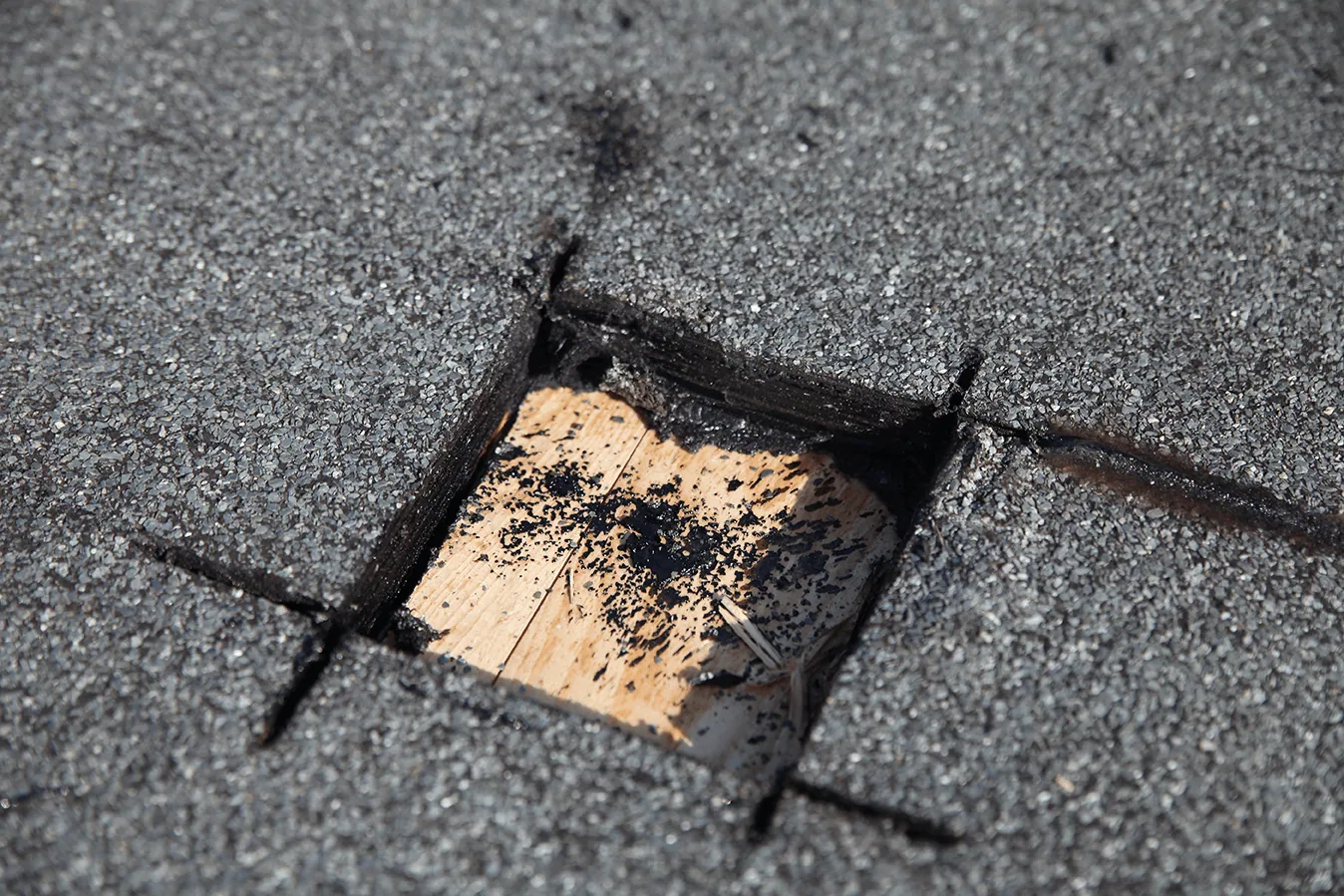
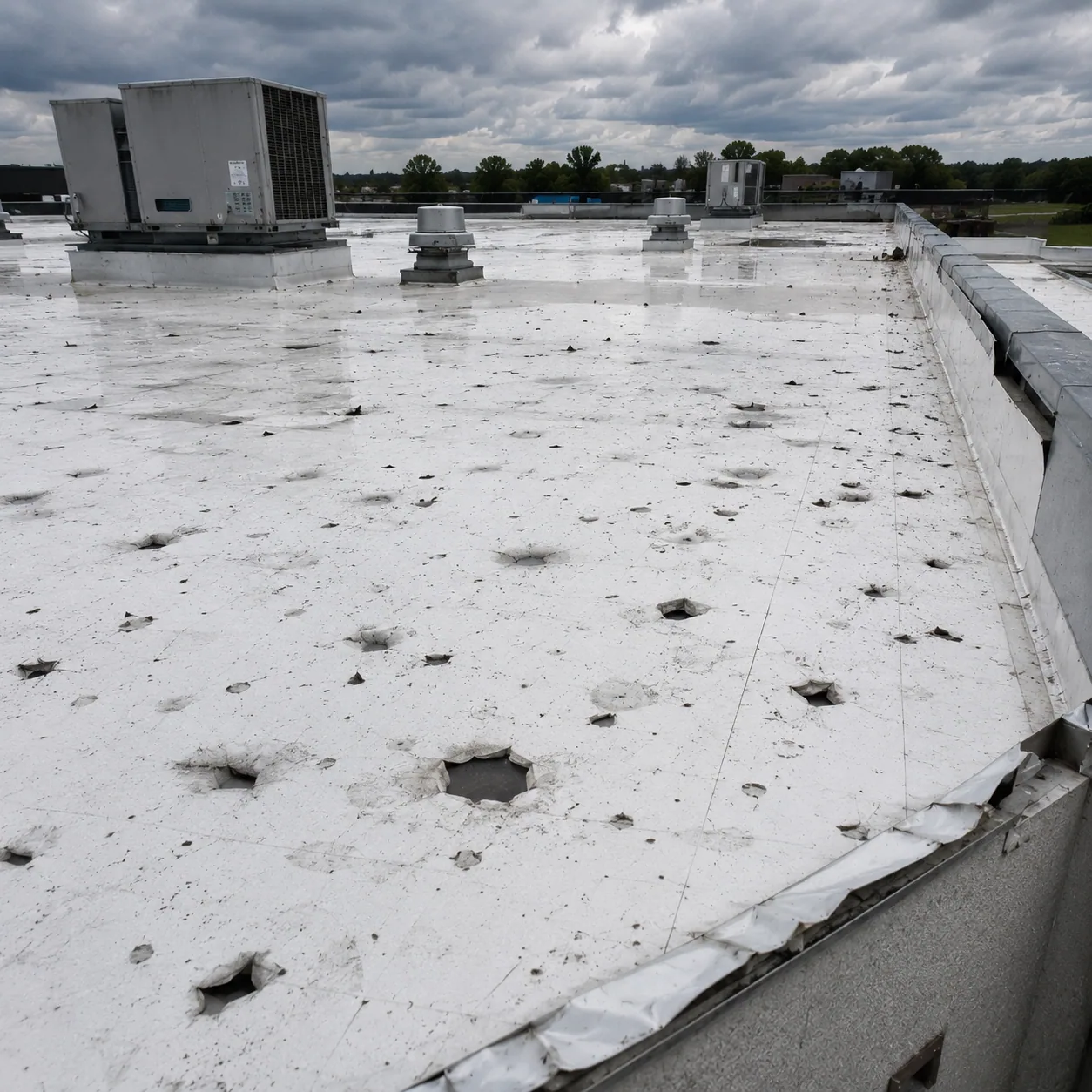
Across North and Central Georgia, large hail, tornadoes, and damaging thunderstorm winds recur, with severe-wind activity concentrated in spring and summer. After a reported event, we inspect the actual membrane, edges, penetrations, and equipment transitions. A hail-damage roof review links photos and test results to any confirmed opening instead of extending one observation across the whole property.
Permanent Repair Scope
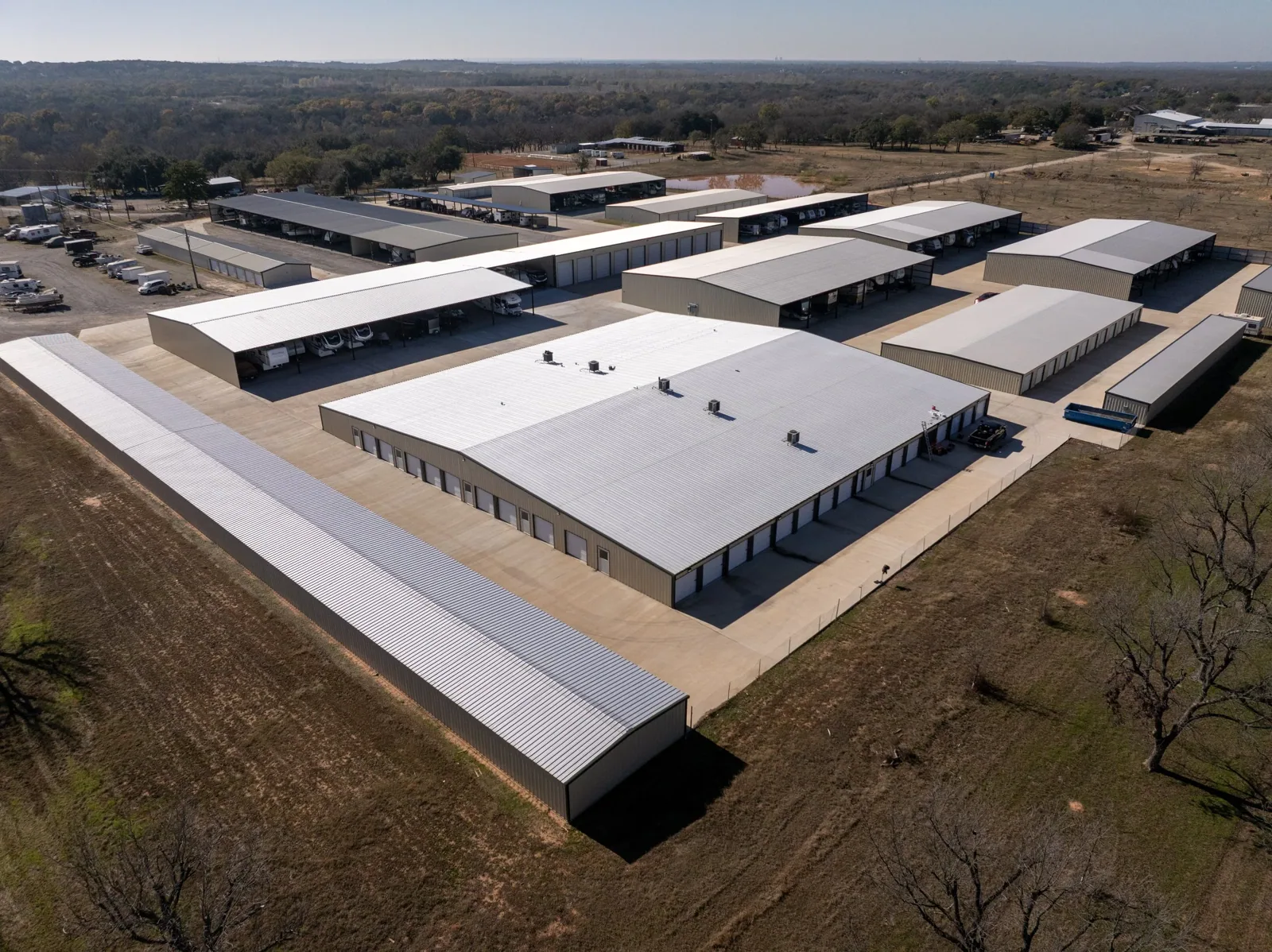
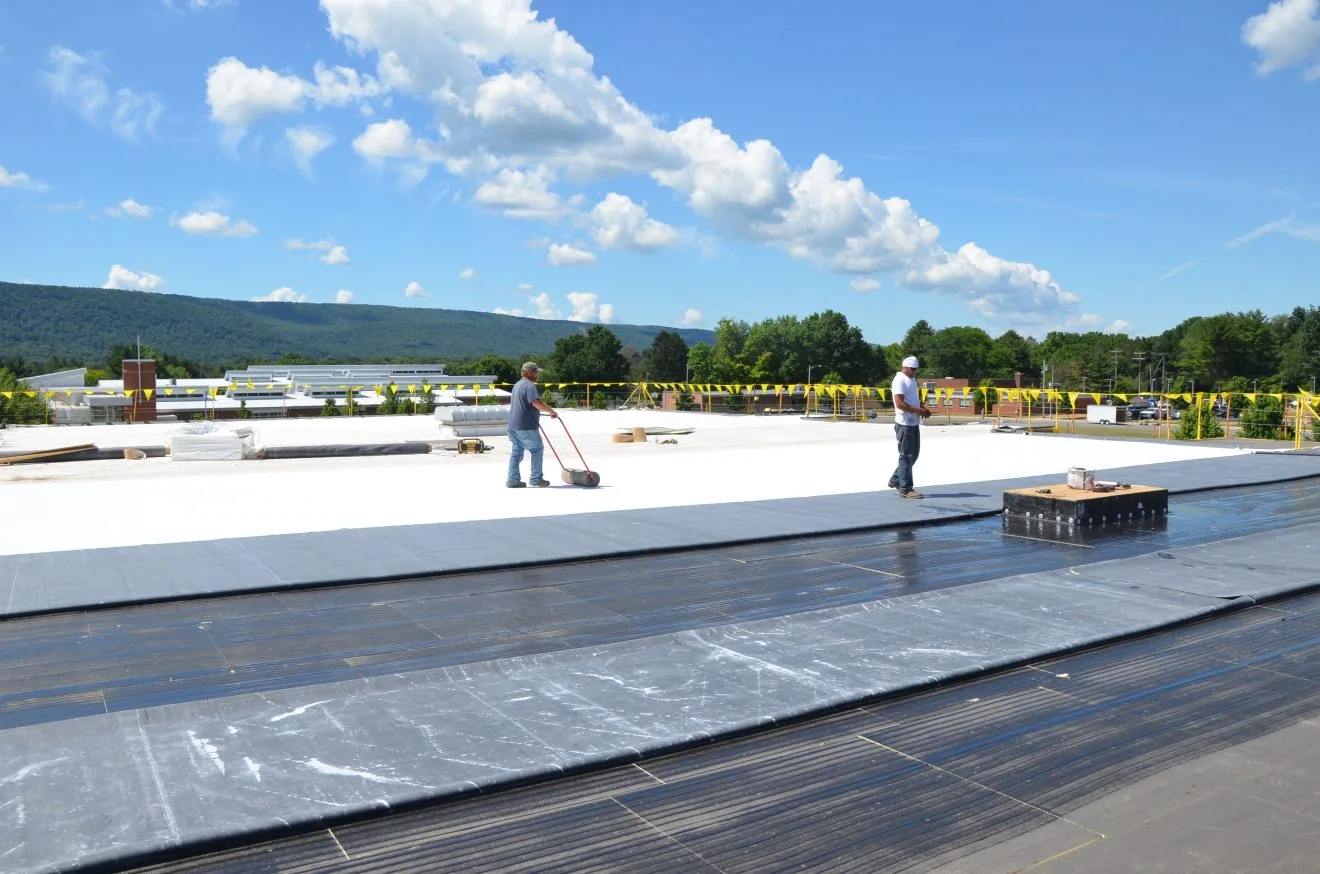
Once the assembly is identified, we select compatible preparation and materials. A welded single-ply seam needs a verified weld; modified bitumen has a different lap and surfacing; a metal roof needs a detail that preserves its movement and fastening. We repair sound surrounding material and restore the transition that failed. If the wet area extends under the membrane, the scope states how far removal should go and what substrate or insulation work is included. A planned roof repair records preparation, material, test, tie-in, and closure conditions.
Humid summer heat can affect roof-surface work and the time a repair remains exposed. We check current conditions, stage materials for the selected method, and cap each work period with a weather-tight stopping point. The facility contact identifies occupied hours, rooftop equipment that must remain on, and any shutdown authority. For buildings in Central Perimeter, four MARTA stations and access to I-285 and Georgia 400 support regional travel, but the property still determines how a crew enters and stages. A Central Perimeter inspection begins with those property-specific limits.
Follow-Up and Condition Trend
After repair, we photograph the closed detail, record the tested area, and state whether interior drying or another roof visit is needed. If the leak returns, the original map helps identify whether water entered at the same detail or a nearby transition. We do not treat a dry ceiling on the next day as proof that concealed material is dry. The owner receives any remaining test, repair, or monitoring action with an assigned next step.
Repeated leak calls at one roof section can change the budget conversation. We group reports by roof zone, note repair dates, and compare them with drainage, membrane, and moisture findings. A condition report keeps confirmed defects separate from areas still under review. If the wider pattern supports renewal, a capital review can compare the deferred exposure with the planned budget year and the access window required for larger work.
To schedule a leak assessment, share the room or equipment affected, time of entry, previous repair history, roof plan if available, site contact, and access requirements. We will set the next visit around the building's operating hours and return a scope that distinguishes temporary protection from permanent work. The repair boundary remains attached to the roof section and the evidence gathered there.
Questions About Commercial Roof Leak Repair
Why might a Central Perimeter ceiling leak sit downhill from the roof defect?
A deck flute, insulation joint, curb, or sloped surface can carry water before it reaches a ceiling. We compare the interior report with the roof details above and uphill from it. The test boundary follows the likely route until the entry point and affected layers are clear.
What temporary protection can limit an active Sandy Springs roof leak before permanent repair?
Yes. A temporary measure can limit water entry while the surface dries or a broader scope is confirmed. We record its location and limit, protect affected interior areas, and identify the permanent inspection or repair still required.
What should a facility manager report about a leak?
Share the time it appeared, affected room or equipment, weather at the time, whether wind changes the leak, prior repair dates, and any recent rooftop work. Those details help us choose the initial inspection route and coordinate access below.
Does a Sandy Springs storm report establish roof damage?
No. It explains why an inspection may be timely, but the repair decision comes from observed conditions on the building. We check seams, edges, penetrations, drains, and equipment transitions, then document the area that was tested.
How do you know when a leak repair is complete?
The closeout identifies the material, tested tie-in, photographs, roof zone, and any remaining moisture or follow-up question. If the assembly below was opened, the record shows what was replaced and how the membrane was restored. A later report can be compared with the same map.
Set the Leak Review
Share where water appeared, when it started, roof access details, prior repairs, and the facility contact. We will coordinate an inspection and define temporary and permanent next steps.
Call 555-555-5555 or send the building details.