Commercial Roof Capital Planning in Sandy Springs, GA
A roof budget is more useful when it separates an urgent condition from a candidate renewal and an unknown that still needs testing. We connect inspection evidence, repair history, access, and operating impact to a practical sequence. In Sandy Springs, Central Perimeter and the Medical District keep occupied commercial and clinical buildings active throughout the year, so the work window can influence which roof moves first. We build the comparison around each asset rather than assigning a shared date to every building.
Establish a comparable starting point
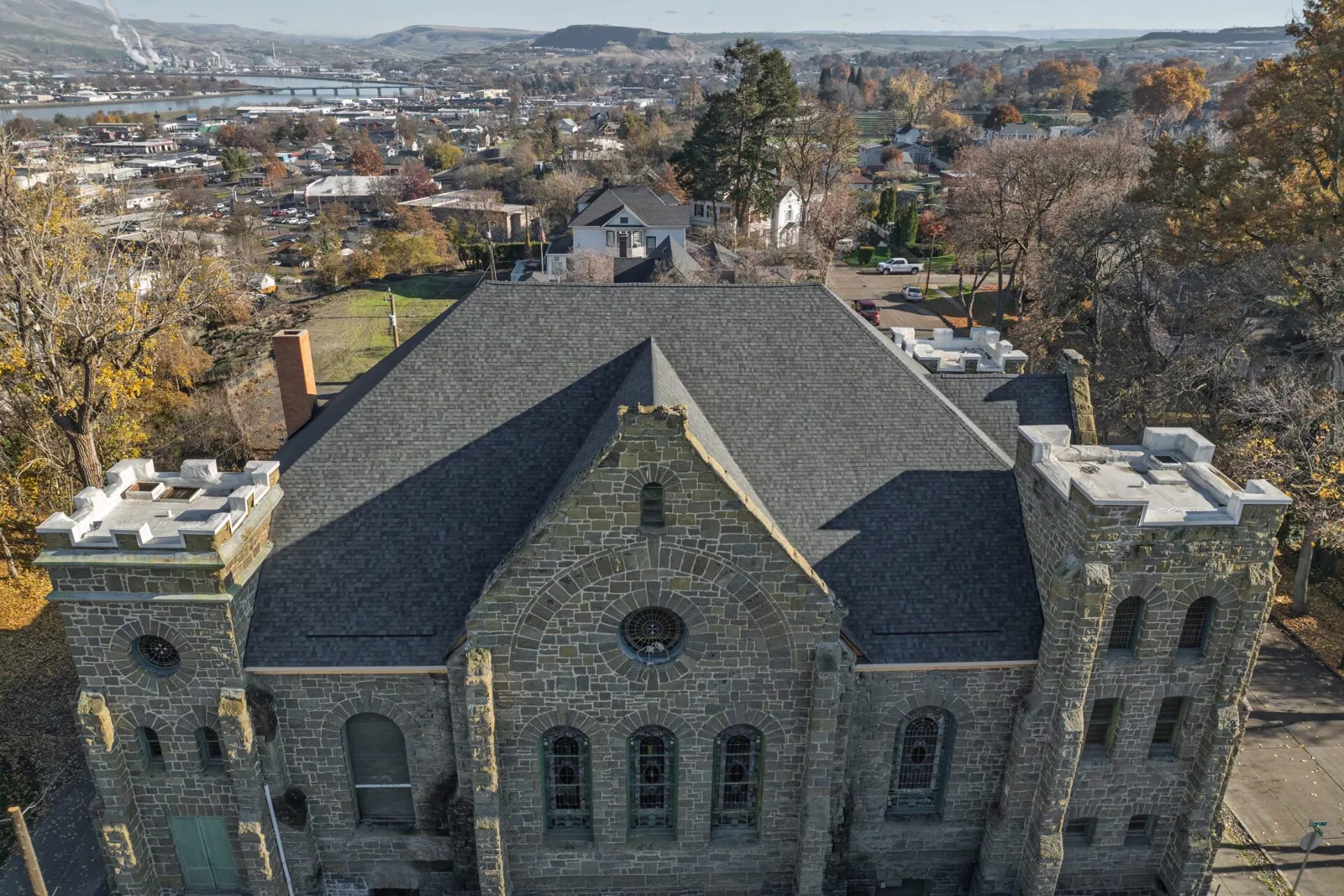
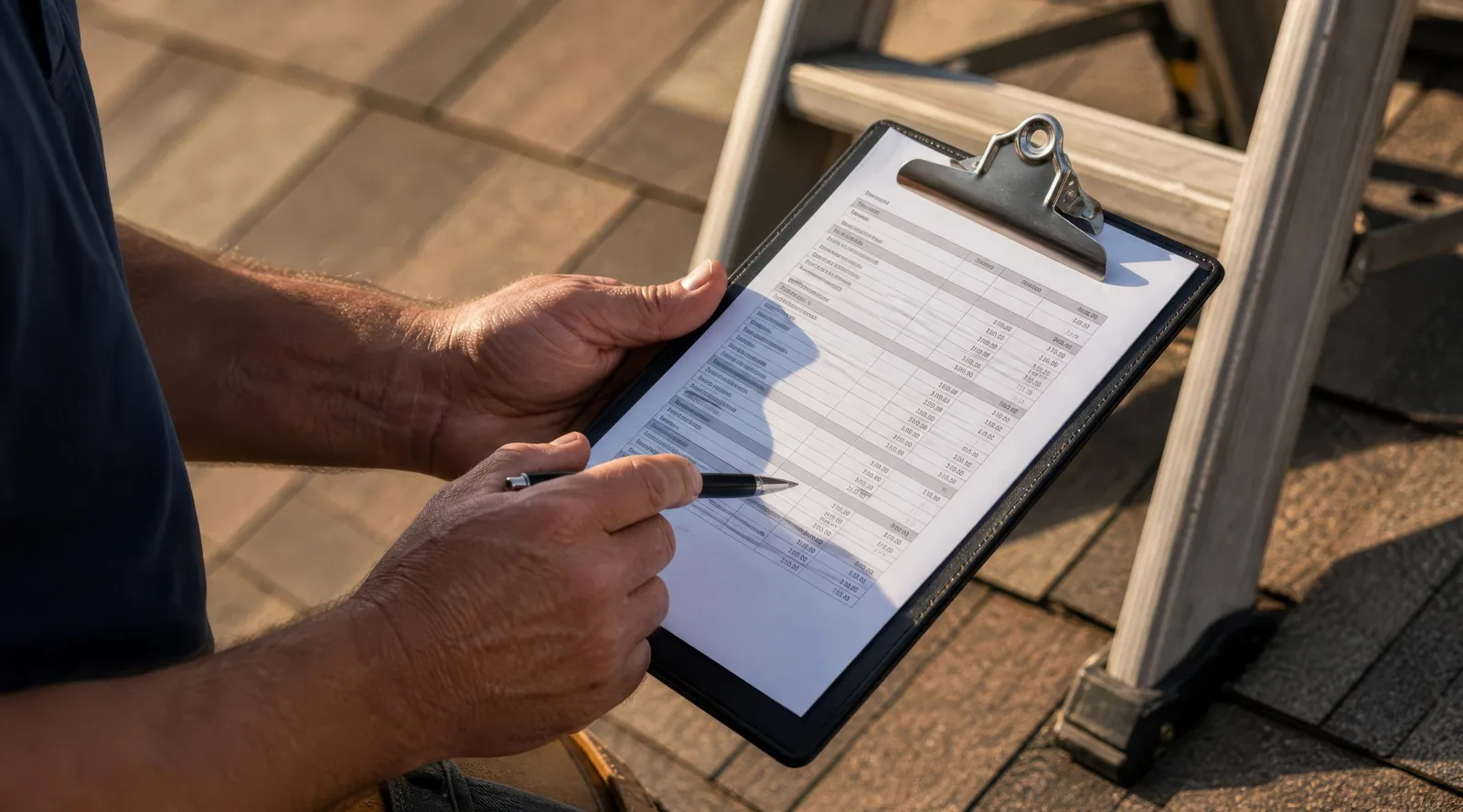
We begin with the roof inventory, available drawings, prior scopes, service calls, and the owner's budget cycle. Each candidate lists the known system, approximate area when documented, condition observations, unresolved questions, and the evidence date. If a roof has not been inspected recently, the capital request should identify the field review needed before final quantities are set. A roof inspection can establish the current condition; a condition report can preserve findings, photos, and test locations.
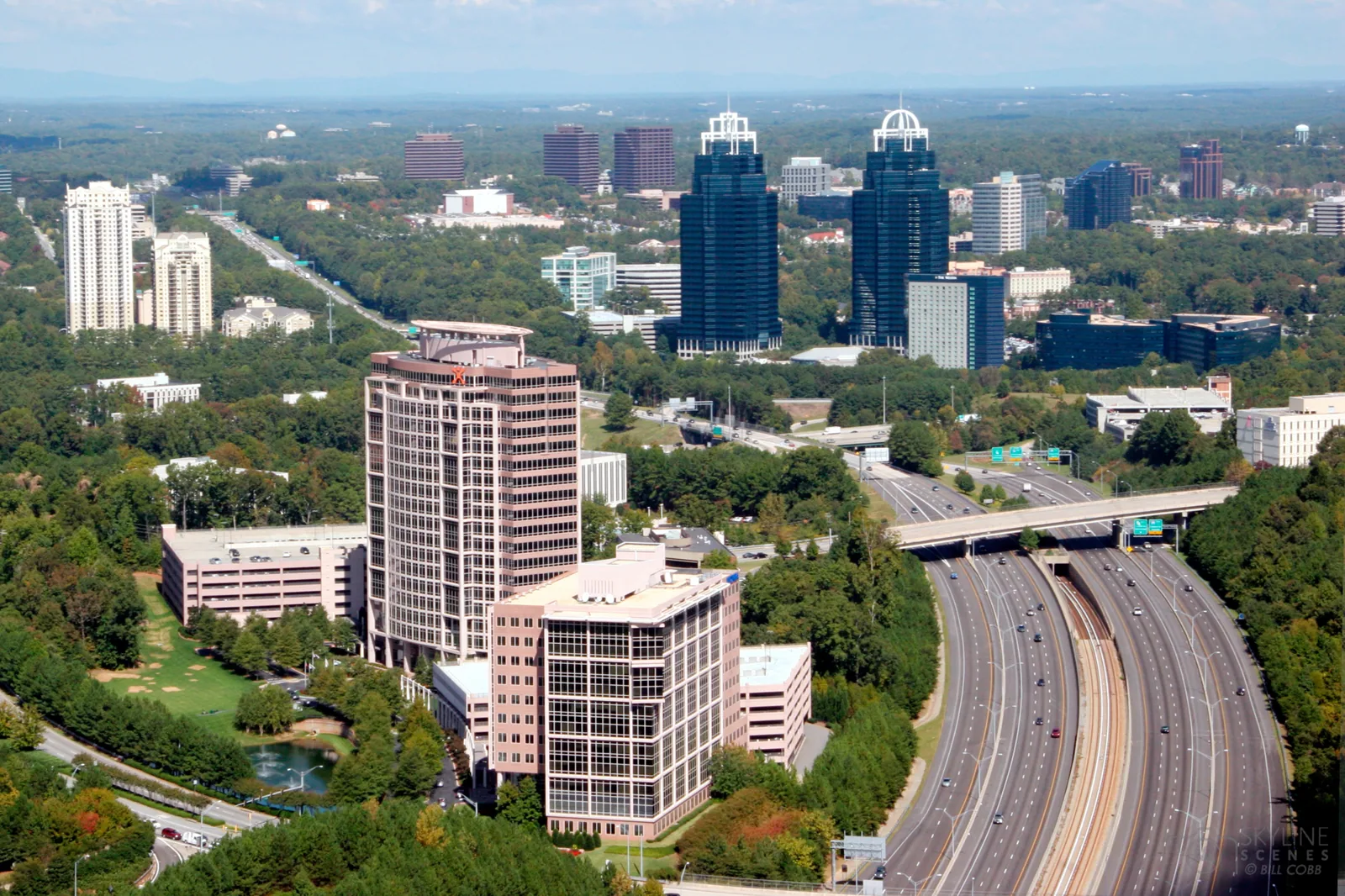
Central Perimeter's office market exceeds 123,000 workers, with four rail stations serving the district. Central Perimeter combines major office, medical, and mixed-use properties, so delivery windows and building access should be confirmed with each facility before the roof review. We use the property manager's access plan and tenant schedule to estimate a workable sequence. For a building in the Central Perimeter, the manager confirms loading, roof entry, and any periods when work cannot occur.
Group findings into immediate protection, near-term repair, investigation, and renewal candidate. Record the reason for each category and what would change it. This keeps a roof with an isolated leak separate from one with broad moisture or widespread attachment concerns.
Rank by evidence and operating consequence
A capital list should reflect more than age. We compare condition severity, repeat calls, test coverage, consequence of water entry, tenant or clinical impact, and access burden. A roof above a critical space may deserve earlier attention than a larger roof with a stable record. The list should show how much is confirmed and where further inspection could change the ranking.
The city's healthcare cluster includes three major hospitals and thousands of physicians and medical professionals in the Medical District. These are distinct facilities in an active healthcare cluster, not one combined roofing asset. Clinical access and patient schedules can affect procurement and phasing at an individual building. The owner or facilities lead supplies those constraints, which we connect to the roof recommendation without assuming identical campus systems.
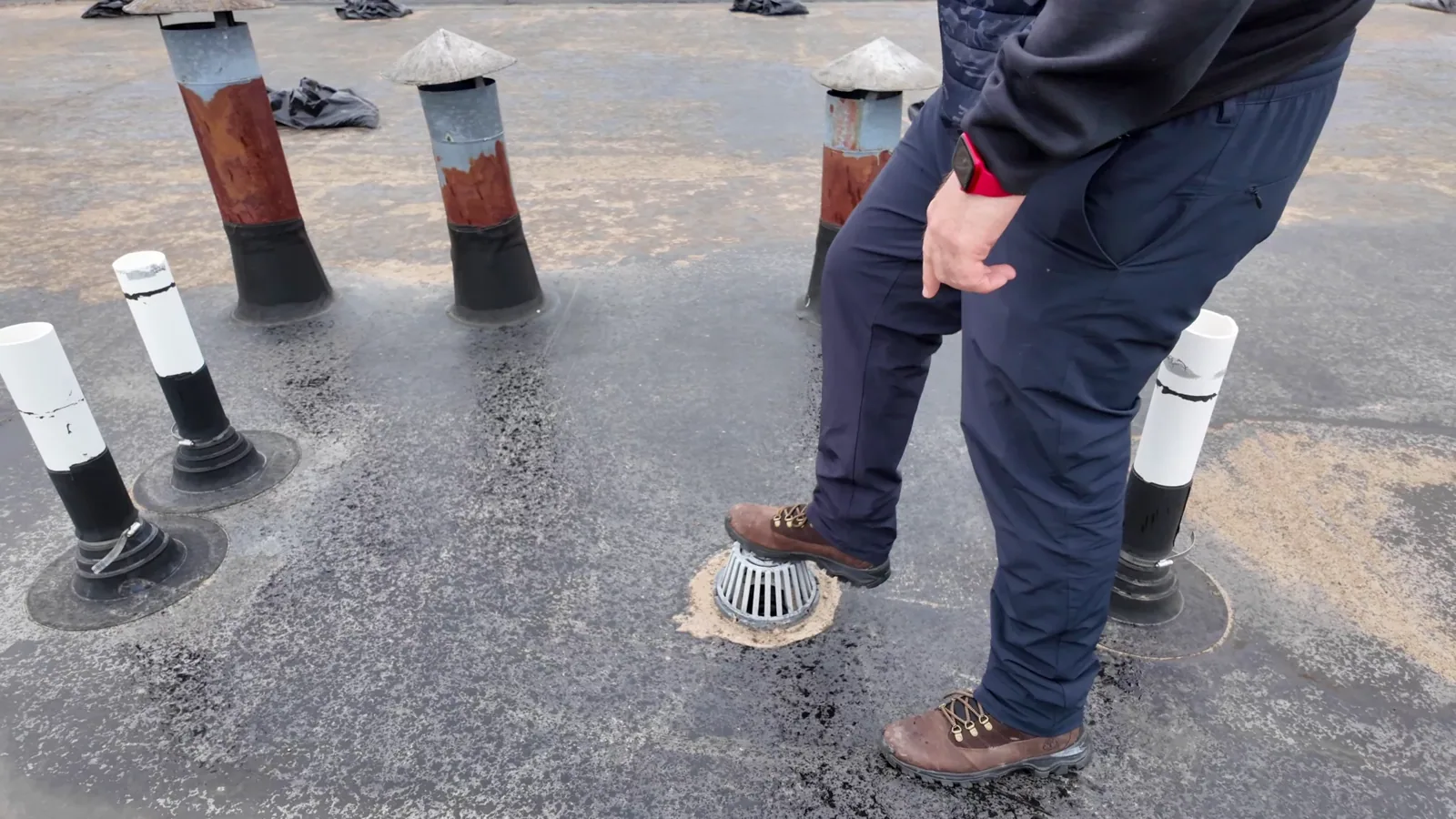
Hot, humid summers and recurring rain make drainage, exposed transitions, and application conditions part of the local timing analysis. We consider whether a repair can be done in a short window or whether a larger project needs temporary protection over several shifts. A drainage assessment can separate routine maintenance from a slope or outlet project. A claim documentation review can preserve measured damage when an insured event contributes to the capital decision.
Compare scopes on the same assumptions
A repair estimate and a replacement estimate answer different questions. For a localized defect, we define the tie-in, related details, and the evidence that supports the repair boundary. For a larger renewal, we compare removal depth, insulation, drainage, edges, equipment, and phasing. Each scope identifies access, protection, disposal, and exclusions so the owner can compare alternatives fairly.
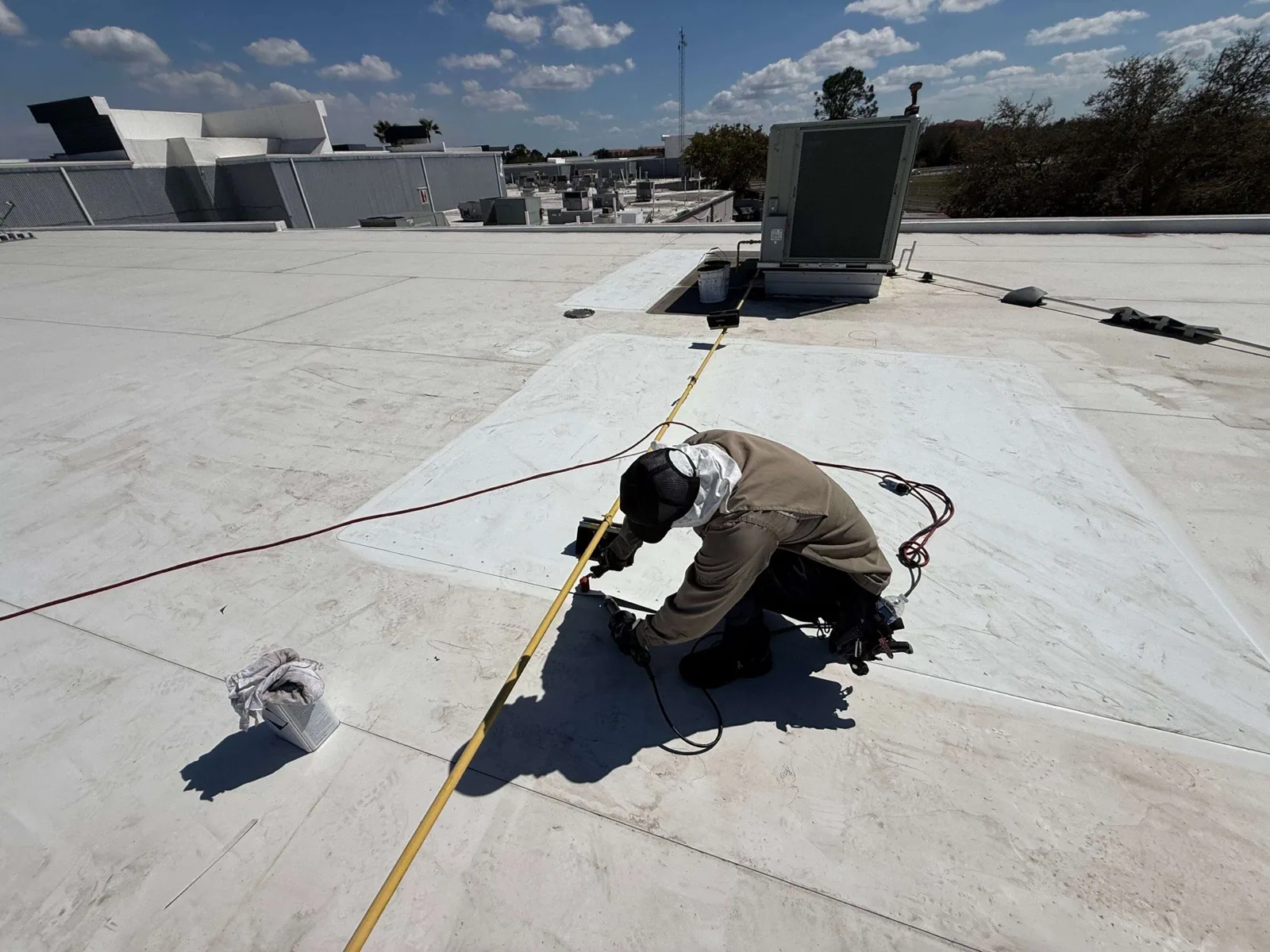
A repair scope can address a verified condition. A replacement study can price a broader assembly. If an overlay is considered, a recover review checks the existing layers, moisture, attachment, and final heights first. The capital model should include the investigation cost when missing evidence could change the chosen option.
For each candidate, note the action that can wait and the condition that would bring it forward. That trigger might be another leak in the same zone, a drainage failure, test results, or equipment work that opens a detail. A documented trigger is easier to revisit at budget season than an undated label such as poor roof.
Schedule around procurement and site access
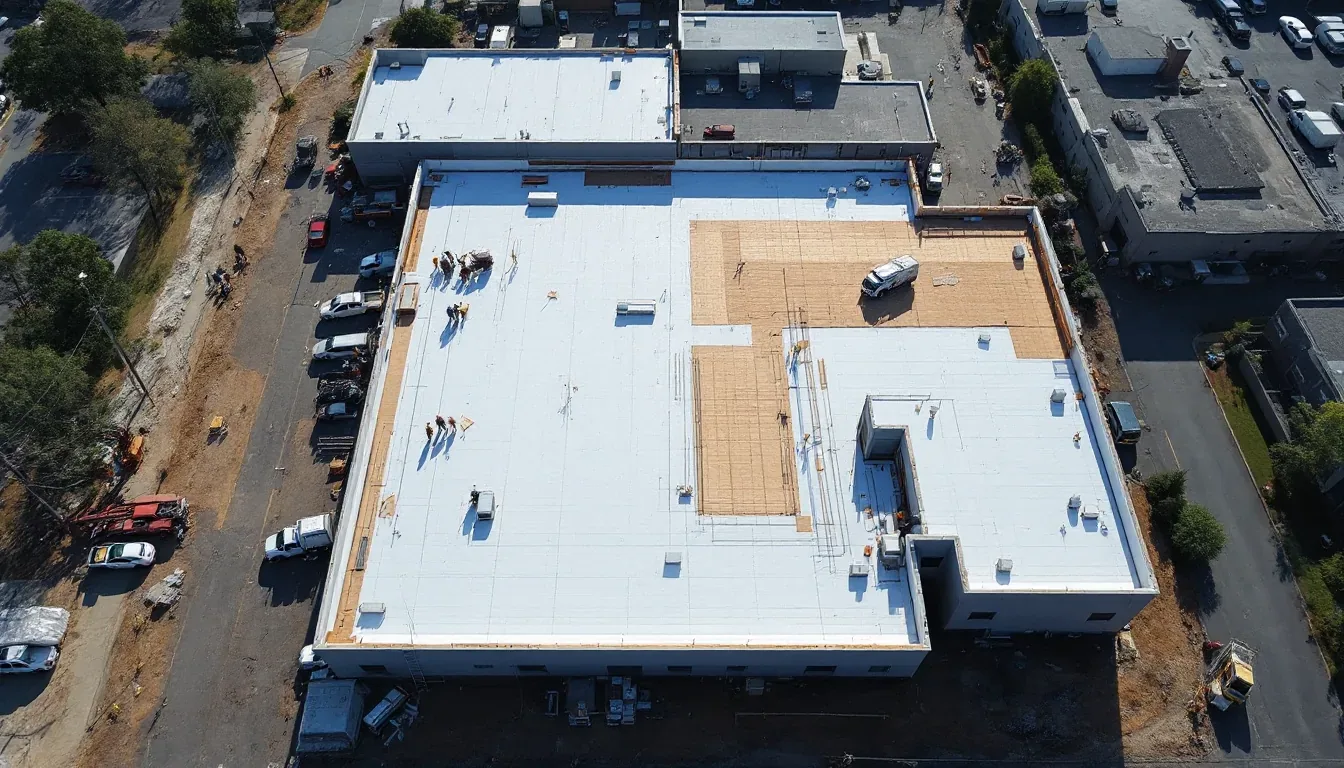
Timing depends on more than a construction duration. Procurement approval, material selection, tenant coordination, roof access, crane or lift planning, and weather windows can all affect the start date. We work backward from the desired completion period and identify the decisions required before mobilization. If work needs to happen while a facility stays open, a phased project plan can define section boundaries and closeout requirements.
City Springs combines civic, event, dining, fitness, and residential uses, creating a distinct access setting from office properties or healthcare facilities. The property contact supplies the actual event calendar, delivery route, and entrance restrictions for that building. We incorporate those constraints into the project sequence rather than relying on a generic market schedule.
For buildings near Roswell Road, traffic and access can vary by time and parcel. A Roswell Road corridor roof review can map the inspected sections, delivery route, and staging limits before alternatives are priced. The schedule should include decision dates for test results, scope approvals, and concealed-condition allowances.
Connect budget year to the next action
The annual plan should identify the next task for each roof: inspection, test opening, temporary protection, repair, design, procurement, or full renewal. Assign an owner and target date to each step. If a project is deferred, record the exposed condition and the cost or operational consequence that made another candidate take priority. That gives leadership a reasoned queue rather than a one-time list. Add a decision owner and a review date for deferred roofs, and note whether the deferral depends on temporary protection or a future test. If the funding cycle changes, the team can update the plan without losing the evidence that supported the earlier ranking. For projects requiring design, procurement, or multiple approvals, mark those lead steps separately from construction duration. This makes the budget sequence useful before a contractor is selected as well as after scope development.
A roof asset register can keep the condition and action history current. A multi-site program can standardize reporting while keeping property-specific scope. For owners comparing warehouses or industrial buildings, warehouse roof planning provides a building-type reference; the measured area and access conditions still come from the individual asset.
Share the capital calendar, roof inventory, recent service calls, access constraints, and any known funding deadlines. We will return ranked actions with the evidence, timing, and decision still needed for each roof.
Questions About Commercial Roof Capital Planning
What information is needed to prepare a roof capital plan?
Provide the asset list, roof plans, inspection reports, repair history, budget calendar, and known access or operating restrictions. We identify which candidate needs new inspection or testing before it can be priced.
Should roof replacement be budgeted by age alone?
Age can inform review when documented, but condition, repair frequency, moisture, access, and operating impact also matter. The plan should show the evidence behind each priority.
How are repair and replacement candidates compared?
Use the same assumptions for access, protection, removal, insulation, drainage, equipment coordination, and phasing. The report should distinguish confirmed quantities from conditions that remain concealed.
How does Sandy Springs affect roof project timing?
Heat, humidity, rain, tenant activity, and site access all affect sequence. Central Perimeter, the Medical District, City Springs, and the Roswell Road corridor have different local contexts, while each property manager confirms actual work constraints.
What happens to a project that is deferred?
Record the remaining exposure, next review date, and trigger that would move it forward. That keeps the decision visible for the next budget cycle and clarifies what could change the priority.
Build the next roof budget sequence
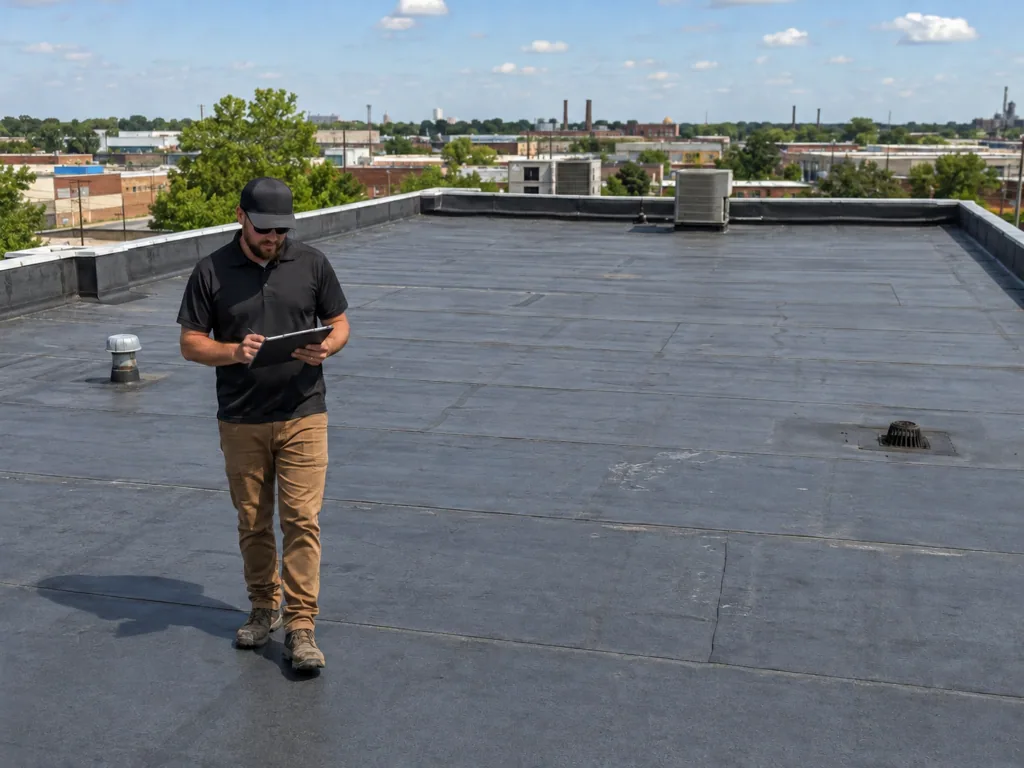
Share the asset list, reports, repair history, access requirements, and budget calendar. We will rank the next inspections, repairs, and renewal decisions by evidence.
Call 555-555-5555 or send the building details.