Commercial Roofing in Roswell Road Corridor, Sandy Springs, GA
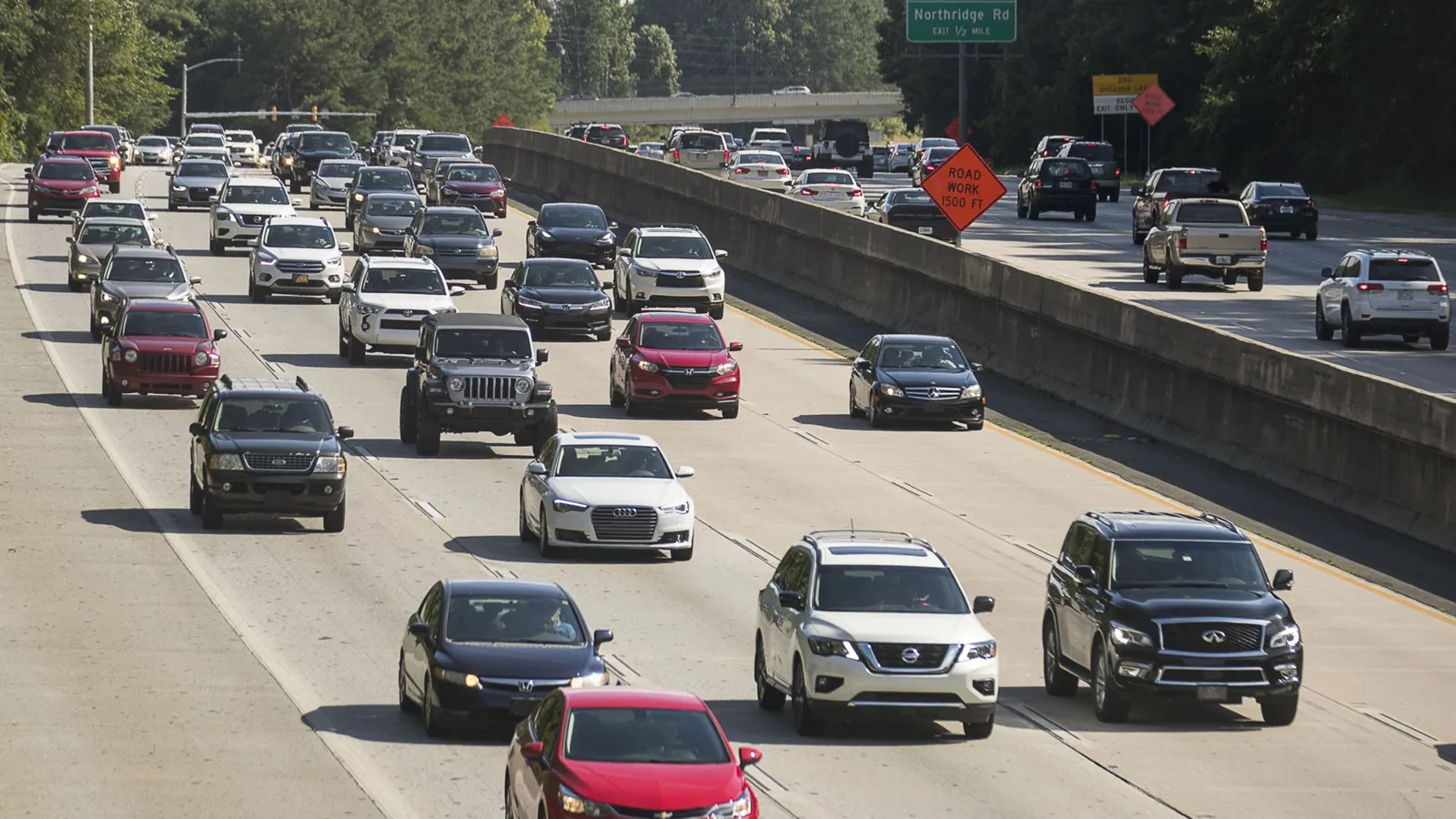
A roof scope along Roswell Road needs a measured footprint, confirmed entry route, and condition record before crews are scheduled. The arterial connects Roswell with I-285 and includes commercial properties and MARTA bus stops. In the North End project segment, the road has two lanes in each direction with a center left-turn lane, and the city is adding multimodal improvements. We use that corridor context to plan logistics, then base the roofing recommendation on the assembly found at each property.
Corridor access and staging
Road access can affect delivery timing, equipment staging, and how a crew reaches a roof without disrupting entrances. We confirm the loading point, roof hatch or ladder, lift location, work hours, and any sidewalk or parking restriction with the property contact. With pedestrian and multimodal improvements planned along the corridor, confirm vehicle access, pedestrian protection, and staging with the property contact during the site walk. For properties with several entries, we record the approved roof approach and nearest safe staging point before scheduling lifts or material delivery.
Crossroads Small Area is another recognized district connected to Roswell Road in Sandy Springs. Farther north, Northridge Shopping Center is one of the North End focus properties in broader redevelopment planning. A Crossroads roof assessment and a Northridge business district review address their own area conditions, while this corridor scope stays tied to the property being inspected.
Where a work zone intersects a pedestrian route or transit stop, the site contact confirms any required protection and notice. We plan material handling and daily closure so the roof is secure when work pauses. The proposal should state who coordinates the access window and what must be ready before mobilization.
For a property close to a bus stop, intersection, or active driveway, map the delivery path and temporary work boundary before arranging a lift. The property contact can confirm which entrance remains open and whether a spotter or pedestrian detour is required. Carry those instructions into the daily plan so the crew can move material without blocking customer access or changing the approved roof sequence mid-shift.
Roof condition and drainage
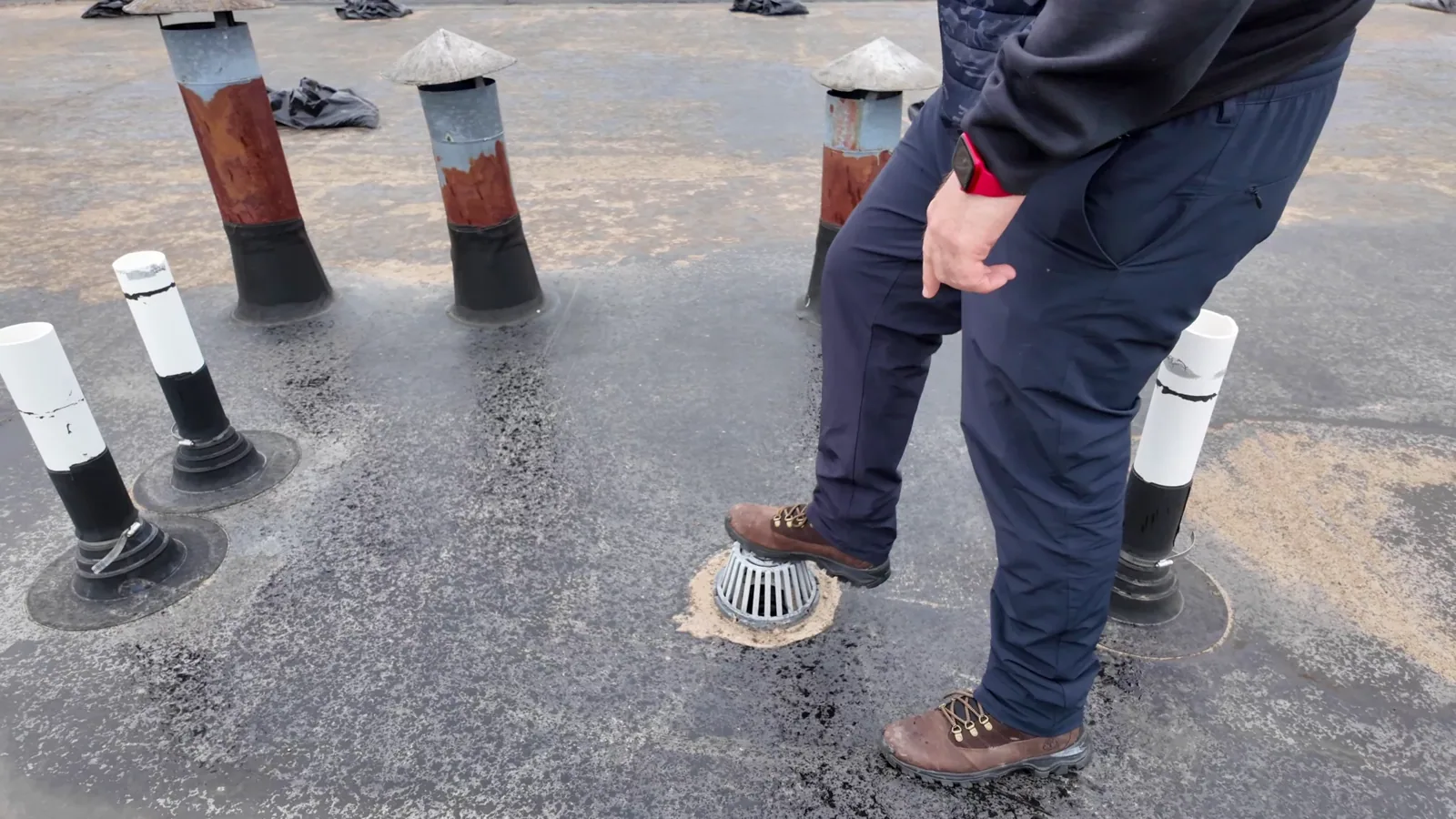
Start the inspection at the roof plan, then walk the assembly in a repeatable sequence. Identify the membrane or metal system, seams, penetrations, curbs, parapets, edges, drains, and prior repairs. Photograph defects with a roof-zone label and connect leak reports to likely water paths. The entry point can sit away from the ceiling stain, so the report should show observations rather than infer the cause from the interior location.
Frequent winter and early-spring rain makes drain performance, overflow paths, and low areas useful checkpoints after wet periods. We inspect drain bowls, scuppers, overflows, and low areas, noting whether debris or a persistent pond could affect the repair. A drainage inspection can separate an outlet restriction from a condition that needs a broader slope review. Where readings suggest moisture below the membrane, a targeted moisture survey can identify locations for confirmation rather than label untested areas.
Commercial properties along the North End corridor can have different roof layers, access, and repair histories. We record the inspected building’s details on its own map and keep its scope tied to those findings.
Repair boundary and storm record
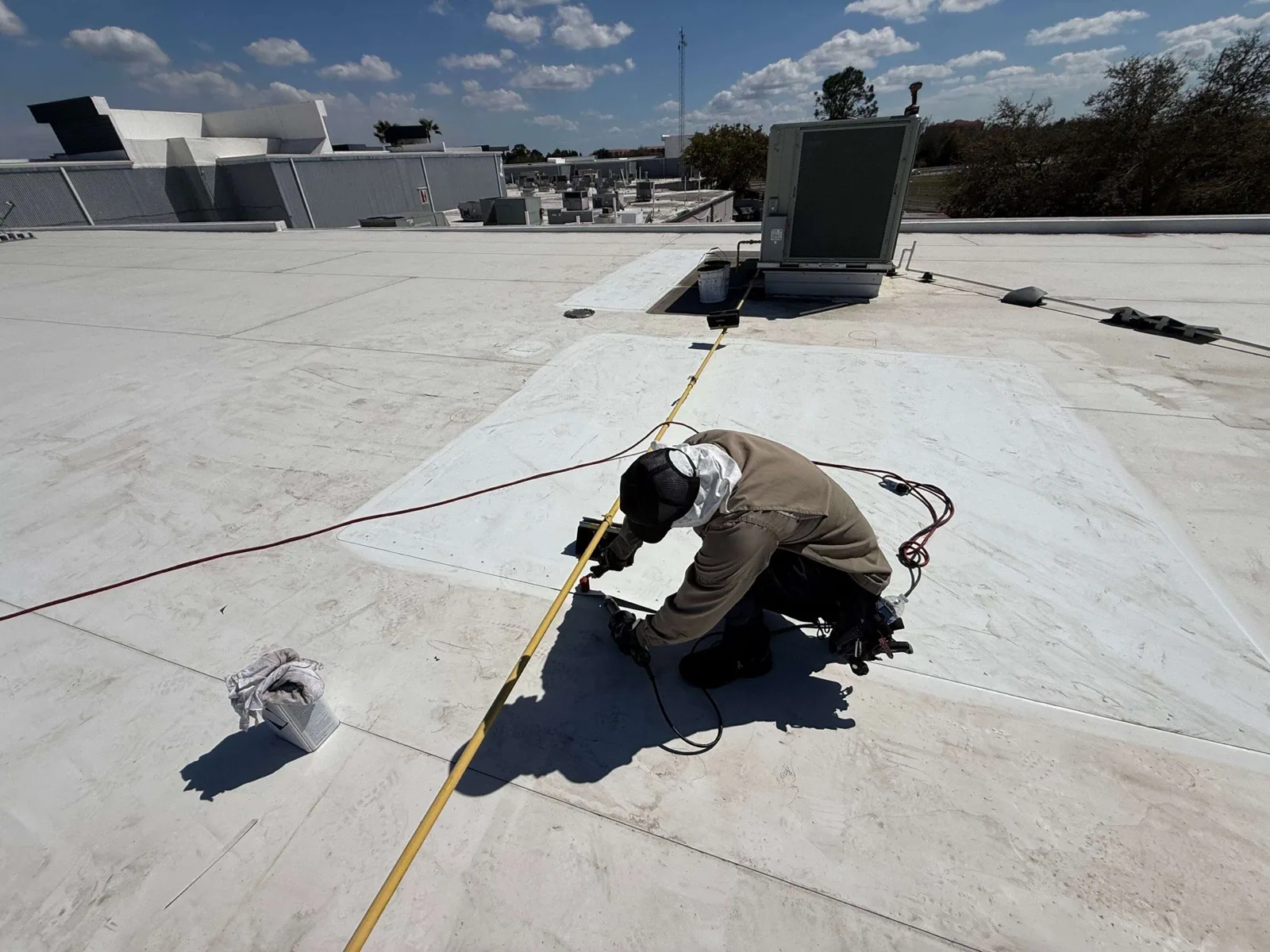
A localized opening, puncture, loose flashing, or damaged edge can be repaired when surrounding material is sound and the assembly below supports a compatible tie-in. We identify the preparation, repair detail, and any condition outside scope. If failures repeat along a seam or moisture extends beyond the visible area, test the assembly before authorizing multiple small patches. A commercial repair assessment can rank immediate work and describe what remains open.
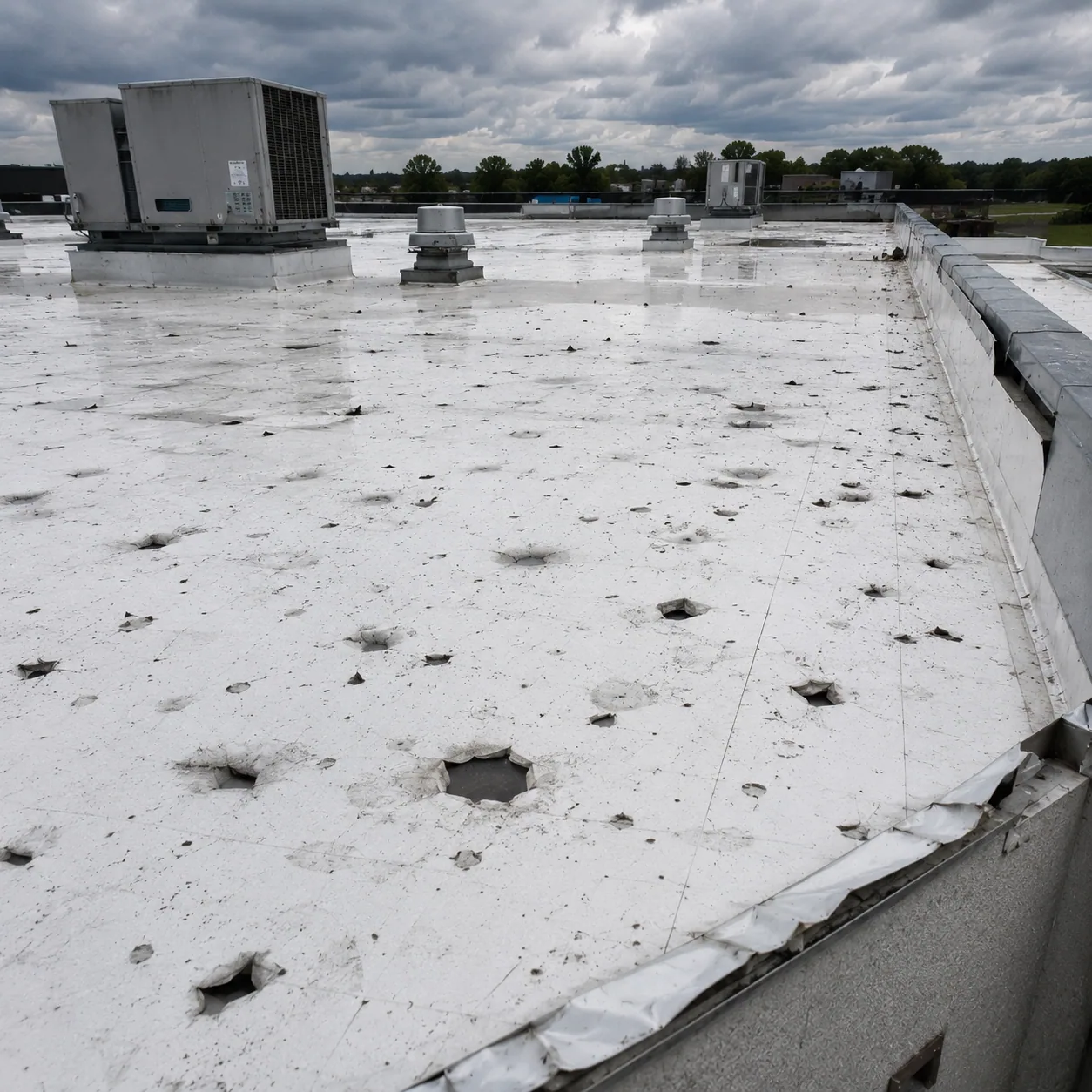
North and Central Georgia experience recurring hail and thunderstorm winds. A reported event should trigger inspection of actual roof areas, not an assumption that the entire corridor has matching damage. We photograph observed punctures, displaced edge metal, opened laps, and impacted details, then label sections that were not accessible. A hail damage inspection can support a storm record that distinguishes impact from age-related wear.
Temporary protection is not a permanent roof scope. If a leak requires immediate stabilization, write down the location, materials used, and follow-up needed to complete a lasting repair. That record helps ownership keep emergency response separate from the renewal sequence and reduces the chance that a temporary patch is treated as a closed condition.
System options and renewal work
Replacement work depends on the existing roof, deck, insulation, drainage, perimeter, and building use. We identify what is visible, what needs testing, and whether the scope requires tear-off or can consider a recover. A recover depends on attachment, moisture, roof height, drain details, and applicable code. Tear-off exposes concealed layers but adds disposal, staging, and a longer sequence. Both options should be compared against the same roof map.
For a thermoplastic system, inspect welds and flashing that match the installed membrane. Metal roofing requires checks of laps, fasteners, sealants, and movement at transitions. A TPO system inspection documents that assembly when TPO is confirmed, and a replacement review compares removal and renewal scope. The road corridor name alone gives no basis for selecting a membrane or describing an individual roof.
Before a renewal scope is finalized, confirm the Georgia code edition and amendments governing the project with the local permit reviewer. Insulation, edge securement, fire requirements, roof height, and drainage can affect design. We list outstanding code or substrate questions before quantities are locked so an owner can plan an approval step rather than carry a hidden assumption into the bid.
Budget year and work sequence
Cost drivers include access equipment, material handling, wet insulation, deck repair, perimeter work, occupied hours, and debris removal. Along a corridor with changing traffic and pedestrian conditions, staging can influence the sequence, but the field condition determines the roofing scope. We separate urgent protection from planned repair, testing, and capital renewal. The owner can then compare work windows with the budget year and any other property activity.
A capital plan review can rank roof sections by condition and deferred exposure. Keep the plan, photographs, moisture results, repair history, drain observations, and closeout notes together. A roof condition report links each recommendation to evidence and provides a baseline for the next interval.
Share roof plans, leak locations, access details, prior repairs, and target timing. We will inspect the building, define the work boundary, and return next actions by section. The corridor informs mobilization; the condition record informs whether the next step is a repair, test, recover study, or replacement plan.
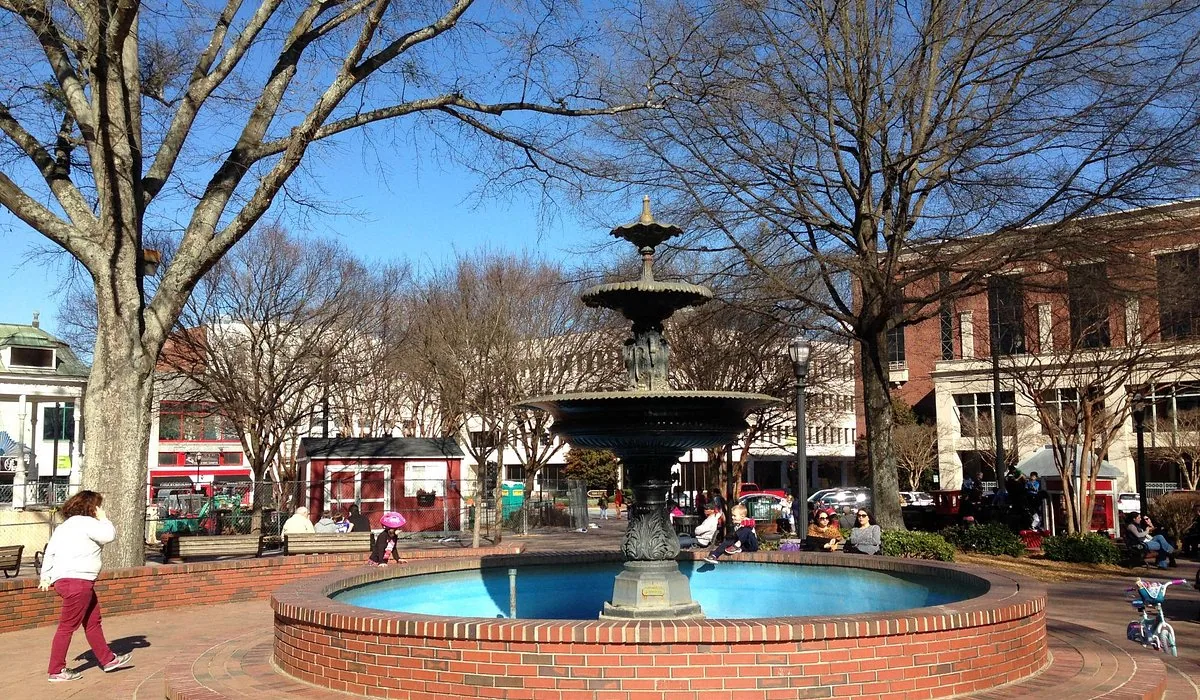
Questions About Roswell Road Corridor
Does Roswell Road access determine the roof repair scope?
It affects delivery, staging, pedestrian protection, and work timing. The repair boundary comes from the membrane, flashing, moisture, drainage, and substrate conditions found at the property.
How do you plan roof work near MARTA bus stops?
We confirm the specific work area, access route, and site requirements with the property contact. The corridor context calls for coordination, while any protection or notice is based on the approved site plan.
Can a corridor inspection identify a roof leak from the road?
No. A field survey requires roof access, the building plan, and interior leak information. We inspect the assembly and trace likely water paths rather than diagnosing from a street view.
What should be checked after a storm along the corridor?
Inspect accessible roof sections for actual punctures, open seams, edge movement, and flashing damage. We photograph findings by zone and mark any area that could not be reached.
How do planned road improvements affect roofing timing?
They can make access coordination worth confirming before mobilization. We verify the property’s current delivery route, staging area, and work window instead of assuming a project detail applies to each parcel.
Set a Roswell Road roof review
Share the building roof plan, leak reports, repair history, access rules, and budget window. We will return condition findings and a prioritized work sequence.
Call 555-555-5555 or send the building details.