Commercial Tornado Damage Roof Repair in Sandy Springs, GA
After a tornado or suspected tornado passage, the roof assessment has to account for structural safety, debris, exposed openings, and the risk of additional weather. A visible hole does not show the full extent of damage, and roof access may remain unsafe until the property or emergency team clears it. We coordinate with the authorized site contact, map areas released for inspection, and separate temporary protection from permanent repair. The report describes what was accessible and what requires engineering or other specialist review. Severe thunderstorms and tornadoes are part of the Sandy Springs weather risk. After a reported event, we compare the property’s incident record with accessible roof conditions and define protection around the damage actually observed.
Wait for safe release and define who controls the site
Before a crew enters, confirm that emergency responders, building management, and any investigator have released the area for roofing work. Check for unstable decking, damaged parapets, downed utilities, loose equipment, broken glazing, and falling debris. No inspection should cross a taped or restricted zone without authorization. A emergency roofing response can review immediate exposure after the site is cleared and identify a safe approach to temporary cover.
Establish a site contact and a route for updates if new hazards appear. Identify roof sections approved for access and those awaiting engineering direction. If the building is occupied or partially closed, align roof work with tenant notices, internal cordons, and emergency access. Document when a temporary cover is installed and who will inspect it during changing weather. A safe boundary protects the crew and keeps the repair record from implying that uninspected areas were cleared.
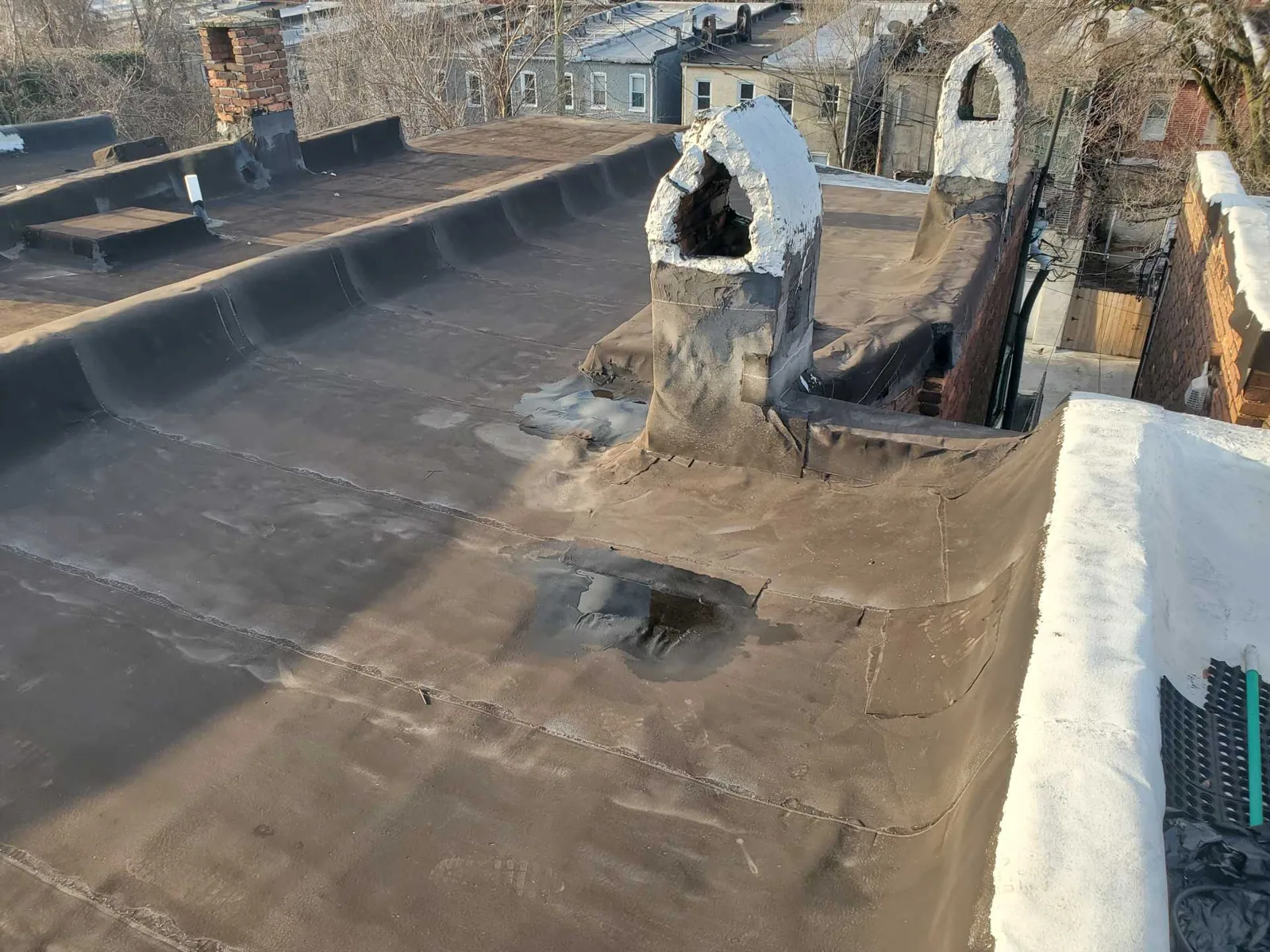
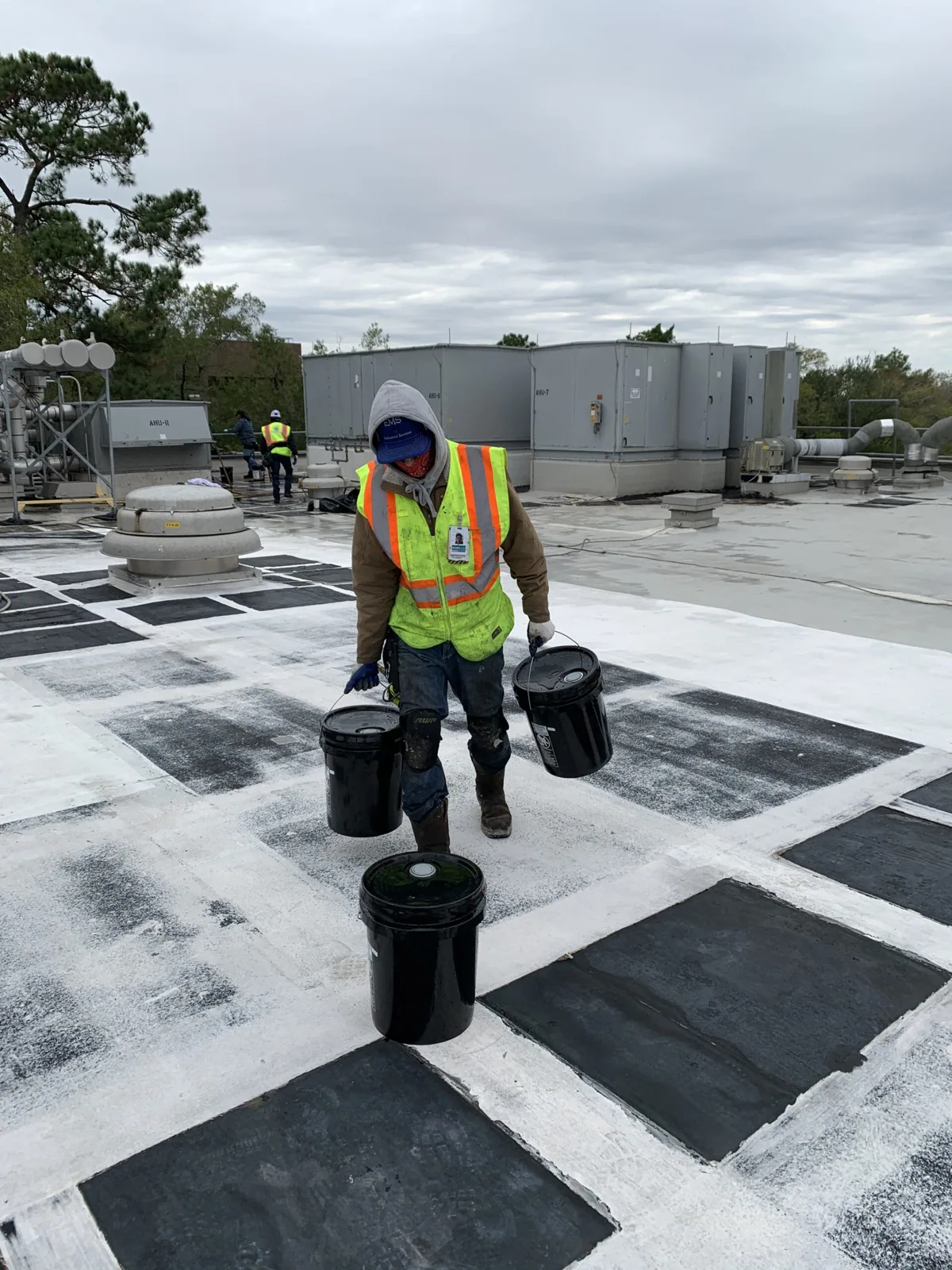
Map impact by roof section, not by event headline
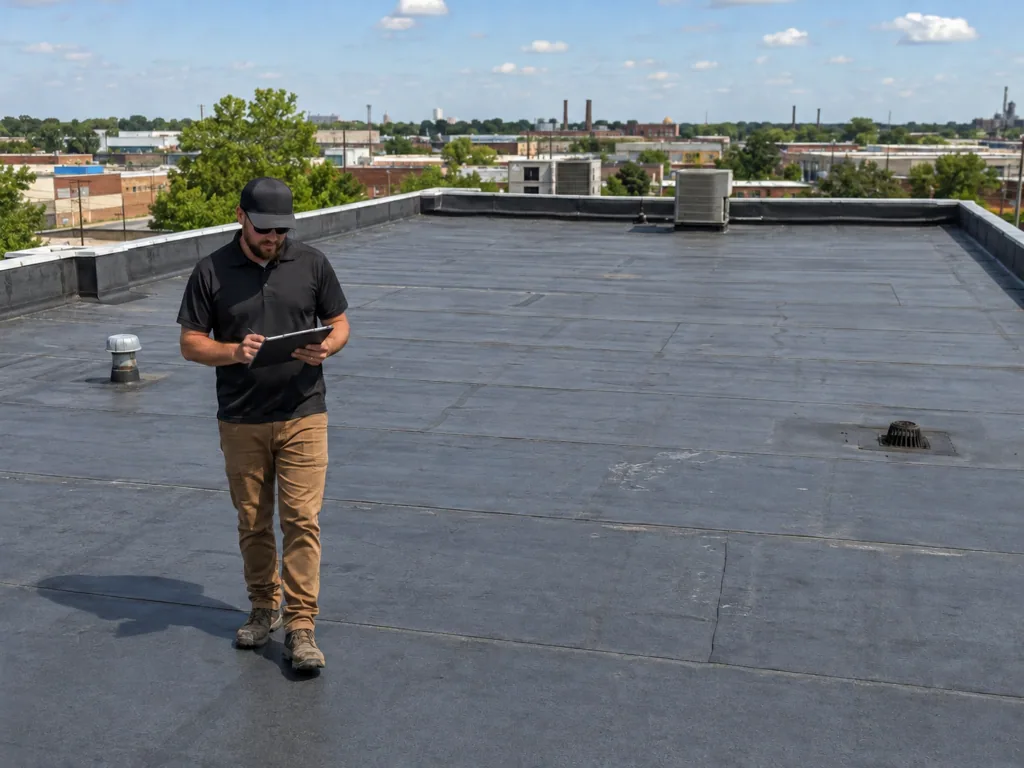
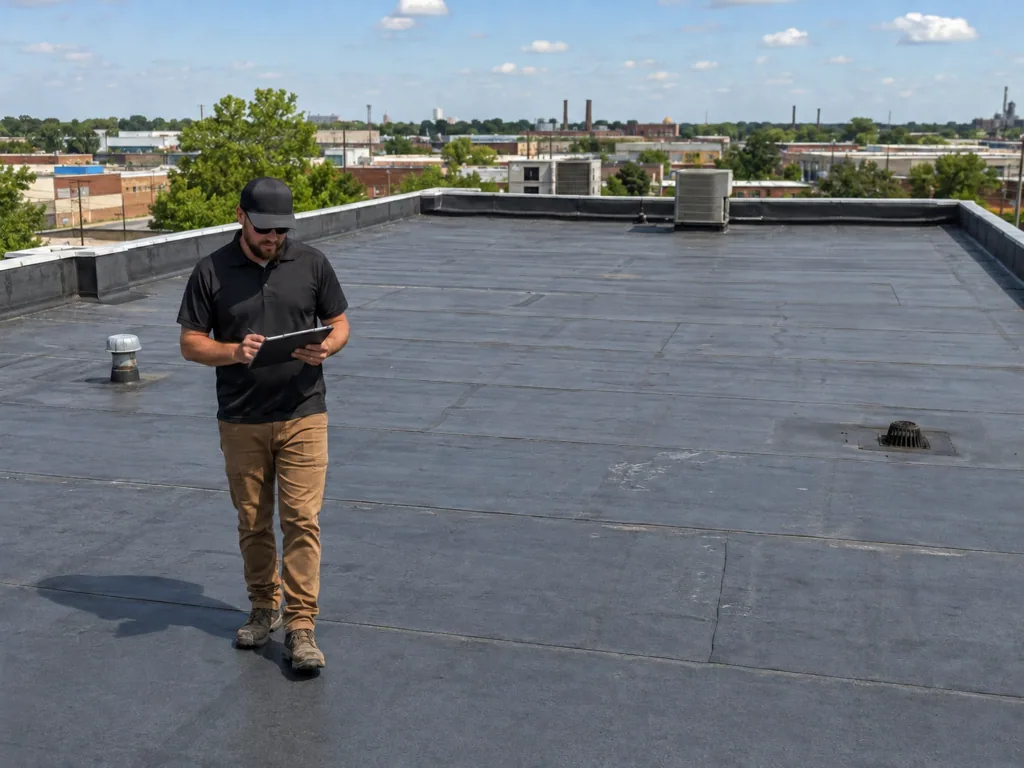
Once access is authorized, record displaced membrane, missing edge metal, openings, punctures, impact from debris, equipment movement, and visible structural distortion. Mark each condition on a roof plan and photograph it with enough surrounding context to locate it later. A post-storm roof inspection can establish which sections were reviewed and what limitations remained. If the roof includes multiple levels or additions, keep findings separated by elevation and assembly.
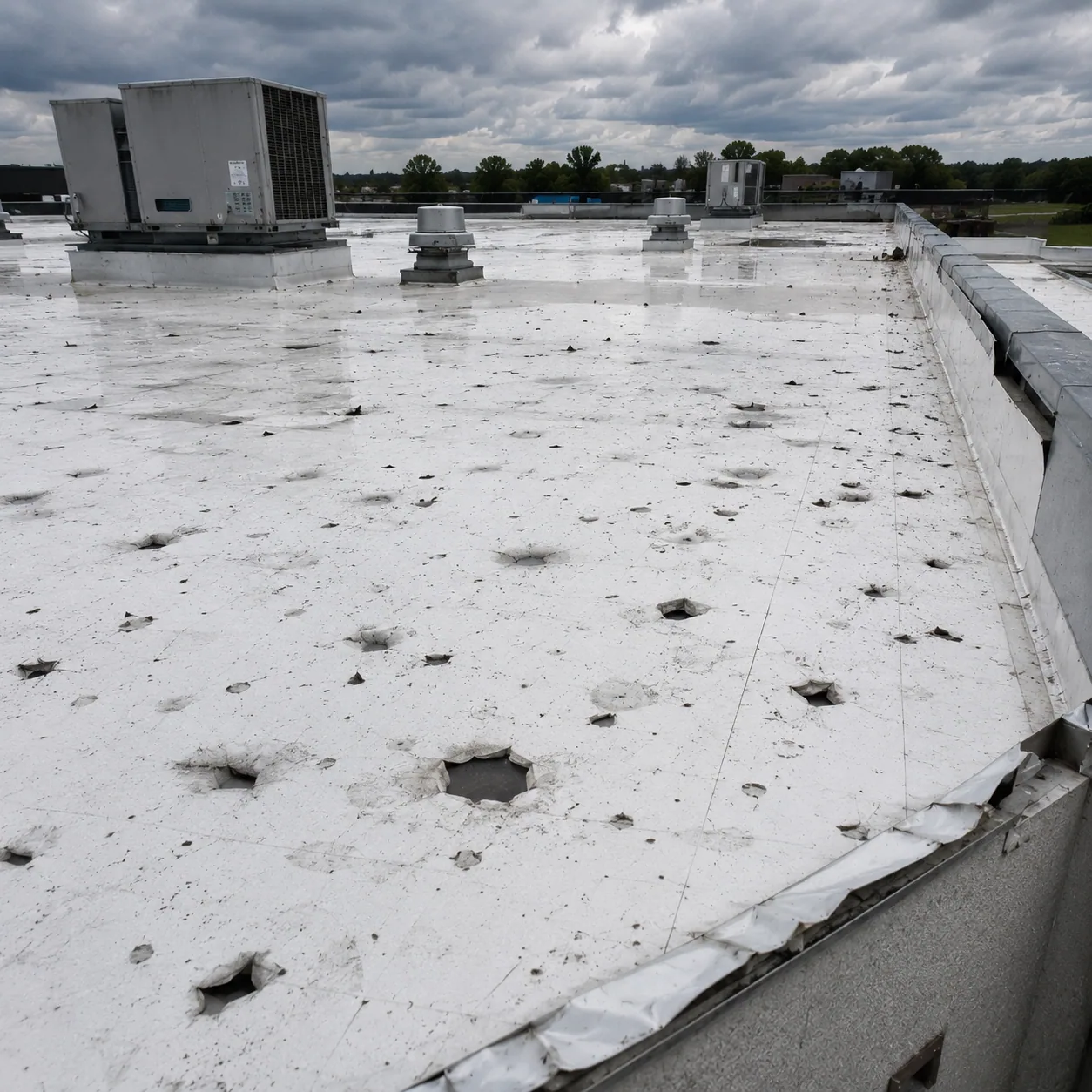
Wind and debris can affect systems differently. A local puncture is not the same as a displaced perimeter assembly, and a damaged curb may require another trade to restore equipment. A wind condition review can address movement at edges or field components, while a puncture assessment focuses on a defined opening. Each recommendation should match the condition recorded rather than treating the event as one uniform roof-wide failure.
Separate roof observation from structural judgment
A roofer can document membrane, flashing, insulation, and visible deck conditions, but a roof walk does not establish structural capacity. If joists, deck, parapets, or supports appear displaced, stop at a safe limit and request qualified engineering review. Do not stage materials over an area that has not been cleared for loading. The engineer’s access instructions and findings should be recorded separately from roofing observations so each professional’s role remains clear.
If debris must be removed before inspection, coordinate the sequence with the owner and incident lead. Retain photographs before disturbing the affected area when permitted. Where an opening exposes damaged deck or wet insulation, measure the extent and keep added quantities pending approval. A roof condition report can preserve photos, inspection limits, and follow-up actions in a single property record. It does not replace engineering analysis or incident investigation.
Stabilize exposed areas before setting the permanent scope
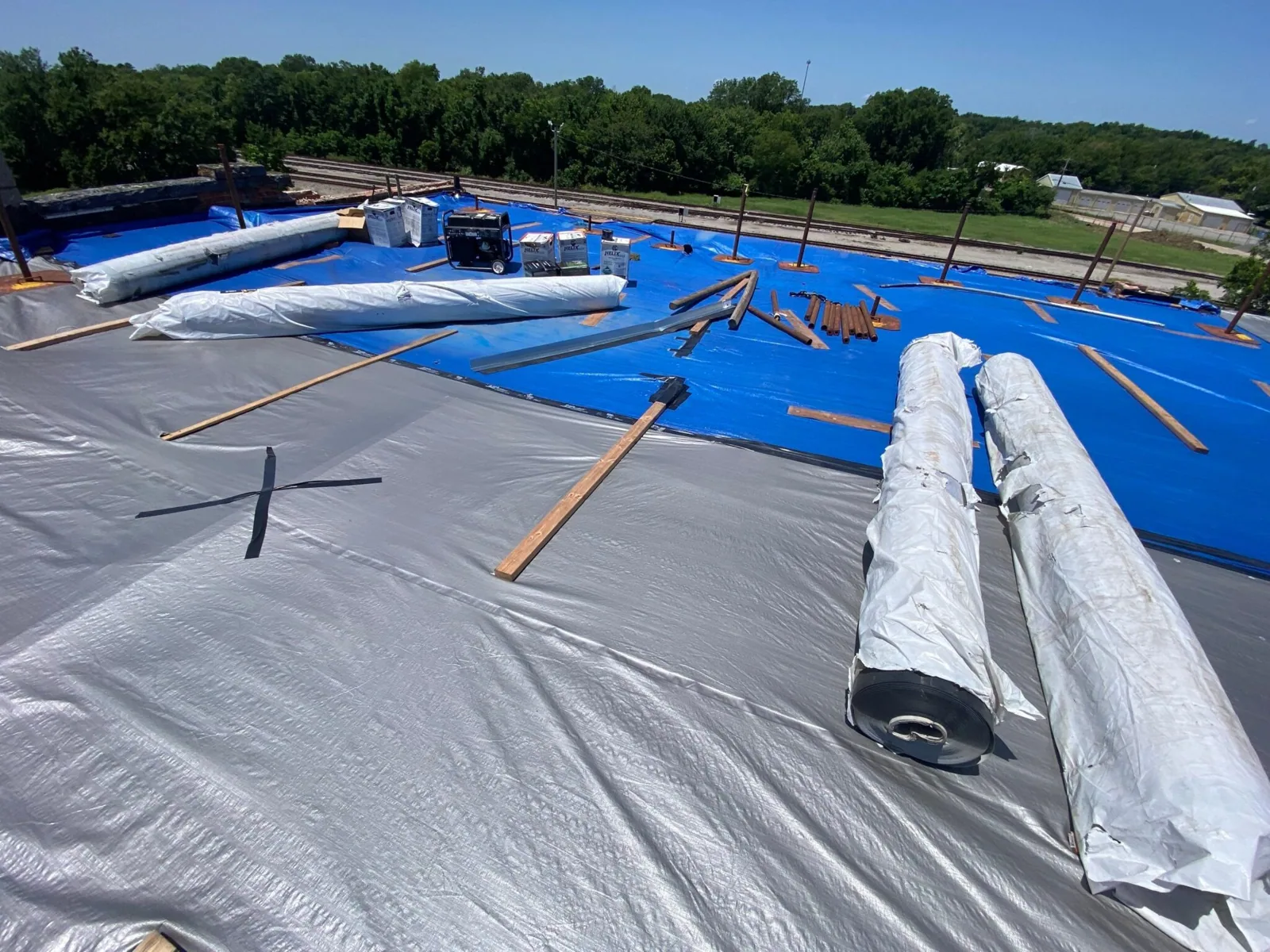
Temporary protection should fit the opening and the available safe attachment points. State which area the cover protects, how it is secured, and how often its condition should be checked. If roof edges or supports are damaged, do not secure a cover to a questionable component. Coordinate the cover with the engineer and owner, then identify when a permanent repair can proceed. Interior mitigation protects contents while the roof record identifies the entry point, affected section, and any area that could not be inspected.
Once access is safe, define permanent work by measured section: removal, substrate review, insulation, membrane, edge transitions, and restored penetrations. A storm damage plan can distinguish the confirmed repair from possible concealed work. A replacement assessment belongs only where inspection shows broad impairment or the existing assembly cannot support a practical repair. The owner should see how the evidence supports the recommended scale.
Coordinate utilities, equipment, and interior recovery
Tornado response may leave rooftop units, conduits, vents, or solar equipment displaced. Confirm who can isolate power or mechanical service and who is authorized to handle each component. Roofing crews restore the membrane interface only within the agreed scope; equipment repair belongs to the qualified service provider. A curb coordination review can clarify what must be reinstated before permanent flashing is closed.
Sandy Springs has active commercial districts including Central Perimeter and Powers Ferry. The work window at one site can differ from another because of loading routes, tenant needs, and public access. Near the Powers Ferry area, confirm site traffic and delivery rules with the property contact. A restoration coordinator can align interior drying, debris handling, and roof protection while maintaining separate records for each trade. The schedule should include confirmed dependencies rather than a completion promise made before access and materials are known.
Build an incident-ready roof file
Record the reported event window, who released roof access, observed areas, photographs, temporary measures, and any exclusions. Keep the roof plan marked by section, with notes about what was not inspected and why. If a claim is open, provide measured roofing quantities and identify assumptions without assigning coverage. A claim review service can help organize roof observations for discussion with the owner and carrier.
For work at a Medical District property, the facility contact confirms security, access, and clearance requirements before the roofing crew enters. Similarly, City Springs includes civic, retail, restaurant, and event destinations with their own operating schedules. A public agency team may need a documented approval path before work begins. The file should identify the person responsible for each open decision and retain the engineer’s direction with the project record.
Confirm permanent closure and follow-up
Closeout should list repaired areas, installed materials when known, photographs, testing or inspection results, and remaining restrictions. If temporary measures remain, state who checks them and when permanent work is planned. Compare the finished work with the approved boundary before returning the space to normal access. If a later leak or movement is reported, revisit that location and the adjacent paths rather than expanding the original scope without review.
A follow-up inspection can check repaired sections after severe weather and give the owner a current condition record. Keep the incident plan, roof photos, engineering direction, and work orders together. A portfolio manager can use the same record fields across buildings while keeping each property’s actual findings separate. This supports future budgeting and emergency planning without implying how a roof will respond to another event.
Questions About Commercial Tornado Damage Roof Repair
Can a roofing crew inspect a building immediately after a tornado?
Only after an authorized site contact confirms safe access and any emergency or investigator restrictions are clear. Unsafe or unreleased zones remain off limits.
Will a tornado event mean the entire roof needs replacement?
Not automatically. We map accessible damage and distinguish localized repair, concealed-condition testing, and areas requiring broader evaluation.
Do you provide emergency roof covering?
We can evaluate temporary protection where safe attachment and access are available. The cover’s location, limits, and recheck plan should be documented.
Who determines whether the roof structure is safe?
A qualified structural professional evaluates capacity and structural damage. Roofing observations can support that review but do not substitute for it.
What should the owner preserve for the repair file?
Keep incident timing, access releases, roof plans, pre-work photos, temporary protection details, engineering guidance, and interior mitigation records.
Plan a safe tornado roof assessment
Provide site clearance, the authorized contact, incident records, and access restrictions. We will document released roof areas and outline stabilization or repair needs.
Call 555-555-5555 or send the building details.