Duro-Last Roofing in Sandy Springs, GA
A Duro-Last roof is still an assembly to inspect, even when many details arrive fabricated for the building. We verify the PVC membrane, field seams, perimeter, attachment, insulation, and drainage before defining repair scope. Factory fabrication can reduce field seaming; inspect each curb, edge, and transition after installation and subsequent equipment or drainage changes. In Sandy Springs, rain and humid summer heat make those details recurring review points. The owner needs current roof evidence and a clear map before choosing repair, recover, or replacement timing.
Fabrication plan and field layout
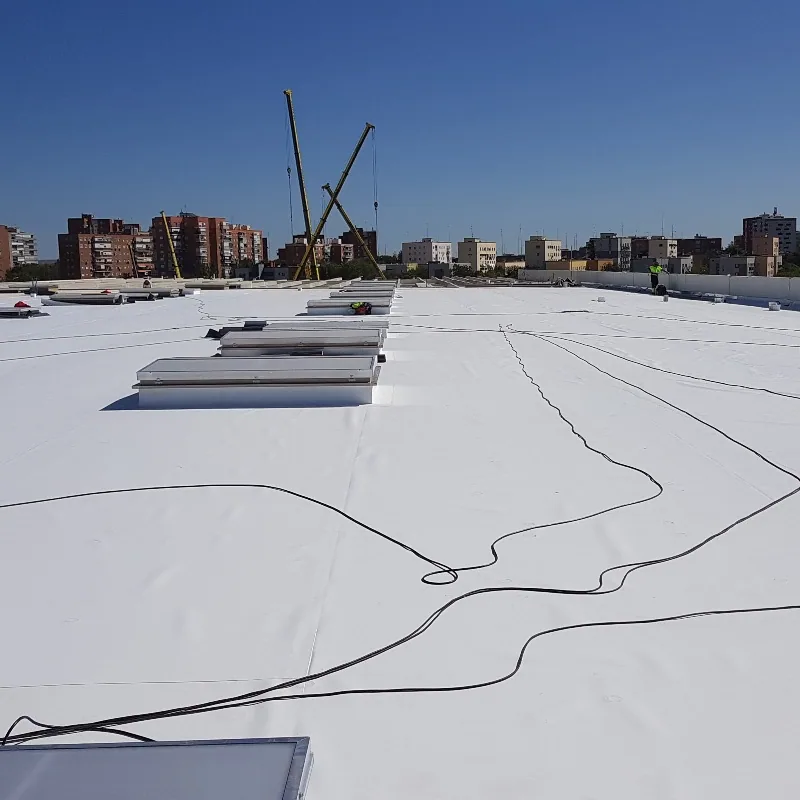
Duro-Last PVC systems are custom fabricated from building measurements, with many seams welded at the factory before delivery. That can change where field seams and site-made details occur, so we compare fabrication drawings with the roof as built. Additions, equipment changes, repairs, and altered drainage may have changed the original layout. The inspection should note where drawings match field conditions and where the roof now departs from them.
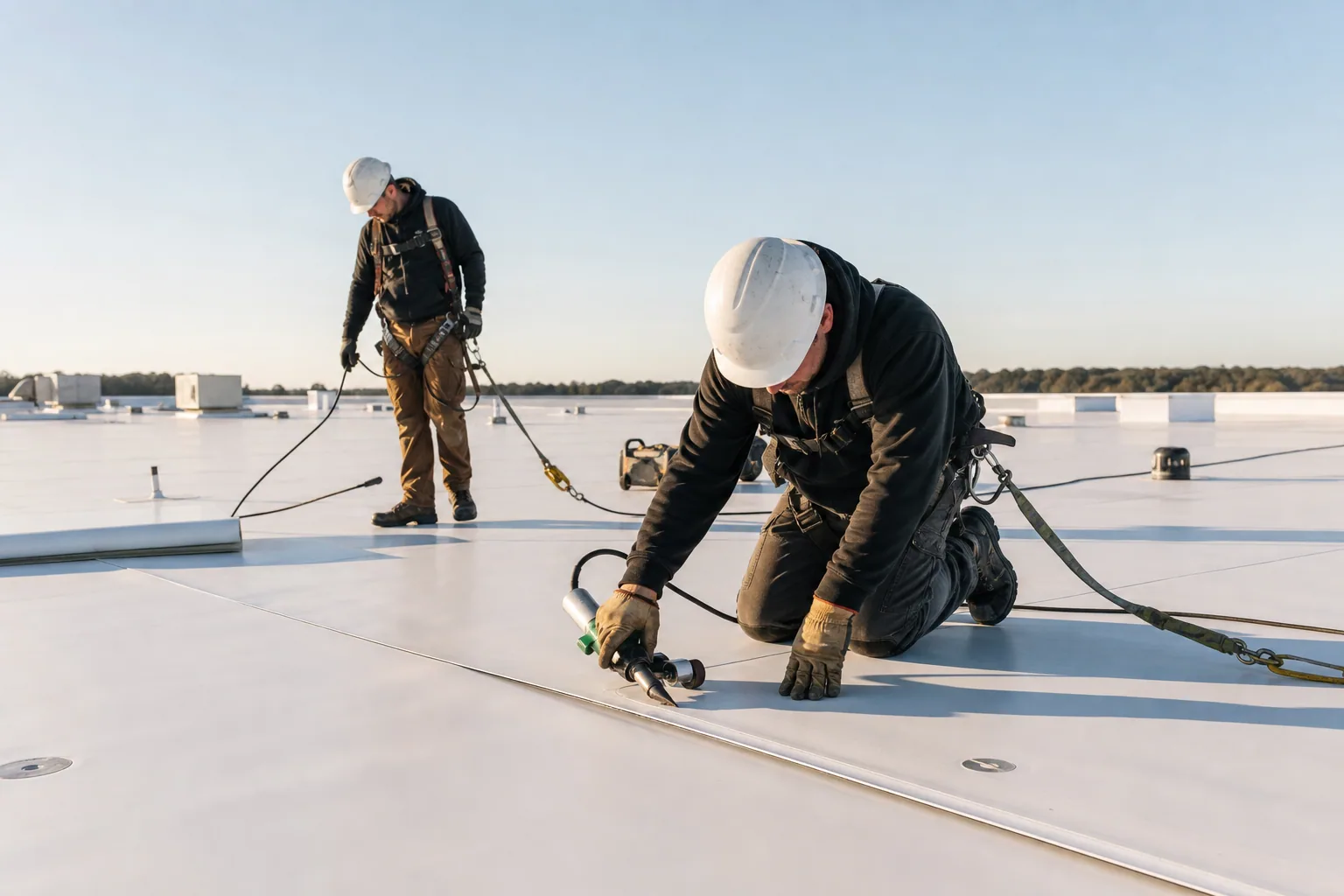
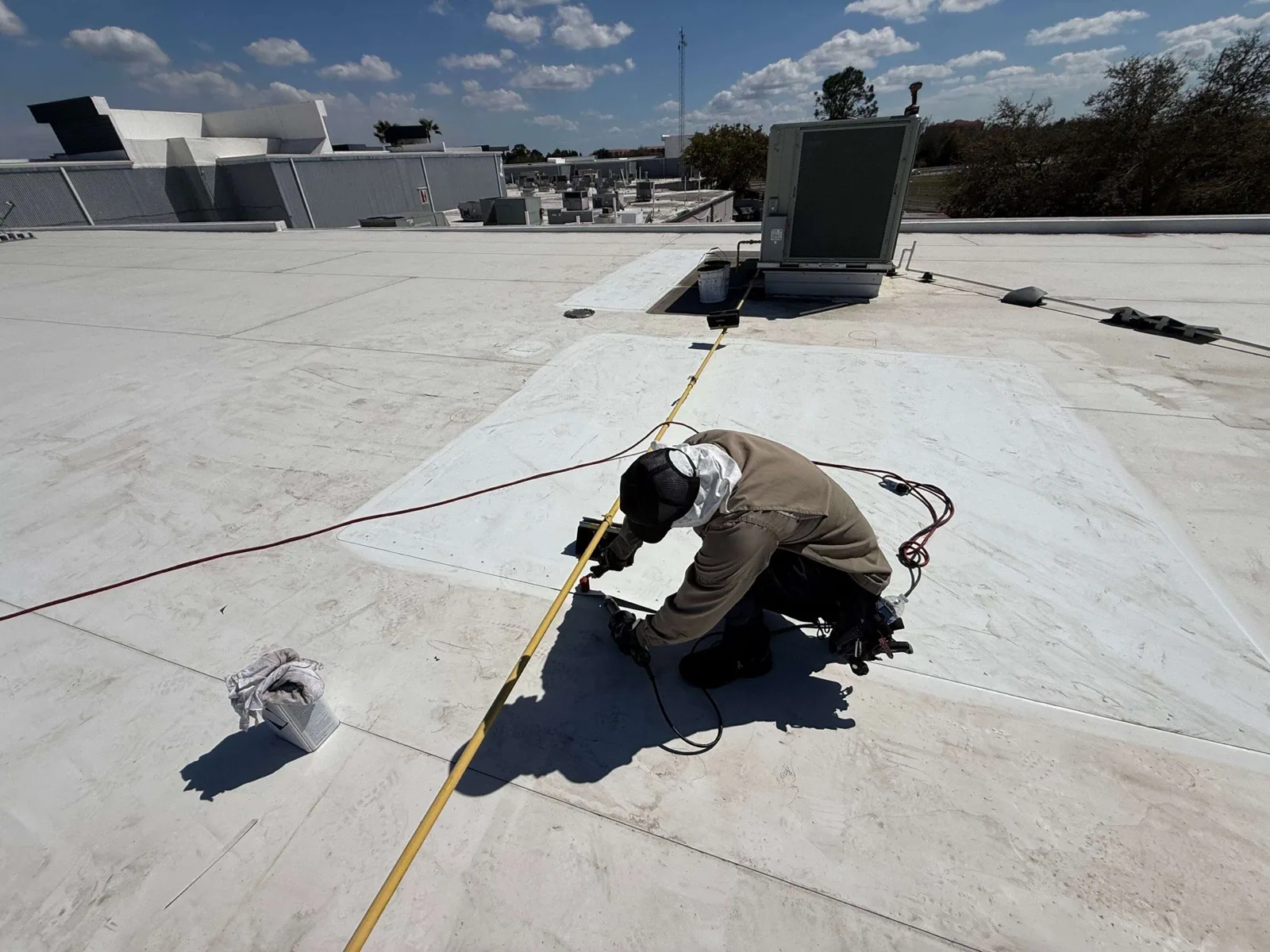
Field welds still need review. We examine seams, corners, patches, and areas around rooftop service routes for separation, contamination, or wear. The membrane’s condition, attachment, and layers beneath it control whether a patch is appropriate. A PVC roof inspection can record those details by section. If an addition uses another system, review the GAF system details separately and document the transition before specifying compatible tie-in materials.
Custom-fabricated curbs, corners, and accessories still depend on correct field integration. We inspect the connection at each perimeter, pipe, drain, and equipment opening. A prefabricated component does not remove the need to check the finished transition, surrounding membrane, or water path. Mark each detail and note the condition visible at the visit. Compare prefabricated components with current equipment locations and any field modifications. A replaced curb or abandoned pipe can leave an opening that differs from the original drawing. We photograph the interface and record whether the installed flashing reaches sound membrane. That helps separate original fabrication from later service work and gives the next repair estimate a defined starting point.
Drains, penetrations, and edges
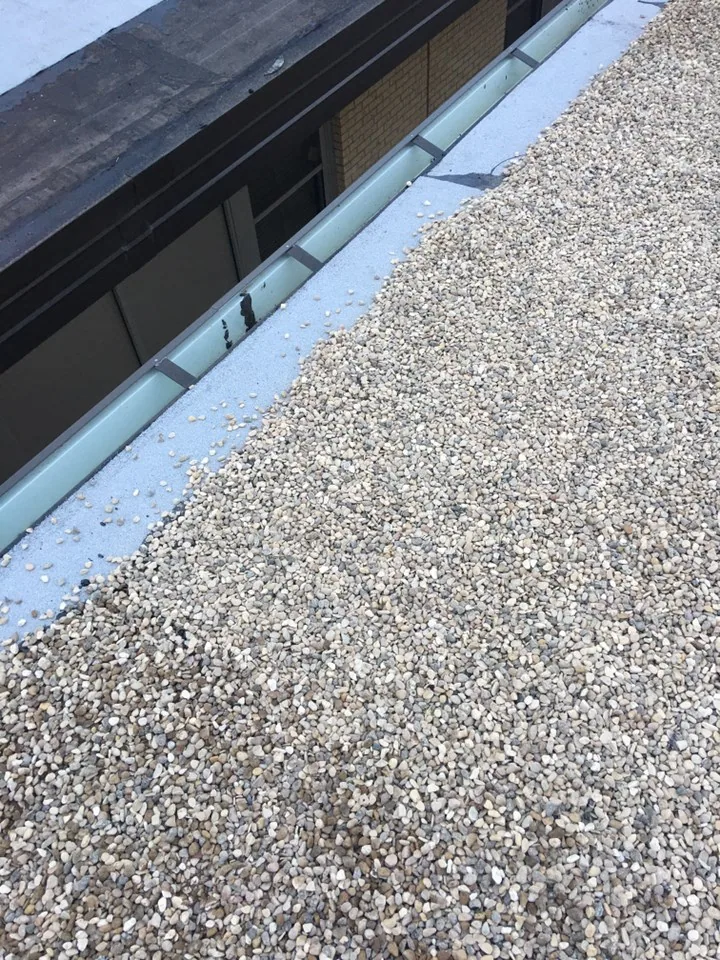
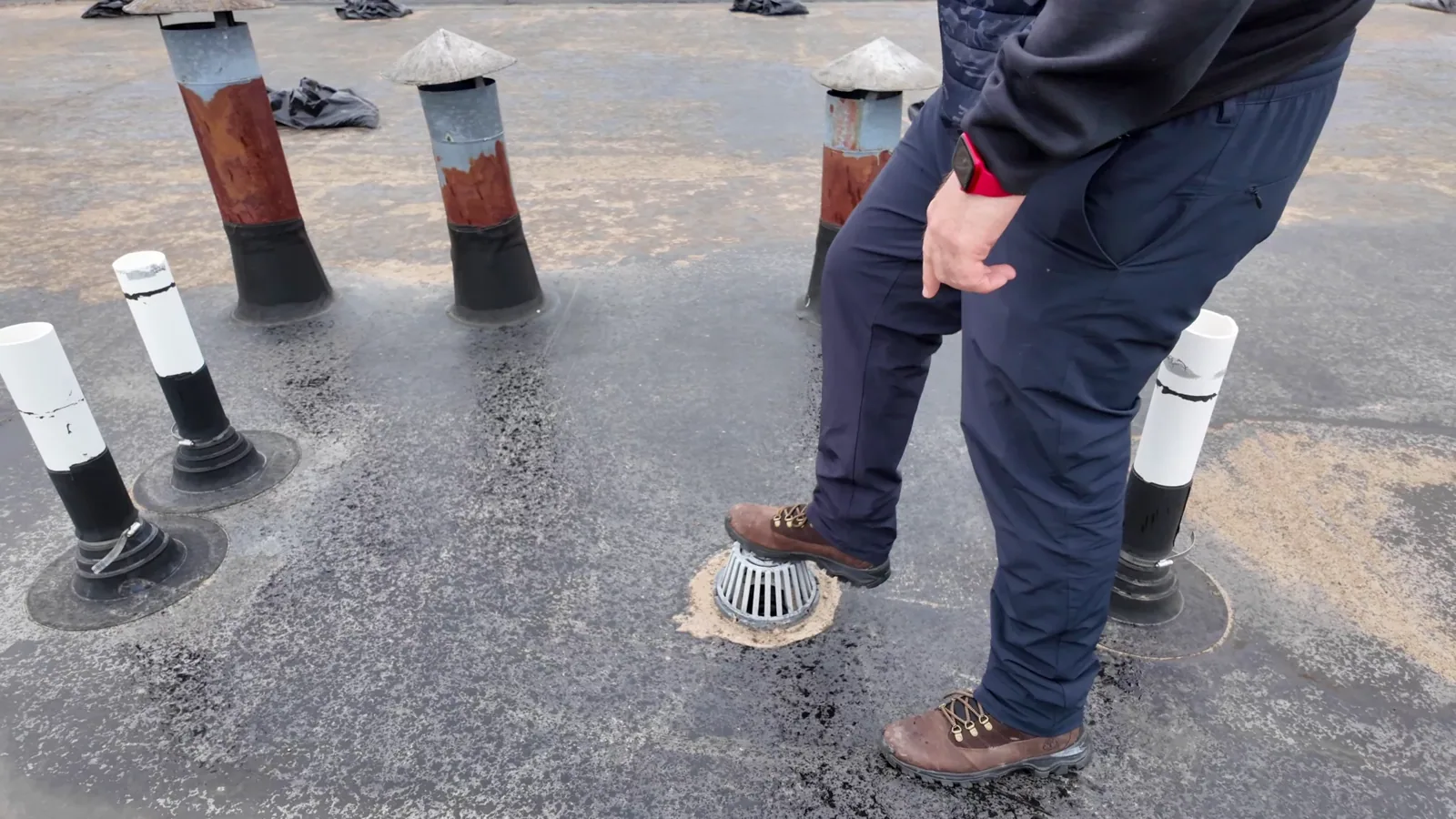
Water has to move from roof field to drain or scupper without relying on a patch to redirect it. We inspect drain bowls, strainers, overflows, low areas, and nearby seam edges. If water remains after rainfall, record its location and compare it with slope, outlets, and past leak reports. An obstruction may need cleaning; a persistent low point could need a separate drainage or structural review. A drainage inspection can state which condition was present at the visit.
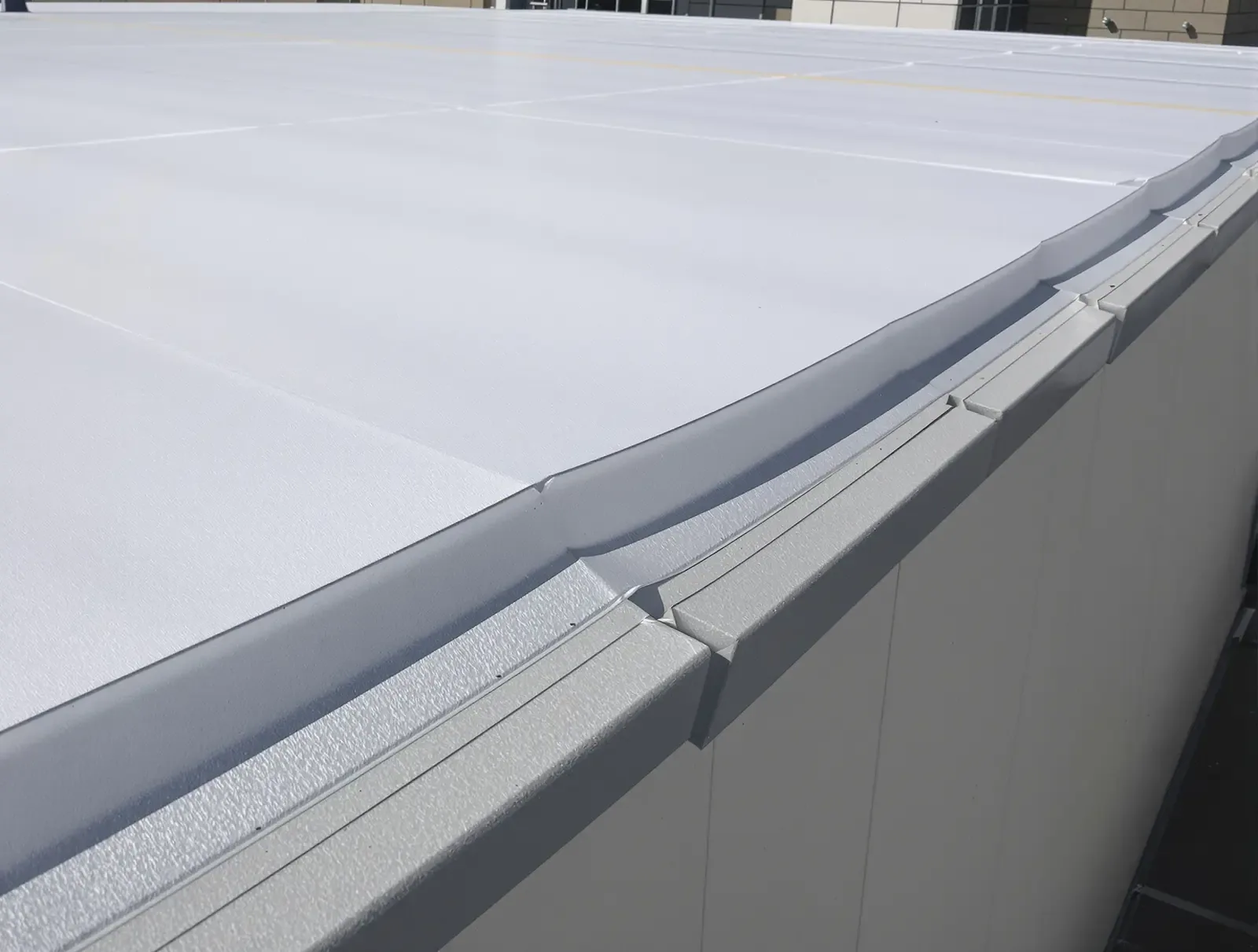
At curbs, skylights, pipes, and parapets, check the flashing and adjacent weld together. Service work can introduce foot traffic or equipment changes that were not part of the original fabrication map. We record new penetrations, abandoned supports, and damaged corners, then identify whether the repair should include reinforcement or a wider tie-in. A flashing inspection captures those transitions, and an edge and coping review checks terminations around the perimeter.
Roswell Road runs north and south through Sandy Springs and connects the city with I-285. Commercial properties along that route have different access and delivery conditions from a medical campus or office tower. We confirm roof entry and material staging directly with the property contact, then keep logistics separate from the membrane findings.
Repair boundary and hidden layers
A localized puncture or opening may be repaired when the surrounding PVC is clean, dry, weldable, and supported by suitable layers. We mark the defect, prepare a boundary that reaches sound membrane, and note conditions outside the work. If water has traveled beneath the sheet or several details are failing, test the assembly before treating the issue as one surface spot. A repair assessment should identify the evidence behind the scope and the question that could change it.
Moisture readings can help focus investigation, but each method has limits. We identify test locations and weather conditions, then confirm concealed moisture with a test opening when that result affects recover or replacement. A wet insulation area should be mapped, not generalized to a larger roof without evidence. The report states which zones were tested, what the result supports, and where uncertainty remains.
When the roof has broad deterioration, recurring repairs, or compromised insulation, compare renewal options using a common scope. Recover feasibility depends on attachment, moisture, drainage height, deck, and code conditions; tear-off adds removal and disposal while exposing concealed layers. A recover evaluation can test that path against replacement before ownership sets a budget request.
Weather window and property access
At Atlanta’s airport station, July and August average highs are near 90 degrees and average lows near 72. Hot, humid conditions affect roof surface temperatures and daily work planning. Rain can interrupt cleaning, welding, or exposed insulation work, so we define the section that can be safely prepared and secured before starting. The field schedule follows current conditions and product instructions rather than a broad calendar assumption.
Northside Hospital is a major institution in the Sandy Springs Medical District. A building in that district may have sensitive operating hours and controlled access. We confirm site requirements with the owner and coordinate roof entry, material routes, and work closures. For a property in the Medical District, confirm the building schedule, roof access, and equipment limits with its facilities contact before planning work.
City Springs contains civic, performing-arts, conference, dining, event-green, fitness, and residential uses. Work timing there may differ from a single-use office property. For either setting, we plan access with the site contact and record any restriction that affects production or the secure end-of-day point. That lets the owner compare a technically suitable repair with the disruption it creates.
Roof record and renewal timing
Keep fabrication drawings, roof-zone plans, product identification, repair photos, moisture readings, and current detail locations together. If field conditions no longer match the original drawing, update the map. A condition report can tie a weld or flashing repair to the next maintenance interval. A different assembly, such as a SOPREMA roof system, should have its own map and condition record if it occupies another section.
Share the roof plan, active leaks, installation record, repair history, access needs, and budget timing. We will inspect the Duro-Last assembly, identify the scope boundary, and return immediate and longer-range actions by zone. The owner can then compare the repair sequence with the capital window and keep open testing needs visible.
Questions About Duro-Last Roofing
Does Duro-Last factory fabrication eliminate field roof inspections?
No. Field transitions, repairs, penetrations, drains, and perimeters still need inspection. We compare the original layout with current conditions and document changes made since installation.
How do you repair a Duro-Last seam that has opened?
We inspect the weld, nearby sheet, attachment, and substrate, then prepare a compatible tie-in where the surrounding material supports it. The repair record identifies the limits and any nearby condition left open.
Can Duro-Last roof water entry come from a drain detail?
Yes. We check the drain bowl, overflow, slope, nearby membrane, and interior report together. Clearing an outlet may help, while a persistent low area can call for further evaluation.
When should an owner consider a Duro-Last recover?
Review attachment, moisture, deck, drainage height, and code conditions first. We compare recover feasibility with removal scope when those findings show whether another layer is suitable.
What should be retained after a Duro-Last repair?
Keep the roof-zone map, fabrication detail, photos, repair method, moisture findings, and follow-up date. Those records show whether the same transition is stable at the next visit.
Review a Duro-Last roof
Share fabrication drawings, roof plans, active leak areas, repair history, access requirements, and budget timing. We will return a condition-based scope by roof section.
Call 555-555-5555 or send the building details.