School Roofing in Sandy Springs, GA
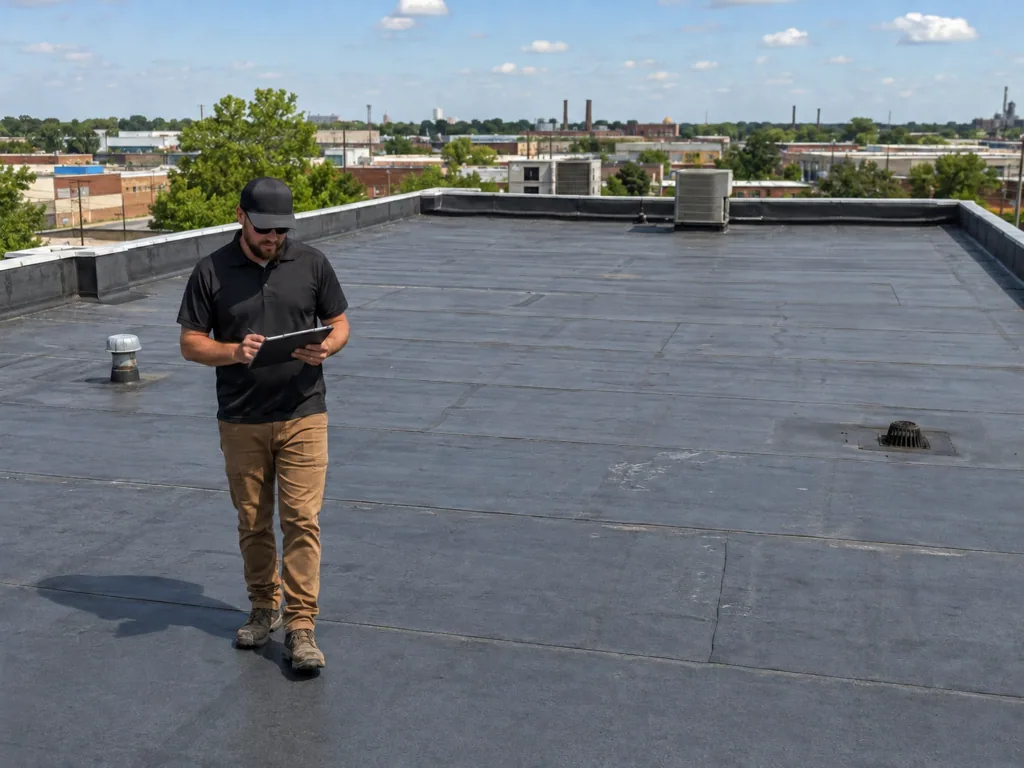
A school roof decision has to fit the calendar as well as the condition record. A leak over a classroom, kitchen, gym, or administrative wing can force a work sequence that differs from a broad renewal plan. Sandy Springs has a broad commercial building base, and hot, humid summers, frequent rain, hail, and thunderstorm winds put repeated demands on roof edges, drains, and penetrations. We start with the roof sections that are exposed now, then compare those findings with the summer or holiday work window. A commercial roof inspection records the assembly, visible defects, drainage, and repair history. That gives a school owner a basis to separate urgent protection from planned capital work without assuming every building needs the same response.
Campus zones and exposure
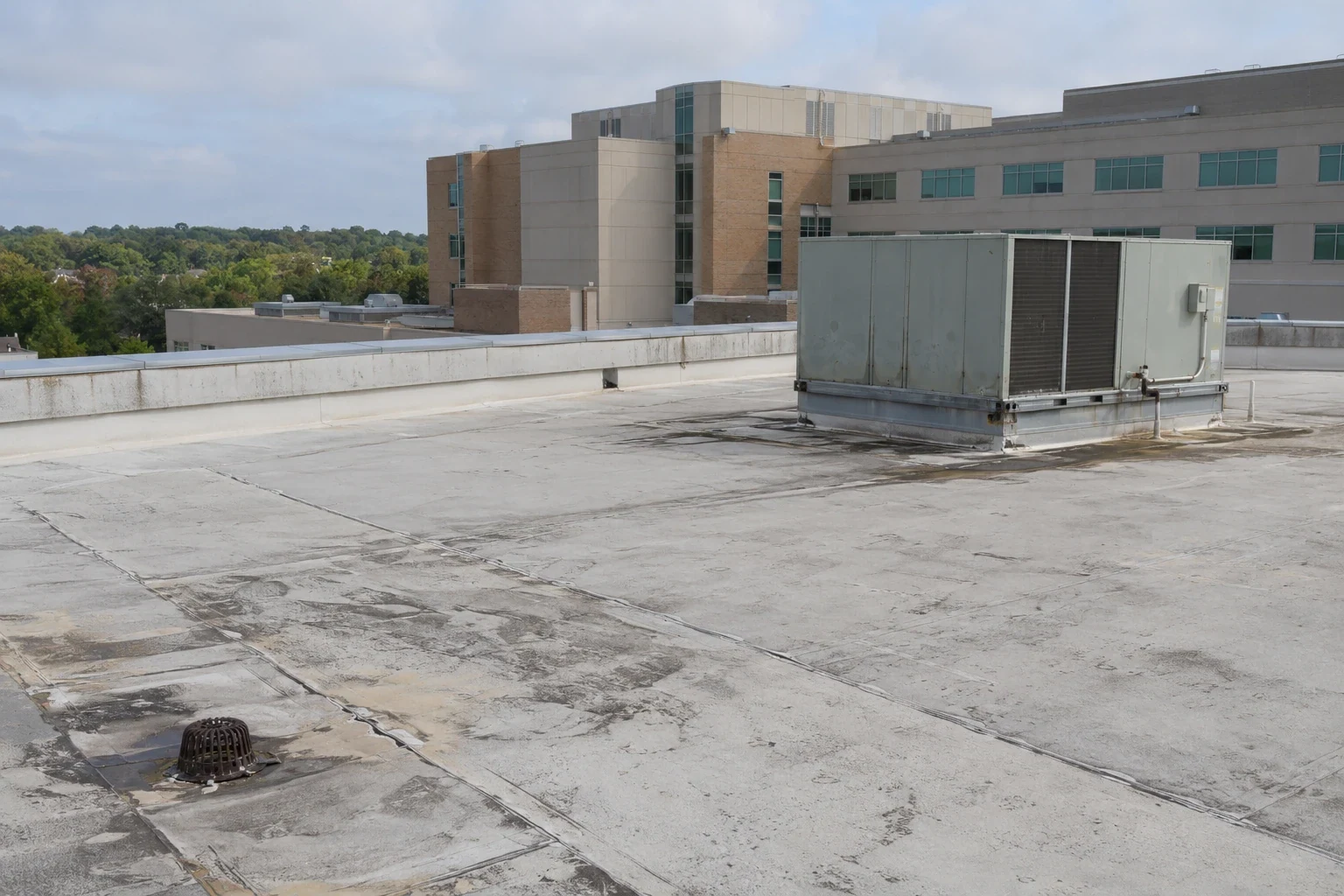
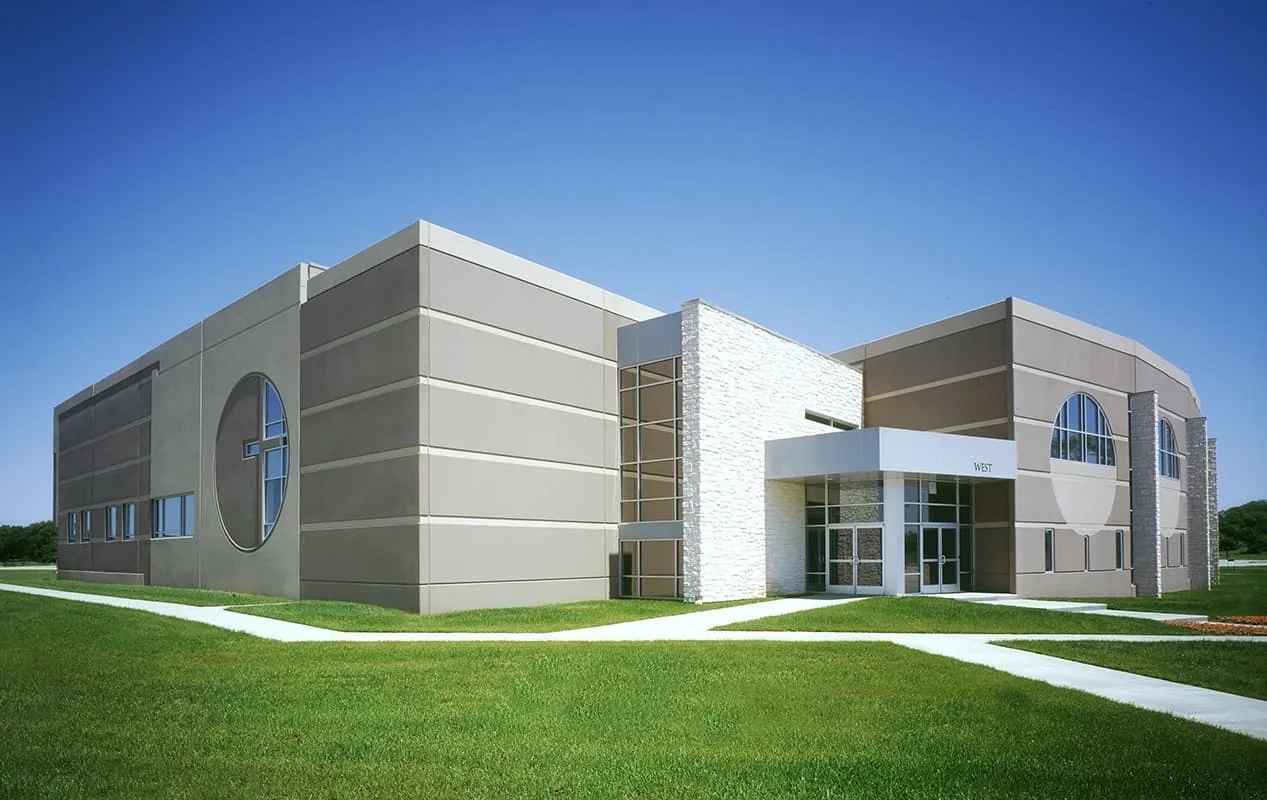
A school campus can include several connected or separate buildings with different roof ages and conditions. The survey should identify each section by use and location, then record seams, flashing, drains, rooftop equipment, and prior repairs. A recurring leak near a mechanical curb may need a local detail repair; widespread wet insulation or failed attachment can point toward a larger scope. We document what is visible and identify areas where access or weather limits the review. Sandy Springs' spring and summer storms make that distinction useful: a roof with a weak perimeter or open transition may need immediate protection before the next storm, while a sound field membrane can remain in a scheduled maintenance cycle. The resulting condition report with photographs gives facilities staff a consistent record across buildings.
A campus review also needs to account for where roof runoff goes after it leaves the field. We check downspout connections, discharge points, splash zones, and grading near entrances where water can return to the building or affect a walkway. If several buildings share a maintenance team, the record should make each drain and roof section identifiable without relying on staff memory. Central Perimeter's transit-served employment district illustrates the region's dense daytime operating patterns; a school remains a different occupancy, but both settings reward clear access and staging plans. A campus roof review for higher-education buildings uses a related asset lens while keeping each building's needs distinct.
Classroom continuity
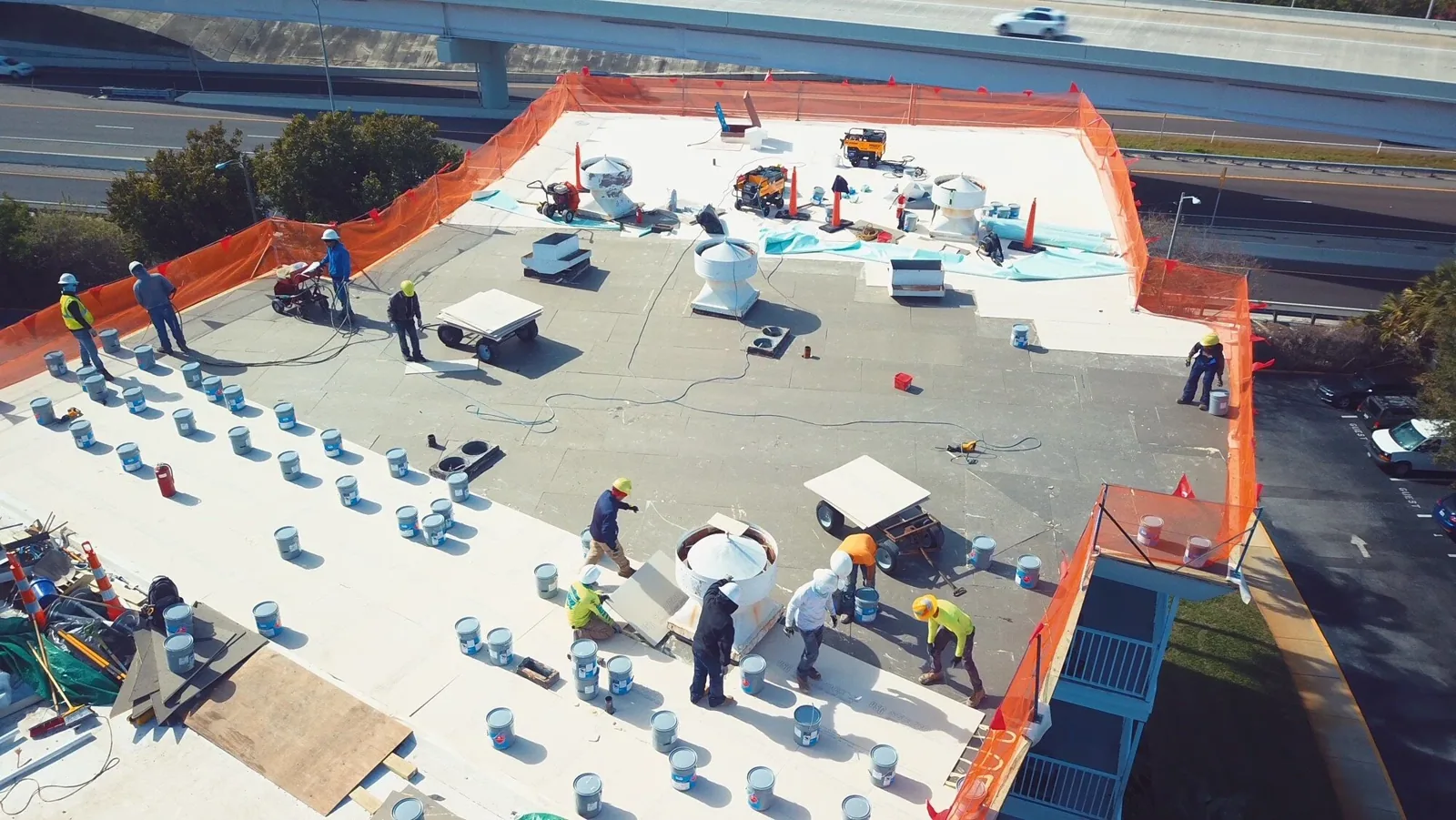
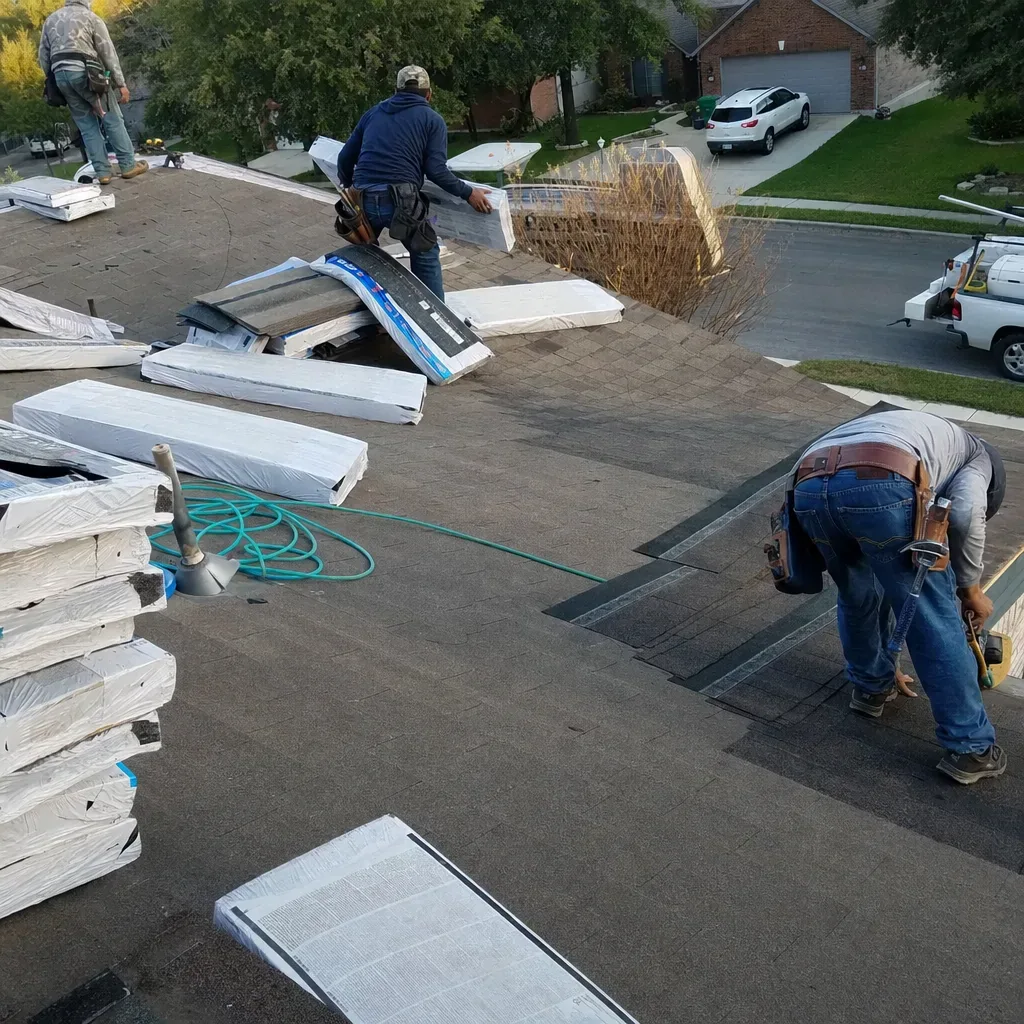
Work above an occupied school is planned by building zone, not by a generic promise that disruption will be absent. We map access, staging, material movement, odor or noise concerns, and the rooms directly below the work. If the roof can be divided into safe sections, the schedule can protect exposed areas at each day's close and keep a known route for staff and emergency access. A phased occupied-building reroof can compare summer break, weekends, and limited daytime work against the actual roof condition. For a building with multiple wings, completing one drainage area at a time may make daily closeout easier to verify. The school team can identify testing, event, and student schedules that should shape the work sequence.
A repair scope should say how the surface will be prepared, which seams or transitions are included, and how the completed work will be checked. We identify whether a patch ties into sound material, whether a drain needs cleaning or correction, and whether a later inspection is warranted. If moisture testing is recommended, the report explains which roof section requires confirmation and how the result could change the project choice. The institutional roof planning approach can also help school owners compare access, procurement, and closeout requirements across public buildings. The school-specific schedule still accounts for exams, athletics, student arrivals, and summer access.
Drainage and storm details
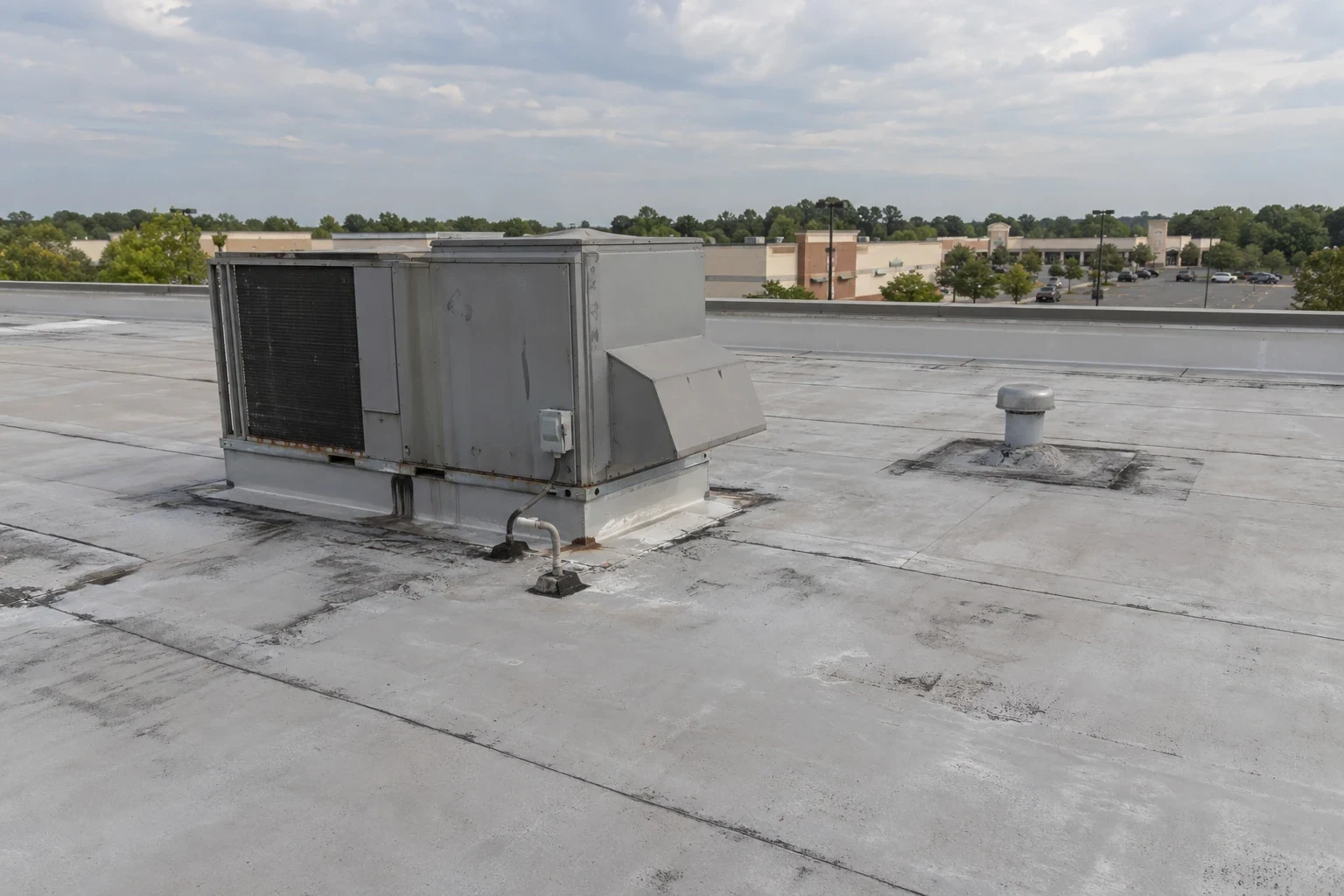
School roofs often carry drains, scuppers, plumbing vents, exhaust, and equipment supports that create separate maintenance points. We check how water reaches each outlet, whether strainers and sumps are clear, and whether flashing remains secure where the roof meets a curb or wall. Hail can bruise or fracture exposed components, while wind-driven rain can test edges and transitions. After a regional severe-weather event, a storm inspection should distinguish fresh impact from older wear and identify any opening that needs temporary protection. The repair log should note the affected roof zone, photographs, and follow-up date. That evidence helps an owner decide whether a repair can carry the building through the next budget year or whether replacement should be priced now.
Along Roswell Road’s North End commercial area, existing shopping centers sit within a district being considered for mixed-use housing, retail, office, and green space. For school work nearby, we confirm roof access, entrances, and lift or material routes with campus operations before staging. A clear plan identifies who can authorize access, where crews can set up, how deliveries avoid student circulation, and what happens if weather changes the workday. These details turn a technical roof scope into a schedule the campus can review and carry through procurement.

Capital window and system choice
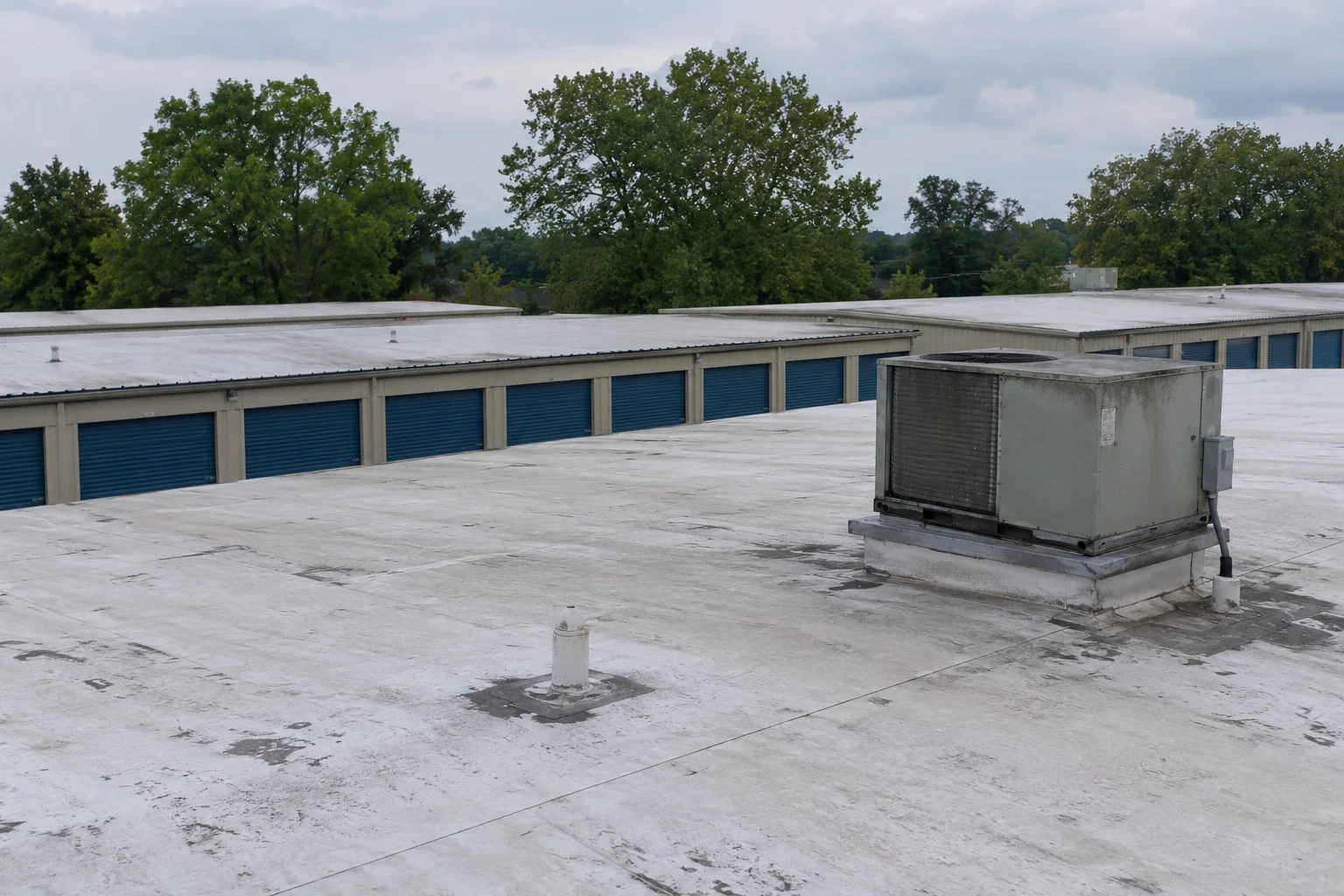
The system decision follows the existing assembly and the condition beneath it. A roof with a stable membrane and localized detail failures may be a candidate for repair or recover, if moisture and attachment checks support that route. A recover assessment weighs the existing layers, drainage, perimeter details, and applicable code requirements before adding material. If tear-off is necessary, we compare a new TPO assembly or another suitable system with the building’s slope, use, and maintenance plan. Sandy Springs follows Georgia construction codes, so the project scope should confirm the currently applicable requirements with the authority having jurisdiction. The estimate separates preparation, insulation, flashing, edge work, drainage corrections, and protection of occupied areas.
Records for the next cycle
A useful closeout does more than list completed work. It identifies the system, sections addressed, repairs made, photographs, remaining limitations, and the next review date. School maintenance teams can then compare storm calls, recurring leak locations, and completed work across the campus rather than restart the investigation each season. If a roof section remains serviceable, scheduled roof maintenance can track drains, seams, and penetrations between capital projects. If deterioration is broad, the owner can align a replacement package with the next budget cycle and procurement schedule. We provide a prioritized review that separates immediate water control, near-term repairs, and renewal work. Share the campus access limits, roof records, active leak zones, and calendar constraints so the scope reflects how the school actually operates.
Questions About School Roofing
Can work be sequenced around summer break?
Yes, when the roof condition and project size support that window. We first identify vulnerable sections, expected preparation, and weather protection needs, then compare the available break with the work sequence. A shorter break may favor a priority zone and a separate later phase.
How do you limit disruption during the school day?
The access plan controls staging, lifting, material routes, and work areas. We coordinate the sections under construction with the rooms below and establish daily protection and closeout steps. The school identifies testing, events, and occupied hours that should govern the sequence.
What should a school board compare in roof bids?
Compare the same roof areas, system assumptions, tear-off limits, insulation, flashing, drainage corrections, and exclusions. The budget should also show temporary protection and occupied-campus sequencing. A low total is difficult to assess if the scope boundary is unclear.
Can one wing be repaired while another is replaced?
That can be reasonable when the assemblies and conditions differ. We inspect each section, check transitions between systems, and explain where a repair can serve its intended interval. The record should show how dissimilar work ties together.
What belongs in the storm file?
Keep dated photographs, the affected roof zone, observed damage, temporary protection, repair limits, and follow-up findings together. We can document visible conditions and separate storm-related observations from pre-existing wear.
Set the next roof decision
Share the roof age, active leak areas, access requirements, and budget window. We will review the evidence, identify immediate exposure, and return a prioritized scope with clear next actions.
Call 555-555-5555 or send the building details.