Commercial Roofing on the North Druid Hills Road Corridor, Brookhaven, GA
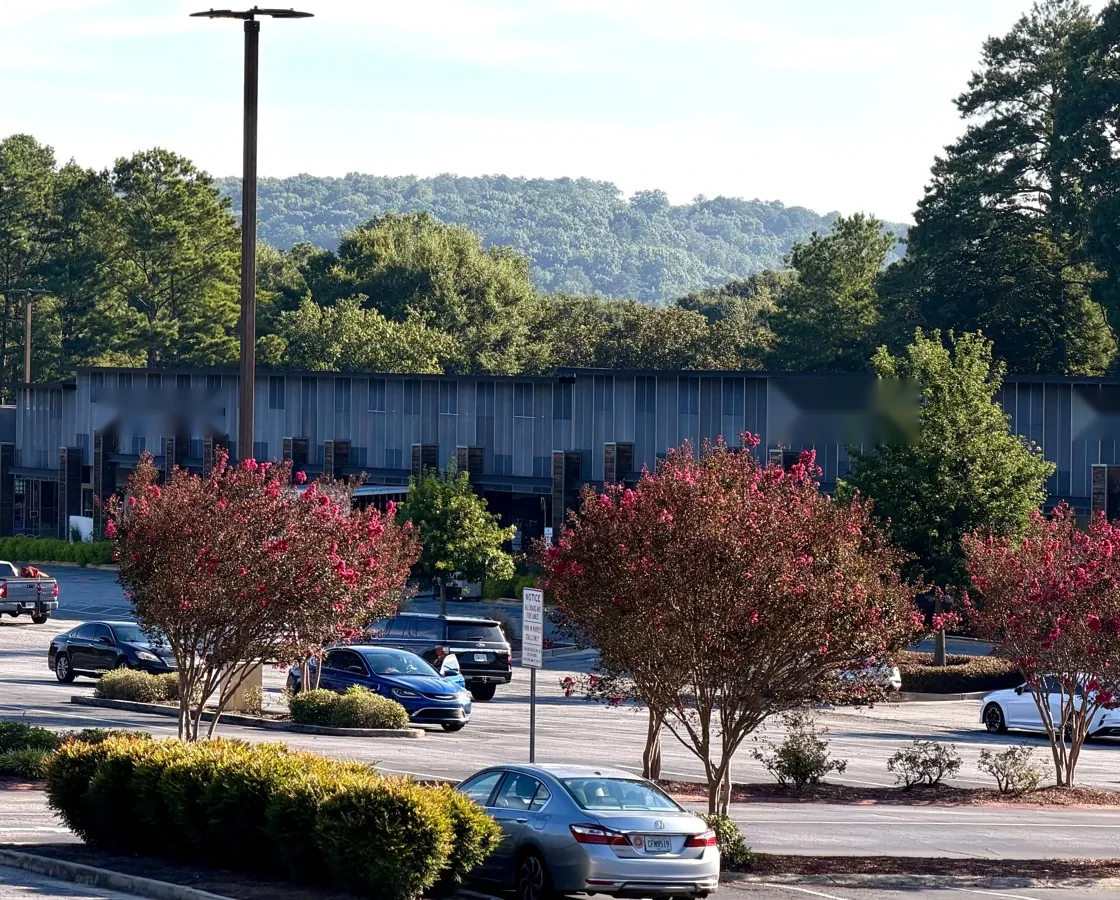
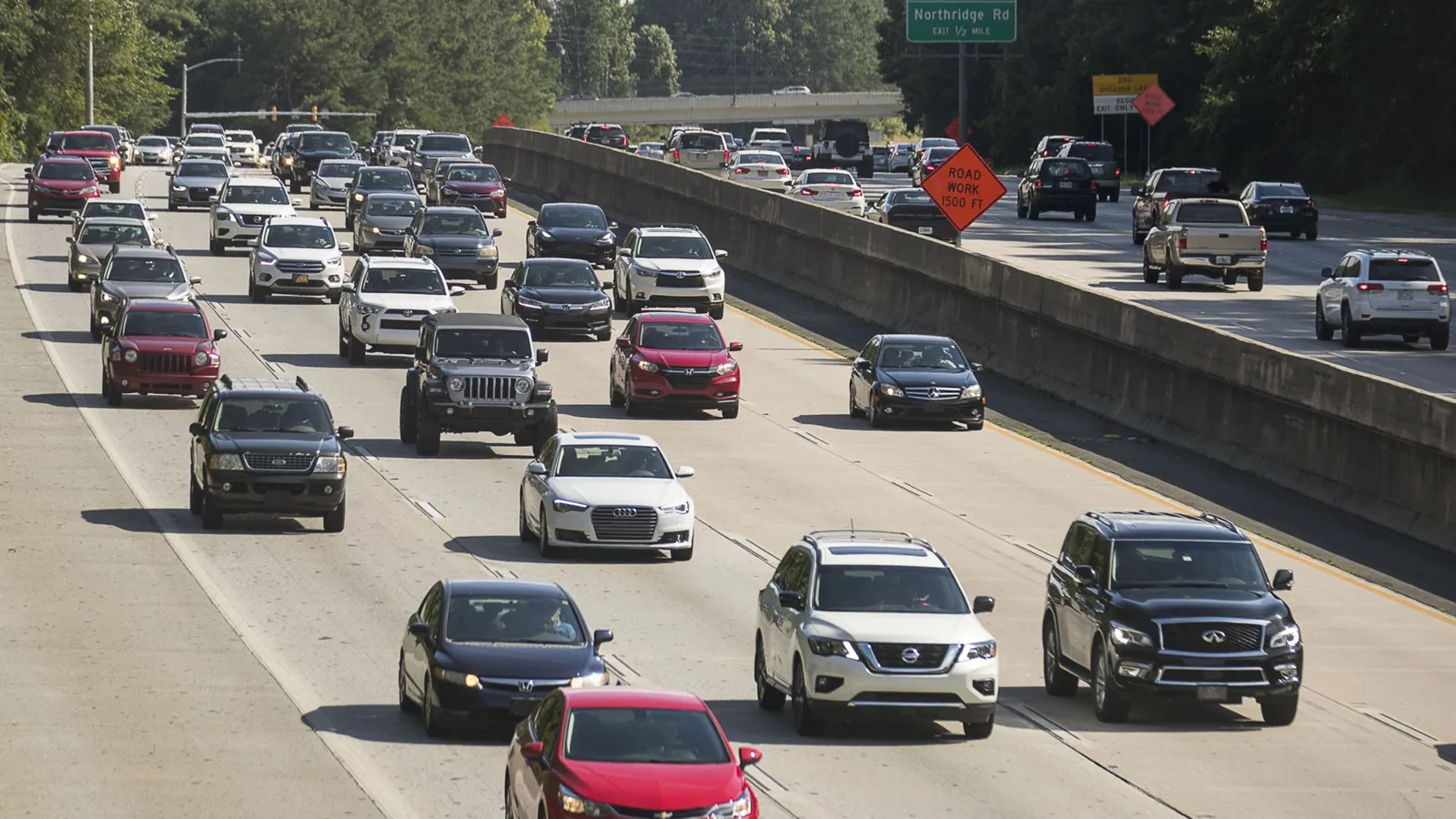
Brookhaven’s North Druid Hills Road Corridor Study covers the route between Peachtree Road and Briarcliff Road, with its main study focus north of Buford Highway. The city developed a corridor vision for future traffic and better walking, biking, and transit access. For commercial properties along the road, roof recommendations still depend on the individual building: we inspect the assembly, drainage, transitions, and access, then set work timing against the owner’s operations.
Coordinate around changing access conditions
The city’s corridor study treats roadway conditions, active transportation, and transit access as area-wide planning questions. Separate projects at the southern end include the Children’s Healthcare of Atlanta Development of Regional Impact, a GDOT interchange project at I-85, and greenway access. Construction can affect deliveries and staging, so verify current conditions with the property contact before mobilization. A roof crew needs approved entry, lift placement, work hours, safety limits, and clear communication with whoever can authorize a change. We record those constraints alongside the roof scope because access can influence duration even when the repair itself is small.
The study spans multiple road segments and considers access for people walking, cycling, and using transit. Roof and access conditions still vary by property. A Brookhaven commercial roof review or a Roswell roof inspection involves a different local setting; in each case, we attach findings to the building evaluated.
Before work, confirm whether the property’s normal operations continue during the project, whether access paths shift, and how public circulation is protected. For an occupied building, note equipment that cannot be interrupted and the contact who can approve a shutdown. Divide the roof into sections with a defined opening and close-out point. If adjacent construction changes the route, revise the staging plan rather than assume the existing delivery path remains available.
Measure the roof before committing a scope
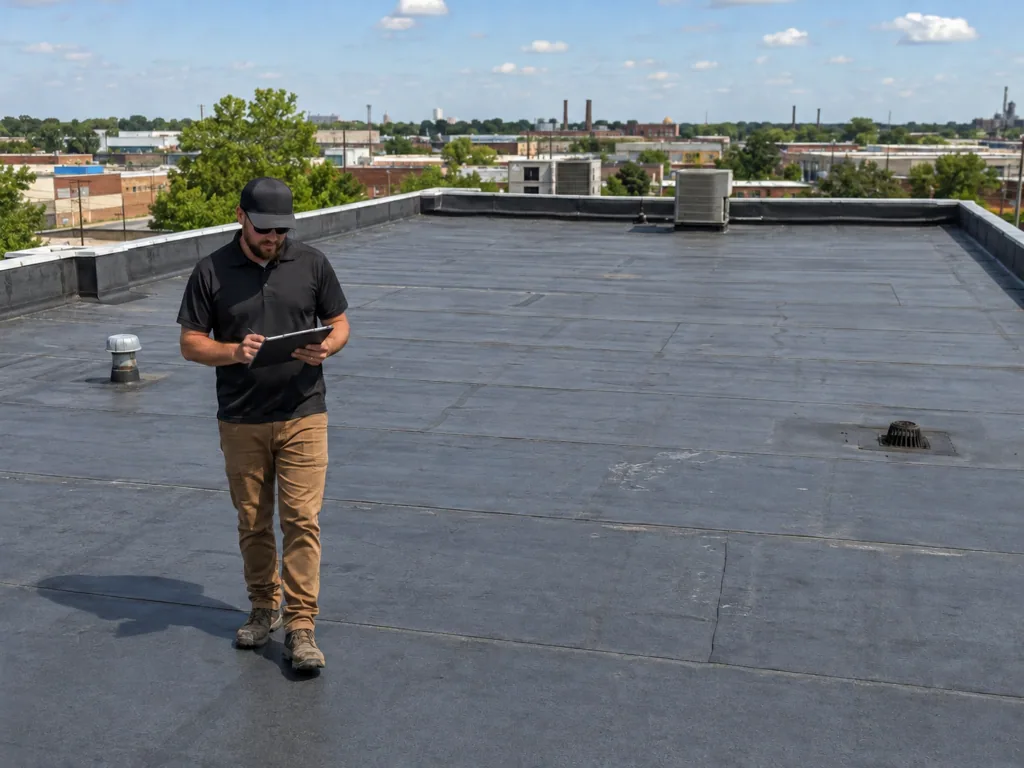
Begin with the roof plan and verify its boundaries in the field. Identify membrane or metal areas, seams, wall flashings, curbs, penetrations, drains, scuppers, edges, parapets, and earlier repair work. Place leak reports on a roof-zone map and compare them with accessible details. Interior staining shows where to investigate, but it does not confirm the entry point. Note suspected moisture, areas that were inaccessible, and questions that require testing before pricing permanent repair.
At Atlanta’s airport station, average highs reach about 90 degrees in July and 89 in August, while average lows stay near 72. Hot, humid conditions can affect safe work windows and handling of adhesives or membranes. We identify how much can be opened and protected during the shift, then adjust for actual surface moisture and the forecast.
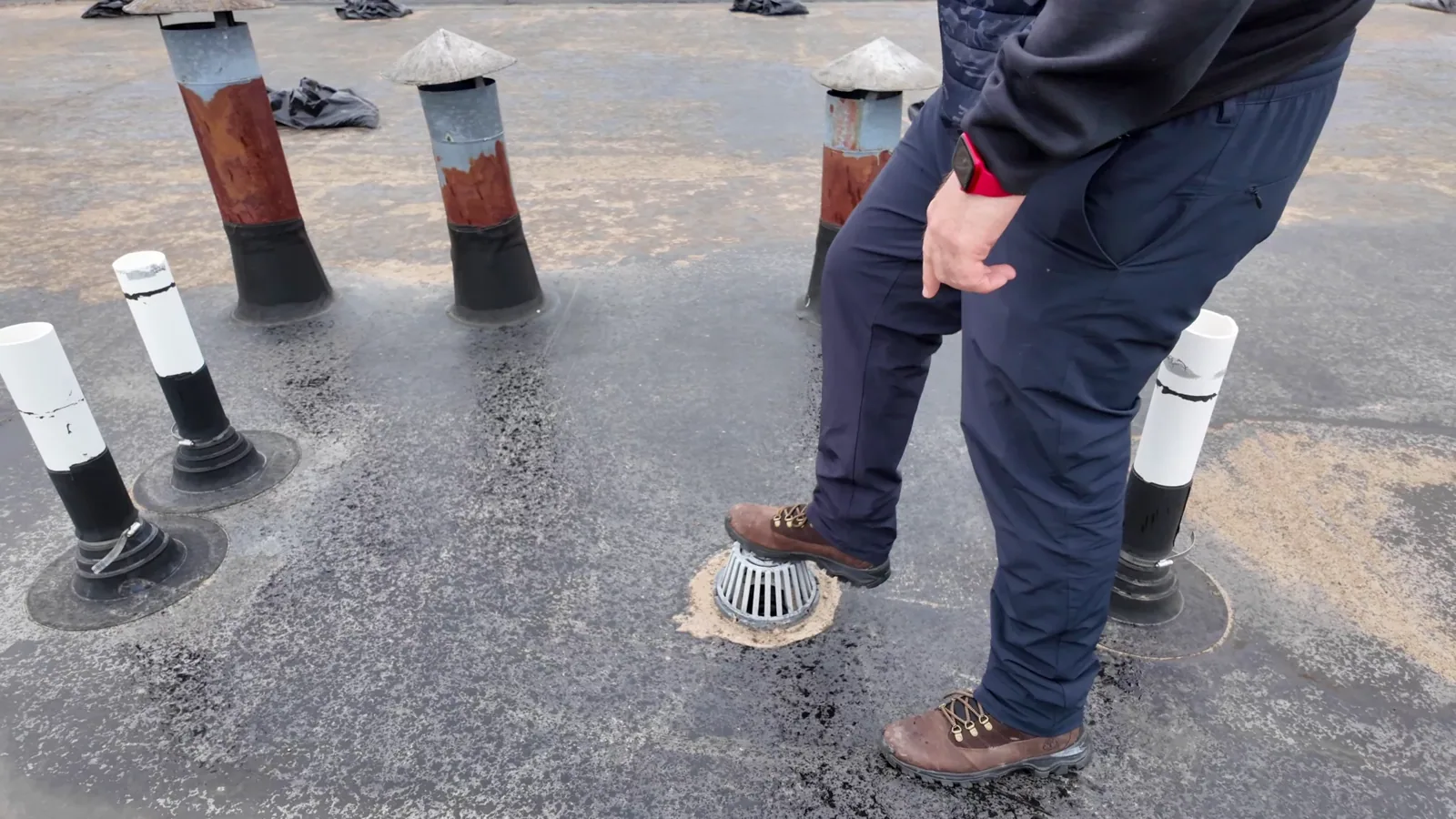
At the Atlanta airport station, normal precipitation totals 4.59 inches in January, 4.55 in February, and 4.72 in March. Check drain bowls, strainers, overflow routes, low points, and the membrane around penetrations. If water is present, document where it sits and what was observed about the outlets. A drainage scope can identify whether clearing or a larger flow evaluation is needed. A commercial inspection captures the evidence and access limits at the time of the visit.
Use findings to control repair boundaries
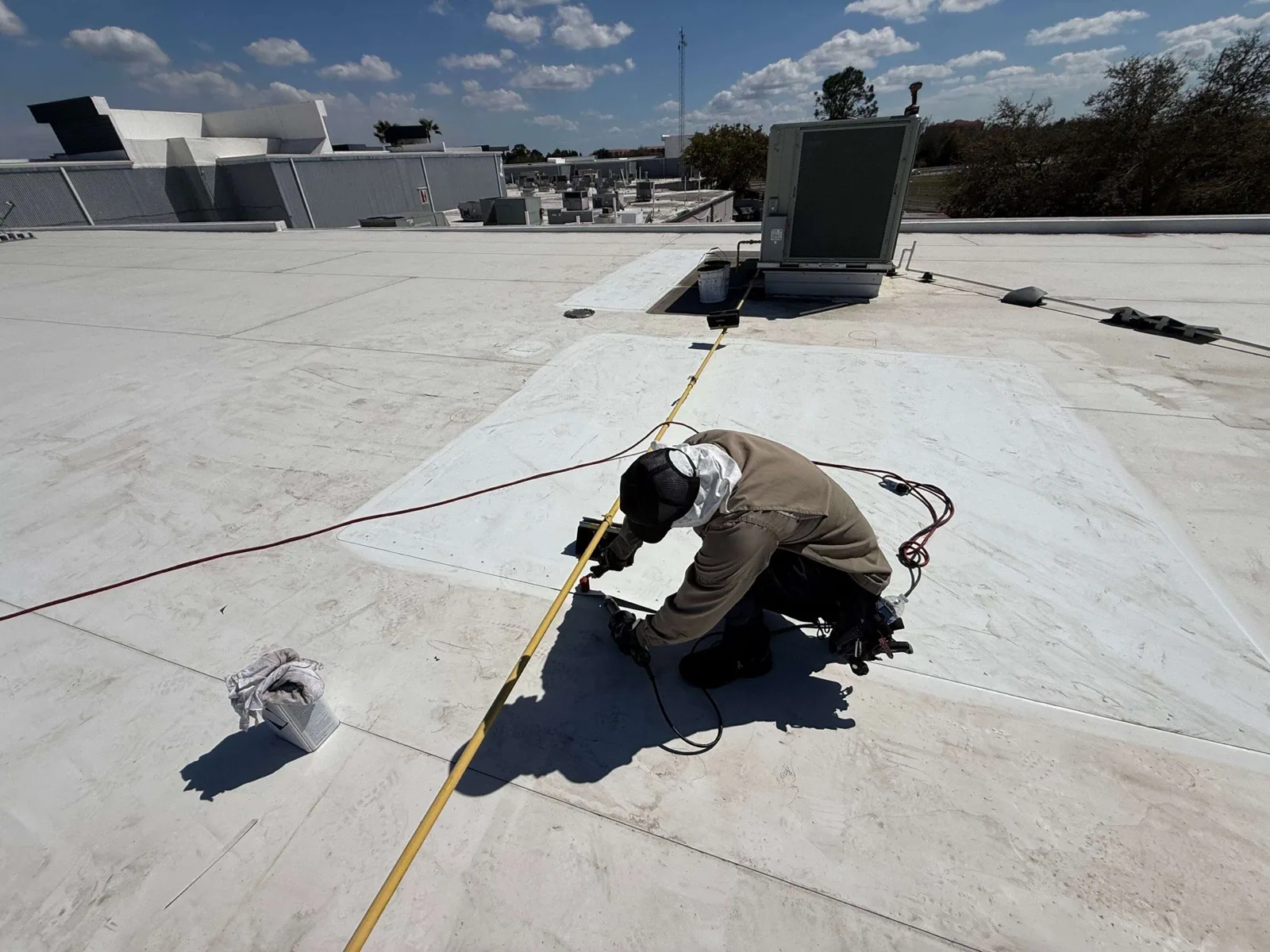
A discrete puncture, seam defect, or flashing separation may support a localized correction when the surrounding material remains sound. We identify preparation, system-compatible materials, the measured area, and exclusions. Where moisture testing finds a wider pattern or leak calls recur across several zones, investigate further before repeating an isolated patch. A commercial repair plan should state what the owner is authorizing and which conditions remain outside the work.
A corridor-wide improvement does not establish the condition of a specific roof. A neighboring parcel’s leak or repair does not establish this building’s condition. Following wind or hail, photograph observed evidence, mark where inspection was possible, and compare each observation with the property’s repair history.
If temporary protection is required, document the material, location, date, and follow-up trigger. A permanent correction may depend on project access, a shutdown, or coordination with adjacent work. State that dependency and its effect on timing. If opening the assembly exposes wet insulation or an unexpected layer, pause at a safe boundary, measure the added scope, and seek approval before proceeding.
Compare recovery and replacement with project timing
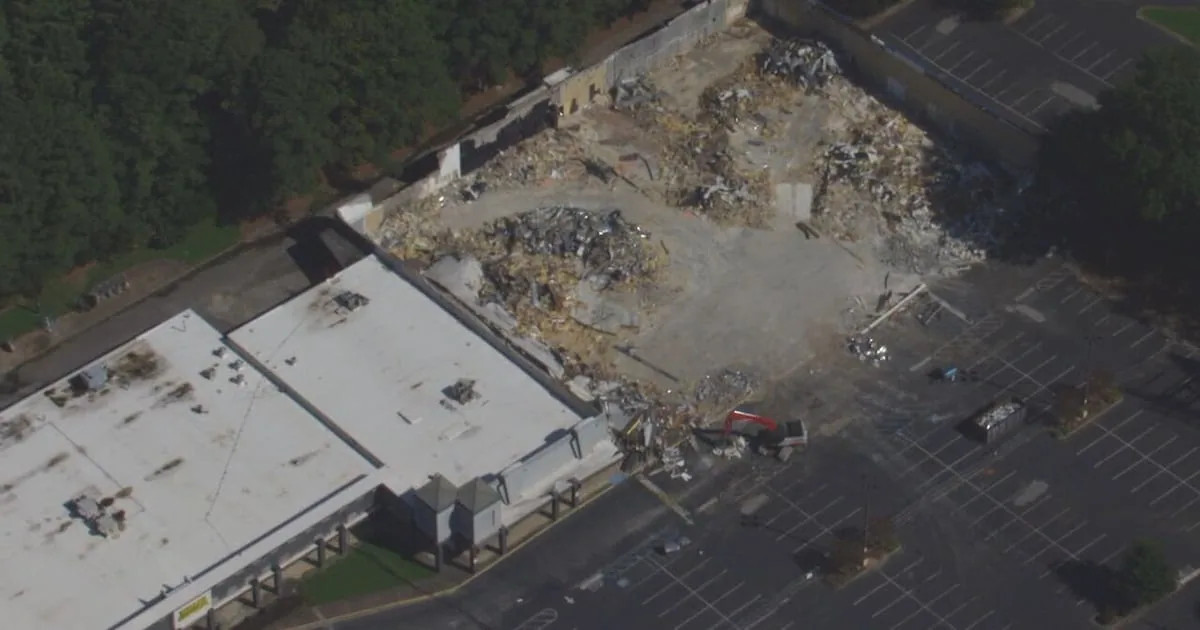
A recover avoids part of the tear-off, but existing layers, attachment, moisture, deck condition, drainage height, and code must support an added assembly. Full replacement removes the existing system and can reveal concealed damage, with added disposal and dry-in needs. Compare alternatives using the same measured area and note what testing could change the recommendation. A recover feasibility assessment can confirm which unknowns need resolution first.
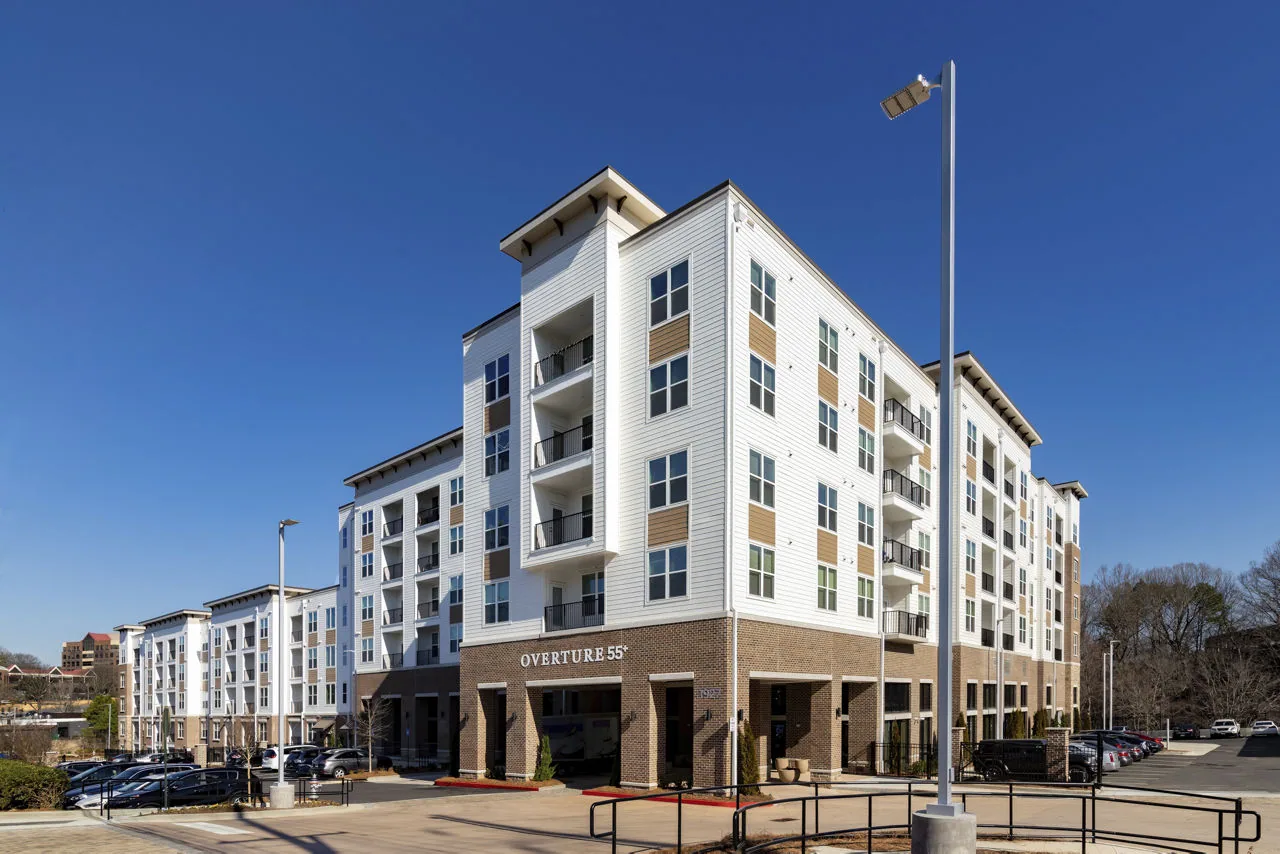
The applicable Georgia construction-code edition and amendments need confirmation with the local authority before details are finalized. Insulation, fire classification, edge securement, transitions, and equipment curbs can affect the detail. Redevelopment approvals and transportation improvements do not replace code review or define the roof assembly. Keep site observations, owner decisions, and design questions in separate parts of the project record.
If a building has been modified or reconfigured, map each roof area and transition before choosing materials. A EPDM assembly uses different seam and flashing details from a metal area or another membrane. Use plans, repair files, and field indicators to identify the current system. If a test opening is needed, state which outcome would change the estimated work and schedule.
Keep current roof decisions visible in the property record
Access restrictions, staging, occupied hours, traffic protection, removal, wet materials, deck repairs, and equipment dependencies influence cost and duration. We itemize those drivers by roof section so ownership can consider emergency protection, repair, and renewal separately. A capital plan can set order using condition, effect on operations, risk of delay, and budget timing. Transportation plans describe area context, but they do not establish roof conditions. Roof scope still follows each building’s inspection and maintenance record.
Keep roof-zone maps, photos, system identification, drainage observations, moisture results, repairs, and open items in the property file. A condition report allows the next inspection to compare findings. Include any temporary work, changed access route, and review date. If redevelopment alters equipment, exterior details, or circulation, update the asset record before planning subsequent roof work.
Share roof plans, leak history, access instructions, repair records, project schedule, and the owner’s capital window for an initial review. We inspect the property and return a prioritized scope with measured boundaries and remaining decisions. The recommendation should separate immediate water control from longer-term renewal and identify approvals or tests that could change the sequence. Owners can align roof work with current access conditions while keeping each building’s survey tied to its own roof sections and operating schedule.
Questions About North Druid Hills Road Corridor, Brookhaven
What part of North Druid Hills Road did the city study?
The study covers North Druid Hills Road between Peachtree Road and Briarcliff Road, with its main focus north of Buford Highway. We confirm each property’s access and roof condition separately.
Do redevelopment plans tell us what roof system a building has?
No. They describe land and project scope. We confirm the installed assembly through records, inspection, and testing where needed.
What should change if construction shifts a delivery route?
Update the approved staging and access plan with the property contact before mobilization. The schedule and estimate should reflect any new equipment route, closure, or protection requirement.
How do you keep a repair from expanding without owner approval?
We set a boundary before opening the roof. If hidden conditions require added work, we secure the area, document and measure what changed, and pause for approval.
How should a roof owner compare recover and replacement?
Compare measured areas, existing layers, moisture, attachment, deck, drainage height, and code requirements. We identify the tests that could change the scope before selection.
Review a North Druid Hills corridor roof
Share roof plans, active leak areas, repair history, access requirements, redevelopment schedule, and budget timing. We will return a property-specific inspection and next-step sequence.
Call 555-555-5555 or send the building details.