Solar-Ready Commercial Roofing in Sandy Springs, GA
Solar planning can turn a roof replacement into a sequencing decision. If the membrane has only a short service interval left, adding an array first can make later repairs or removal more expensive. We inspect the roof sections under consideration, document moisture and attachment, and coordinate the roofing scope with the owner’s solar designer and structural engineer. Sandy Springs’ large office and healthcare markets create varied operating schedules. A solar-ready roof plan should start with the building record, then set the roof work and array work in an order that protects both.
Roof life before array design
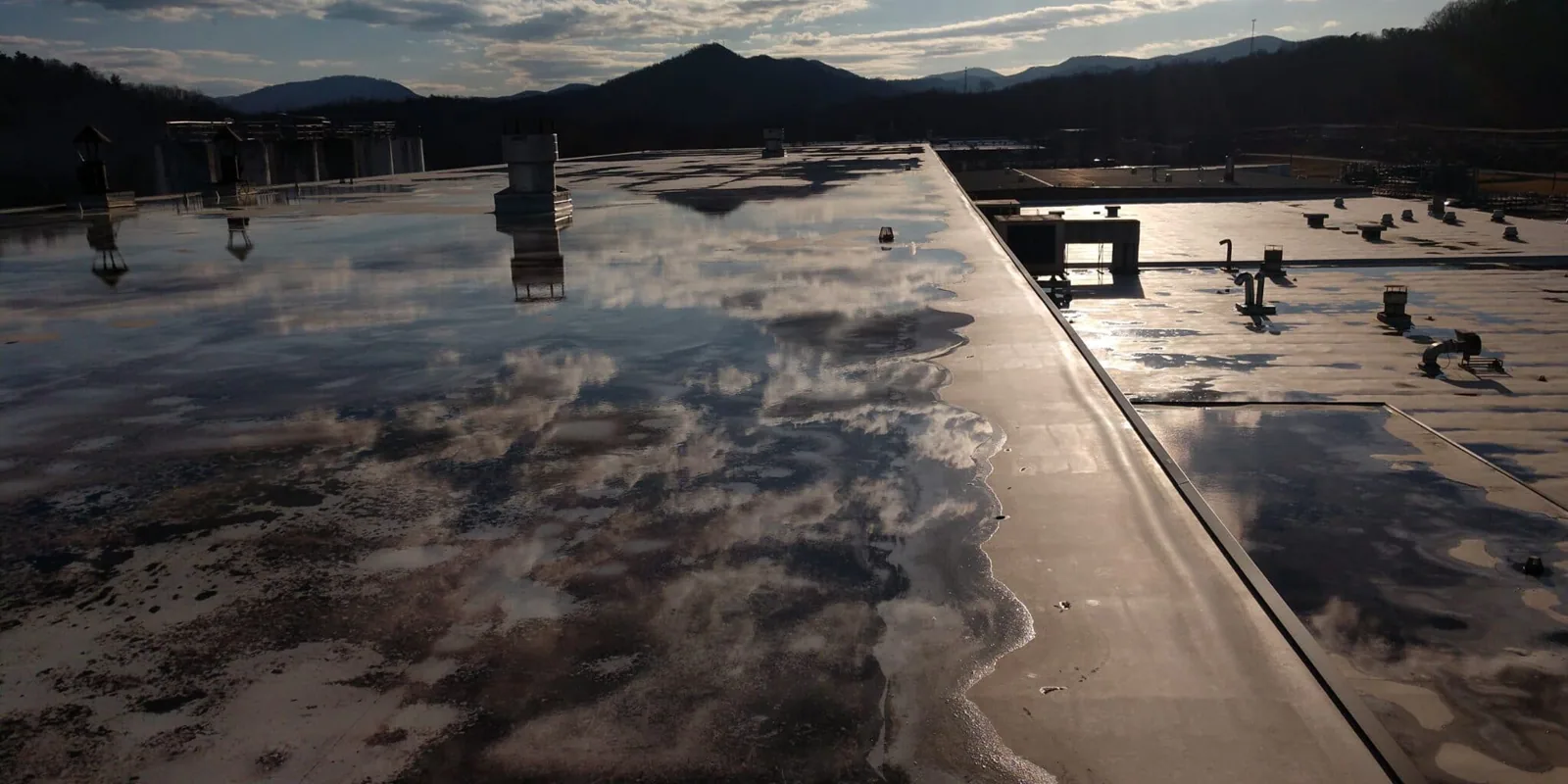
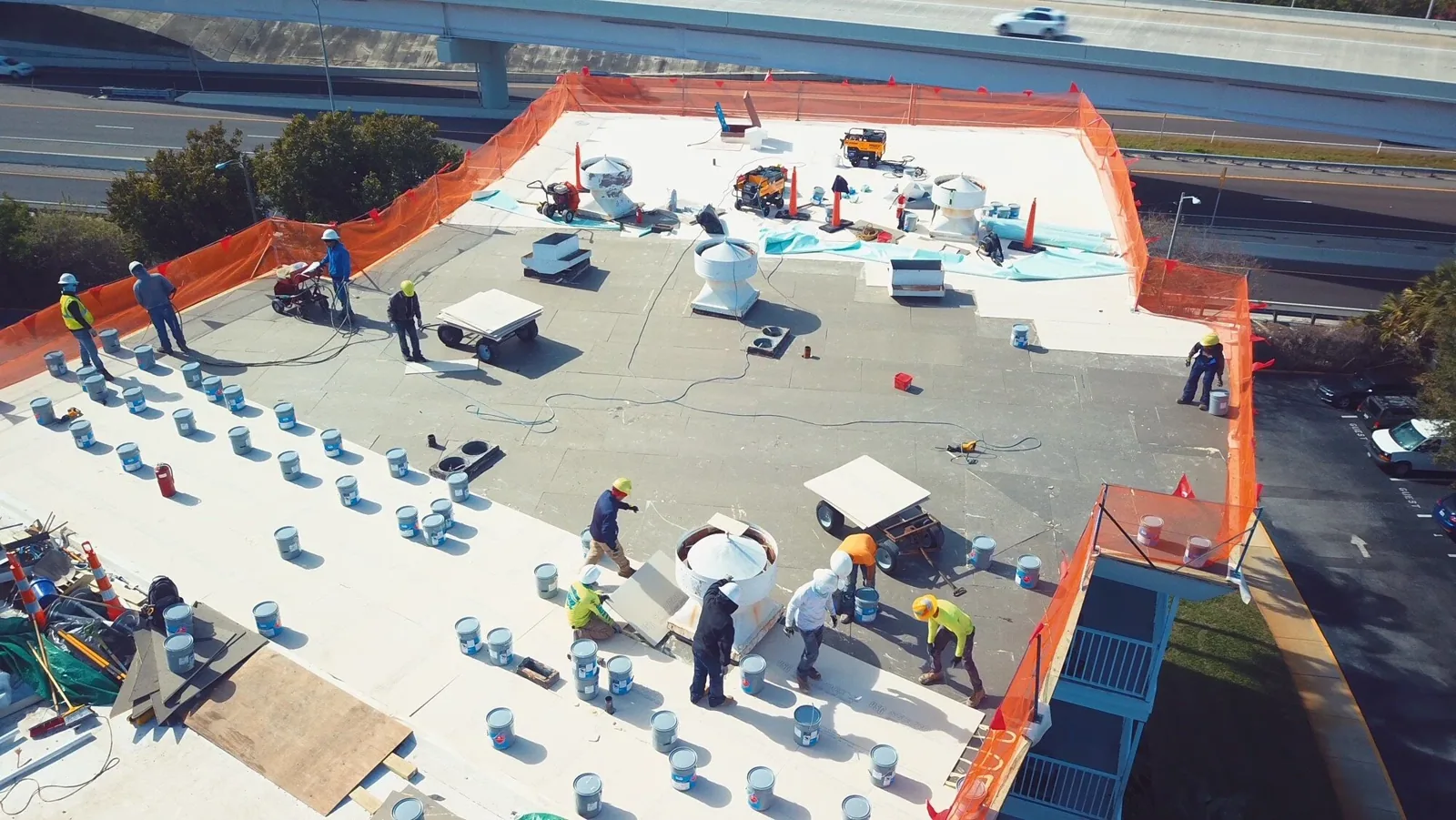
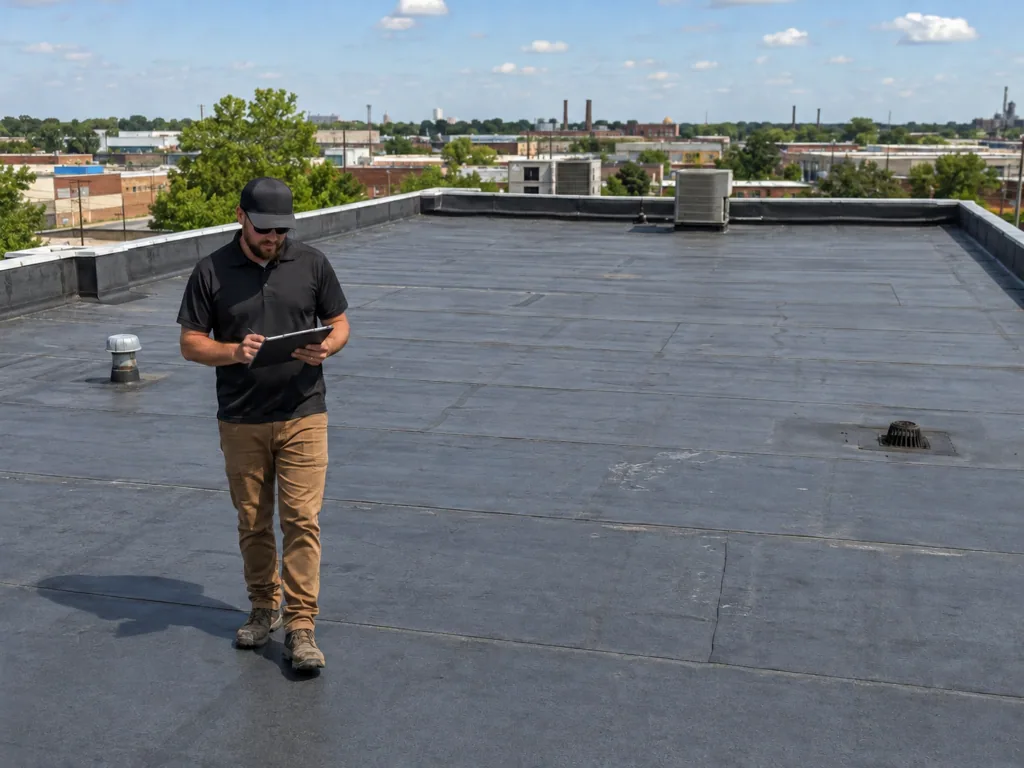
The first question is whether the existing roof can support the planned project interval. We map active leaks, prior repairs, wet insulation, membrane wear, drainage, and flashing before equipment or panels limit access. A roof that needs replacement soon may be better renewed before installation. A roof with a sound assembly may still need targeted repairs or a defined inspection interval. We mark what was tested and what remains unverified so the designer does not treat a surface walk as a structural analysis. A commercial roof inspection provides the condition map that the solar and roofing teams can use together.
Central Perimeter is a regional employment center with four MARTA stations and major highway connections. Those routes support a dense commercial district, but the roof’s access, electrical rooms, tenant restrictions, and crane positions must be confirmed at the property. We label roof sections and staging constraints before equipment is specified. That record lets the owner compare a near-term roof renewal with array timing instead of asking the new installation to bridge an undocumented roof condition.
Loads and attachment points
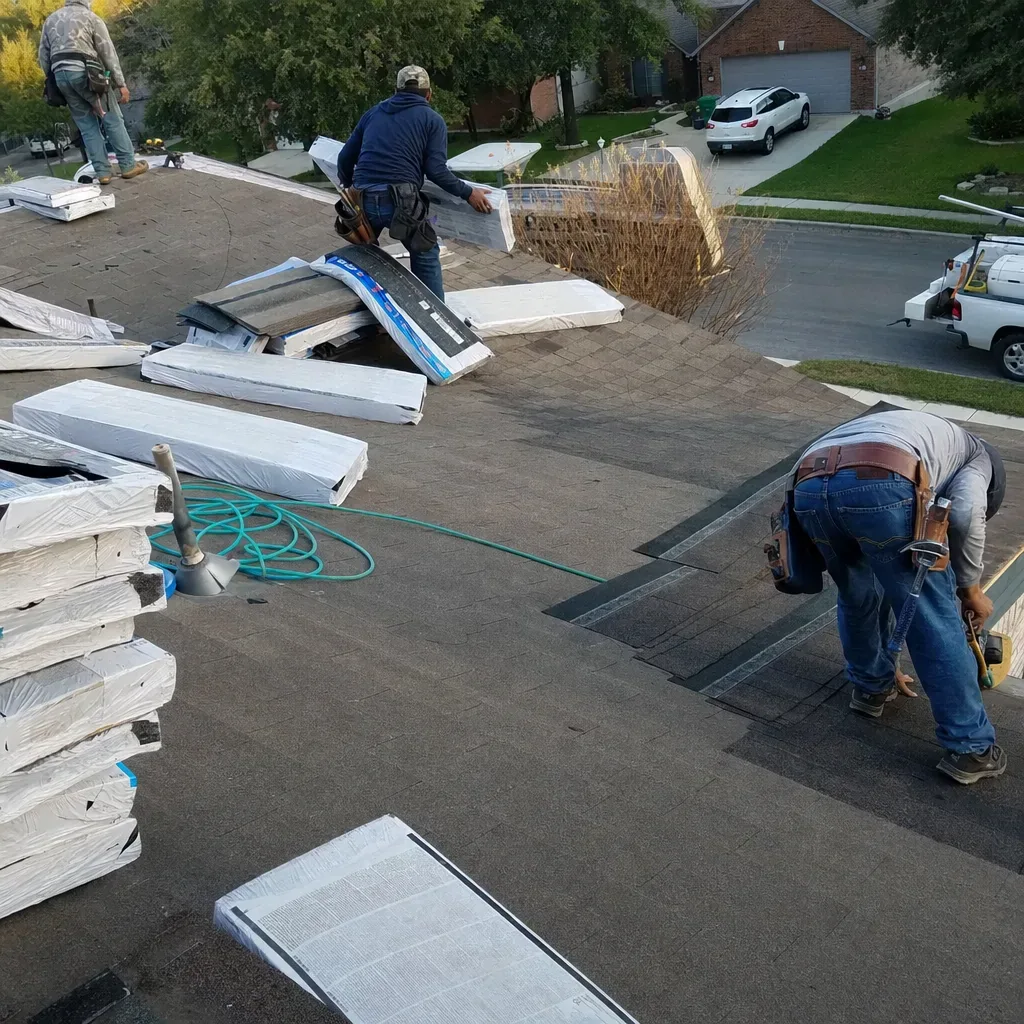
Solar racking adds dead load and may introduce uplift, concentrated forces, ballast, or penetrations, depending on the design. A structural engineer evaluates the deck, framing, connections, and proposed loads. The roofer’s role is to describe the assembly, identify waterproofing interfaces, and install or repair the roof details in the agreed sequence. We coordinate attachment locations, flashing requirements, walkways, and inspection access before the roof is closed. A curb, conduit, or attachment detail should not be improvised after the array is delivered.
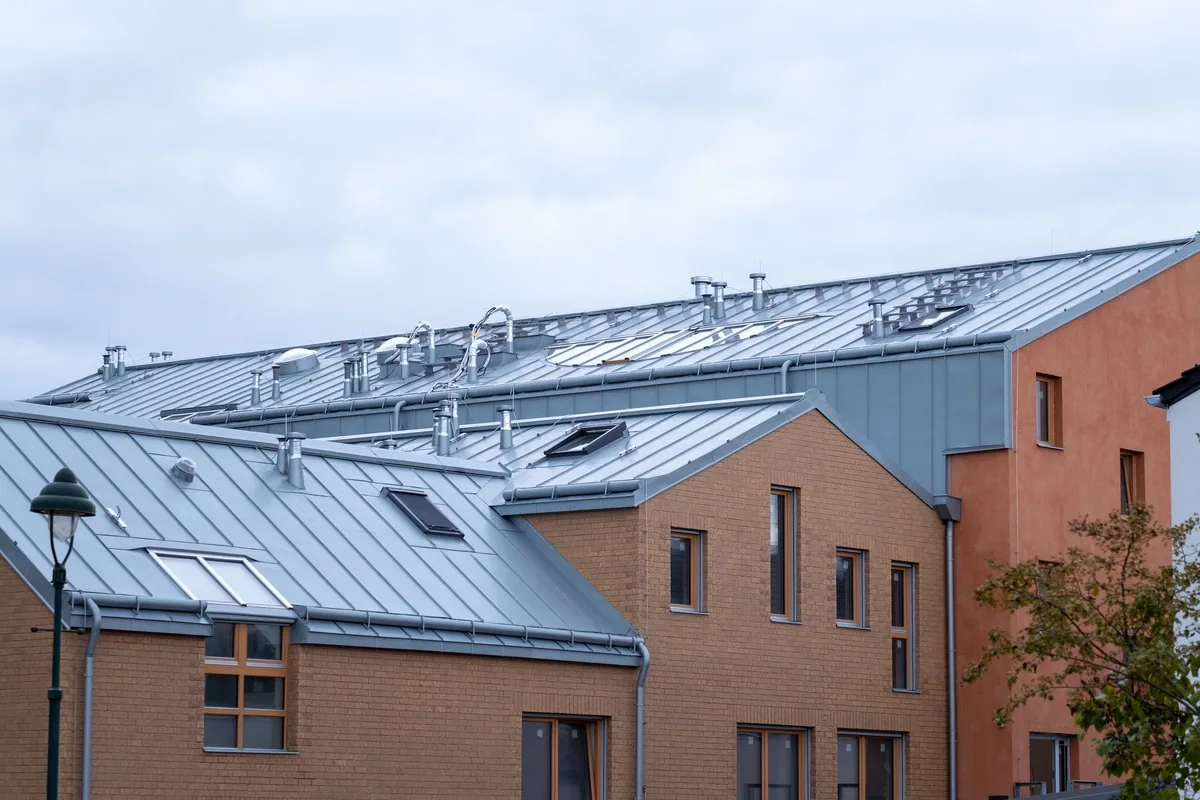
Low-slope membrane and standing-seam metal roofs need different interfaces. A TPO assembly uses welded seams and compatible membrane accessories, while standing-seam metal may use engineered clamps at approved seam locations. Neither description replaces the array engineer’s load and attachment design. The final roofing scope identifies each penetration, support, flashing transition, and inspection hold point. Where a solar layout conflicts with a drain, expansion joint, or rooftop unit, the team resolves the conflict before construction.
Access through installation and service
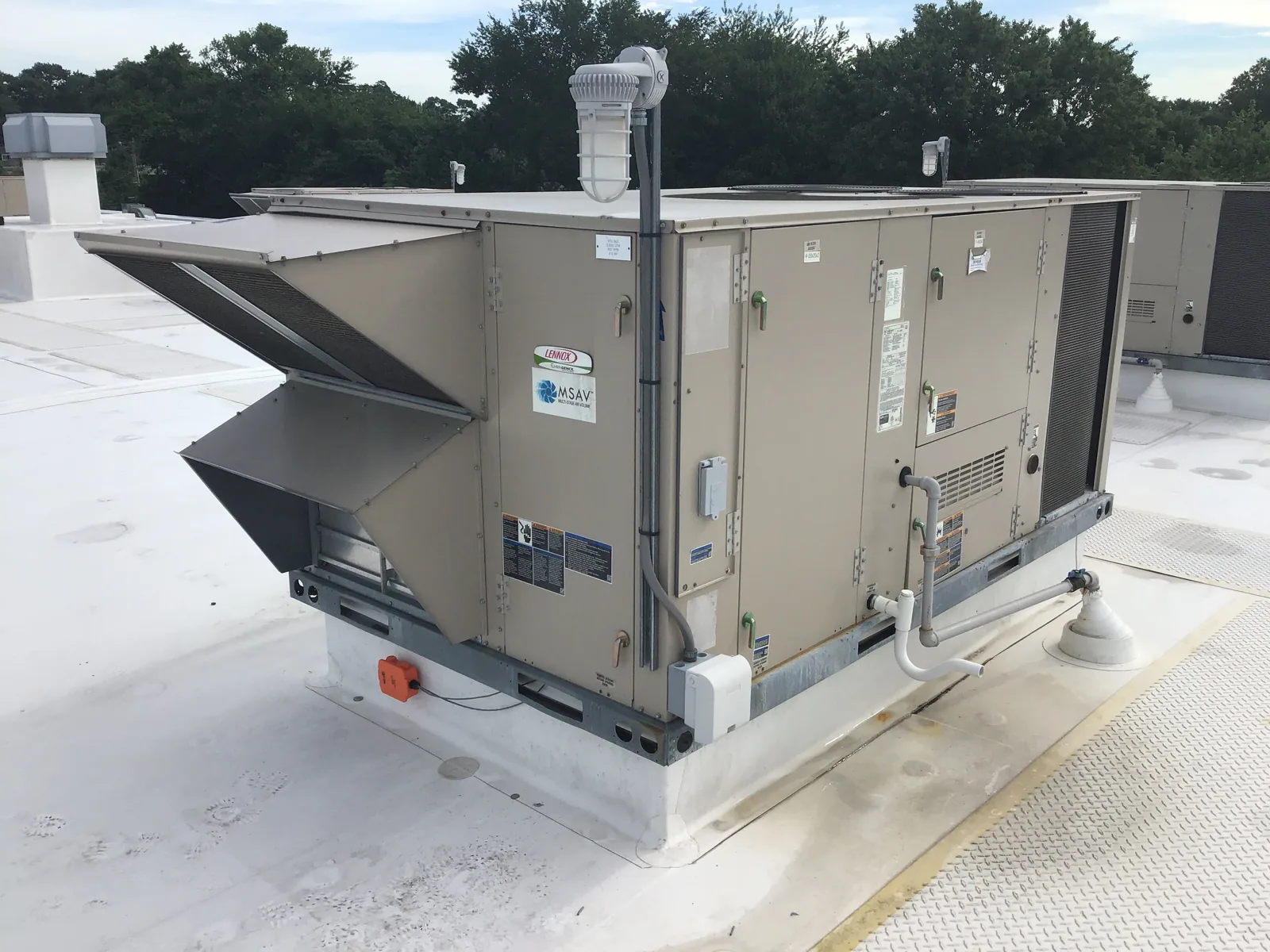
Solar equipment changes the roof’s future service path. Panels and conduit can restrict access to drains, curbs, skylights, and seams. The layout should preserve routes for leak response, membrane repair, electrical service, and eventual array removal. We identify the roof details that need clear working space and coordinate the access plan with the solar provider. A curb and support review can address rooftop units and piping that share the same roof area.
The Sandy Springs Medical District has major hospital institutions, but the district’s identity does not set any one facility’s roof rules or work hours. The designated building contact defines access controls, electrical clearances, and the operating window for the project. A Medical District roof review can coordinate roof access with the authorized contact and clarify which equipment or routes must remain available. The local hospital presence is useful context, but a specific building’s hours, electrical capacity, and roof configuration must be established through its own records.
A serviceable array layout leaves room to inspect the roof after installation. Keep drain bowls, scuppers, expansion joints, edge metal, and rooftop units reachable without stepping across wiring or unsupported modules. The solar plan should show who can remove a panel when a membrane repair needs access and how the array will be made safe. Those maintenance responsibilities belong in the project handoff, not only in the original construction drawing.
Roof renewal and solar budget
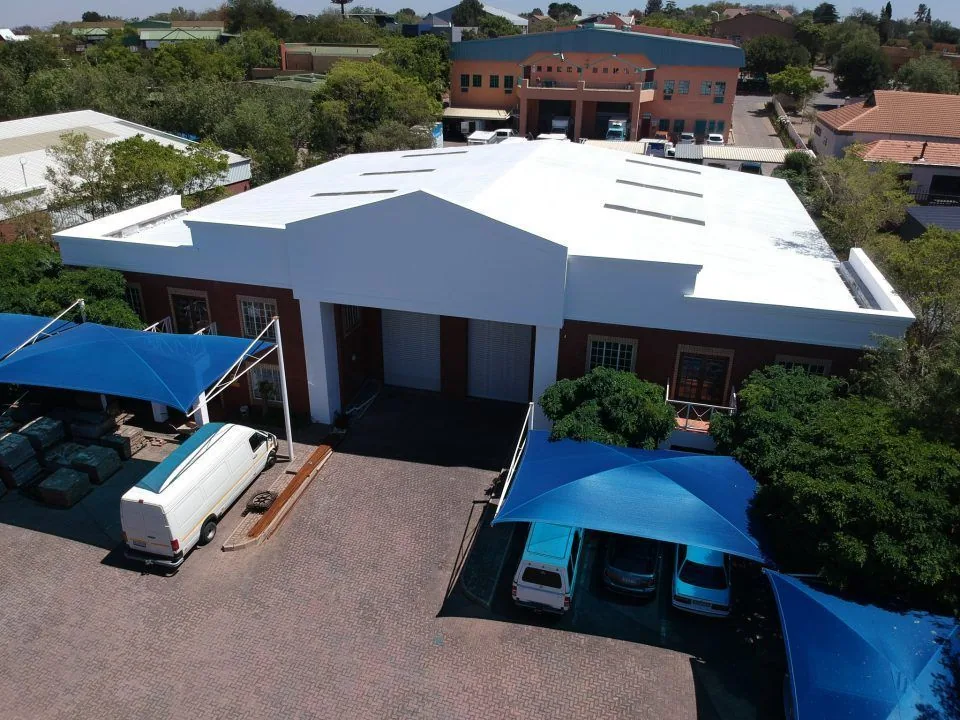
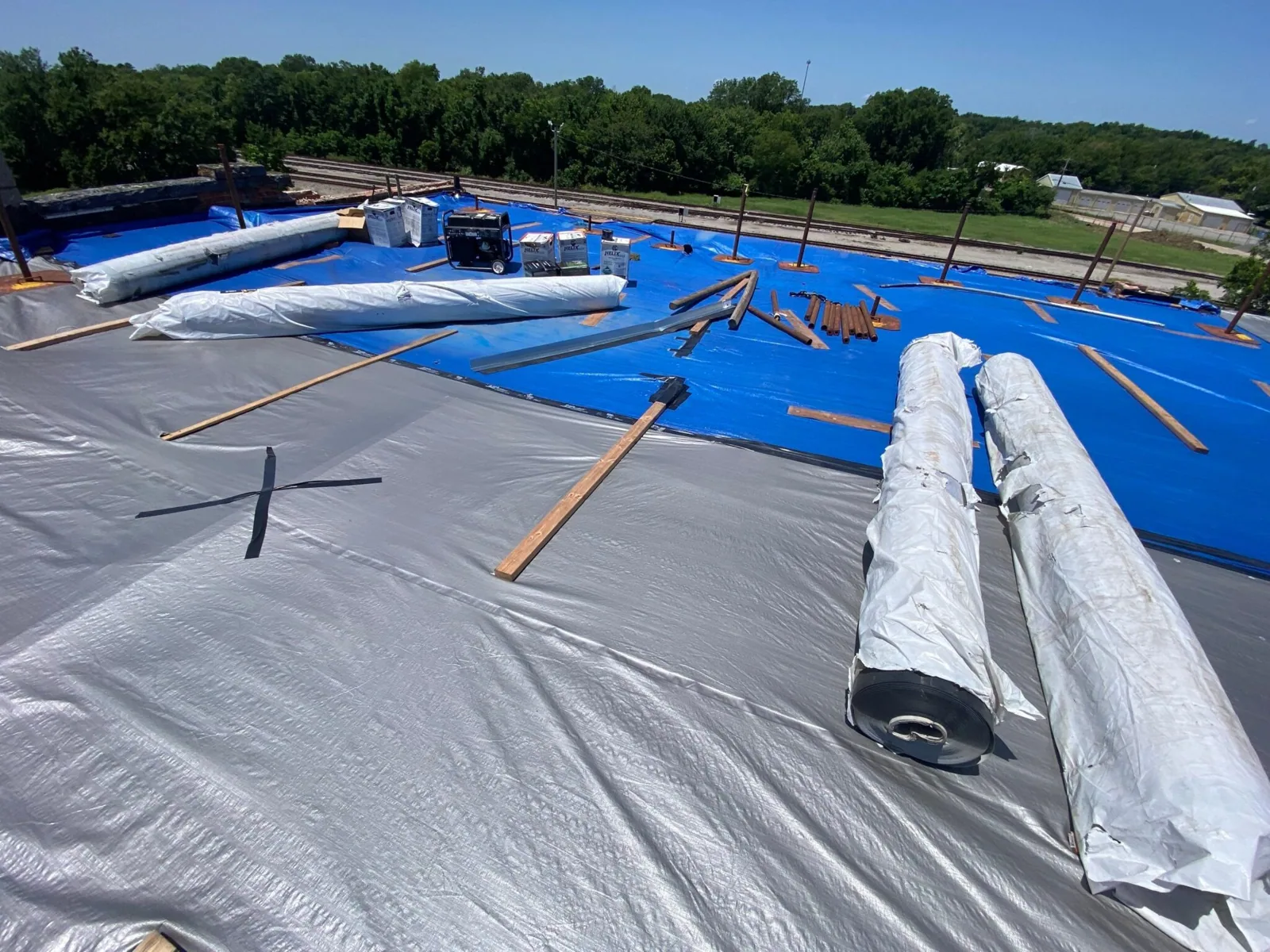
A joint sequence can prevent the owner from paying to disturb new roofing for later attachment work. Compare the roof’s remaining condition, proposed solar life, replacement window, incentive or financing schedule, and maintenance access. We can price roof repairs or renewal independently from the array so each scope has a clear boundary. If the owner expects a new roof before the array, a replacement scope should include the planned attachment zones and future flashing interfaces. If the existing assembly may remain, a roof due-diligence survey can define what additional testing is needed before that decision.
Sandy Springs follows Georgia construction codes. Georgia’s amended 2024 International Building Code became effective on January 1, 2026. The project team should confirm current structural, energy, electrical, fire, and permitting requirements with the authority having jurisdiction and the qualified designers. The energy-code provisions depend on the applicable state supplements. We document the roofing assembly and proposed transitions, while qualified designers and the local authority resolve structural and code requirements.
A durable roof and array record
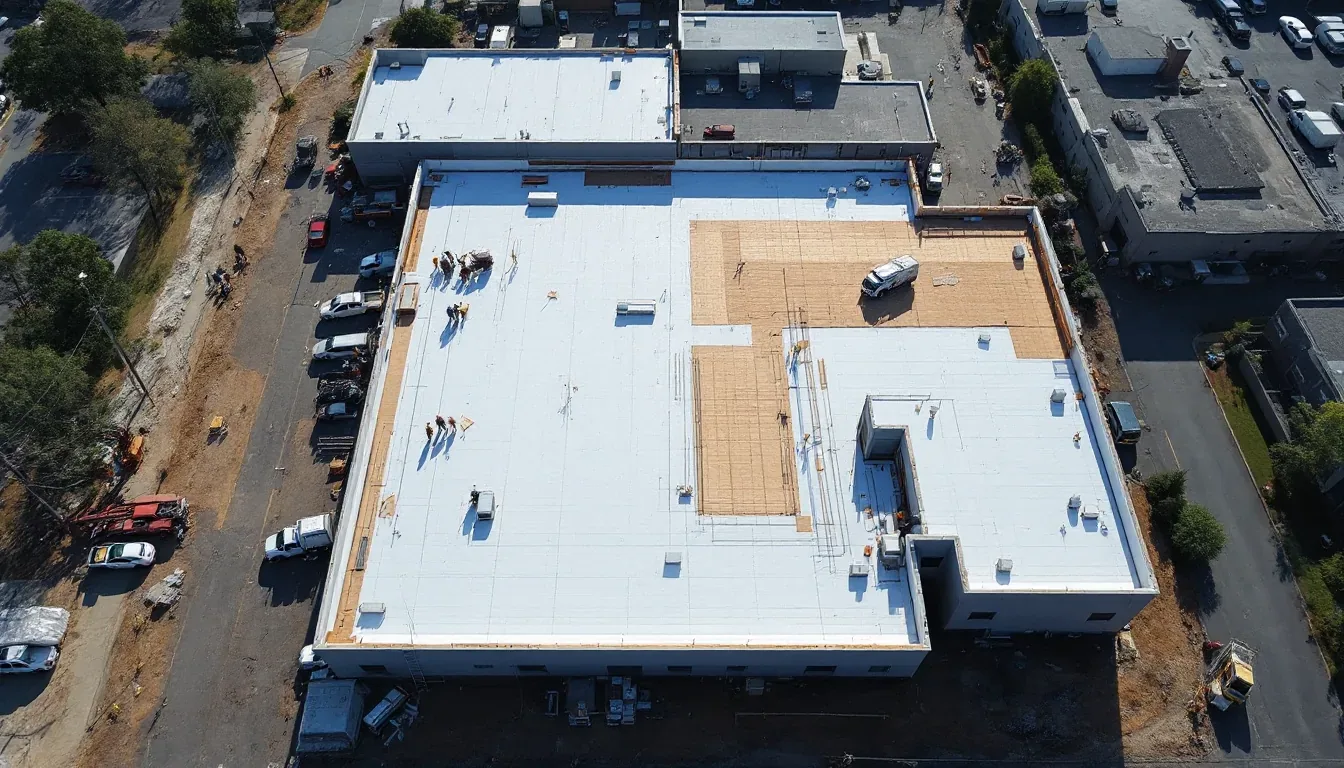
Before mobilization, the owner should have a roof plan that marks array zones, drains, penetrations, access paths, equipment, and protected areas. The roofing scope records existing conditions, work completed, and any concealed findings. The array closeout should identify installed attachments and service paths. Keep the two records aligned by roof section so a future leak call does not begin with uncertainty about which trade changed the detail. A condition report can carry membrane and flashing observations into the owner’s asset file.
Send roof age, leak history, available drawings, planned array timing, access needs, and the capital window. We will identify the roofing decisions that need resolution before attachment design is final and return a sequence with defined responsibilities. The result is a roof scope the owner can compare against the array schedule and maintain after installation.
Questions About Solar-Ready Commercial Roofing
Should a Sandy Springs owner align roof renewal with the planned solar array?
The condition record and expected roof service interval should be compared with the array plan. If renewal is likely during the array’s service period, completing roof work first can avoid later removal and reinstallation. We document roof conditions; the owner and solar team set the project economics.
Who determines whether the roof structure can carry solar equipment?
A qualified structural engineer reviews the existing framing against the proposed array and its support reactions. We identify the roof assembly, its condition, and any waterproofing interfaces where attachment work is planned. Coordinate those reviews before releasing the layout for construction.
Can panels be installed over TPO or a standing-seam roof?
Both roof types can have solar layouts, but each needs an attachment method designed for the assembly. The membrane, seams, penetrations, drainage, and service access must be addressed in the project details. We coordinate the roof-side scope with the system designer.
How do we avoid blocking drains and repair paths?
The roof plan should mark drains, overflows, curbs, edges, seams, and safe service routes before panel rows are fixed. We review the roofing access needs with the designer and identify clearances that must remain available for maintenance and leak response.
What should be in the solar-ready roofing scope?
Include existing-condition findings, repair or replacement limits, attachment interfaces, flashing details, access paths, inspection points, and closeout records. State which decisions belong to the structural engineer, solar provider, electrical contractor, and roofing team.
Coordinate the roof and array sequence
Share roof ages, active leak areas, drawings, planned solar timing, access requirements, and the budget window. We will return a prioritized roof review with decisions to resolve before installation.
Call 555-555-5555 or send the building details.