Versico Roofing in Sandy Springs, GA
Versico’s product families can cover different roof assemblies, but the name on a file does not establish the system in place today. We confirm the membrane, attachment, insulation, flashing, and repair history before setting scope. VersiWeld TPO, VersiGard EPDM, and VersiFlex PVC use different seam and detail methods. In Sandy Springs, frequent rain makes drainage and low areas worth tracking between inspections. A condition record tied to each roof section lets the owner decide whether the next budget should fund a local repair, further testing, or broader renewal.
Product line and attachment evidence
Versico lists TPO, EPDM, and PVC membrane families, including VersiWeld, VersiGard, and VersiFlex. We identify the installed material from records, field markings, seams, and flashing details. An assembly can also contain material from a later recover or addition, so the inspection map should show each boundary. If a roof document conflicts with what is visible, report the conflict instead of choosing the product that seems most likely.
Attachment affects both system performance and the repair plan. A field can be mechanically fastened, adhered, or installed with another approved method; edges and corners may use different securement. We inspect visible plates, adhesive, terminations, and membrane movement, and we flag hidden construction that may require testing. A TPO system inspection examines welded laps, while an EPDM assessment focuses on its own seams and flashing. A GAF membrane comparison can help map a separate roof generation without merging unlike assemblies.
Central Perimeter offices are served by four MARTA rail stations and major highway routes. That changes how property teams may plan deliveries and access; it does not identify attachment or roof age. We confirm each building’s roof entry, loading point, tenant hours, and equipment routes before setting the field schedule.
Seam condition and repair preparation
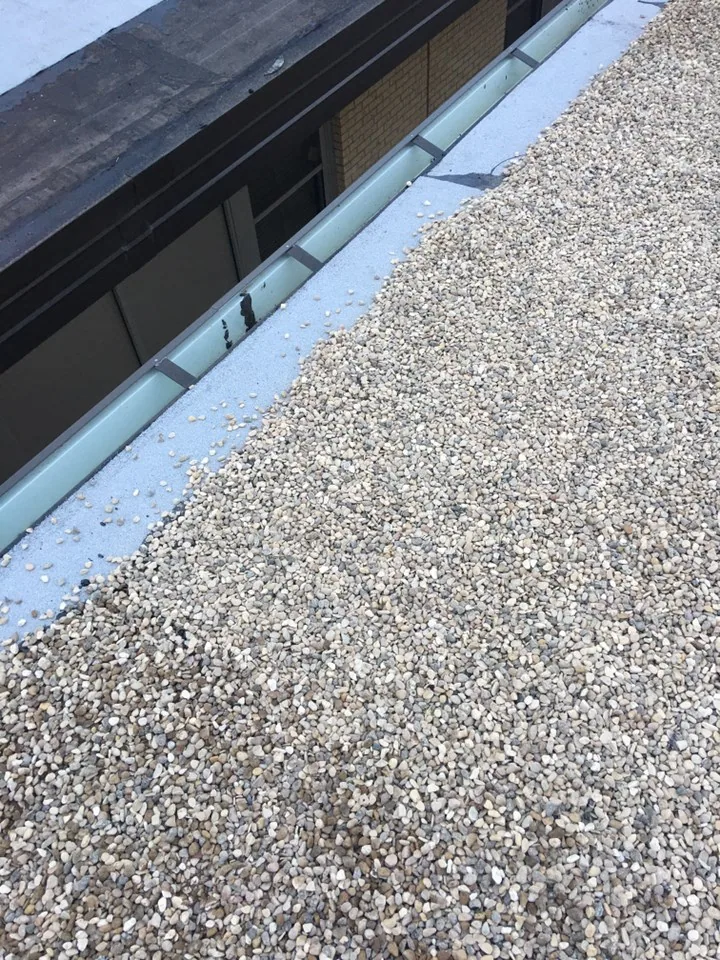
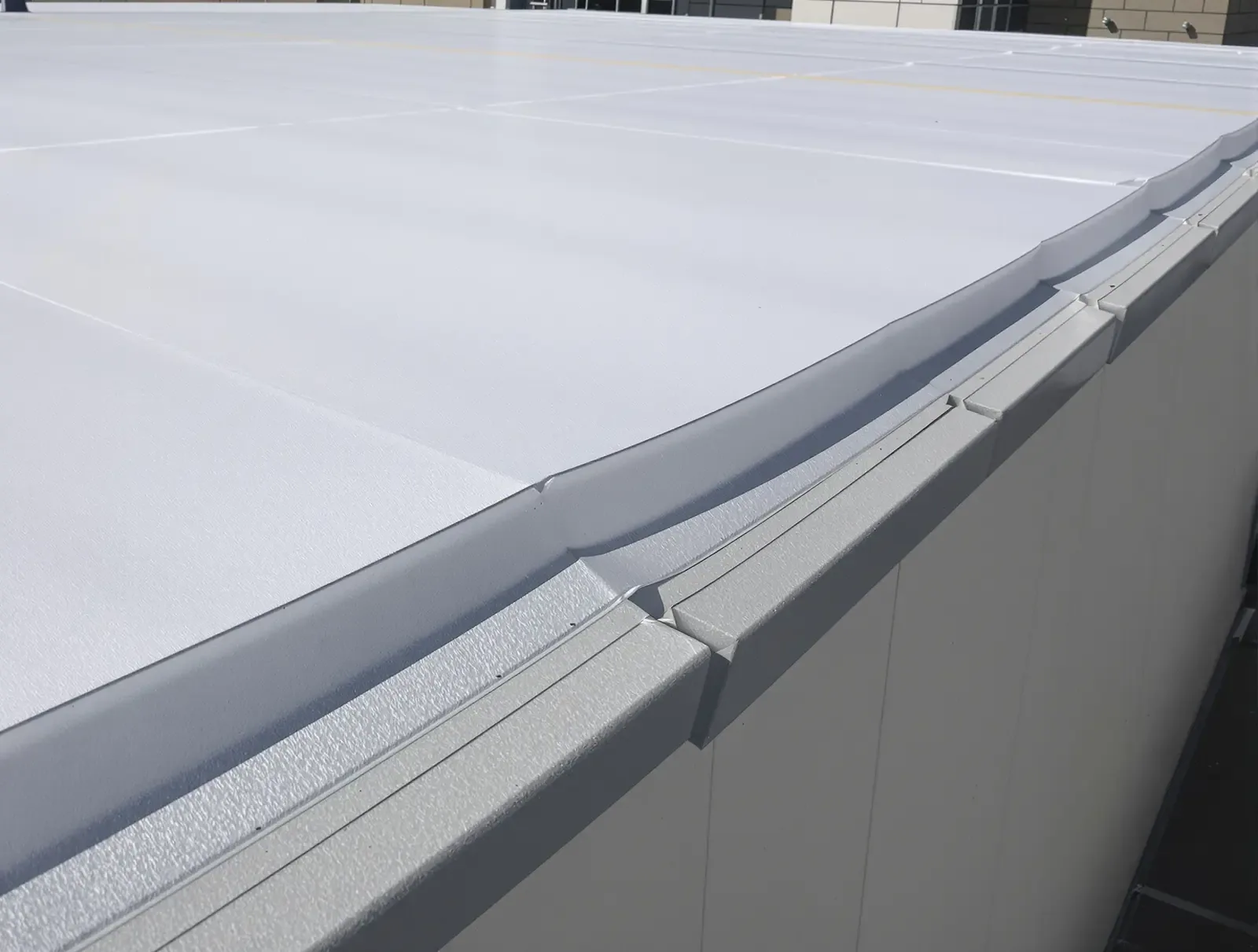
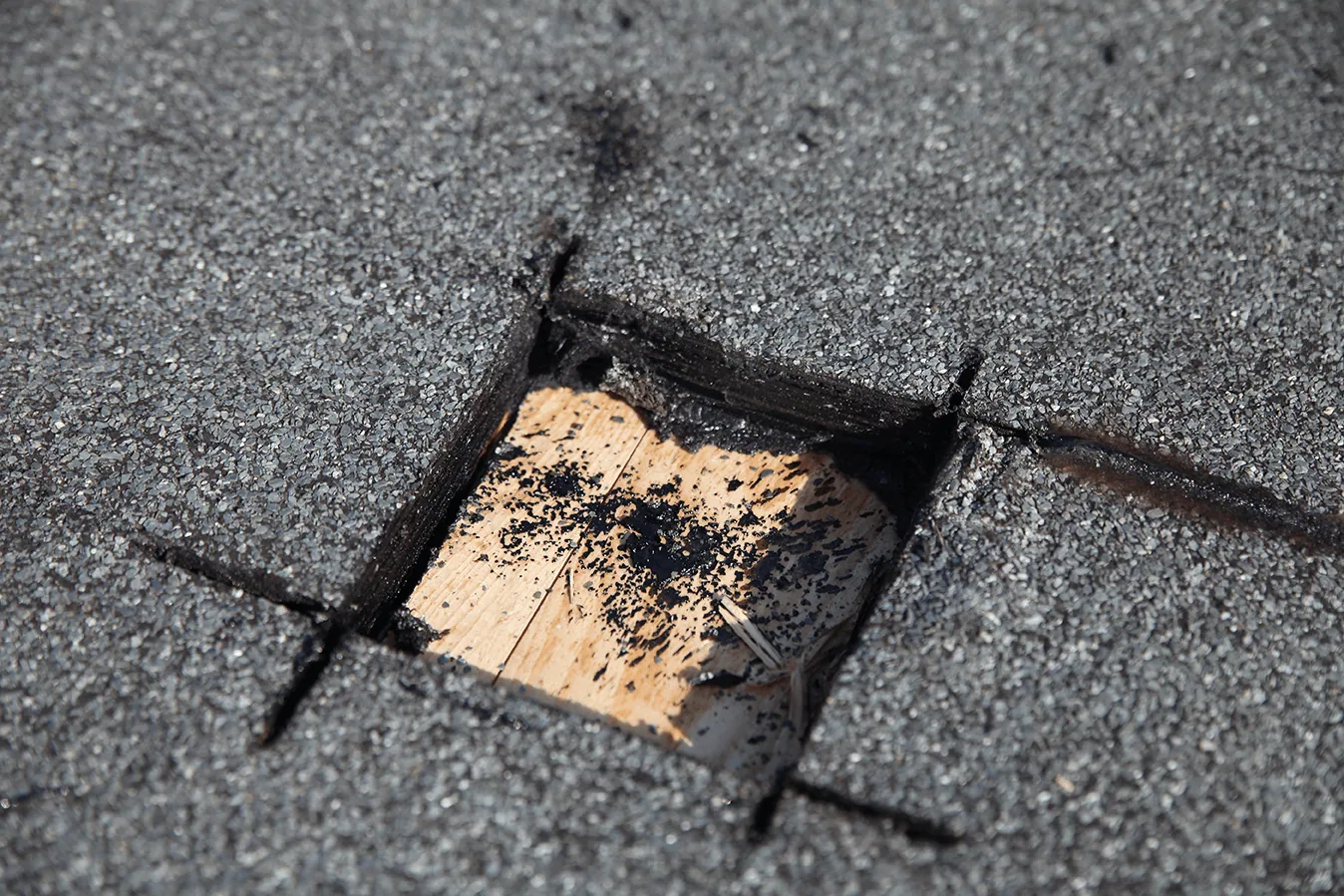
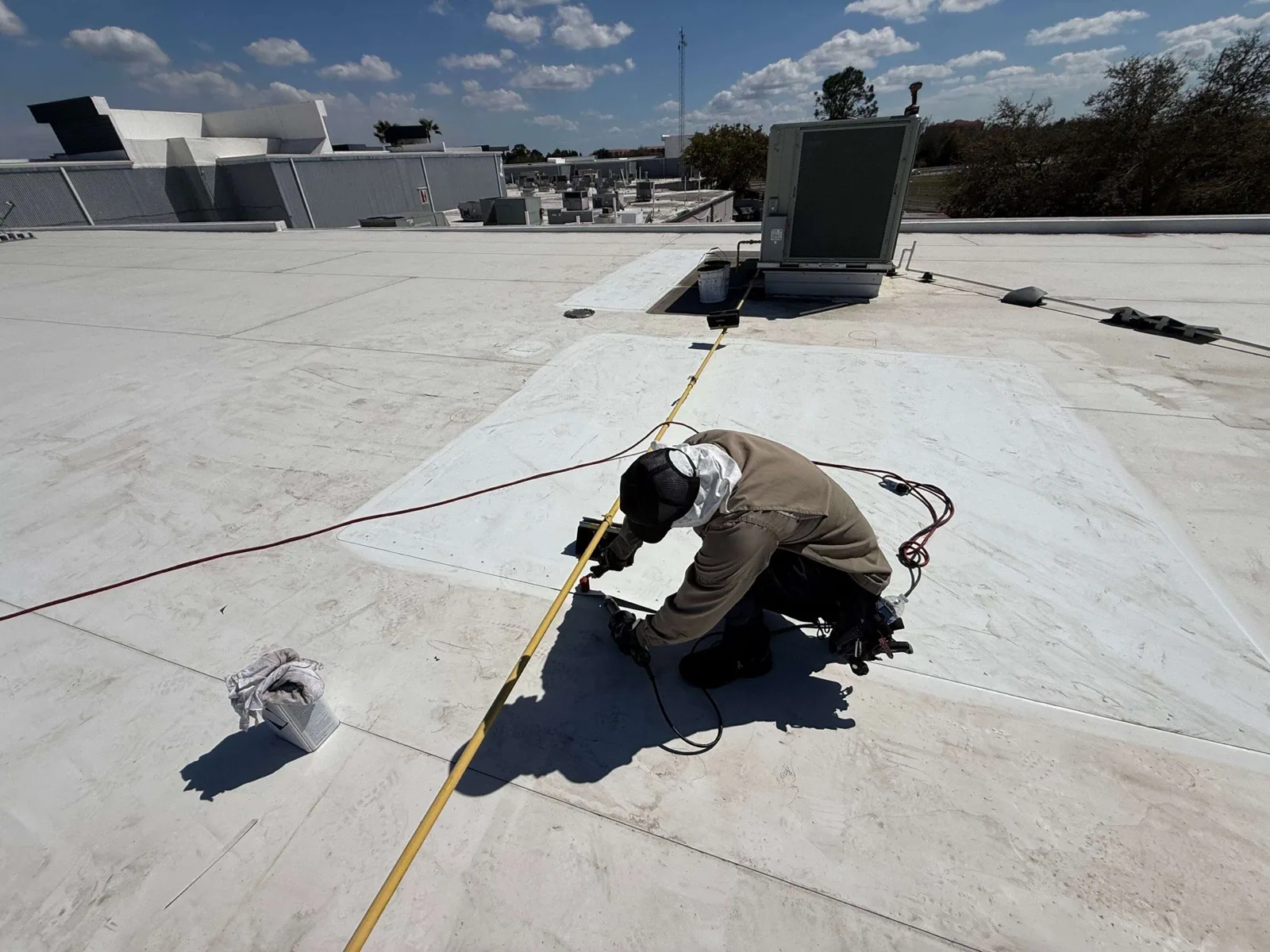
For TPO and PVC, heat-welded seams need a clean surface and sound bond. We inspect the lap, corners, repair edges, and transitions where sheets change direction. EPDM repairs call for compatible seam and flashing materials rather than hot-air welding. On any membrane, the prep matters: contamination, trapped moisture, or movement can limit how well a patch ties into the field. We define the boundary beyond the visible opening and check adjacent material before closing the scope.
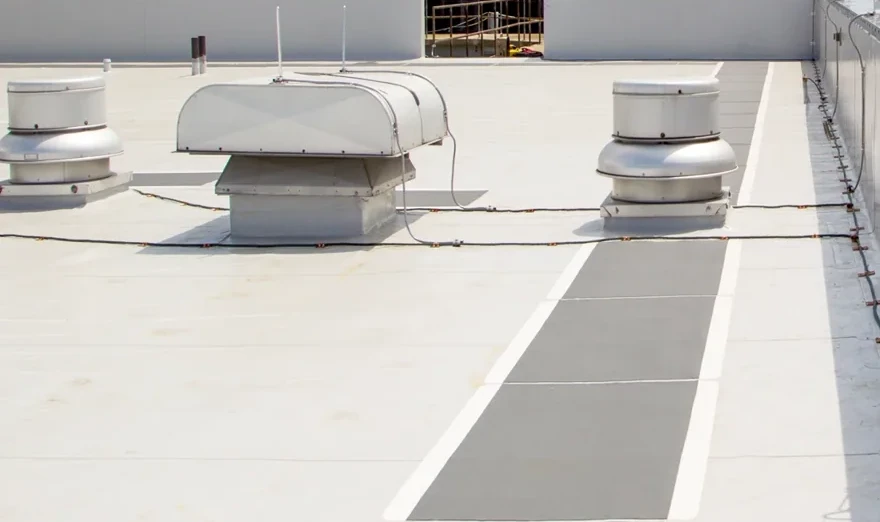
Pipe boots, curbs, roof hatches, skylights, parapets, and expansion joints create separate details. We inspect the flashing, counterflashing, termination, and nearby membrane for movement or puncture. The water path may cross a seam or slope before it reaches a ceiling, so pair interior reports with roof drawings and drain locations. A penetration and curb review can capture those transitions, while a seam failure assessment documents a confirmed weld issue.
Roswell Road is Sandy Springs’ principal north-south arterial, connecting the city to I-285. A building on that corridor may have a distinct loading or access route, but the roof inspection still needs direct evidence. We note the verified entry method and staging point so the schedule reflects actual site conditions.
Drainage, moisture, and exposure
Check the low points, strainers, drain bowls, and scuppers where water leaves the roof. Debris can restrict an outlet, but persistent ponding may also point to slope, settlement, or a distorted drain area. We record where water remains, its depth if measurable, and nearby seams or penetrations. The same low point can also change after drain work or a roof repair, so note conditions before and after each correction. That helps distinguish maintenance from a need to evaluate the assembly below.
When the membrane looks intact but leaks continue, moisture testing can help focus the investigation. We use readings to identify areas for confirmation, then test where the result could change the repair or renewal decision. Infrared, capacitance, and test cuts each have limits; note method, date, weather, and locations. A moisture survey can help prioritize those checks. It should not be used to label untested roof sections as dry or wet.
The Atlanta airport station averages more than four inches of precipitation each month from January through March. Drain performance and repaired seams can therefore be compared across wet periods. The Roswell Road corridor has commercial properties where access and work hours also need to be confirmed with each owner.
Repair, recover, and replacement scope
A compatible local repair fits when the membrane around a defect is sound and the underlying layers support the work. We document what is repaired, what remains outside the scope, and any follow-up check. Repeated seam openings, broad moisture, deteriorated attachment, or damaged insulation can call for a larger study. A commercial repair assessment should identify whether the issue is isolated or part of a wider condition trend.
A recover may avoid some tear-off only if the existing roof, moisture, attachment, drainage height, and applicable requirements support another layer. Replacement opens the assembly for inspection but introduces removal, disposal, access, and business interruption. We compare both paths using the same roof map. A recover review can test feasibility before ownership carries an assumed solution into the budget.
City Springs contains civic, conference, event, dining, fitness, and residential uses. A commercial roof there may need a work calendar that avoids an event or limits a delivery window. We coordinate that schedule with the property contact, then sequence each repair or replacement area with a defined secure point at the end of the shift.
Portfolio record and next interval
Store the system identification, roof plan, repair photographs, test locations, and open questions together. Label each roof section and record what changed since the last visit. A condition report gives ownership a comparable history for maintenance and renewal discussions. Where a portfolio has several systems, do not assume a Versico roof will need the same date or scope as the adjoining building.
Send the membrane schedule, roof-zone map, repair log, and facility calendar. We will identify the condition questions and organize field actions by exposure, then set a follow-up date for any open repair or test.
For a comparison across manufacturer families, a Holcim Elevate system review can help ownership keep documented assemblies distinct. The comparison should be based on the roofs actually present, their current condition, and their operational constraints, not on the name printed in an old proposal.
Questions About Versico Roofing
How do you identify a Versico TPO, EPDM, or PVC roof?
We check product markings and records against seams, flashing, and attachment evidence. If different clues conflict, we record the system as uncertain and identify what further check would settle it.
Can a Versico seam be repaired during a normal maintenance visit?
A small repair may fit if the roof is dry, the surrounding membrane is sound, and the detail can be prepared correctly. We check those conditions before adding repair work to routine maintenance.
What should be checked when ponding remains on a Versico roof?
We inspect outlet restrictions, low points, slope, seams, and nearby flashing. If water persists after the outlet is clear, further evaluation can determine whether the cause is drainage geometry or an assembly condition.
Can one maintenance schedule cover several Versico properties?
A portfolio can use shared reporting fields, but each roof needs its own condition and access record. We set follow-up based on its system, repair trend, drainage, and operating schedule.
Which records help compare repair with replacement?
Use the system map, leak and repair history, moisture results, photographs, drainage notes, and access requirements. Those details define the scope and show what could affect its timing.
Review a Versico roof section
Share roof plans, product records, active leaks, past repairs, access requirements, and budget timing. We will set a condition-based sequence with clear next actions.
Call 555-555-5555 or send the building details.