Navy Reserve Facility Roofing near Sandy Springs, GA
A Navy Reserve support building may combine training, administration, and operational functions, each with a different schedule and access pattern. The roofing decision starts by identifying the assigned facility and the roof section at issue. We inspect the assembly, document what is visible, and set out any test that could change the repair boundary. Navy Operational Support Center Atlanta is located on the Dobbins campus west of Sandy Springs, where the installation's access process and building-specific requirements govern the work window.
Scope the Navy building separately
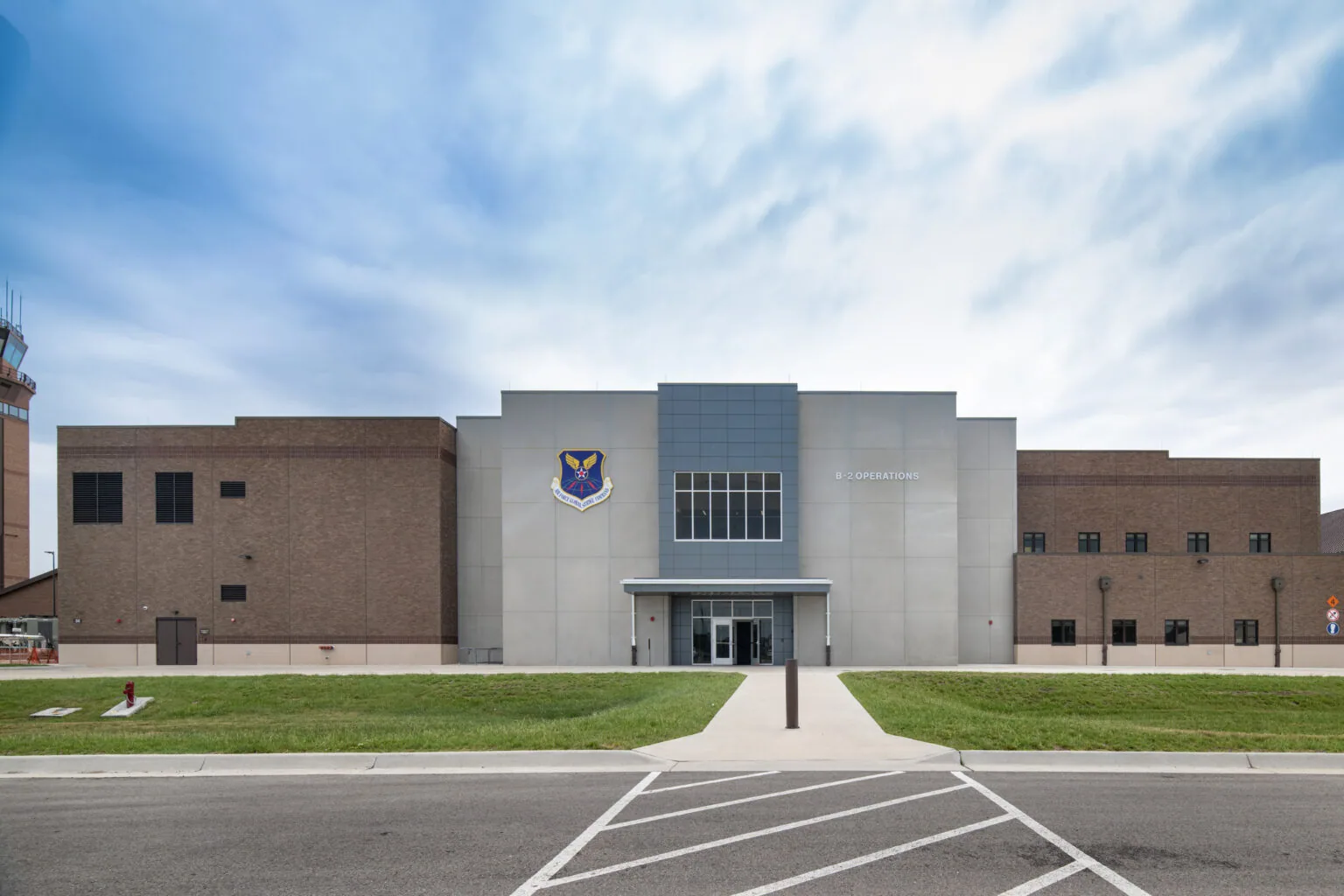
Navy Operational Support Center Atlanta is a Navy Reserve training facility at Dobbins with operational, training, and administrative functions. It is located in a physically separate part of the campus connected to the main base by an overpass. Those functions shape access and routing; the assigned building’s roof inspection records its system, details, and condition. We use approved facility identifiers and records to confirm which structure is in scope.
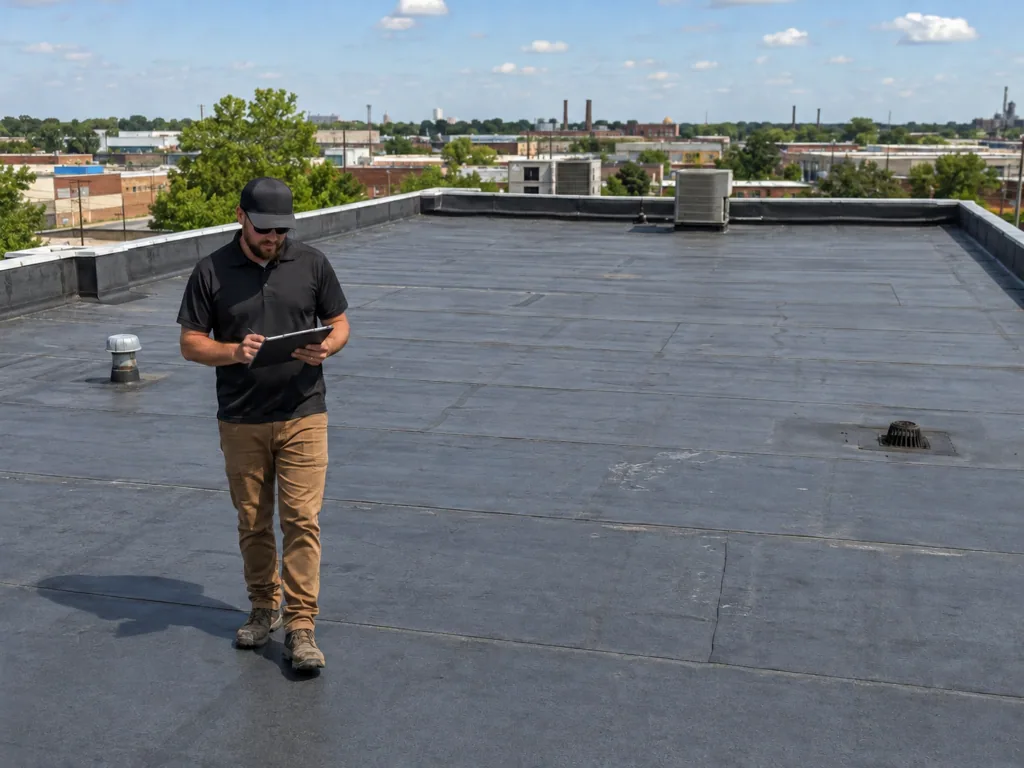
We review roof drawings, prior work orders, reported leaks, and facility constraints before inspection. On the roof, we examine seams, flashing, curbs, drains, supports, wall transitions, and visible repair boundaries. A roof inspection records the areas reached and items that remain inaccessible. If concealed layers matter, we identify a test point, protection plan, and approval path before opening the roof.
Dobbins is west of Sandy Springs in the Marietta and Cobb County area. Roswell and the Central Perimeter are separate parts of the broader service region. Regional travel through the Roswell area is separate from installation authorization and security; confirm the approved gate, escort, and material route for each visit.
Confirm escort and training windows
The installation authority sets current badging, escort, screening, vehicle, tool, material, operating-hour, and emergency rules. We confirm which contact authorizes roof access and who can approve changes to a scope. Those requirements affect crew duration, staging, and whether multiple short visits are more practical than one continuous mobilization. The estimate should include the approved sequence and any required closeout review.
Training schedules and administrative services can limit noise, delivery, and roof access. The site contact identifies the hours available, any restricted area, and the route between authorized staging and the building. A phased roofing approach can divide the scope into approved zones and give each shift a defined watertight close. If equipment must stay active, the responsible facility trade controls its operation and movement.
Georgia 400 and Interstate 285 provide regional connections around Sandy Springs, and Dobbins is in Cobb County to the west. Regional routing helps plan delivery, but the base confirms the gate, inspection, and material transfer procedure. If that path or timing changes, we update the work schedule before mobilization rather than waiting until the team arrives.
Inspect penetrations and drainage transitions
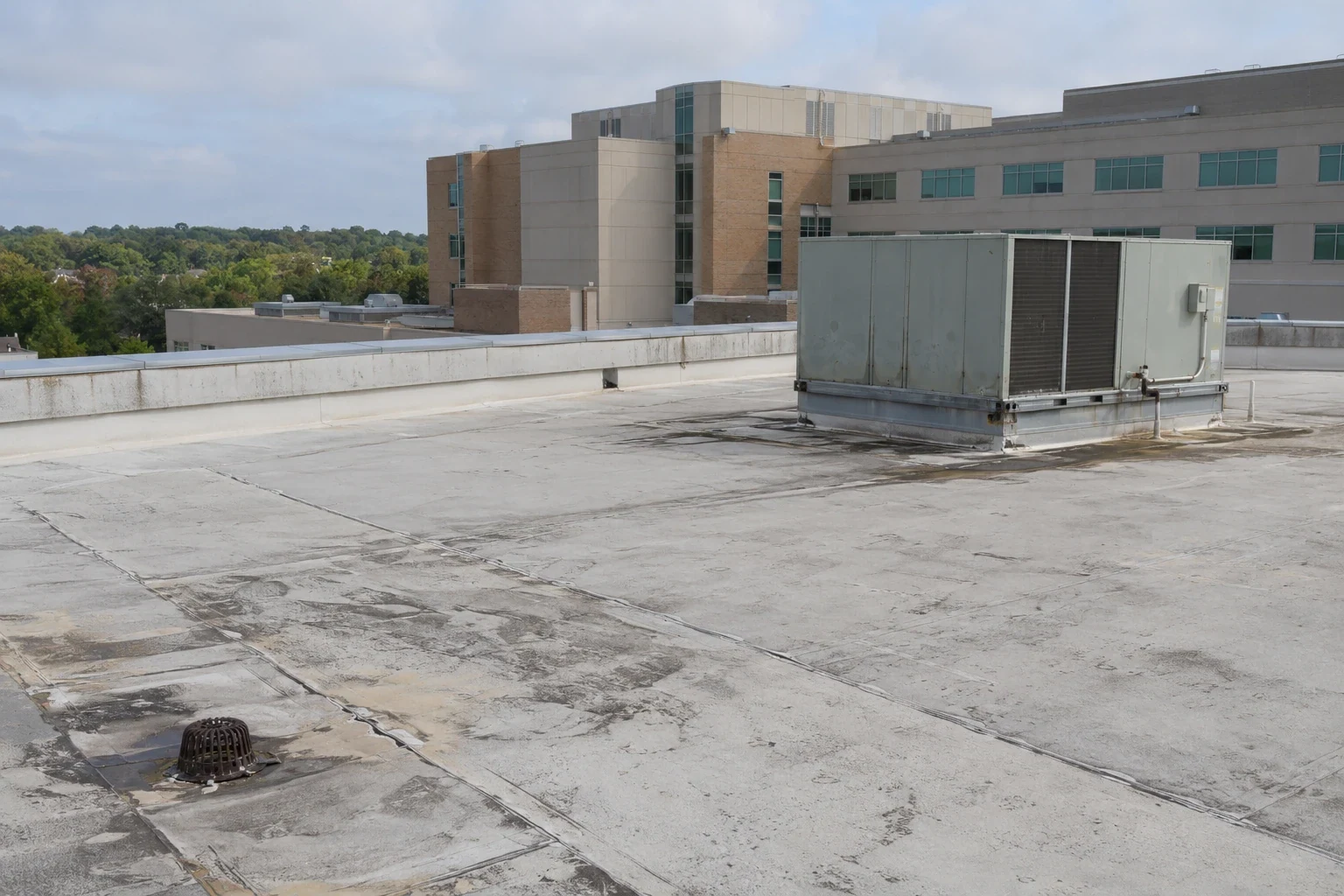
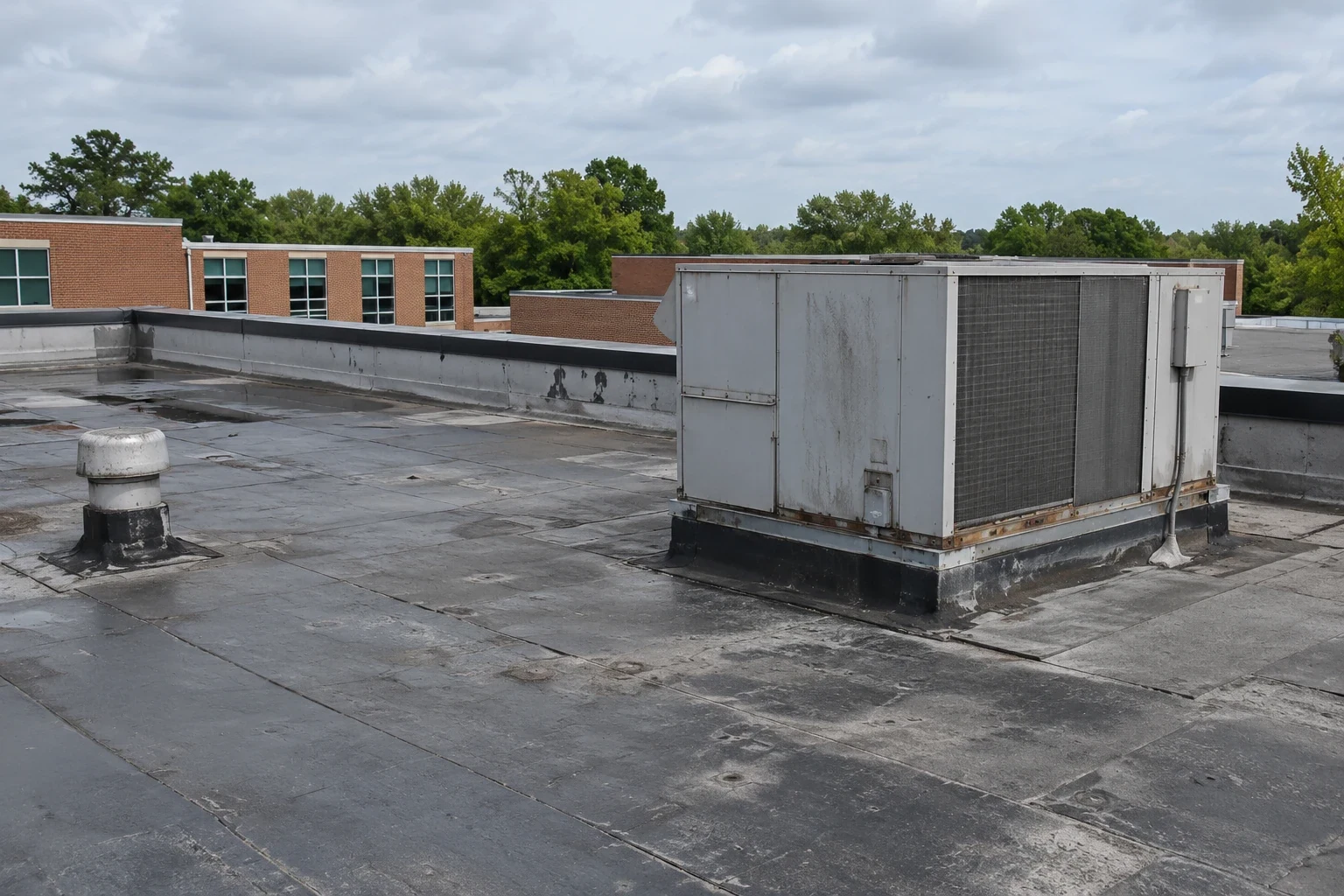
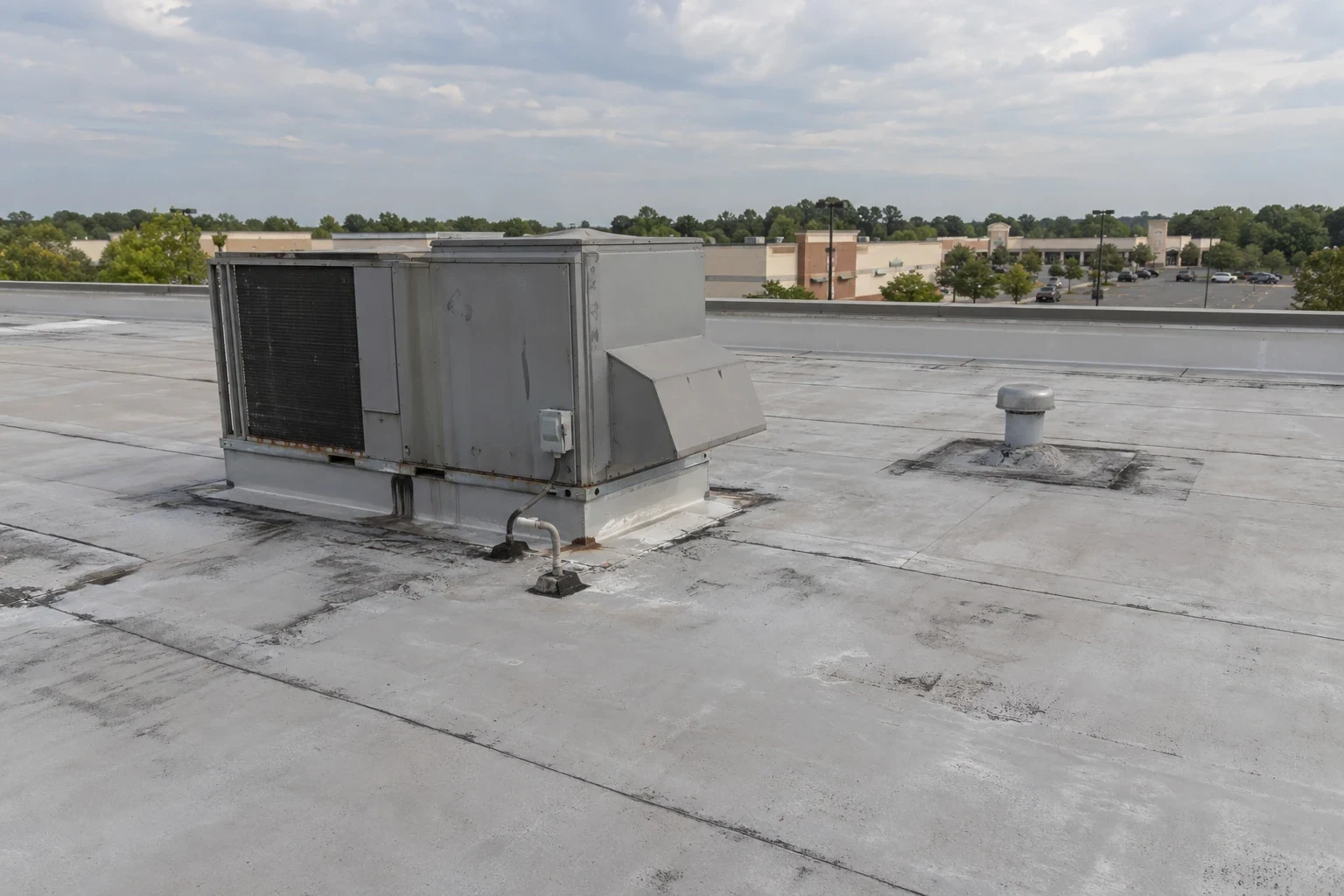
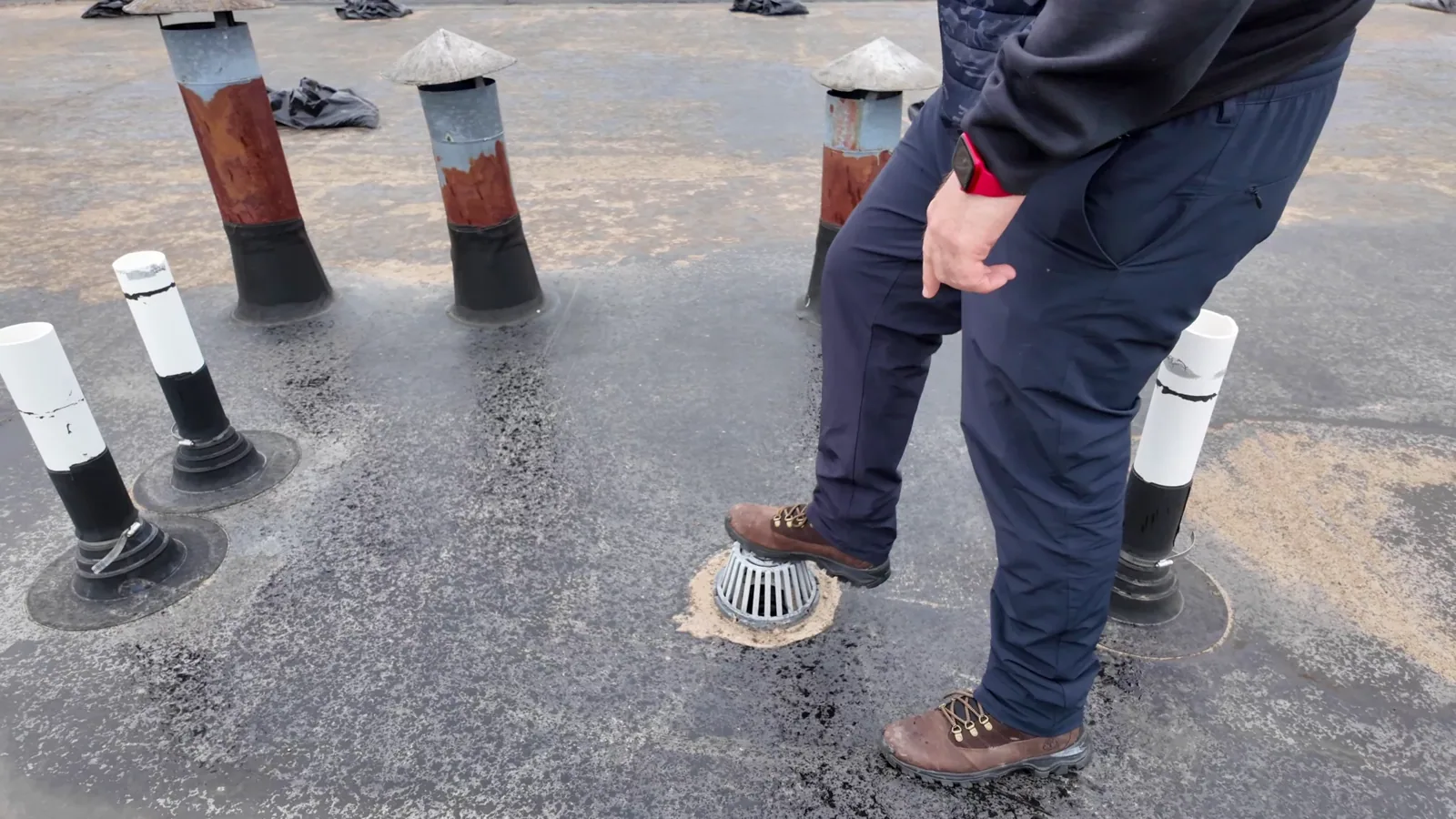
Training and administrative buildings may have HVAC units, exhausts, communications equipment, rooftop access points, and different roof additions. We inspect the flashing at curbs and penetrations, field seams, edge metal, drains, and transitions between roof elevations. If another trade maintains an antenna or mechanical unit, we record the interface and identify who completes the final roof tie-in. No equipment change proceeds without facility direction.
Sandy Springs has hot humid summers and recurring rain. The roof assessment checks water paths, strainers, overflows, low areas, and discharge. A drainage review can identify whether cleaning, repair, or additional slope work is needed. For metal panels, a metal assembly review can document seams and fasteners. For a membrane, the scope should identify the actual material and compatible tie-in rather than treating every roof as interchangeable.
A test result applies to the location opened or measured. We map that point and state what remains unknown on the adjacent roof area. This gives the owner a way to authorize the next step without assuming that separate buildings or campus zones share the same condition.
Secure each work area at shift end
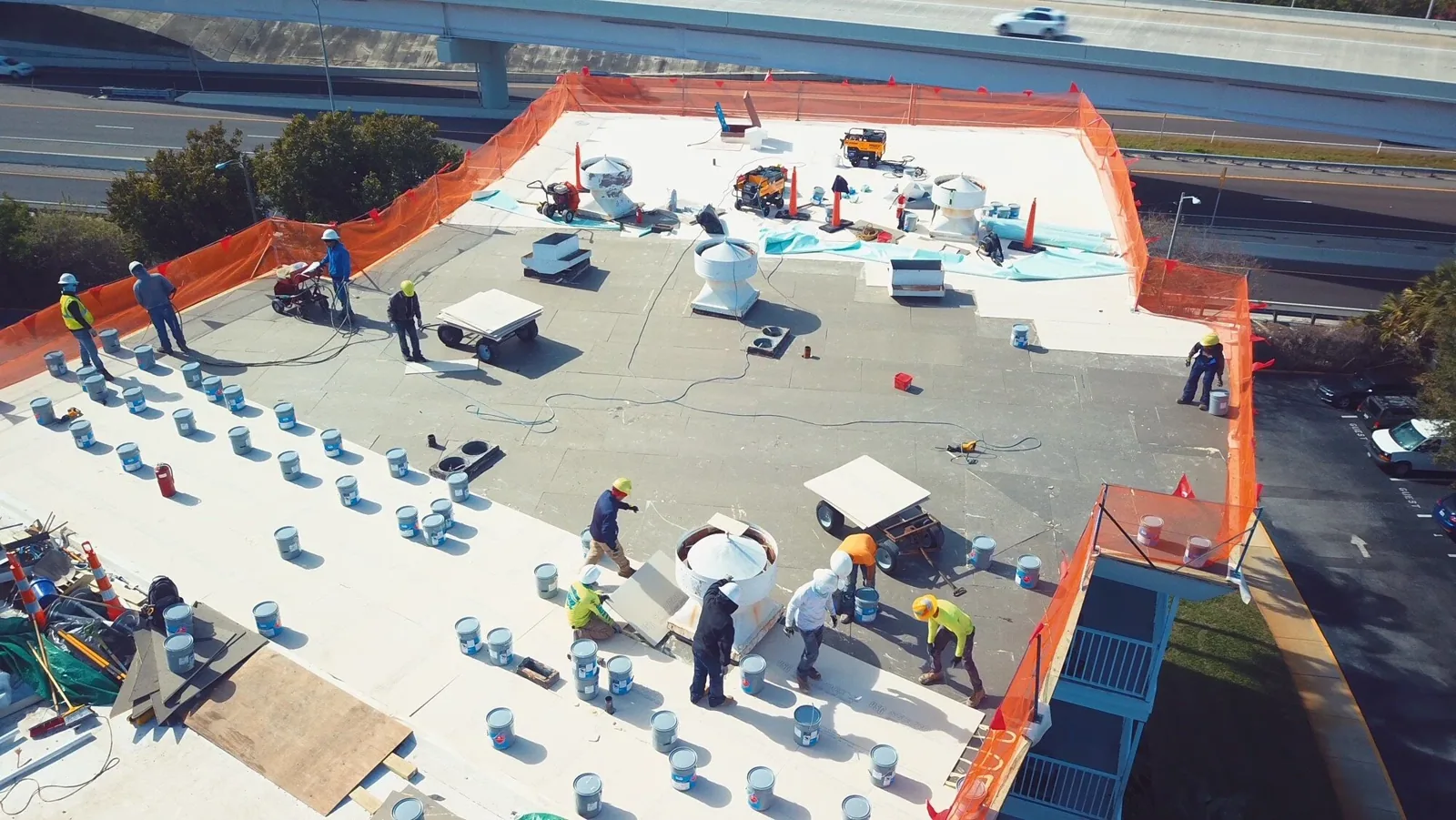
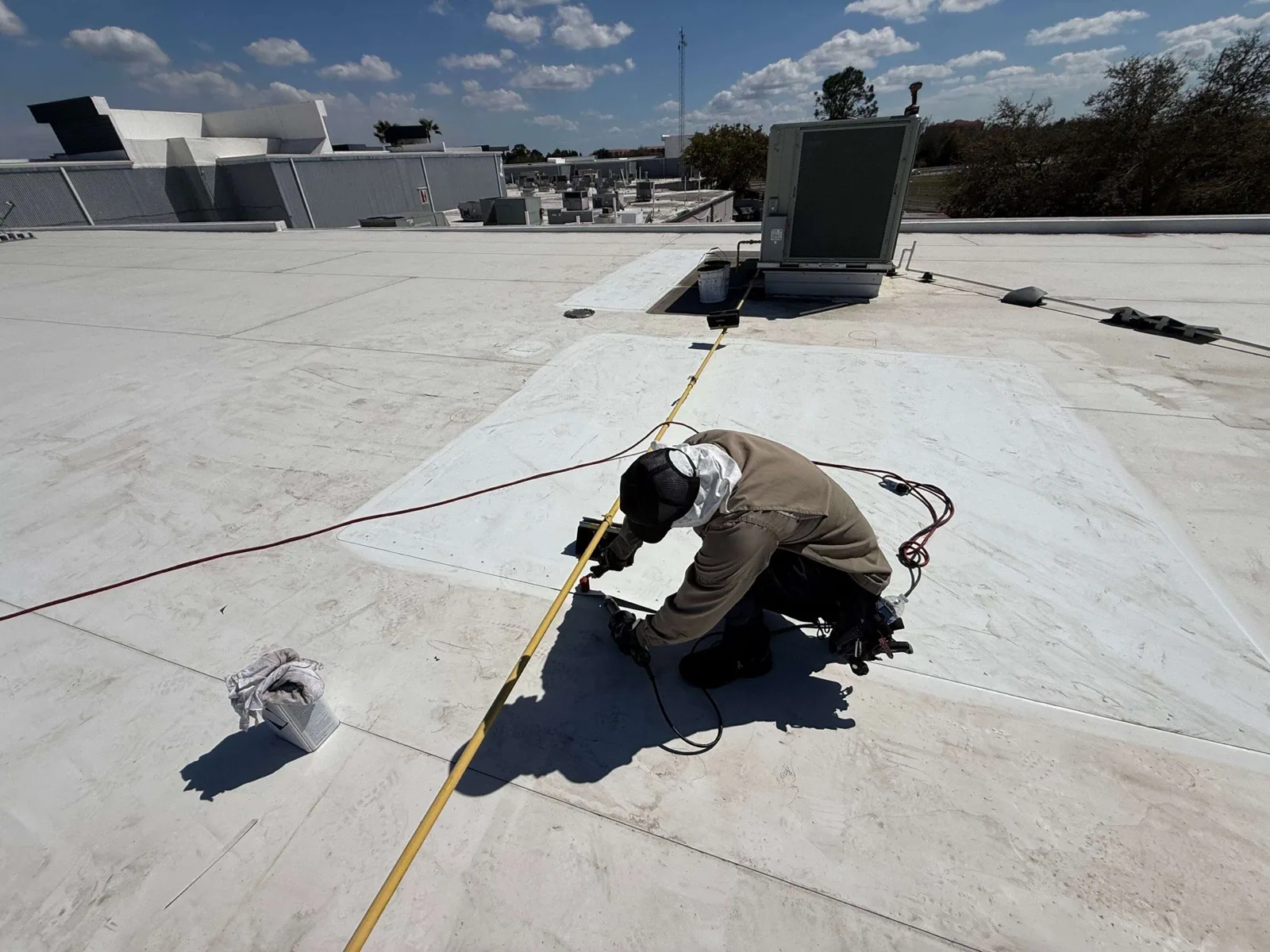
Before work begins, confirm building use, occupied hours, roof access, overhead protection, active equipment, fire lanes, and the authorized contact for a scope change. The crew secures the work area while tools and materials are on site, keeps drainage open, and closes each exposed section at the end of a shift. If removal shows a different assembly or wider moisture, the team records the finding and stops at a safe boundary until the owner directs the next action.
For a rapid leak response, the first action may be temporary water protection; permanent repair follows installation rules and approved materials. A storm-related inspection can document the roof condition after severe weather and define what testing is needed. The report separates immediate protection from a proposed long-term repair so facilities can communicate the status clearly.
When access involves the separate Navy support area, the site contact confirms travel between campus areas and the exact work entry. The installation contact should confirm approved movement between the connected campus areas and identify any separate escort or staging requirements. The job plan should identify approved movement and where materials may be staged before the roofing work begins.
Compare a bounded repair with renewal
A repair may fit a localized defect with stable adjacent materials. Repeated leaks, broader moisture, failing seams, or a near-term capital cycle can justify a renewal comparison. We review the roof map, test evidence, prior work, facility schedule, and access controls. Recommendations state the confirmed condition and the uncertainty that may affect scope or cost.
A repair scope identifies the affected detail and tie-in. A replacement study can compare removal, insulation, drainage, edge work, and phased access. An overlay option should be evaluated only after existing layers and moisture are checked. Cost and schedule depend on installation approvals, building use, material delivery, overhead protection, removal depth, and the number of available work windows.
For a campus with several mission uses, set priorities by condition and operational consequence. Navy training and administration functions shape access planning; tie the roof scope to the facility’s assigned building, asset records, and approved work area. A separate line for testing can reduce uncertainty before full renewal is priced.
Close out with the right facility record
Closeout should name the approved facility reference, roof zone, system observed, work completed, materials, photographs, drain and penetration repairs, test locations, and any open item. Follow installation rules for drawings and report distribution. The next maintenance visit should be able to identify exactly where the repair occurred and what remains unverified.
A condition report can support future maintenance and procurement. Owners comparing Navy support facilities with hangar roofing or government-building roofs can use common condition fields but should keep access plans and building functions separate.
Share approved roof plans, facility use, access and escort rules, repair history, and the planned budget year through the authorized project channel. We will return a condition record and next actions tied to the approved building and work boundary.
Questions About Navy Reserve Facility Roofing
What Navy Reserve facility is in the Sandy Springs service region?
Navy Operational Support Center Atlanta is identified at Dobbins and supports Navy Reserve training, operational, and administrative functions. The facility team must identify the exact building and access process for any project.
Does the campus overpass determine roof access?
No. The installation's current access and escort requirements control movement between campus areas. We coordinate route and staging with the authorized contact.
What information should be available before an inspection?
Provide approved facility identifiers, roof plans, service records, access and escort rules, operating windows, and equipment restrictions. We use those details to plan a compliant visit.
How do you handle an active leak at a training building?
The crew can define temporary water protection and document the roof zone. Permanent repair follows the installation's approval, material, and scheduling requirements.
When should the owner compare replacement with repair?
A broader comparison may help when failures recur, testing shows moisture across areas, or repair quantities approach a planned capital decision. The scope should identify the evidence and unresolved questions.
Set a Navy Reserve roof review
Provide approved facility identifiers, roof plans, escort requirements, building use, and repair history. We will document conditions and define authorized next steps.
Call 555-555-5555 or send the building details.