Senior Living Roofing in Sandy Springs, GA
A senior-living roof decision reaches beyond the membrane. A leak can affect resident rooms, common areas, or a route used every day, while a planned repair must fit staffing and access limits. We identify the roof section, inspect the details tied to the report, and set out what the owner can address now versus what needs more evidence. Sandy Springs has a major healthcare district. At each senior-living property, the facility team sets resident access, staffing, and work-hour requirements alongside the roof inspection findings.
Connect the roof report to resident areas
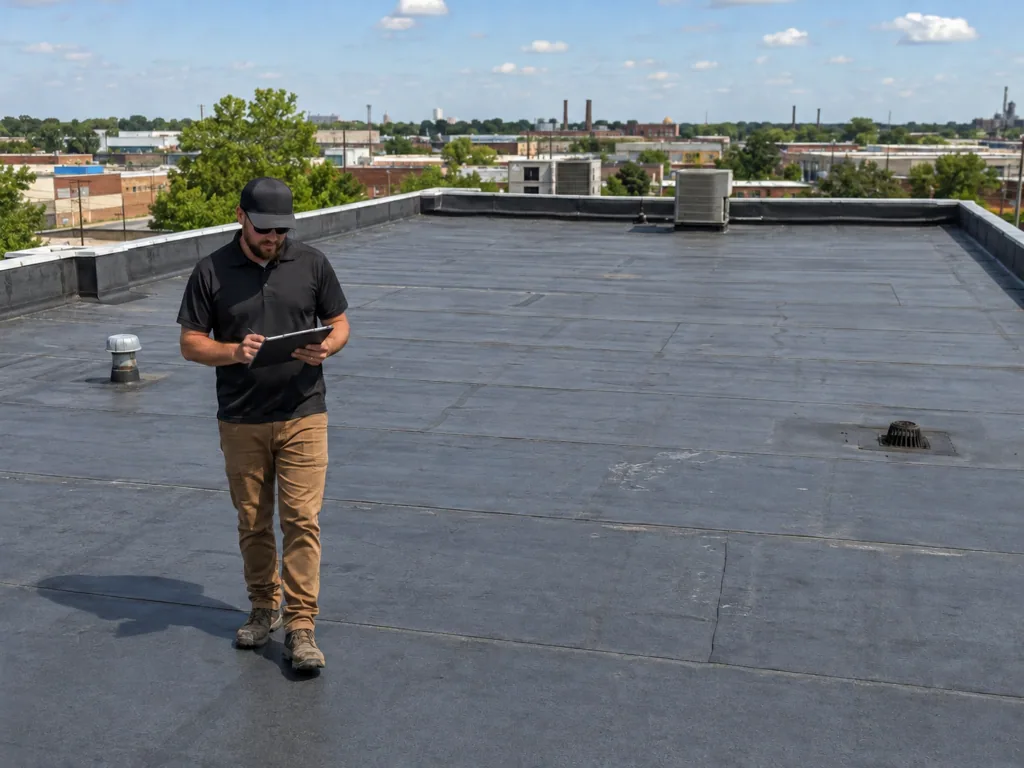
We start with the roof plan, service history, reported interior area, prior repairs, and any known building additions. On the roof, we inspect membrane seams, edges, curbs, vents, drains, and accessible insulation. We mark sections that could not be reached because of equipment or access restrictions. A roof condition inspection should show the finding and the roof zone clearly enough that facilities staff can match it to an interior work order without including resident names.
Children’s Healthcare of Atlanta at Scottish Rite, Northside Hospital, and Emory St. Joseph’s are among the Sandy Springs Medical District’s major institutions. For a senior-living property, the facility contact identifies ambulance access, meal delivery, quiet periods, and resident entrances before setting the work route. The facility contact identifies ambulance access, meal delivery, quiet periods, and the entrances residents use before setting the work route.
Interior staining alone cannot establish whether water entered through a roof detail, a mechanical system, or another building component. We compare the report timing with exterior observations and define a test when concealed materials could change the scope. Readings and openings stay tied to their locations. The owner receives a clear distinction between confirmed moisture, a suspected path, and areas not sampled.
Set safe routes before materials arrive
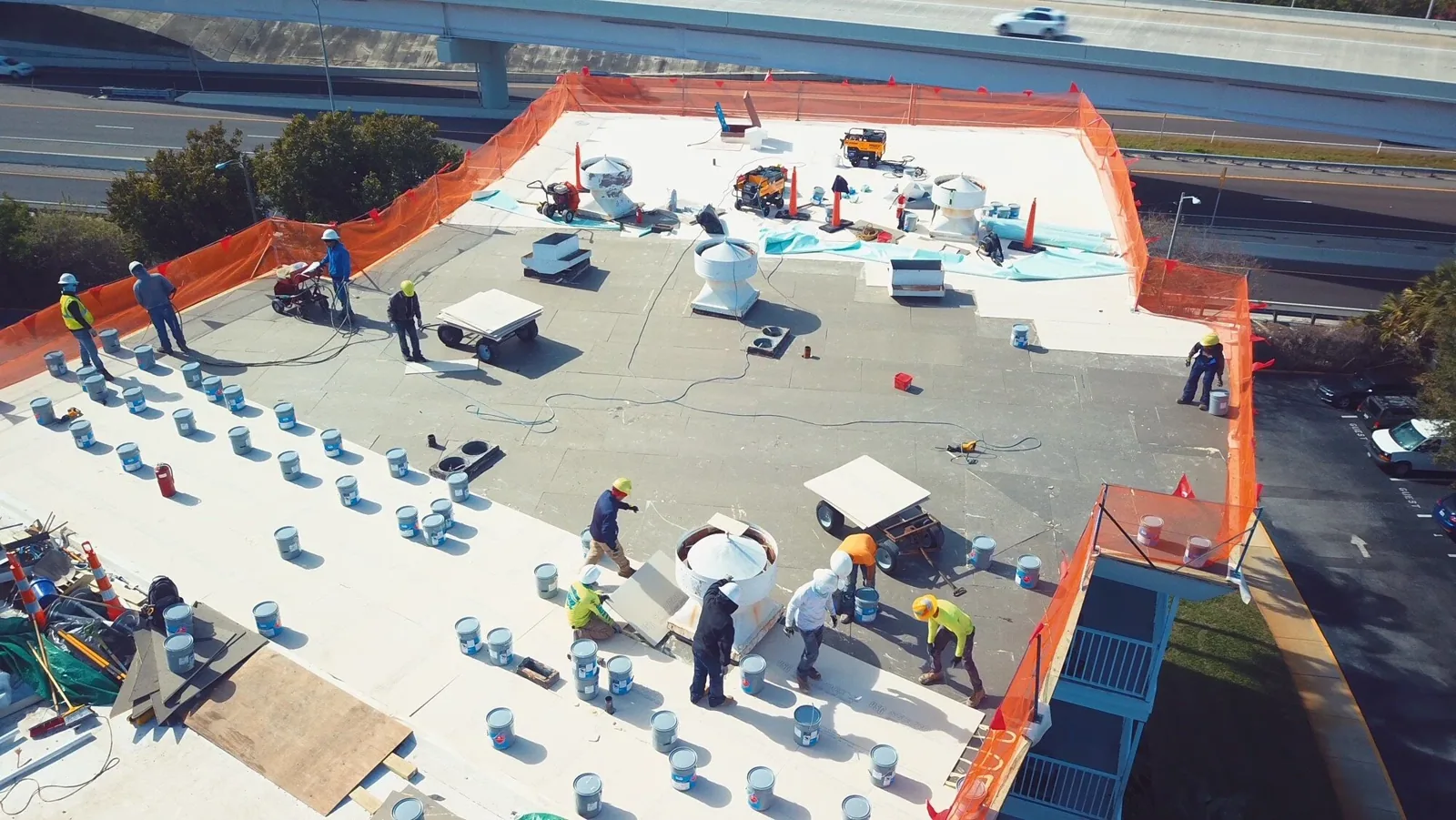
Work above occupied rooms requires a practical plan for access, noise, debris, and overhead protection. The property team confirms resident schedules, mobility routes, staff contacts, roof keys, lift placement, and any areas that must remain available for emergency response. We can stage work in smaller sections when the roof and weather plan allow it. The sequence should include a secure daily closure and a named person who receives updates if concealed conditions change the scope.
The Central Perimeter is served by four MARTA rail stations, and Sandy Springs’ daytime population nearly doubles as workers arrive. For a senior-living property, we verify where trucks can stop, which routes residents and visitors use, and how materials reach the roof without blocking an entry. Compare each residence’s access window and roof-zone condition separately; shared ownership does not make every building ready for the same repair date. For a multi-site owner, the record should also show which leak controls remain temporary, who checks those areas after rain, and what finding moves the work into a funded repair.
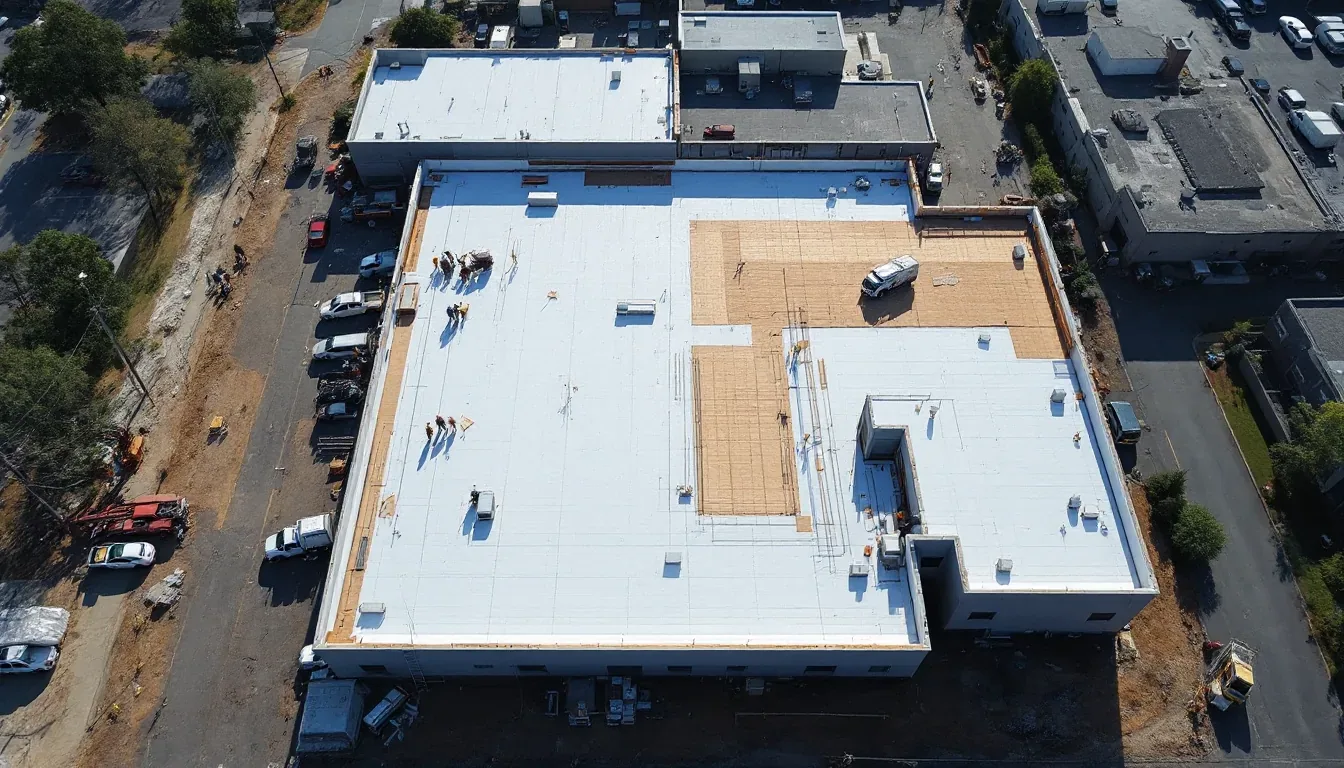
A phased reroof plan can set work areas, protection, daily closure, and notices. For an urgent leak, we isolate the roof area and protect the interior as directed. The work record lists temporary measures and the next inspection point. Staff should not have to infer whether a temporary cover remains or who is coordinating the next step.
Inspect drains, curbs, and service points
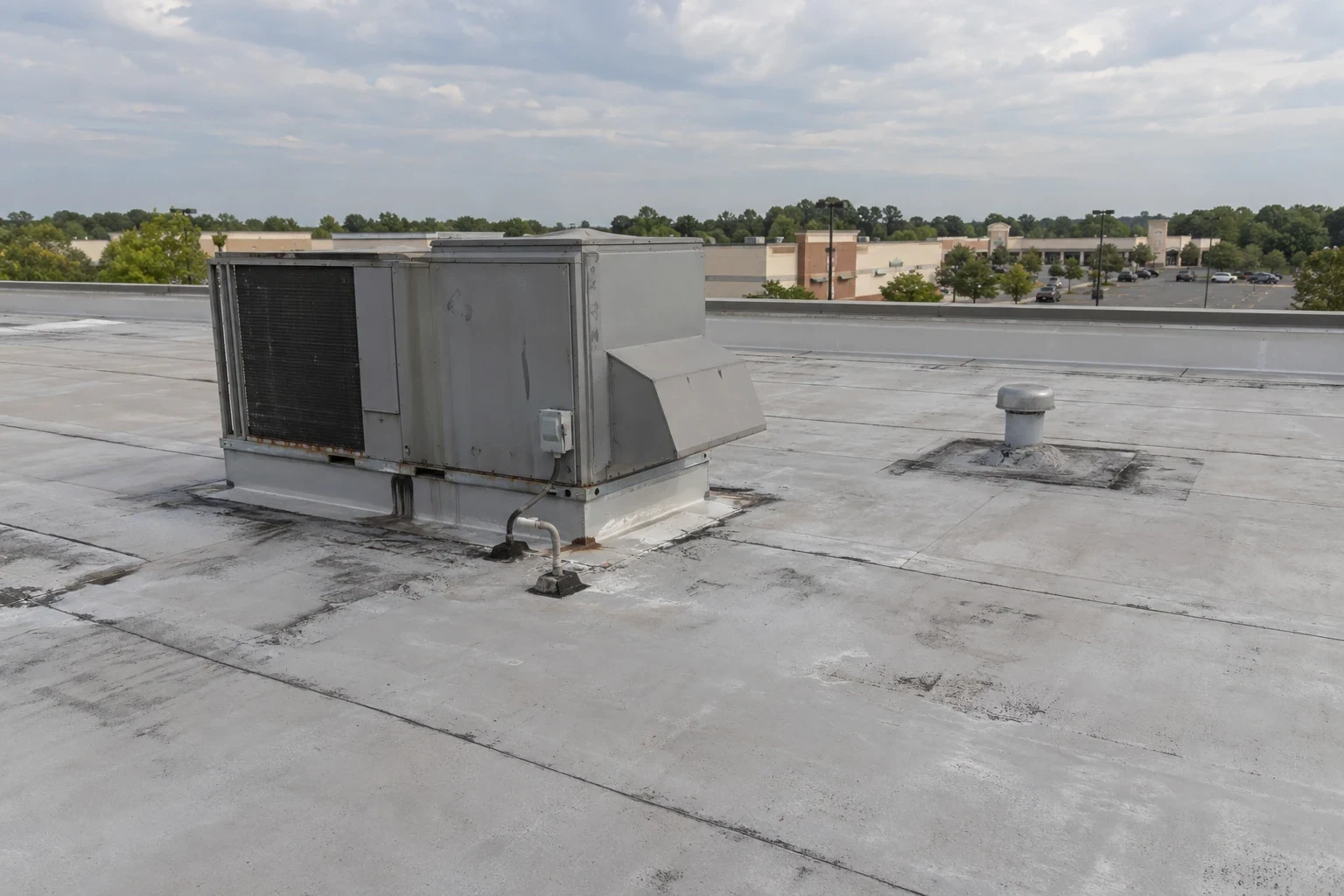
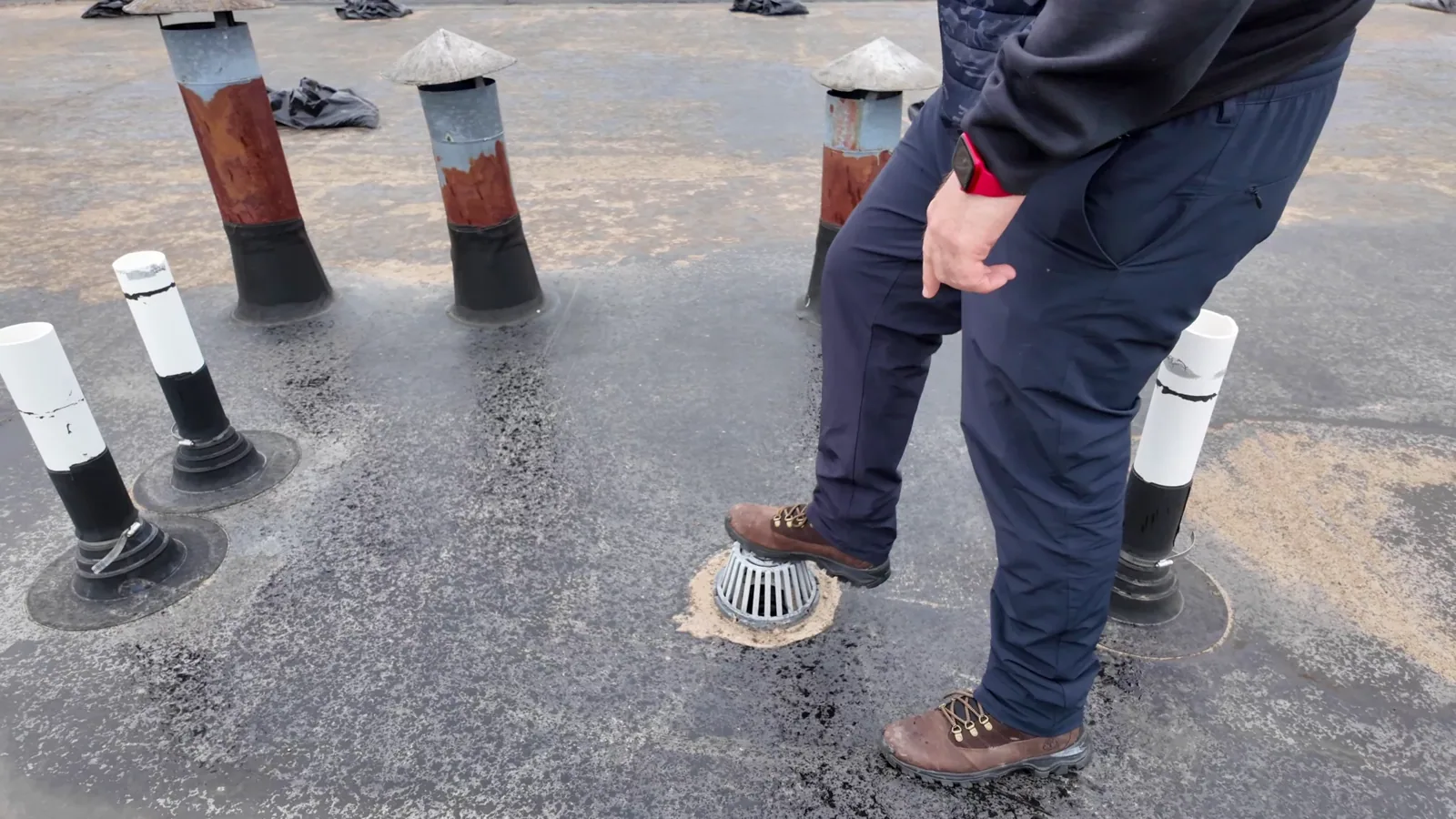
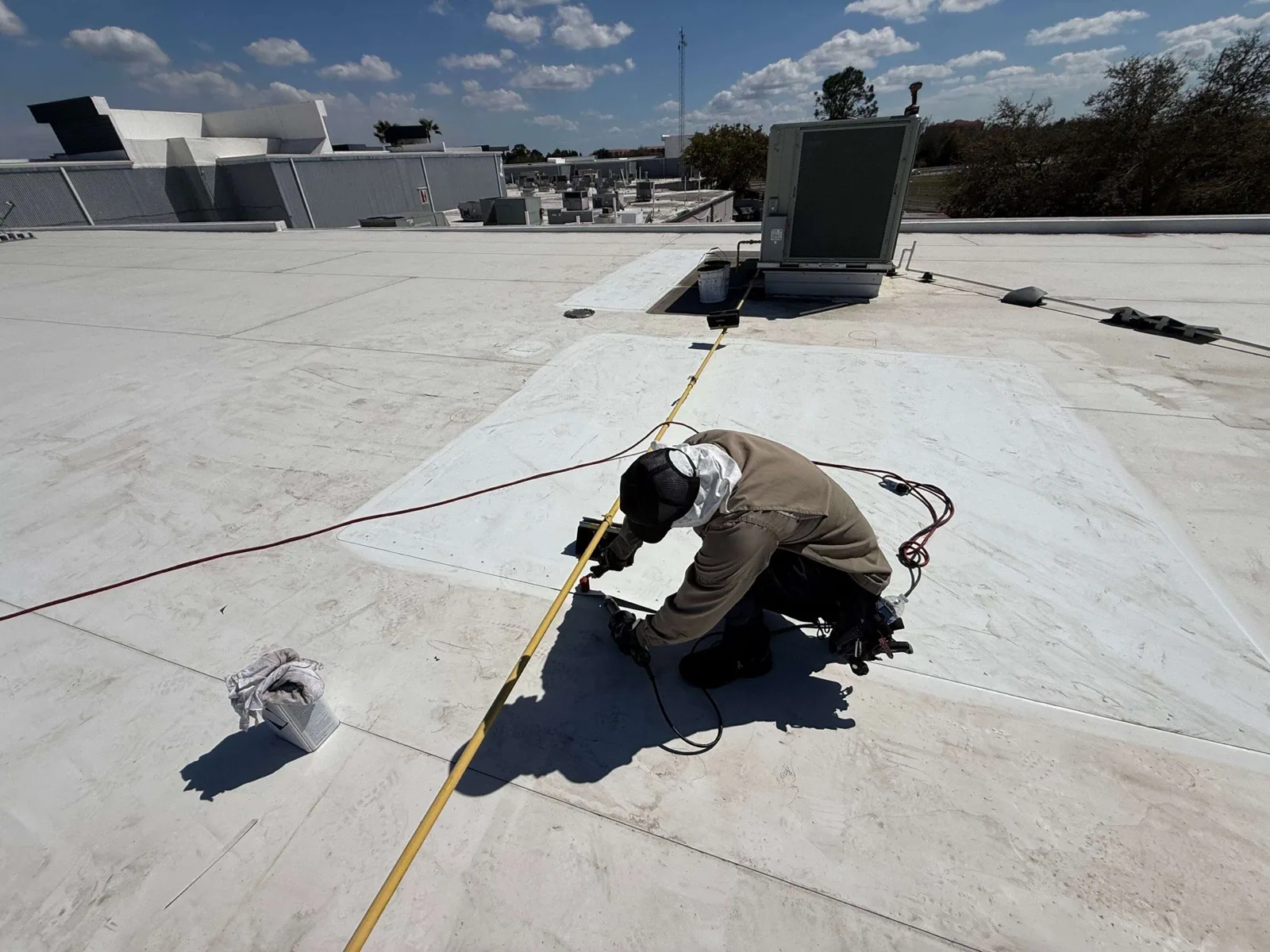
Senior-living buildings often have multiple rooftop units, exhausts, plumbing vents, and later additions. We look at flashing, supports, membrane transitions, and prior repairs around selected details. If an HVAC contractor changed equipment or a penetration, the roof tie-in should be reviewed as part of the service closeout. The roofing scope names the relevant trade handoff and does not assume that equipment can be moved without facility approval.
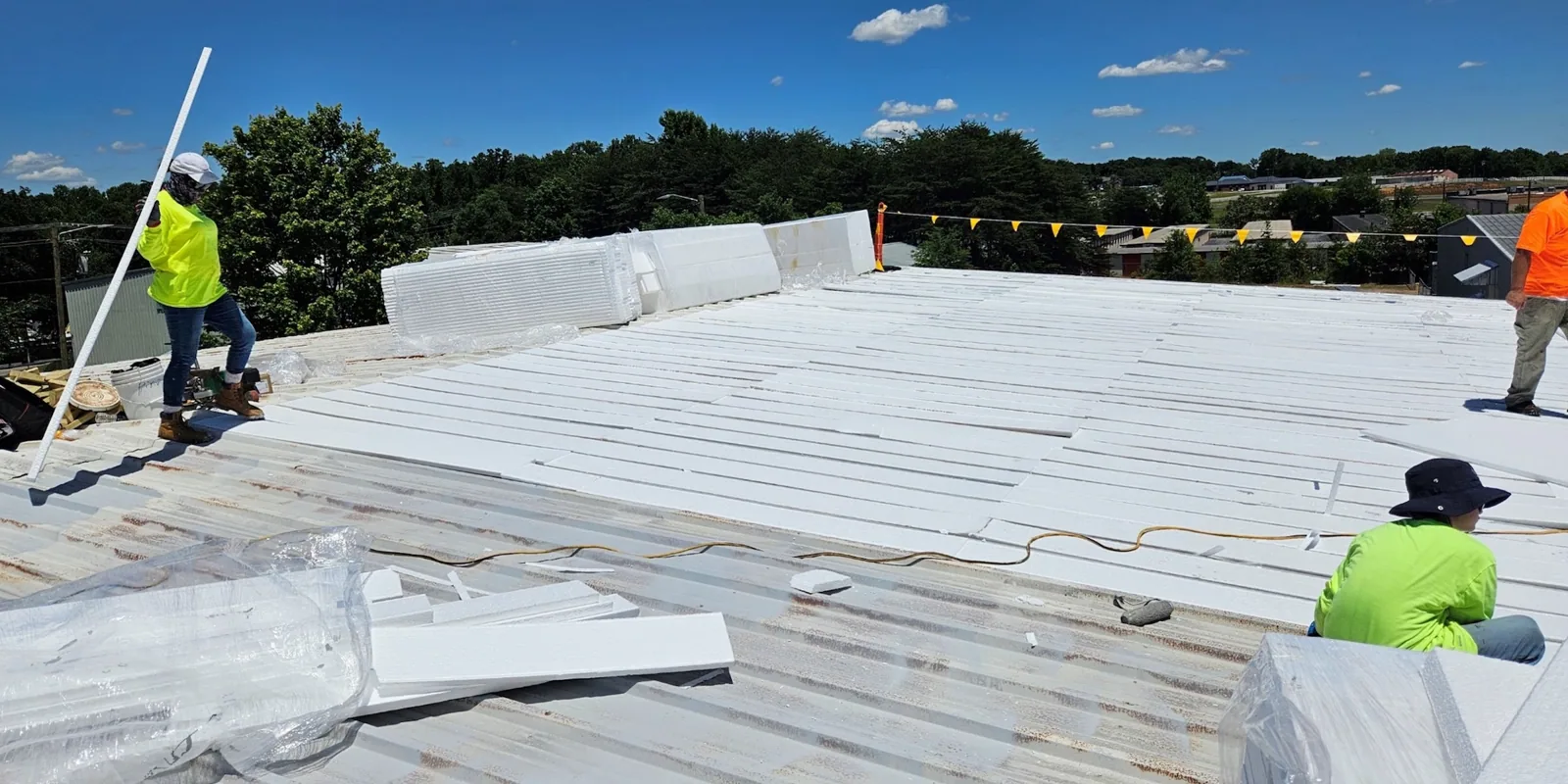
Atlanta's hot, humid summer conditions and recurring rainfall make drainage and surface condition part of routine review. We check strainers, scuppers, overflow routes, low areas, and discharge points. A drainage assessment can identify whether the next action is cleaning, a component repair, or a broader slope investigation. If the assembly shows moisture, insulation work should follow the tested boundary and show how retained materials will be tied in.
Roof access should remain controlled around resident windows, balconies, and outdoor areas. Before a lift or material drop, the facility approves the location and any temporary closure. We record which roof section was completed and confirm that drains and routes are clear at the end of the shift.
Compare immediate protection with renewal
A local repair may fit when the problem is limited and nearby material can accept a sound tie-in. Repeated leaks, broad moisture, deteriorated attachment, or a roof close to a capital window may justify a wider comparison. We review findings, repair history, access, resident impact, and the facility's available work periods. The estimate defines included protection and states which concealed conditions could change removal quantities.
A repair option can address a confirmed defect. A replacement study can compare tear-off, insulation, edge details, and phased access. If a recover is under consideration, assembly review first checks the existing layers and condition. Cost and timing depend on the affected roof area, disposal, equipment coordination, protection needs, and how many secure work shifts are available. We also account for resident notice lead time, staff coverage, and whether temporary routes need additional supervision during a workday.
For an owner with several care properties, rank projects by documented condition and resident consequence rather than building type alone. A community near Roswell Road may have different arrival and staging limits from one closer to Powers Ferry. A For a property in the Medical District, the facility contact confirms resident routes, service access, and work-hour limits before the roof sequence is set. Separate urgent water control from renewal that can be scheduled in a future budget year.
Keep closeout useful to the next shift
Closeout should show repaired zones, materials, photographs, drain work, equipment details, test points, and any area not reached. Use roof-zone labels that staff can match to a maintenance plan. Keep resident identifiers and care details out of roof records. If a future contractor opens the same section, the facilities team should be able to find the last repair and determine what was tested.
When equipment is replaced, include a roof detail review in the work order and update the map after flashing is complete. A condition report can help compare repeat issues and set follow-up intervals. Owners managing mixed properties can compare with medical-office roofing or hospital roofing, while preserving each site's own operating limits and condition history.
Share roof plans, repair records, staffing and access rules, resident-area constraints, and the budget window. We will return priorities tied to roof sections, with immediate protection and longer-term options kept distinct.

Questions About Senior Living Roofing
How do you plan roof work above occupied resident areas?
We coordinate access, notices, protection, and daily closure with the facility representative. The plan identifies resident routes, emergency access, roof zones, and who receives any change in scope.
Can a roof inspection include private resident information?
Roof records should use building and roof-zone references. Resident names and care details are not needed to describe a roof condition or repair.
Which roof details around a senior-living HVAC curb can affect water entry?
We review curb flashing, pipe and conduit penetrations, supports, seams, and prior alterations. Any equipment movement or shutdown stays with the authorized facility and mechanical contacts.
When should senior living ownership compare replacement with repair?
Compare broader renewal when moisture, recurring failures, or deteriorated attachment extend beyond an isolated detail. Testing and repair history help define whether the current condition supports a larger scope.
How does Sandy Springs weather affect the schedule?
Hot humid periods and recurring rain affect roof surface conditions and installation windows. We coordinate timing with the actual conditions, product requirements, resident schedule, and the planned daily closure.
Plan roofing around resident operations
Share roof plans, repair history, access rules, resident-area constraints, and the budget window. We will prioritize the roof sections and define practical next actions.
Call 555-555-5555 or send the building details.