VA Medical Center Roofing near Sandy Springs, GA
A VA medical-center roof has to protect clinical, education, research, and residential functions while the campus remains in use. The work boundary and access plan matter as much as the repair material. We identify the assigned roof area, inspect the assembly, and define what the owner needs to know before selecting a scope. The Atlanta VA Medical Center in Decatur serves a broad northeast Georgia region, making continuity and clear facilities records important across its clinical and outpatient network.
Map the campus function to the roof zone
The Decatur VA campus is a teaching hospital with clinical, education, and research functions. It includes inpatient care, a Community Living Center, domiciliary, and residential treatment program. Those services create different schedules and access needs across the facility. We review the asset plan, reported leaks, maintenance history, and campus contact instructions before assigning a roof zone. The inspection record should identify the building and area without including patient or resident information.
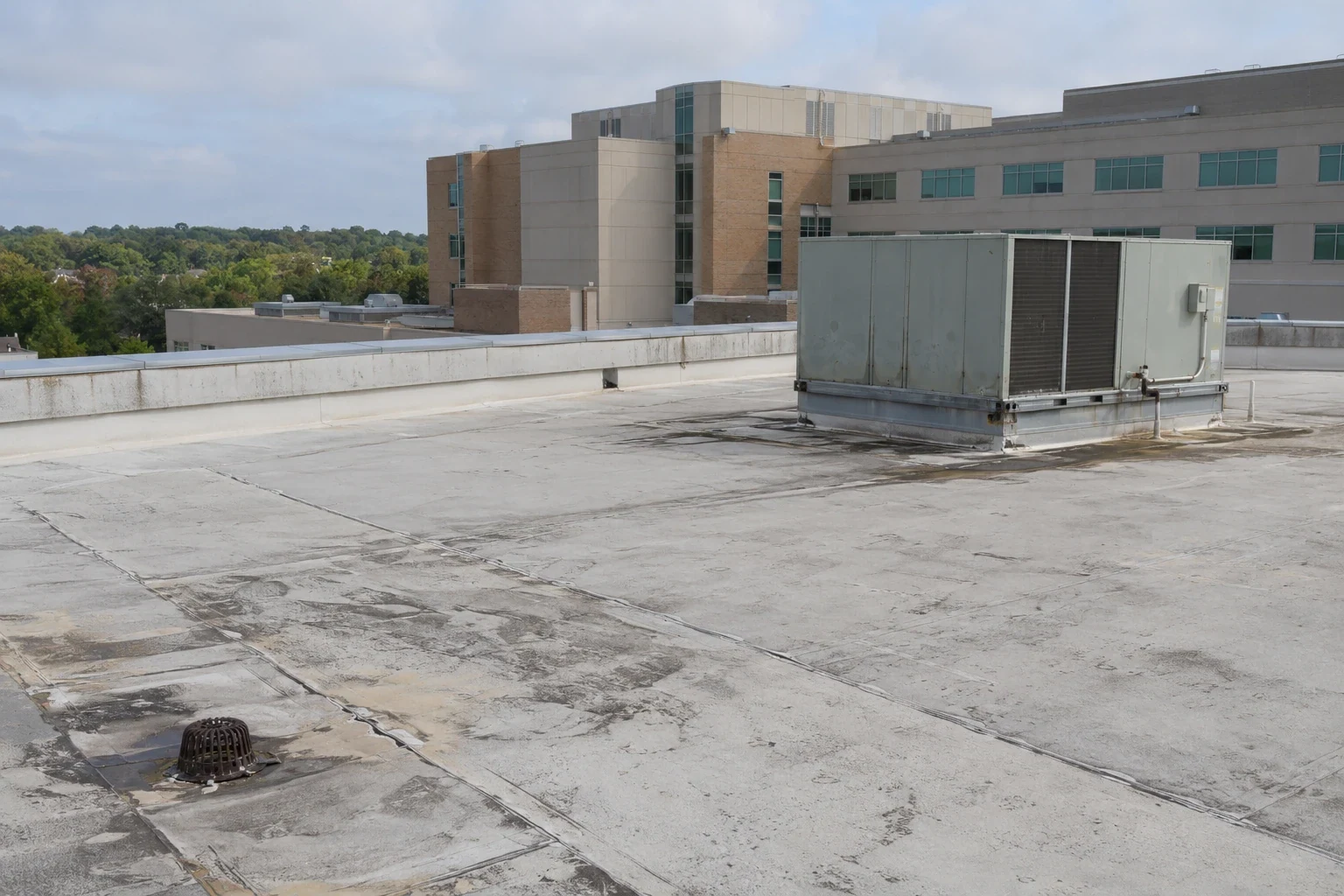
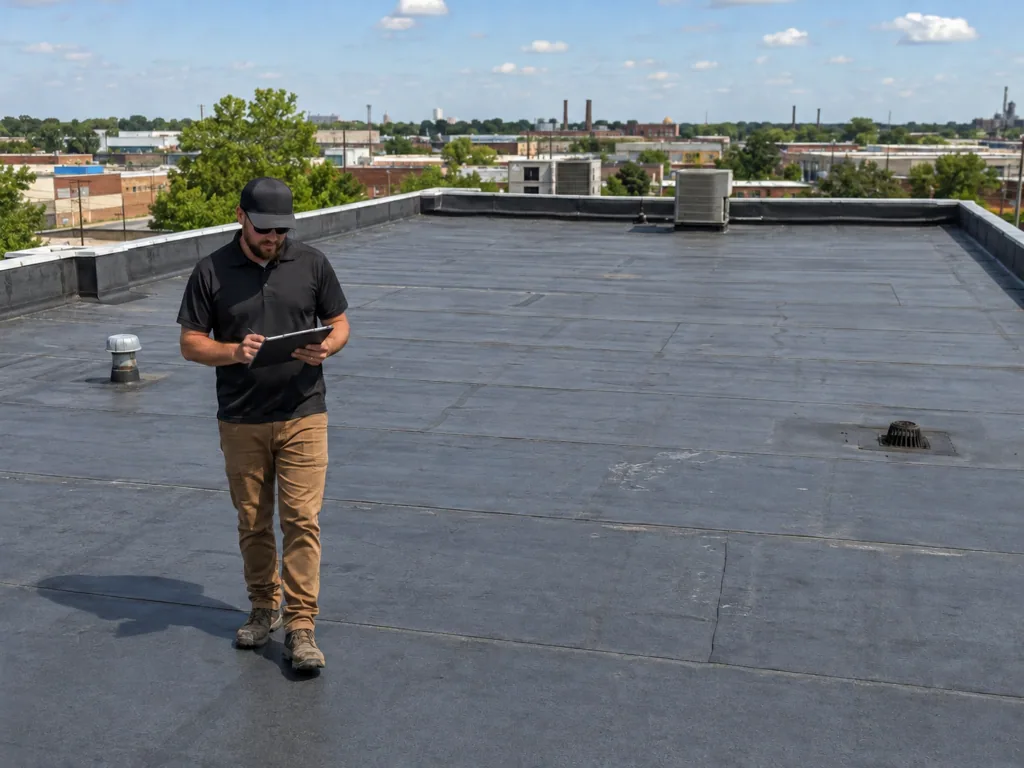
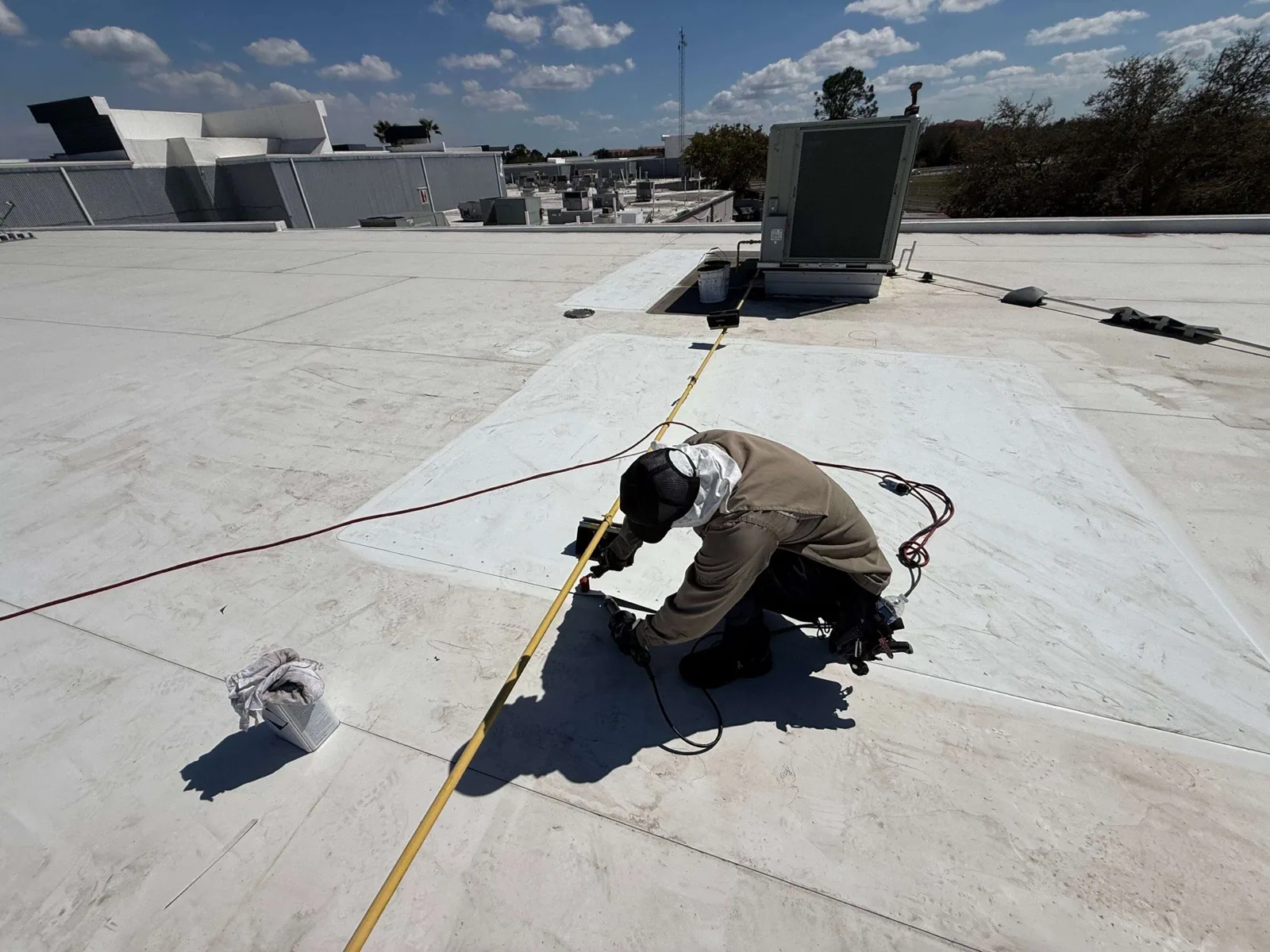
We check seams, wall transitions, curbs, drains, skylights, supports, edges, and visible repairs. A roof inspection documents accessible areas and identifies any test needed to set removal limits. For a multi-building campus, record each test result and repair recommendation against the roof zone and method used to verify it.
Decatur sits southeast of Sandy Springs. The North Druid Hills corridor and Roswell are separate regional service areas with distinct travel and building contexts. This wider geography informs dispatch, while the medical center's own security, clinical, and delivery procedures define the jobsite sequence.
Separate active leaks from planned renewal
We compare work orders, prior photographs, and maintenance records with the roof condition. If a report points to a ceiling area, we inspect the likely water path above it rather than assuming the roof opening sits directly overhead. A controlled test can confirm layers at one point; the report states what remains unknown outside the sample. This is important when several buildings or wings have different additions and roof histories.
The VA Atlanta system serves a 50-county northeast Georgia region through its medical center and community outpatient clinics. The central campus has a broad service role, but its facility staff define which areas are in this roofing project and what approvals apply. We identify patient routes, deliveries, research or clinic schedules, and any spaces that need specific protection before setting work hours.
For a recurring issue, map each report to a roof section and track repair frequency. An inspection can separate a localized flashing problem from a drainage concern or a broader assembly condition. If moisture readings or a test opening are needed, we specify the location and restoration procedure before requesting access.
Inspect roof interfaces above care spaces
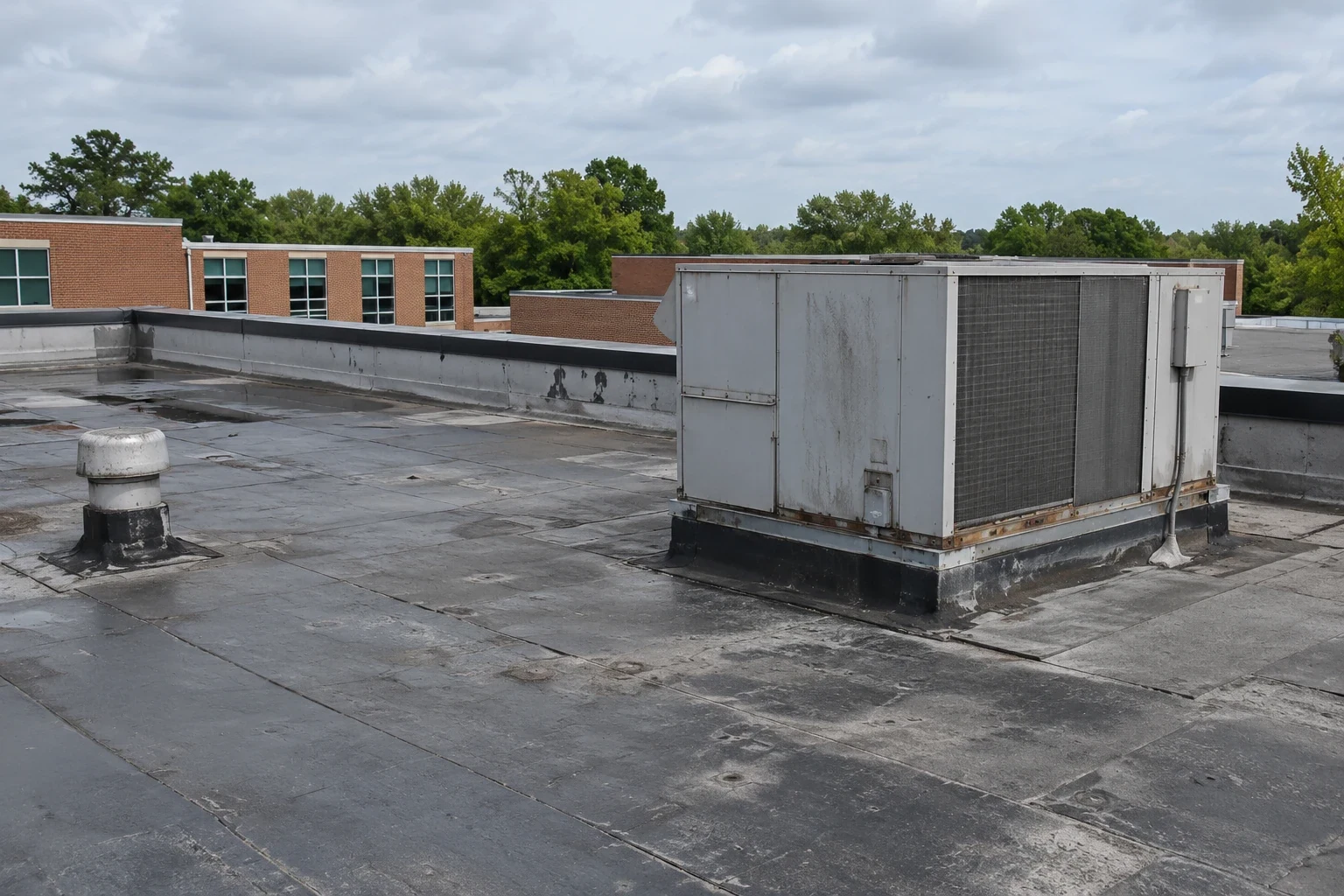
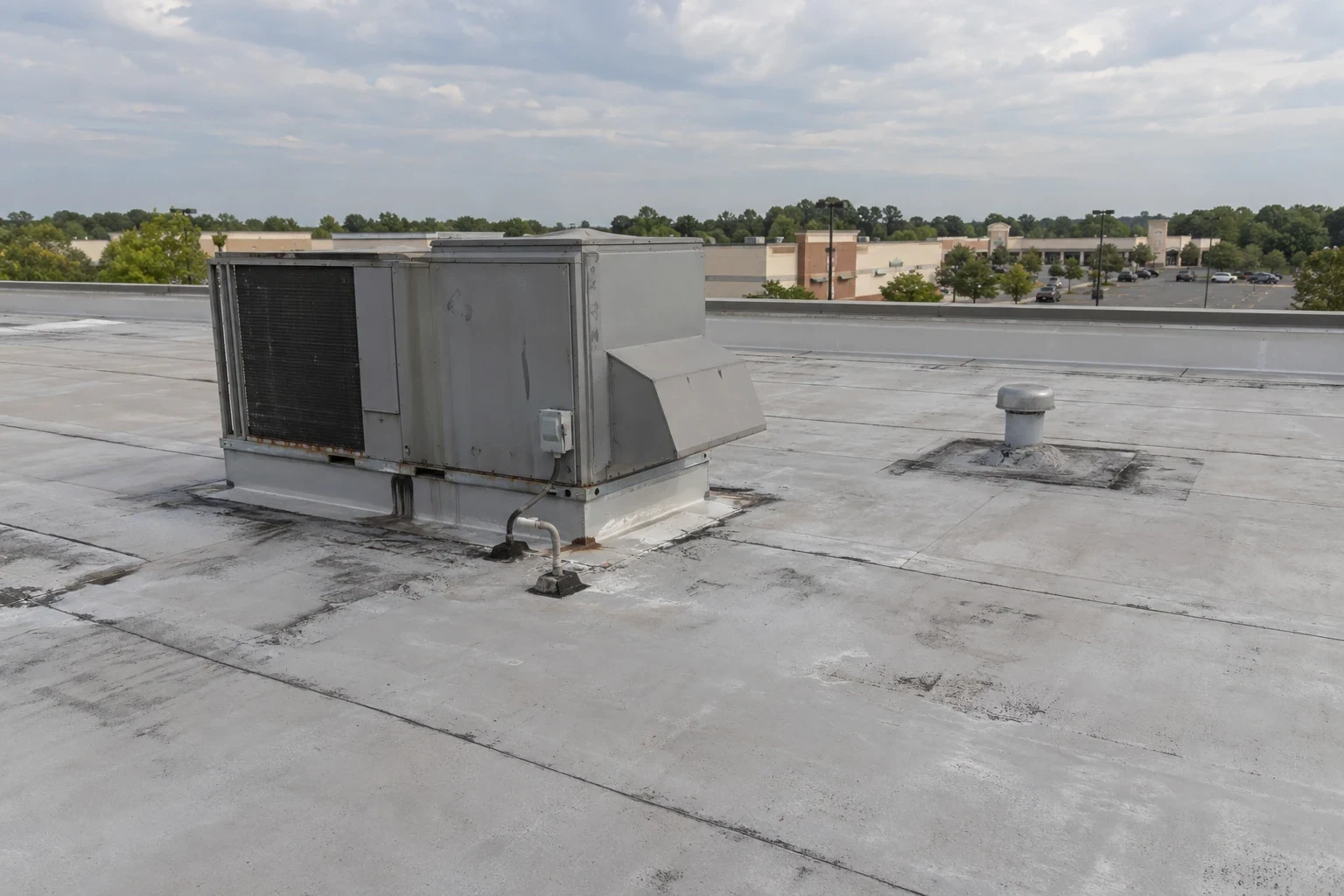
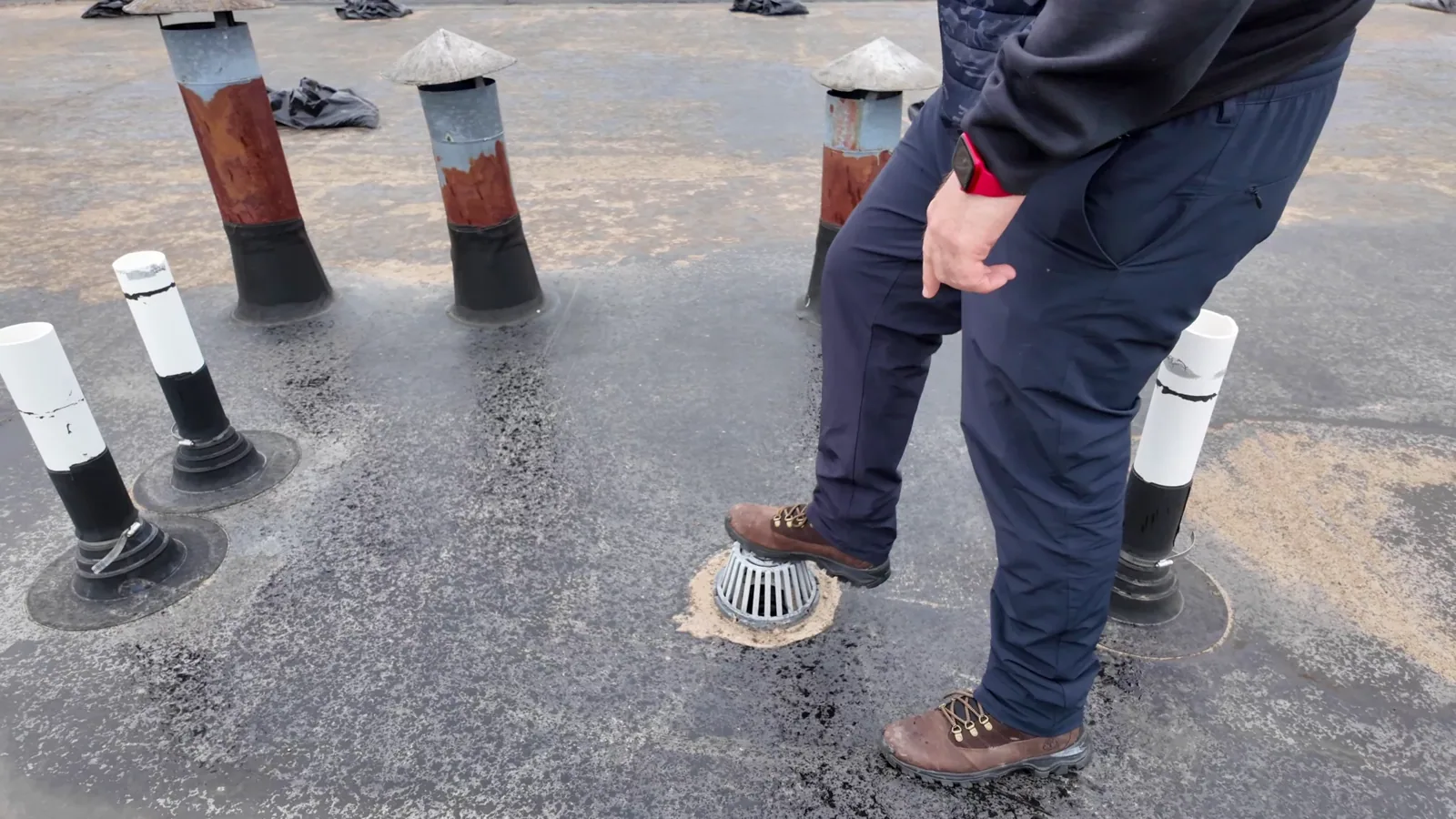
Medical campuses can have HVAC units, exhausts, piping, communications equipment, skylights, and multiple roof elevations. We inspect the flashing and membrane transitions around those details, along with drains, overflows, wall connections, and prior patches. When a mechanical contractor controls equipment, the work scope identifies the interface and who completes the roof tie-in after service. No clinical or mechanical system changes without facility direction.
Atlanta's warm humid summers and recurring rain affect roof surface conditions and drainage checks. We record outlets, strainers, low points, and discharge paths. A drainage assessment can identify whether cleaning or repair is required. If test results support insulation replacement, a roof assembly review can define the removal boundary and transitions. The owner should know where a finding is confirmed and where additional inspection is still needed.
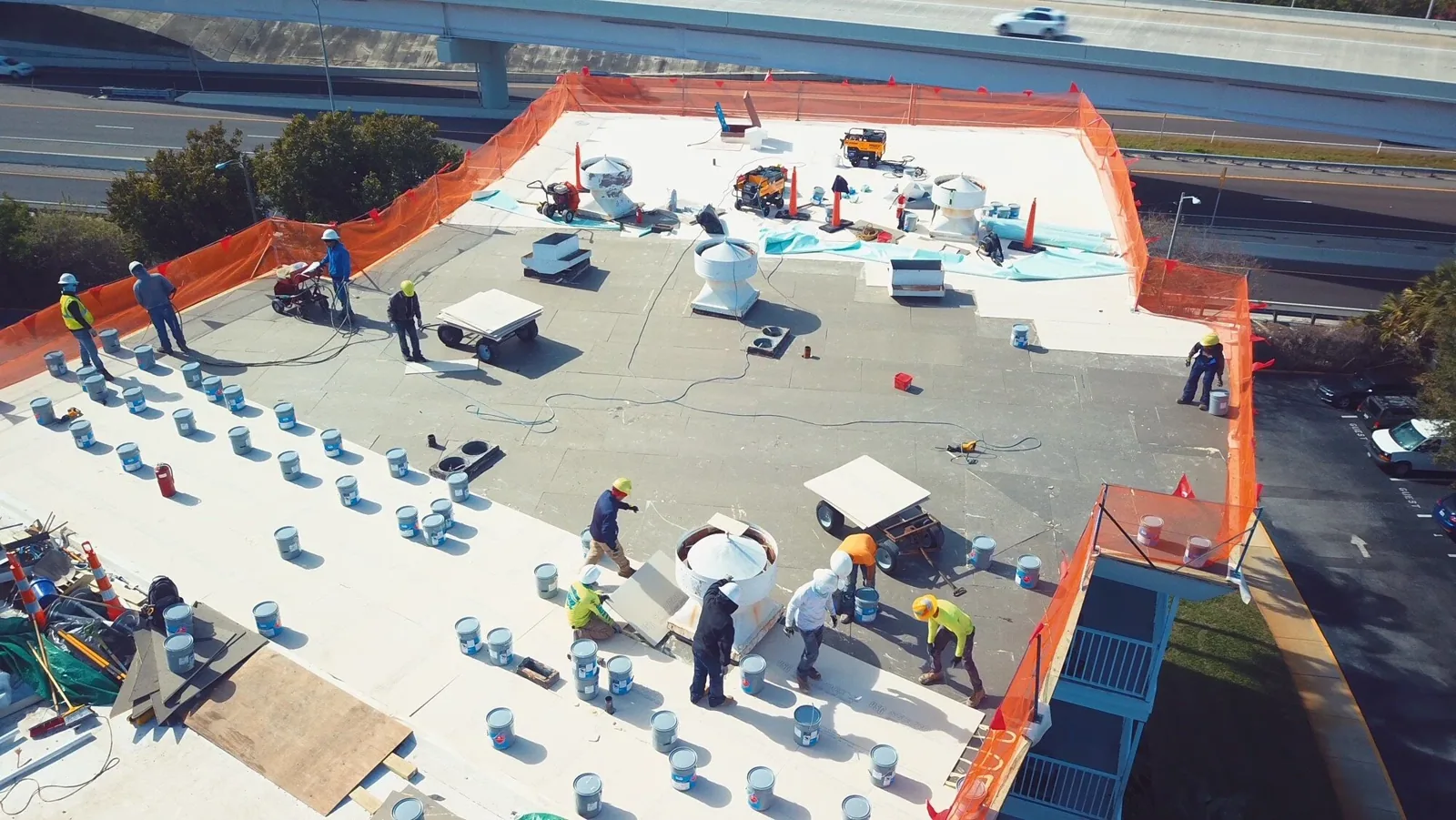
A medical building's access doors, emergency paths, and equipment yards can limit staging. The campus contact approves the lift and material route. We account for those constraints in the work plan and preserve a watertight closure at each shift boundary.

Coordinate work with patient and staff access
Before mobilization, confirm clinic hours, inpatient or residential routines, public entrances, staff routes, deliveries, security screening, roof access, and who can authorize changes. If work sits above an active entrance or treatment area, the plan defines overhead protection and notifications. We establish daily communication and a safe stop point so staff know what is complete and which zone remains under temporary protection.
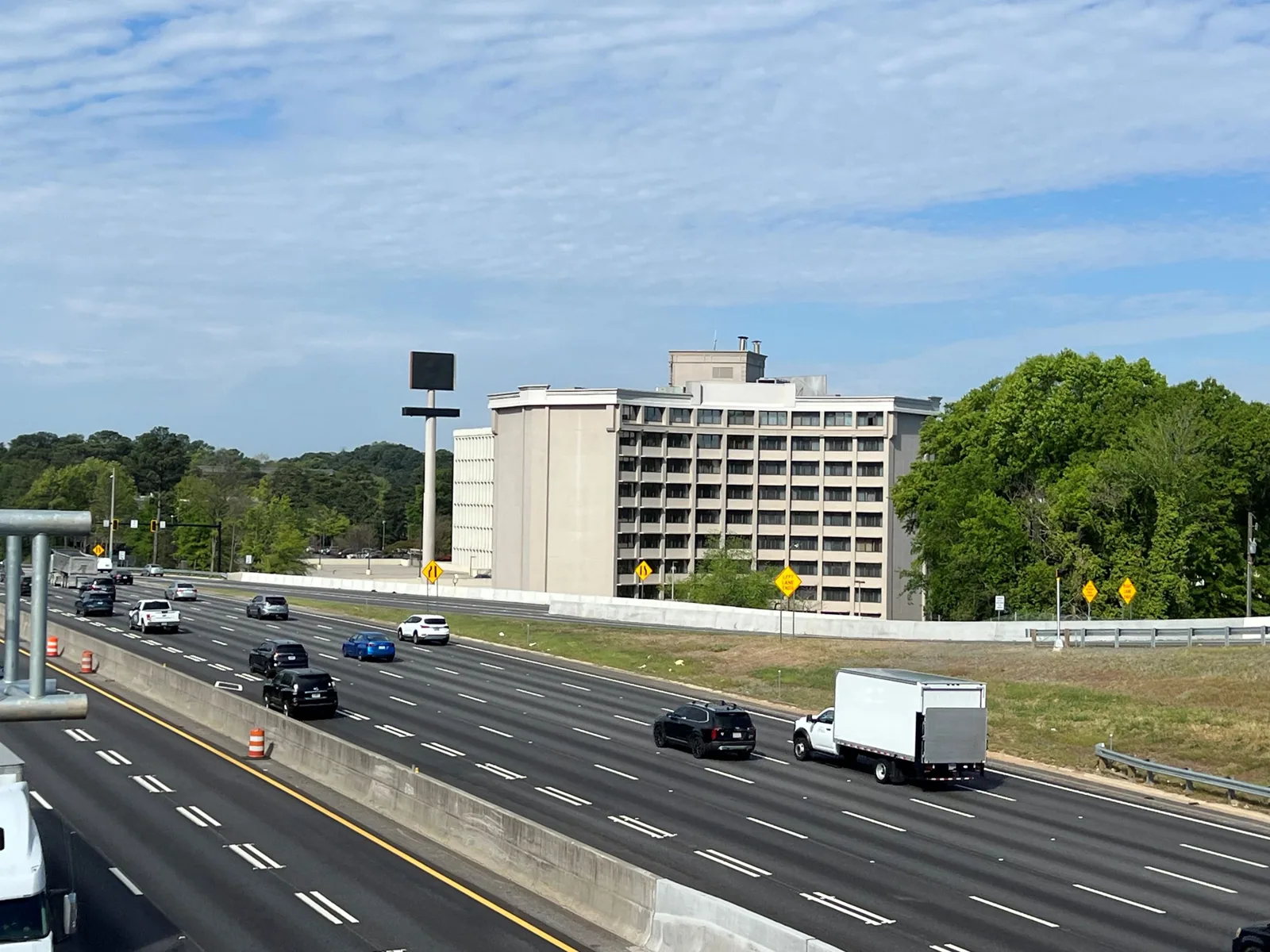
Georgia 400 and Interstate 285 are primary regional connections for Sandy Springs, while the VA campus is in Decatur. The campus contact confirms gate procedures, delivery windows, approved staging, and escort requirements before mobilization. A phased reroof plan can sequence building areas around patient services and include inspection and release points between shifts.
If removal exposes additional wet material, the crew secures the roof and records the change before requesting approval. The owner sees the location, cause under review, and effect on the work window. Temporary water control and permanent repair remain separate line items when the facility needs to decide on the broader scope.
Compare service protection with capital work
A repair may fit a confirmed detail when adjoining materials support a sound tie-in. Repeat leaks, broad moisture, deteriorated attachment, or a roof nearing a planned renewal year may support a larger study. We compare test evidence, repair history, campus access, service consequence, and the time needed for procurement. The estimate identifies scope, assumptions, and the concealed conditions that could change quantities.
A repair scope can address a defined defect. A replacement study can compare removal depth, insulation, equipment coordination, and phased access. If coating or recovery is considered, the existing assembly and moisture condition need review before an option is priced. Cost and schedule depend on security, patient protection, staging, disposal, roof detail count, and the available work periods.
For multiple clinical properties, prioritize by documented condition and service impact. A clinic and a teaching hospital can use similar report categories, while their access procedures and roof systems remain distinct. A portfolio table should separate immediate stabilization, testing, and renewal candidates so procurement can align each action to a budget year.
Prepare a campus-ready handoff
Closeout should identify the authorized facility reference, roof zone, observed system, materials, photographs, test locations, repairs, drainage work, and open items. Use roof-zone labels rather than patient details. Follow VA document and security procedures for drawings and photographs. A later crew should be able to locate the same area and understand whether a finding was observed, tested, corrected, or left for follow-up.
When equipment work changes a curb or penetration, include a roofing inspection in the trade handoff and update the map. Owners managing a separate clinic can compare the process with medical-office roofing, while hospital teams can compare with hospital roofing. The roof record should still describe the specific building and the evidence collected at that location.
Share authorized roof plans, work history, access process, clinical schedule, equipment limits, and capital window. We will return a prioritized assessment that separates immediate water control from planned roof renewal.
Questions About VA Medical Center Roofing
What roof information should a VA facilities team provide?
Share approved asset identifiers, roof plans, leak records, access and security rules, occupied schedules, equipment limits, and prior closeouts. These details shape inspection and work sequencing.
How do you keep roof records appropriate for a medical campus?
Use building and roof-zone references, not patient or resident identifiers. The report documents the roof condition, test location, repair, and open action under the facility's document procedures.
Can roofing work proceed during clinical operations?
The campus determines access, patient routes, notices, protection, and hours. We define work zones and daily closure around those approved conditions.
Does one test opening establish the condition of an entire campus roof?
No. A test confirms only the sampled location. The report marks the area and identifies which sections need another inspection or sample before the owner changes scope.
When should the owner consider full renewal?
A renewal comparison is useful when repair calls recur, testing shows broad moisture, or the roof enters a capital window. The recommendation should include access, clinical impact, and procurement timing.

Set a VA campus roof assessment
Share authorized roof plans, repair history, clinical access limits, and the budget window. We will document each roof zone and define the next approval steps.
Call 555-555-5555 or send the building details.