Commercial Roofing in Cumming, GA
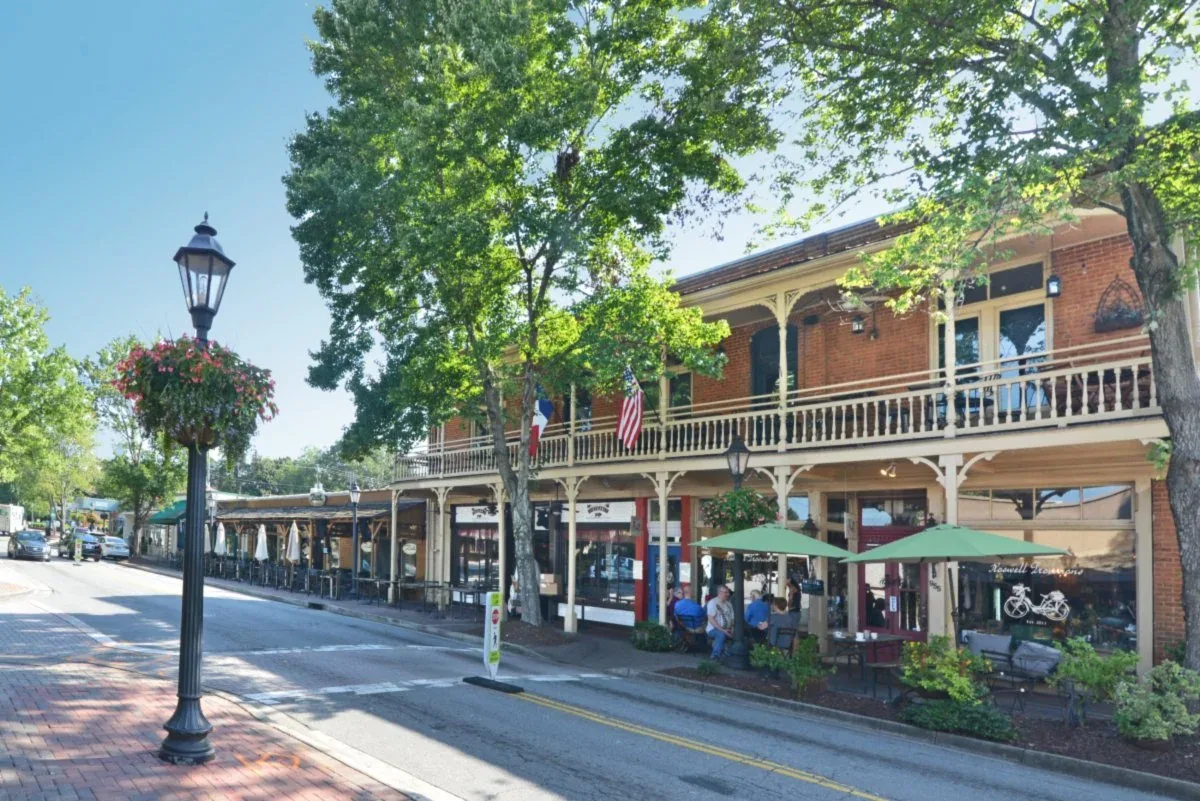
Cumming serves as a commercial and service center for Forsyth County and the surrounding region, so roof priorities can span office, medical, and industrial operations. Medical-office work and manufacturing or industrial businesses are among the city’s economic-development priorities, alongside infrastructure for office, commercial, and light-industrial growth. Those uses bring different equipment, access, and continuity questions. We inspect the building in front of us, confirm its roof assembly, and tie each repair or renewal decision to measured conditions rather than assume a common system across Cumming.
Set the work window around the building’s function
A medical-office roof may have rooftop equipment that cannot be interrupted during business hours. A manufacturing or light-industrial facility may have receiving schedules, exhaust systems, or production access that affects staging. Those are planning considerations for the property being inspected, not claims that every Cumming building contains those features. We ask the owner to identify critical equipment, occupied areas, entry procedures, loading limits, and approval contacts before estimating the sequence.
Cumming’s role as the Forsyth County commercial and service center ties different property decisions to the same regional economy. The city’s stated priorities include medical-office activity as well as manufacturing and industrial businesses. We build the scope around the actual use of the asset. For an office-oriented comparison, the Johnson Ferry and Abernathy Road corridor has a distinct Sandy Springs context; Marietta’s industrial area also retains its own operating conditions. Those examples do not substitute for Cumming-specific inspection.
Before work begins, confirm roof entry, escorts, safety orientation, equipment shutdown rules, and where materials can be staged. If part of the site must remain active, define a roof-zone boundary that can be opened and secured without blocking operations. The schedule should identify delivery, removal, noise, and any interior protection steps. These details can affect crew time and project duration, so capture them while the work area is still being planned.
Map the assembly and active exposure
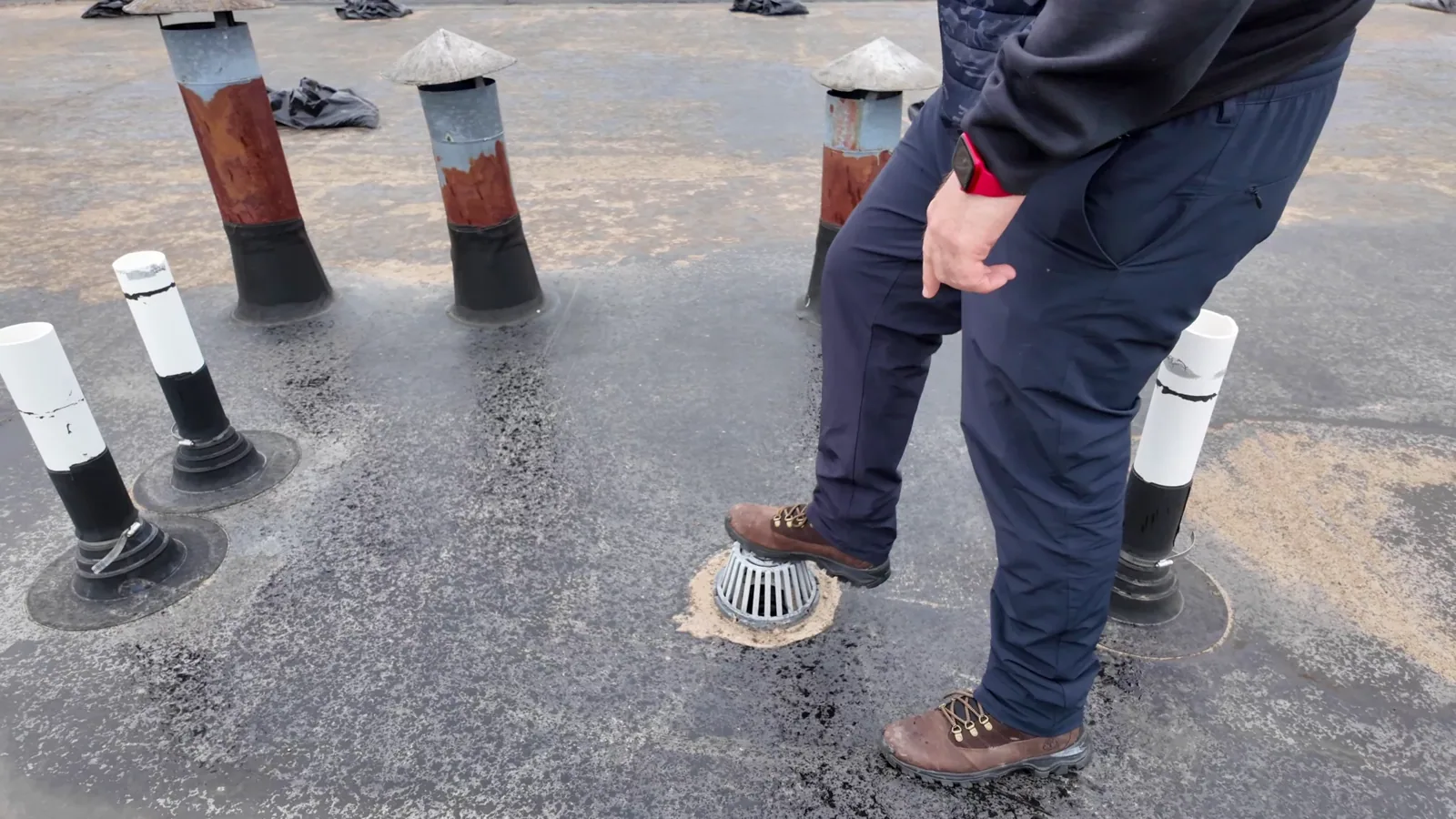
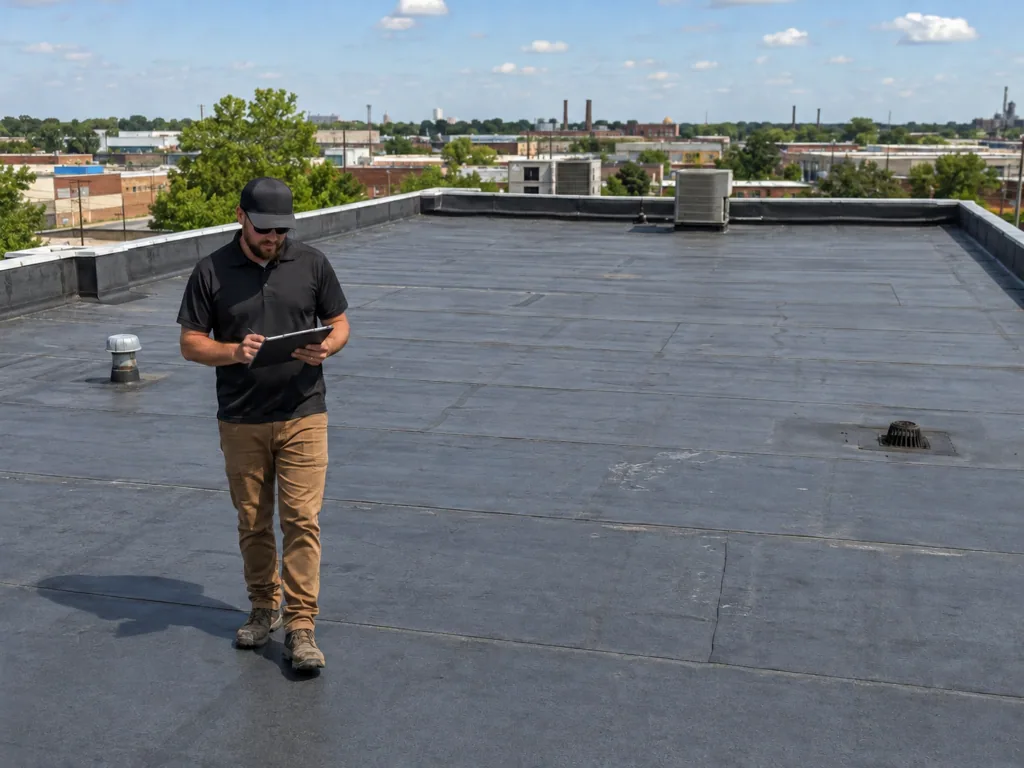
Start with the roof plan if one is available, then verify visible boundaries in the field. We identify membrane or metal areas, seams, flashings, penetrations, curbs, drains, scuppers, parapets, edges, and previous repair points. Mark active leaks by roof zone and compare those reports with the conditions above. An indoor stain is a symptom to trace, not proof of the entry point. The record should separate visible defects, suspected moisture, and areas requiring a test or opening.
At Atlanta’s airport station, July and August average highs reach about 90 degrees and overnight lows stay near 72. That seasonal heat frames work windows; surface temperature, humidity, and the forecast determine whether the crew can expose material or complete an adhesive detail.
The Atlanta airport station averages more than four and a half inches of precipitation in January, February, and March. Inspect each drain opening and overflow route, then note nearby low points, seams, and wall transitions. If water is visible, record its location and the conditions during the visit. A drainage and scupper review can distinguish a maintenance task from a larger slope or assembly question. The inspection service documents what was accessible and what remains uncertain.
Keep repairs narrow when the evidence supports them
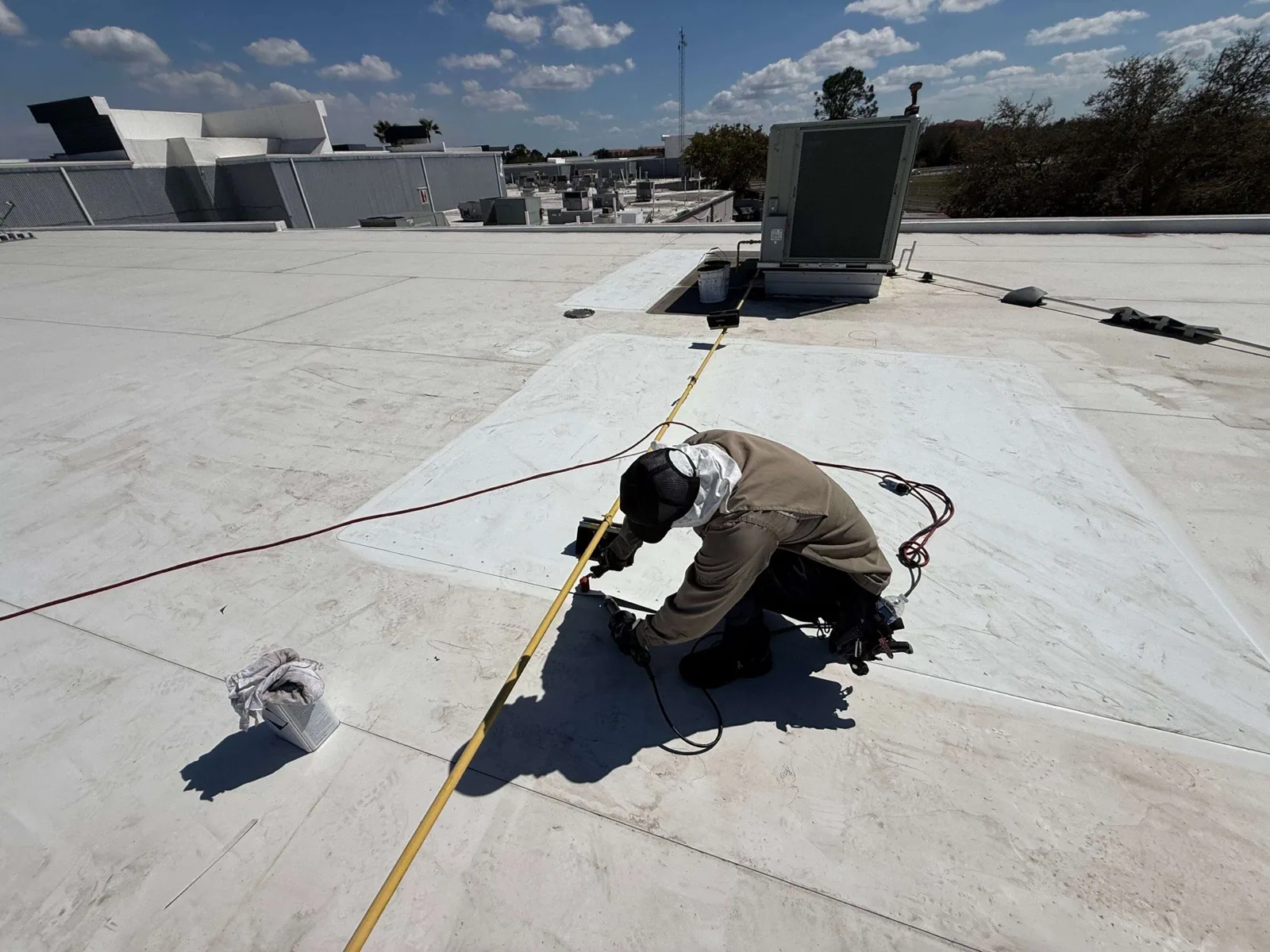
A localized puncture, open seam, or failed flashing can support a focused correction when surrounding material is sound. We define preparation, compatible material, roof-zone location, and exclusions. If a leak returns or moisture readings extend to other sections, widen the investigation before repeating a patch. A commercial repair scope should distinguish the confirmed correction from conditions that remain under review.
For a manufacturing or light-industrial property, keep production, exhaust, or equipment dependencies in the work sequence only when the site confirms they apply. For a medical-office facility, plan around occupied hours and any critical mechanical service identified by the owner. This specificity matters because the city’s economic priorities describe types of activity, not the operating details of an individual building.
After wind or hail, document visible evidence such as punctures, displaced edge metal, open laps, or separated flashing. North and Central Georgia see recurring hail and damaging thunderstorm winds. After a reported event, date the photos, mark accessible sections, and distinguish observed storm conditions from ordinary aging. If temporary protection is installed, record its location and a follow-up date for permanent work or monitoring.
Compare the options with verified roof information
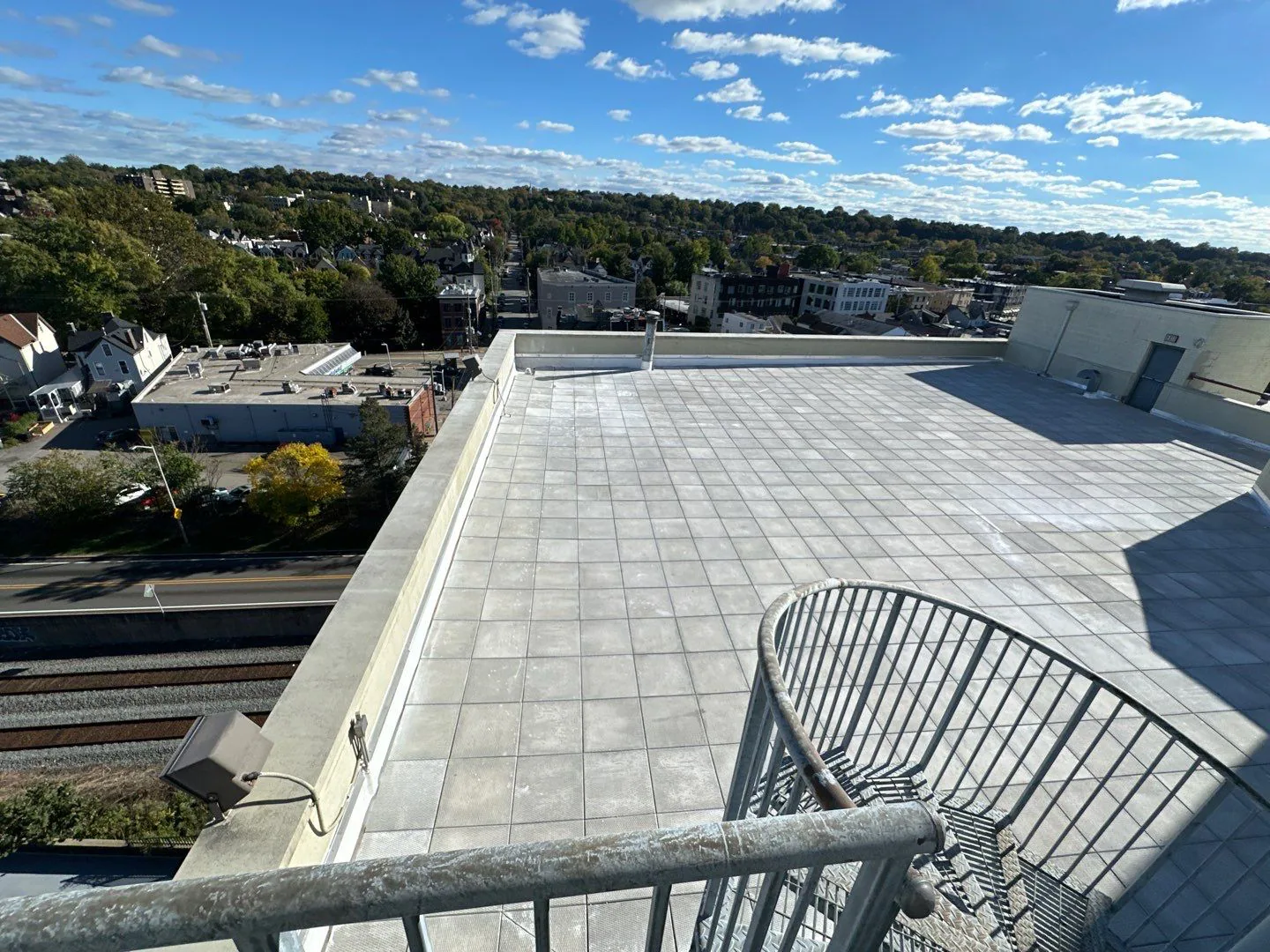
Adding a second roof layer is only an option after inspection confirms the current build-up, fastening, moisture, deck, water exit height, and code will accept it. A full tear-off instead exposes the substrate and adds removal, disposal, and weather-protection needs. Use the same measured area to compare both options and list tests that may change scope. A recover feasibility review helps resolve those questions before selection.
Georgia State Construction Codes apply to commercial roofing work, with applicable provisions confirmed by the local authority. Insulation, fire classification, edge attachment, equipment curbs, penetrations, and changed elevations affect details. The city’s emphasis on infrastructure for office, commercial, and light-industrial development does not establish the age or roof type of current buildings. We record field findings and identify design or code questions separately.
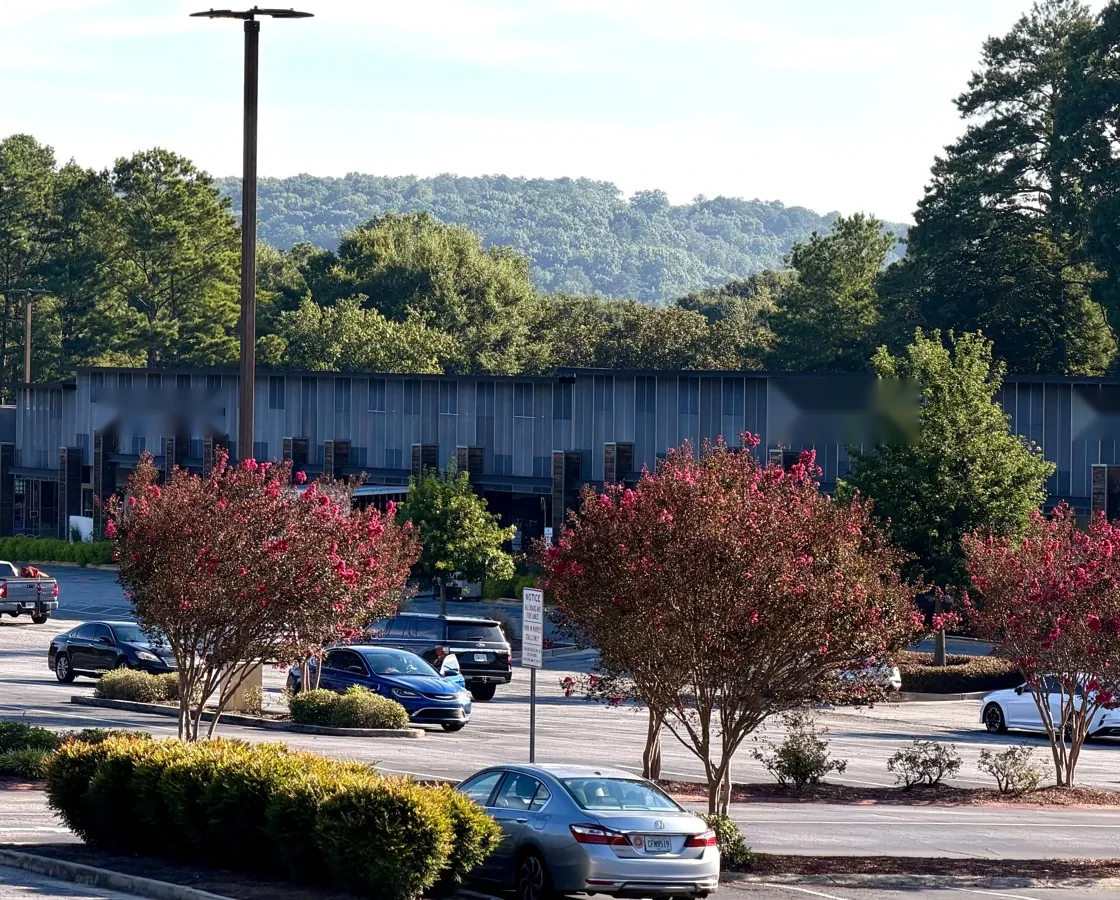
Medical-office and industrial properties can have different equipment layouts and maintenance records, even when two roofs appear similar from the ground. Identify each system from drawings, prior scopes, and field clues. A standing-seam metal area needs a different repair detail from a single-ply membrane, and a TPO section has its own seam requirements. State unresolved material assumptions before ordering or assigning a renewal date.
Carry the decision into a capital window
Access equipment, operating hours, staging, removal, wet insulation, deck repairs, equipment protection, and drainage affect cost and schedule. We itemize those factors by roof zone so ownership can compare urgent protection with planned renewal. A capital planning review can rank actions by observed condition, operational effect, consequence of delay, and budget year. Cumming’s regional commercial role supplies context; building evidence sets the priority.
Closeout should include the marked roof plan, dated photos, assembly identification, moisture results, drainage observations, repairs, and unresolved items. A condition report gives the next visit a baseline. Keep temporary stabilization and access limitations visible, with a follow-up date for each item. If equipment or site operations change, revise the work assumptions before the next inspection.
For a first review, provide roof plans, leak reports, repair history, equipment constraints, access rules, and the budget window. We inspect the property and return prioritized actions with scope boundaries, quantities, and any testing or approval still needed. Separate immediate water control from broader renewal so the owner can decide what belongs in the current work order and what belongs in a later capital cycle. That creates a Cumming-specific record without assuming a single roof standard across medical-office, manufacturing, or light-industrial properties.
Questions About Cumming
Does Cumming’s economic plan establish what roof systems its buildings use?
No. It identifies economic-development priorities, not installed materials. We verify the assembly from property records, testing, and field observations before specifying work.
How should a roof project account for medical-office operations?
Confirm occupied hours, critical equipment, roof access, and any shutdown approval with the property contact. We build those constraints into the work zones and sequence when they apply.
What changes when the inspected property supports manufacturing?
Production schedules, exhaust equipment, deliveries, and staging may affect timing, but only the site contact can confirm which constraints apply. We record them before finalizing the work plan.
Can a recover be priced before moisture conditions are known?
A preliminary comparison is possible, but moisture and attachment can change suitability and quantities. We identify what testing is needed and state the assumption until results are available.
How do I separate emergency work from capital renewal?
Document the immediate water-control action, then assess the remaining assembly and condition trend. We can show temporary protection, repair, testing, and replacement as separate decisions with their own timing.
Set a Cumming commercial roof review
Share roof plans, active leak locations, operating requirements, repair history, and the budget window. We will return building-specific findings and prioritized actions.
Call 555-555-5555 or send the building details.